
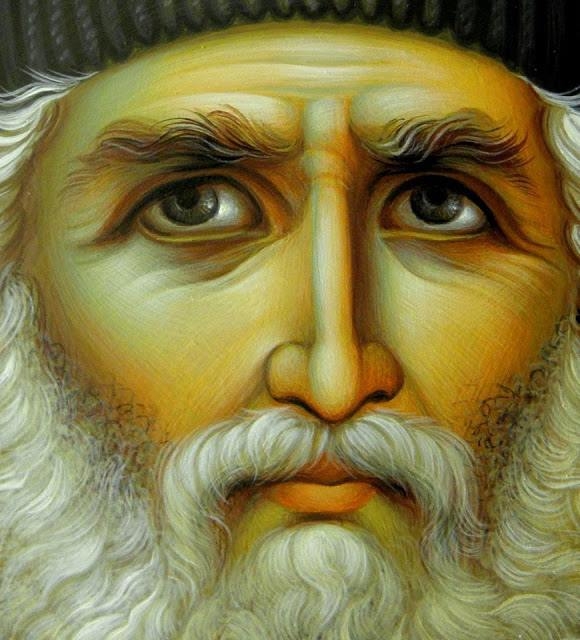
 The theme of the Gospel passage for this Easter Sunday is one of the most topical issues of our time. Physical blindness isn’t so bad, as it will end when the soul leaves the body. Spiritual blindness is far more terrible, because the soul that becomes blind here remains blind forever. It is an epidemic of the present. Man does not see what is right before his eyes. He sees physically but does not understand. The Lord Jesus Christ did not have much patience with those who could recognize the season and predict the weather but did not understand the spiritual meaning of the time in which they lived. They saw events but did not recognize their spiritual meaning. (Matthew 16:2-4)
But try saying to someone, “You are blind.” All these blind people will start shouting, “We see perfectly well; you are blind!” The Pharisees saw that the Lord Jesus had healed the sight of a man who was born blind. Yet they did not want to understand anything and shouted that Jesus was a sinner because he did not keep the Sabbath. Arguments here are pointless. Even worldly education is no defense against spiritual deception. A scientist can be spiritually blind just like a simpleton—but a scholar is more at risk of blindness than an uneducated person, because an educated person often suffers from deadly self-confidence. Today’s blind people are even worse off than the ancient Pharisees. And it is saddest among Christians – that is, in the Church. And the higher the place a blind person occupies in the church hierarchy, the more tragic and frightening a phenomenon he becomes.
A Greek bishop recounted that, once, while still a monk on Athos, he came to see the elder Paisius. There was a well in the yard, and a bucket for drawing water was lying in it. The elder led him to the well and put the empty bucket on his head, which covered his head and rested with its rim on his shoulders. The monk, of course, could not see anything. The elder not only predicted to him that he would become a bishop (in Greece, only bishops wear mitres), but also, using the parable of the bucket, showed him the terrible power that the bishop’s mitre has. What threatens its wearer? The danger of spiritual blindness. You put on the mitre, and you will no longer see. (And no one will tell you this, because you are a bishop.)
* * *
Blindness is often an automatic and direct consequence of pride. A person can be proud of anything. Of having been somewhere and seen something there. Of how much he has read (whether he understood any of it is another matter). Of having seen half the world. Of knowing something, and of knowing nothing. Being able to do something, even though pride destroys any benefit that his skill could bring to him or the church. Of his reason and unreason. Even in his humility. From a spiritual perspective, a proud person is practically like a madman. He sees nothing correctly; he lives in delusions. To condemn pride is as meaningful as throwing peas at a wall (you know the Czech proverb). Everything that a person who has fallen into pride says and does is corrupt, spiritually empty, and useless, or rather harmful to the work of the church. If possible, it is best to run away from a proud person and not waste the short time of your life fighting his pride and madness.
Elder Paisius of the Holy Mountain said that everything good is not ours, it does not come from us, but from God. Only what comes out of our nose when we blow our nose is ours. A proud person trusts himself and believes that something good can come from him, that he can do something useful with his own strength, that some of his opinions can be of high value, and that his ideas have the right to be realized. However, we only produce the products of our pride. Even manure has greater value – it can at least be used to fertilize the soil. However, a proud person’s opinions only pollute the surroundings with a spiritual stench and prevent others from breathing freely.
* * *
People’s opinions can often differ. I fear that the blind and fierce promotion of personal opinions can completely subvert the church. Typically, that is why canons are established: to resolve issues of church administration according to sacred rules, thereby limiting the devil’s ability to subvert the church. Another topic that people argue about in the church is property or money – whether it is the property of parishes, the temple treasury, or church restitution – property and the purse are often a grateful source of strife. Another inexhaustible topic of human contention revolves around divine services, or rather, around divine services (various national traditions, language, singing, typicon, etc.). All these disputes do not occur (or quickly wither) where there is humility. Where there is no humility, disputes will never cease. This paralyzes the Church: instead of praying and struggling with passions, people meet, endlessly debate, create factions, plot, send e-mails, and engage in all sorts of other futile activities, and spend their spirit in quarrels. My God, what can be done in the Church instead of praying! If a person has even a grain of humility, they will easily understand that human life is too short for such vanities and that there is no point in endlessly debating with someone with a worldly spirit. I think that Christ does not dwell among people who are restless, quarrelsome, power-hungry, or self-assertive and eternally dissatisfied. If it is not a matter of defending Orthodoxy, then it is possible to calmly leave them and go to where prayer and humility are practiced.
I have observed one rule: if the ability to pray and the love for divine services are lacking, if the will to struggle with passions is lacking, people prefer to satisfy an unquenchable appetite by endlessly debating or solving something, or by developing administration and similar secondary things, not to mention nonsense. During the time I have been in the church (and from what I have heard from my predecessors), I have directly or indirectly seen a whole gallery of people’s spiritual falls and/or complete apostasy from the church, from piety, or from reason. It is interesting, but at the beginning of most cases of spiritual disaster among these individuals, there was some modification of the sentence: “The services are too long.” A spiritually blind person not only fails to see that the more abundant the prayer, the more blessings it brings, but also tries to limit other people’s prayers. If I do not pray, they do not pray either.
We see this worldly spirit, which causes blindness of the soul, operating in the Church in small and large ways – at all levels. Bishops who do not observe the canons and seize power create unrest in the Church, thereby disrupting the Church’s prayer. Ceremonies can be held magnificently in any circumstances. Still, for the development of prayer throughout the Church, peace and stability (or persecution) are needed. When people quarrel in the parish, humility and mutual love disappear, and the faithful abandon the services to which they were entrusted. They complain about this or that. And the first thing that goes aside is prayer. Such is the time we are walking into. Chaos in the world will also confuse the Church. Who then can understand that the main work of the Church is prayer, in second place is prayer, and then prayer? Instead, people will enthusiastically repair everything and polish the golden domes of temples, as the prophecy about the times of the Antichrist says.
Elder Lavrenty advised the nuns not to be too busy with repairs, as it took time away from prayer. He advised them to repair only what was necessary (today we would say: a state of emergency), and otherwise to give everything to prayer. Elder Pasiy (although he was a skilled craftsman and knew how to work with wood) kept his cell in extreme simplicity and poverty – he only cared for it so that it did not fall apart; he did not even hammer a nail into the wall.
To some extent, there have always been problems with human blindness in the church. The devil is always prowling around looking for someone to devour. Especially when there is real spiritual work underway, Christians must show sufficient resistance to temptation if they want to maintain their spiritual guard. The devil especially targets such places where there is some prayer and lies in wait for the spiritually unfortified or the downright weak to penetrate through them and destroy this fortress from within. This has always happened. This must be taken into account.
Sometimes a spiritual fortress falls under external pressure that gains power over it, sometimes through internal betrayal. This applies to entire local churches (see, for example, the West), parishes, and monasteries. How many large and strong monasteries have already disappeared in history? If one bastion falls, those who want and know how to continue fighting must move elsewhere. Above all, don’t throw a pebble in the sand!
* * *
What is said about the meaning of prayer is as true today as it has always been in the past. Understanding the principles of prayer and its fundamental importance has shaped the historical development of our church services. That is why Orthodox church services are so impractically long – and still are, even though we have been shortening them for the last two centuries (well, tell me yourself: all ektenies, troparia, and kontakions; long psalms; slow singing; and I’m not talking about the many stichera at vespers or paremias at Easter, and what’s more, liturgies! And we prefer not to hold the longest church service—matins—in our country, otherwise the cup of patience of our believers would probably really overflow. The liturgy is the church’s main prayer (not even the Jesus Prayer or the inner prayer of the heart can replace it), and the entire prayer life of a Christian unfolds from it. There is no more important prayer than the liturgy. But we, the blind people of today, no longer see this. And the same blindness prevents us from seeing the state of the present world. And the same blindness still prevents us from seeing the spiritual cause of this state. And it is still the same blindness that will prevent us from seeing how necessary and powerful good prayer accompanied by humility is. What can a Christian’s private prayer look like when, after two hours in the temple, he complains that it is too long? One thing can be said with certainty about such believers: they do not feel an encounter with Christ during the liturgy. If a person encounters Christ in prayer, then even ten hours are not enough for him… But God’s grace does not visit those who lack a humble heart.
A blind person cannot say after five minutes of seeing: “That’s enough, I’ve seen everything, give me back my blindness,” and similarly, someone who has seen spiritually cannot say, “I’ve had enough of the liturgy for about an hour, and I want to go home; I still have enough other things to worry about.” And yet the world and all of us need prayer much more than a hundred or two hundred years ago. But in this critical time, even the minimum that the Church established as necessary to preserve God’s commandment to sanctify the holy day is no longer available to people: liturgy every Sunday and on twelve holy days. Is there any way out of such a situation? Or will it be better to accept that the fulfillment of the aforementioned commandment from the Decalogue will now be a matter for a few individuals? In what state is the Church when the vast majority of Christians have resigned themselves to this commandment of God? And what awaits such a Church? It would be beneficial for us to consider this, at the very least.
Elder Paisios said:
Do not forget that we are living in difficult times and that much prayer is needed. Remember the tremendous need that people feel today. Remember the enormous fervor for prayer that God asks of us. Pray for the general madness that has gripped the whole world. Pray that Christ will have mercy on his creation, because it is approaching catastrophe. May God intervene in his own way in this crazy era that we are living in because the world is being dragged into chaos, madness, and a dead end. God has called us to pray for a world that has so many problems. Unhappy people, they do not even have time to make the sign of the cross. If we monks do not pray, who will we leave it to? In times of war, a soldier is on alert, shod, and only waiting for orders. A monk should also be in such a state.
Let us not be confused by the fact that the elder speaks primarily of monks. After all, there is no such thing as a dual Christianity – monastic and secular. There is only one Christianity. However, we have already spoken about this here several times. The elder Paisius also emphasized this. He said that a good Christian living in marriage would certainly be a good monk under other circumstances. And a good monk would certainly be a good secular Christian if his life developed in such a way that he could not become a monk and had to marry.
Where God has placed you, there you can and should be holy. St. Justin Popovich said: If you are a teacher, be a holy teacher; if you are a craftsman, be a holy craftsman; if you are a monk, be a holy monk; if you are a journalist, be a holy journalist.
* * *