Foundress of the Order * 28 January 1572 in Dijon in France † 13 December 1641 in Moulins in the Allier department in France
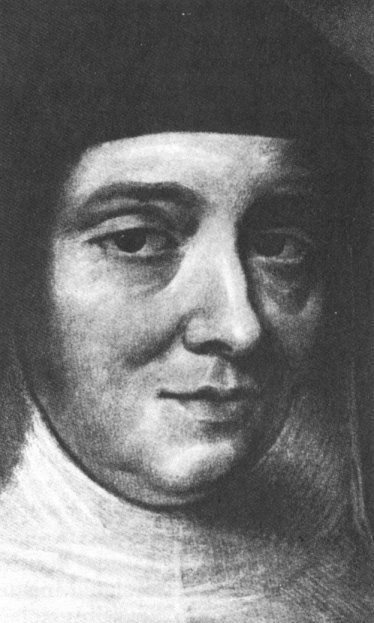
Image after a contemporary portrait
Joan of Arc was the daughter of the President of Parliament Fremont of Burgundy and at the age of 20 she married the young, wealthy and cheerful Baron Christophe de Rabutin, Baron of Chantal, to whom she gave birth to six children in a happy marriage, four of whom survived. In 1601 her husband died in a hunting accident. This stroke of fate made the pious woman even more inward; prayer and penance determined her life, and her first mystical experiences and visions appeared. Among other things, her future spiritual guide was revealed to her.
In 1604, Joan of Francesco met Francis de Sales for the first time and recognized in him the man revealed in the vision; a close friendship developed and a correspondence that has continued to this day. She decided to live a celibate life in the future. For a while she spent time with the Carmelites in their monastery in Dijon and became clear about her calling. She put her children in good hands; her eldest daughter had married Francis de Sales’ brother and was now able to live her destiny.
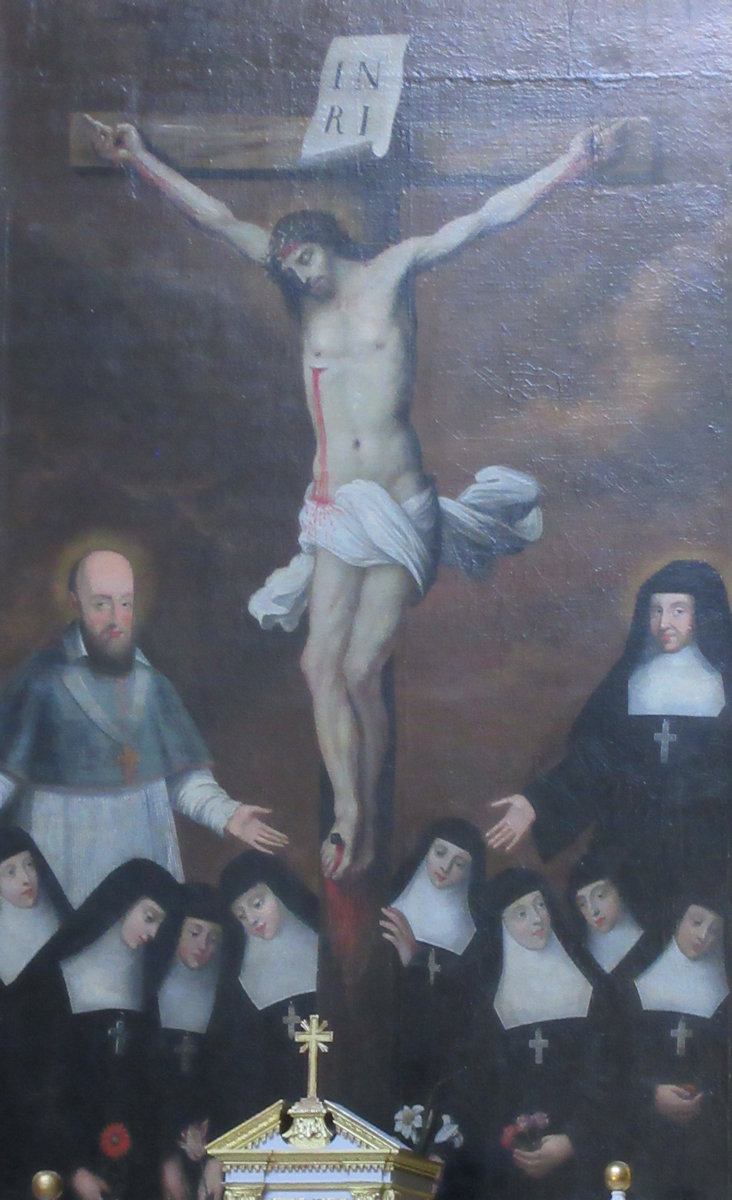
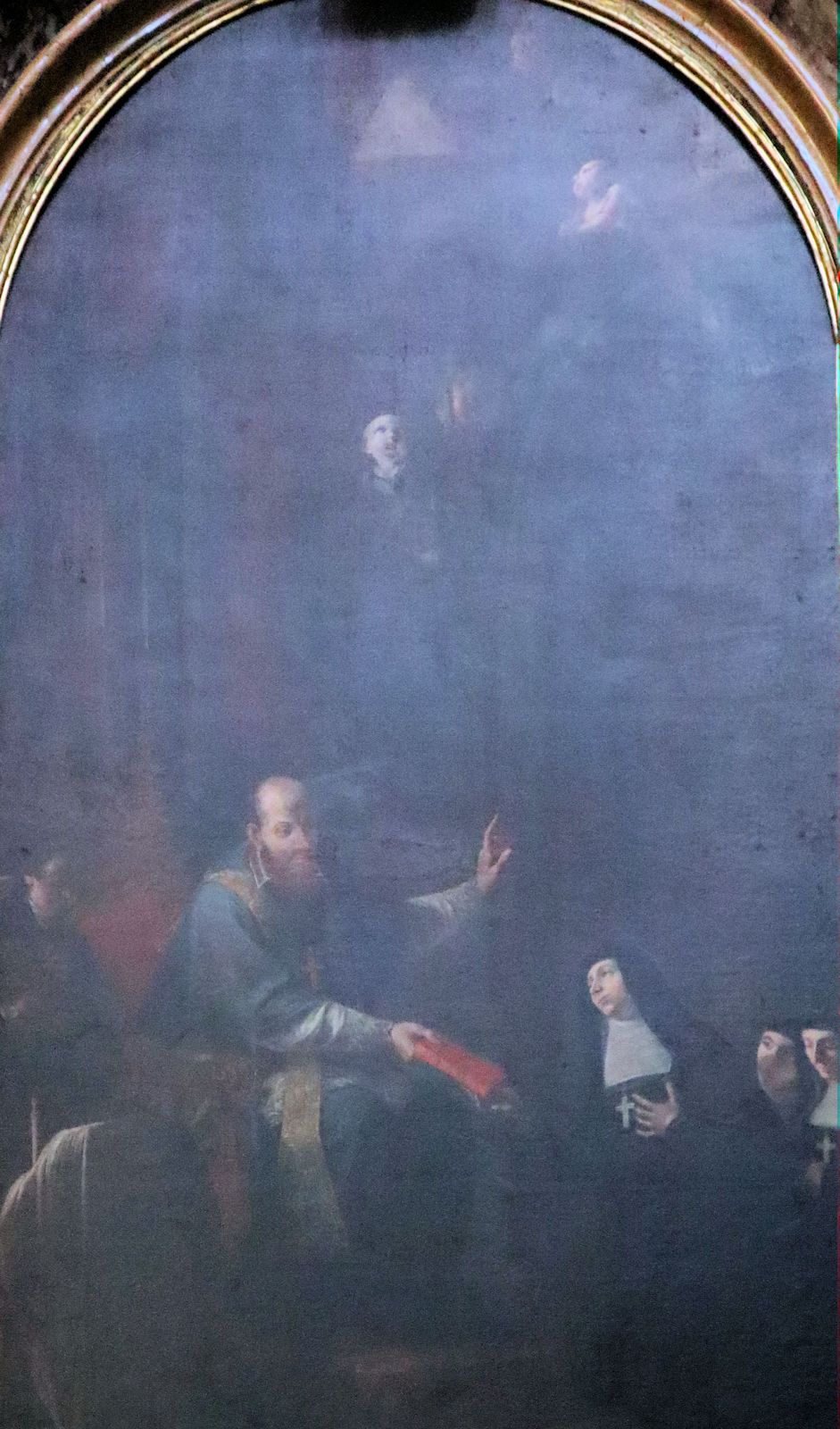
Francis de Sales and Joan of Chantal with the Visitants, altarpiece in the side chapel of the Visitants Church in Fribourg in Switzerland
In 1610, Joan of Arc co-founded the Order of the Visitation of Mary, also known as the Salesian Sisters or Visitants, with Francis de Sales. The order aimed to live a devout life without adhering to the strict formalities of other orders. The sisters focused on making personal commitments to follow Jesus Christ and practicing inner asceticism, rather than observing external rituals. This emphasis on individual piety, inspired by Francis de Sales, was supported by Joan of Arc. The first monastery was established in Lyon in 1615 and later relocated, followed by the foundation of the monastery in Moulins the next year.
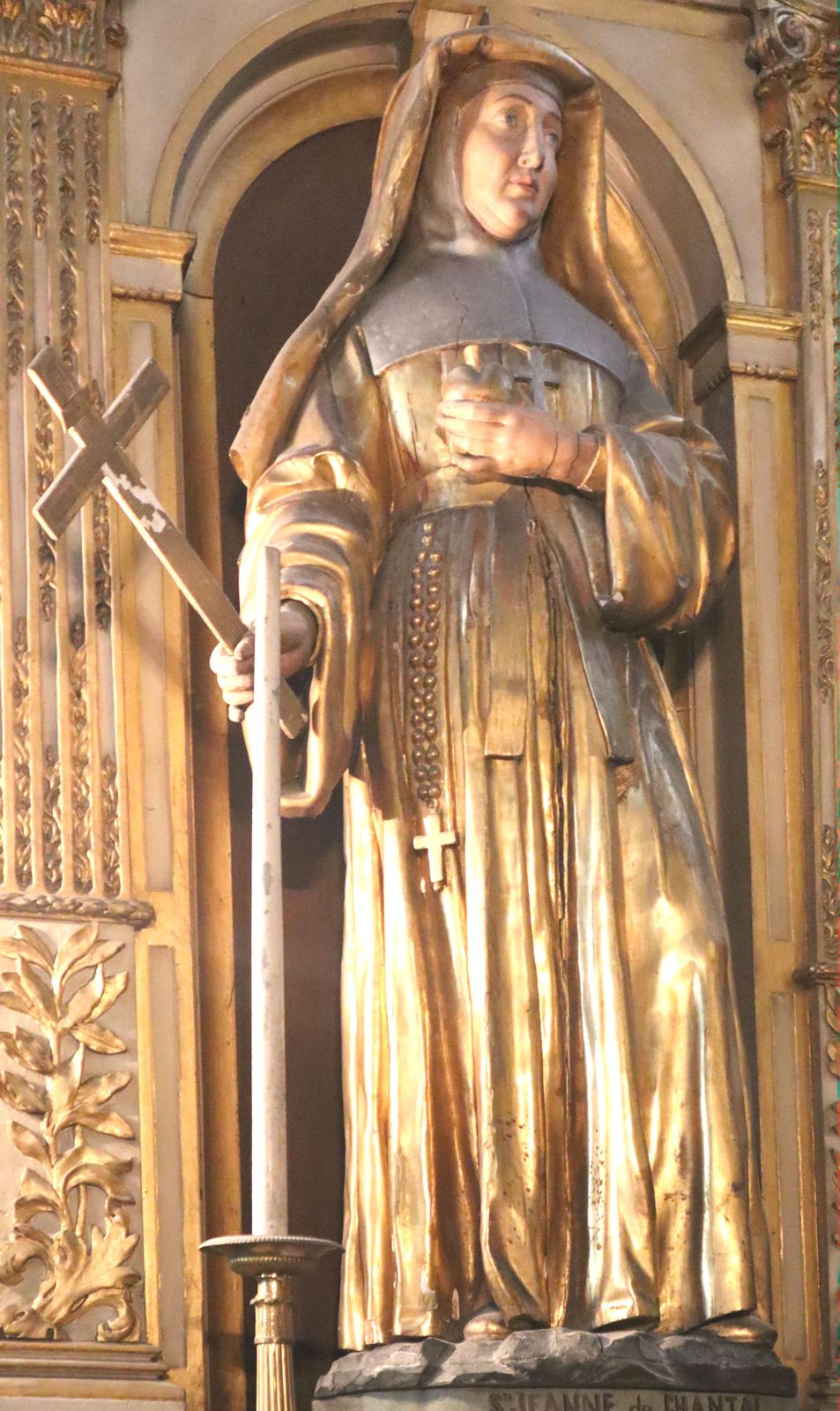
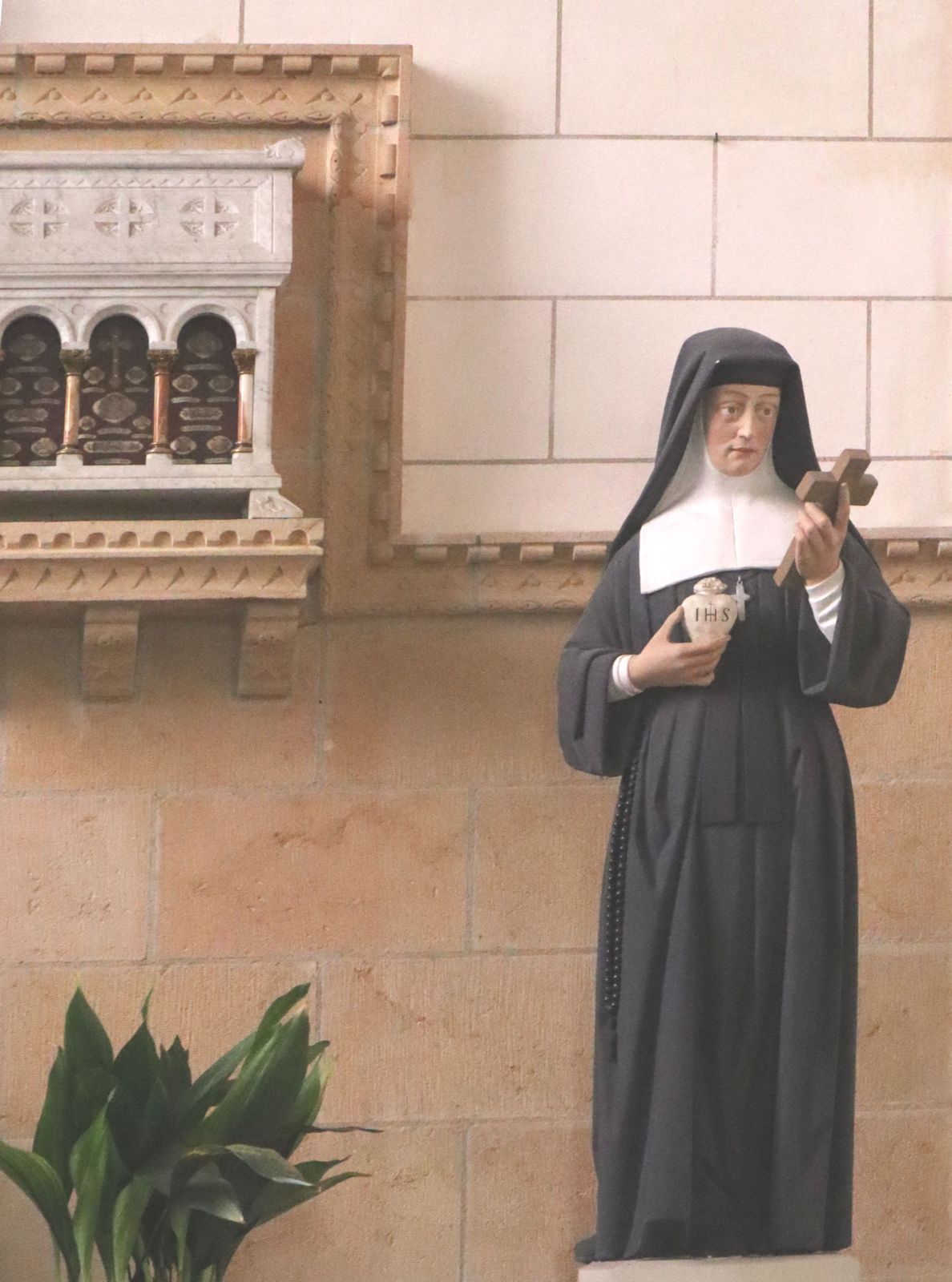
Statue and reliquary in the church of the monastery in Moulins
Joanna-Francisca spent her final years expanding the order, which grew to 87 houses by the time of her death. She had founded one of these, the monastery at the Church of the Visitation in Turin, as early as 1638 with the Duchess’s support. Exhausted and ill with pneumonia and pleurisy, Joanna-Francisca died on a visit to her Moulins monastery.
An altarpiece in Turin’s Church della Visitation shows Francis de Sales presenting the order’s rule to Saint Joan of Arc.
At the request of the French Bishops’ Conference, Joan of Arc’s Memorial Day was moved to August 12 in 2001. Until then, her Memorial Day was December 12, and before 1970 it was August 21.
Canonization: On August 21, 1751, Johanna-Franziska was beatified by Pope Benedict XIV and canonized on July 16, 1767 by Pope Clement XIII.
Today, the Church commemorates St. Pirmin, a bishop, missionary, and founder of monasteries, who lived during the eighth century. He was a man of deep faith, tireless missionary zeal, and profound love for the Church. His life reminds us that … Continue reading → The post St.Pirmin appeared first on predication.net.
The meaning of prayer for the dead … › for youth … A certain monk’s father died. A council of condolences stood by the monk over his fresh grave. The well-known priests whispered, “Accept the expression of our pain.” And … Continue reading → The post Commemoration of All the Faithful Departed,Joh 6,37-40 appeared first […]
Dear brothers and sisters in Christ, Most of us have experienced the pain of losing someone dear. Perhaps it was a father or mother, a husband or wife, a brother or sister, a child, a relative, or a cherished friend. … Continue reading → The post Why should we pray for our deceased? appeared first […]
The Church’s history is filled with men and women who took the Gospel seriously and made it the foundation of their lives. They did not seek earthly glory, wealth, or power. Their greatest desire was to serve God and lead … Continue reading → The post St.Wolfgang. Bishof appeared first on predication.net.
It is a holiday. Jesus is invited to a feast. Let’s bring it to our time: Someone invites us to a festive lunch. The host watches us, along with the other diners, to see how we behave. An unpleasant and … Continue reading → The post Friday of the Thirtieth Week in Ordinary Time Lk […]