I was the meaning of Sunday. Nothing is lost by celebrating Sunday but gained.

What are my values ​​in life? Every person has a hierarchy of values; it’s simply part of life.

“The disciples do what is not allowed on the Sabbath” (Mt 12:3) what is not allowed” (Mk 2:24)? But he said to them: “The Son of Man also lords over the Sabbath” (Mt 12:8)? Many people think about the meaning of celebrating Sunday and keeping it. We heard that the Pharisees caught Jesus’ disciples plucking ears of corn because they were hungry. We see how they verbally attacked Jesus. They always found something imperfect in people and immediately blamed them. In this way, the meaning of the Sabbath was completely lost in trivialities. In this way, they kept reducing the value of the Sabbath, and the meaning of rest was completely lost. It became a ritual for them and a burden for the people.

Now let’s try to look at this problem from a different point of view, as today’s people perceive it. How do people look at Sunday today when witnessing a great boom in business activities? Let’s take such an example. We often hear how Sunday has become professionalized after many shops are open. Various Carrefour, Hypermarkets, Polus centers and Tesco have become a modern temple where everyone can meet and talk to each other. It is already becoming a certain rule, how best to spend Sunday time. Sunday as a holiday has become a thorn in the side, especially for those who want to bind people with new forms of slavery. We have even heard such an opinion that the Church should transfer services to shopping centers. It is an interesting idea how this issue could be solved. The employees’ reluctance to deal with such a situation results from a simple reason.

The more I work, the more I earn; everything revolves around that. What will the Church do, or what has she already done in this situation? Pastoral letters and even a joint statement to the government were written. We are witnessing that it is difficult to move anything in this matter. People don’t seem to see or don’t want to see that the Church has always been concerned with people’s spiritual and material well-being. Therefore, this challenge is much more current and necessary. God always wanted the best for people. Christ does not hide this even from the Pharisees, even though they always condemned him. Today’s man must realize that no one can change the natural law in himself. God commanded man to subdue the earth, rule the world in righteousness and holiness, and center himself and the universe around God. Then we see that God gives people the Sabbath as a day of “rest” when they should contemplate the work of God. It is not just sweet idleness but the relationship dynamic between God and man. When Christ redeemed all mankind, the day of rest became Sunday, the first day of the week. The Lord’s Day also appears to us as the Church’s Day.

We thank God for the whole week we worked for ourselves, for people, and for God’s kingdom. The day of the Lord always directly connects with the day of man. Rest is a sacred thing for every person, and it is necessary to break away from the cycle of earthly duties. Amen.
 
Posted in Nezaradené | Leave a comment

Let’s learn from Jesus. Live an exemplary life.

Can we believers talk about uncomfortable faith? Can faith make us uncomfortable? Jesus would not change his teaching, retract his words, ask us for an opinion or opinion to improve, perfect, or omit something in his teaching. Even today, the words: “My yoke is easy, and my burden is light” (Mt 11:30).

We notice the pronoun “my.” Jesus requires one to “take the yoke upon oneself”, which cannot be compared with the requirements that the Law imposes on a person. This imperative completely grows out of the indicative of the previous words, “Come to me, all you who labor and are overburdened, and I will give you I will strengthen” (Mt 11:28). It can be seen that Jesus does not ask without first giving. He gives so that a person can fulfill the requirement that follows from the strength of the gifted. And in the request itself, there is promise and power again.

Notice the word “yoke”. It is a tool that allows animals to pull loads. This picture reveals more truths. The yoke is designed for work. Jesus requires work from his disciple. A disciple is only a disciple when he does not live only for himself. The student has to endure everything that the teacher has determined for him.Yoke is a tool that makes work easier. Can we imagine the work of an animal without a yoke? The yoke helps. And the yoke that Jesus points to makes the believer’s work easier, and only he – Jesus – makes a person capable of carrying out his mission. The yoke clearly sets the goal for the one who carries it. An animal without a yoke would not reach its destination. But the one who guides the animal with the yoke will lead the animal to its destination. With the help of the yoke, God leads the Christian to a clear and correct goal. One can imagine a double yoke. Two animals in one yoke pull the load more easily. It is possible to explain this comparison that Jesus walks with us and helps us bear the burden. He teaches us to be his followers with a “quiet and lowly heart”. Gentleness and humility in the life of the Lord Jesus become all who decide to take the yoke of evangelization – reinforcement. Whoever accepts the imperative of Christ will find peace in his heart. That peace is not always immediately apparent on the outside because even a disciple in his time, marked by the signs of the times, does not always have to defend himself against pressure. When he perseveres with Jesus, he receives peace of mind. The gift of Christ helps him bear the yoke of life.

The yoke is not a superfluous thing, nor a thing that gets in the way, but it is very useful. Useful for the wearer because it gives him support, help, purpose, and meaning. However, it is also useful for the cause of Christ the Lord, who is building his kingdom with these “yoke people”. This is also the gift that Jesus gives us. This is why we know the word “grace” in today’s Gospel. What can we do without God’s grace? In the life of a Christian, we cannot understand the yoke as something enslaving. On the contrary! Christianity brings to man what the world cannot give.

Posted in Nezaradené | Leave a comment

Quiet and humble in heart… God not only makes himself known, but he also becomes an eternal reward.

Many have not forgotten that the people around them are not just strangers. They are not silent. They include paramedics, paramedics, various uniformed brothers and sisters. Jesus reminds us: “I praise you, Father, Lord of heaven and earth, that you have hidden these things from the wise and understanding and revealed them to little ones” (Mt 11:25); he asks for us to learn his words in our lives: ” Take my yoke upon you and learn from me, for I am meek and lowly in heart, and you will find rest for your souls” (Mt 11:29).

The message he brought to the world that we should adopt and follow in our Christian life. He calls those who adopt his little ones. Jesus is not against wisdom and reason, but he is against pride and conceited wisdom, often just plain stupidity. Several times Jesus encountered this kind of behavior of people who, with their indifference, stubbornness, and inattention, not only hurt his heart but also misled and scandalized others around him. They were the ones who saw and managed the nation. He did not reproach them for their science and learning but for their pride, which prevented them from accepting the truth. Pascal writes: “The heart has reasons that reason does not know”. Jesus does not despise courage, learning, wisdom, and diligence, but what is connected with pride, such as arrogance, exalting oneself, underestimating others, and recognition. Pride closes a person’s path to the truth. A person can be wise like Solomon, but if he does not have the simplicity and innocence of a child’s heart, he closes himself from the truth, and in the end, he can be worse for the house than a simple person without education, but who is honest, humble, and open to the truth. Jesus declared himself to be the Truth (cf. Jn 14:6).

It doesn’t take much, and we understand the words “learn from me, for I am meek and humble in heart” (Mt 11:29), because they are a sign of God. As Jesus sees the Father, so when we see Jesus act, we should learn to act according to him; that means that when we are toiled and overburdened and act in his spirit, quietly and humbly, our yoke will become easy, and our burden light because he will be with us. Our earthly and eternal happiness is tied to whether we follow Jesus’s example. That is why he addresses us with the words: “Learn from me” (Mt 11:29). It is the wish of Jesus that humility and quietness of heart should also become our virtues. St. Bernard sees humility as the foundation of every Christian virtue. He says: ” There is no other virtue in the spiritual life without humility.”.” It is not enough for us to know the theory but to implement the words of Jesus about humility and silence in practice. In a world of haste, tension, and material burden, human qualities such as humility and silence lose their value and are relegated to the past; they have their place and justification. Some personalities do not gain admiration, respect, and seriousness by broad elbows, verbosity, violence, and the like but by their heart, manifested by qualities rooted in silence and humility. 

Posted in Nezaradené | Leave a comment

What is going on with the “eldest daughter of the church” 

Catholicism in France may soon become a minority but more orthodox

The trend of decline could be quickly reversed by a revival of traditional faith.

Catholicism in France may soon become a minority but more orthodox

Notre-Dame de Senlis Cathedral.

The recent announcement of the resignation of two French bishops suffering from episcopal burnout and the release of a potentially devastating report on allegations of sexual abuse in the French Community of Saint John has brought renewed attention to the fragile state of the church in France.

Is Catholicism in France, the “eldest daughter of the Church” and homeland of Saint Louis and Saint Joan of Arc, on the verge of extinction?

Studies on the development of the religious composition in the country already indicated this in the past months. The most recent one shows that Catholicism is the religion with the most significant decline in members and the lowest rate of transmission of faith within the family.

These findings led historian and sociologist of religion Guillaume Cuchet to hypothesize that in a few decades, Catholicism could become a minority, overtaken by Islam, evangelical Protestantism, and, above all, people of no faith.

At the same time, it is likely that this trend will be accompanied by a more traditional and ceremonial behavior of Catholics in the minority.

If these predictions are confirmed, the face of France, whose 1,500-year history began with the baptism of King Clovis by Saint Remigius, will fundamentally change, as will Catholic culture itself.

This decline of Catholicism, of which Cuchet has often warned in recent years, has accelerated dramatically since 2008, as shown by the Trajectoires et Origines 2  (TEO2) survey commissioned by INSEE (National Institute of Statistics and Economic Research). The results of the survey were published in April 2023.

According to the Trajectoires et Origines survey, in 2020 only 25% of French people aged 18 ̶ 59 professed to be Catholic, compared to 43% in 2008. Meanwhile, the number of people with no religion rose from 45% to 53%, the number of Muslims increased by 37% over the same period, and according to another study, Muslims now make up about 10% of the total French population. 

This data led the sociologist to theorize that Catholicism could one day (probably soon) become the country’s second or even third religion.

For the historian Yann Raison du Cleuziou, an expert on contemporary Catholicism and the author of the book Qui sont les Cathos aujourd’hui ? (Who are today’s Catholics?), this theory is almost mathematically self-evident.

Catholicism is the religion with the most significant decline in members and the lowest rate of transmission of the faith within the family.

Based on the 2018 European Values ​​Study , which found that 15% of young people aged 18-29 identified themselves as Catholic, compared to 13% of young Muslims, du Claudio notes that in the young Catholic and Muslim generations already there is an equalization of the number of believers.

In an interview with the Register, he said that although the TEO2 survey only confirmed long-term trends, its contribution was that it showed that family culture is the basis for the preservation of religion ̶ an area in which Catholics are the least successful of the main French religious groups.

The rate of generational reproduction of religion is 91% for Islam, 84% for Jews and only 67% for Catholics.

“In Western societies, the belief has spread that the very values ​​of religion determine its social success. But from a societal point of view, religion is primarily an inherited culture meant to embody the general population,” said Raisin du Claudio.

From the Second Vatican Council to the abuse crisis

At the same time, this change in religious composition is undoubtedly exacerbated by the steady increase in migration to France in recent decades (according to 2021 data, 10.3% of the population was born abroad, compared to 6.5%, according to 1968 data), which has fueled the rise Islam and evangelical movements.

However, most experts agree that the decline of the Catholic religion and its transmission in the family dates back to the mid-1960s.

In his 2018 book Comment le monde a cessé d’être chrétien (How our world has ceased to be Christian), Cuchet outlined the upheaval that followed the Second Vatican Council, stating that “the end of the pastoral insistence on the obligatory nature of the practice of religion that came together with the council, played a fundamental role on a collective level in the schism’, which led to a significant decline in the practice of the religion from 1966.

According to Raison du Cleuziou, this phenomenon continued and inexorably worsened until the COVID-19 crisis and the 2021 ” Sauvé Report ” on sexual abuse in the church accelerated the existing trend of decline even further.“Each new crisis, more so on divisive issues like sexual morality, encourages mass exodus; only the hardiest remain,”

Priest Michel Viot talks about his critical book in which he deals with the report of Jean-Marc Sauvé. This fall 2021 news rocked…

According to the historian, today we often find the greatest tenacity in the more traditionalist Catholics, precisely because, since the 1970s, they have developed a relatively critical attitude towards the church institution and its decisions in the post-conciliar ministry.

This theory is also confirmed by a recent study by the newspaper La Croix , which showed that these traditionalist and relatively conservative families, unlike other believers, “successfully” ensure the transmission of spirituality and carefully prioritize the religious socialization of their children.

Raison du Cleuziou explains this as a consequence of the minority functioning of these conservative religious communities, which, like other groups, such as Jewish communities, are more aware of their uncertainty and possible demise.

“When a group is in the minority, it tends to be demanding on the level of conviction of its members to ensure its survival, which depends not only on the free adherence to principles and rules but also on the transmission of a faith that preserves rules and ritual as much as possible,” he said.

Today, we often find the greatest tenacity in the more traditionalist Catholics.

“This is precisely why Catholics who strictly adhere to religious principles have established themselves best in France because they have maintained codes, prohibitions, and clear boundaries between what is okay and what is no longer okay,” he added.

According to him, such a trend is completely contrary to what the French Church has promoted since 1700 with an attitude that is quite typical of the weakened majority ̶ focused on openness and friendliness and undemanding to socio-cultural norms and codes, which undoubtedly mark the identity of the church.

Cleuziou is therefore convinced that Catholic France will soon change significantly and, at least for a time, be anchored in a strong affirmation of the importance of dogma in religious experience.

Traditionalism, the future of the French Church?

Père Danziec (Father Danziec) also agrees with this opinion – a well-known pseudonymous commentator of the French Catholic media, who warns of the impending collapse of the hierarchy of the French Church.

According to this priest from the traditionalist Institute of Christ the King High Priest, the recent sex scandals that have rocked the church have particularly accelerated its decline.

“To face the challenges of today’s society, you have to be really strong in every way, and the French clergy seems to have been completely stunned after the publication of the Sauvé report,” he told the Register, drawing a parallel with the atmosphere that preceded the sudden collapse of the Soviet Union in 1991.

However, the general dissatisfaction with Catholicism, empty churches and the wave of closing seminaries in France is also accompanied by a strong attachment to traditionalist movements, especially among young people, as evidenced by another recent study , which lends credence to the hypothesis of a gradual change in the direction of the church and a tightening of the practice of religion.

In May, organizers of the annual Christian pilgrimage to Chartres, where Catholics gather to celebrate the traditional Latin Mass, had to close registration for the first time in 40 years about 10 days before the event because the 16,000-person capacity was filled.

Pilgrimage organizer Jean de Tauriers said in an interview with the Register that there is about a 10% increase in participants each year and that more than half of them are under 21 years old.

“Many of them are so-called ‘recommencers’, who return to religion or at least ask questions, driven by a desire for spirituality and religious anchoring,” he said at the end of the pilgrimage on May 29, 2023. “In addition, I see in these participants a desire to high standards, as our three-day pilgrimage is also marked by physical and spiritual strain.”

He also pointed out that the participation of diocesan priests is also increasing.

These facts lead Père Danziec to believe that although Cuchet and Cleuziou’s predictions of the continued decline of the Church in France are very likely, this trend could be quickly reversed by a revival of the traditional faith.

“More and more people are attracted to the triptych of coherence, transcendence, and demandingness and are convinced that if a person is to be a Christian, he should be one in every aspect of his life.”


Posted in Nezaradené | 1 Comment

If.

If miracles had happened in Tire and Sidon,… they would have repented long ago. People often sigh: if I had the conditions, if I had health, if I had time – I would do something. And they lament: I had no chances to achieve this or that, no chances were given to me; they are begging someone: at least give me a chance. And in general, they blame their failures in life on a lack of chances, that is, a lack of possibilities, opportunities, economic conditions, etc.

Let’s be clear: if the Lord God calls a person for a certain direction, to fulfill certain tasks, he will always give him opportunities for this. If someone can say with his hand on his heart that he does not have these possibilities – then it simply means that God is not calling him for those tasks. Of course, with a sensitive heart and an attentive eye, we see many tasks that need to be done around us – but this does not mean that they are all meant for us. But on the path of his profession, everyone gets every chance; the misfortune is that not everyone uses them properly. Lord Jesus strongly condemns those cities that wasted their chance. That chance was his presence in Bethsaida and Capernaum, who were given to hear Christ’s teaching and see the miracles that happened there. This was a chance for acceptance of the Gospel and conversion. Unfortunately, the personal meeting with Christ, his rather long stay there and extraordinary events became a wasted chance for the people there. Are we making proper use of the chance that Christ’s presence is in our midst: his presence through faith in our hearts?

Let’s ask ourselves a question: Who cares about the salvation of his soul today? Who is afraid of the judgment of the Lord Jesus today? We should realize and seriously approach it in practice that we must not be indifferent to what will follow after our death or how we use the gifts we receive from the Lord Jesus. We say that God is good. Yes, he offers us his gifts even today, but he is also waiting for our answer. However, this means that we humbly and lovingly fulfill the duties that he expects from us. Let’s realize that God is all-knowing and will not tolerate just some tinsel, or superficiality. We must not waste the graces offered and given in this way of life. Otherwise, we rightly expect a more severe punishment and Jesus’: “Woe!”

Even in our surroundings, we see a lot of sin, evil, and scandal. Some are public, some are secret. Difficulties and problems in our family are like a stormy sea.

Posted in Nezaradené | Leave a comment

St. Bonaventure


St. Bonaventura

Posted in Nezaradené | Leave a comment

Let’s put God first in our lives.

Did the true and pure life of a Christian appeal to you? Living with Christ is at least as difficult as in the past. And they did not stop paying the words of the Lord Jesus about following him. “He who loves father or mother more than me is not worthy of me. And whoever loves a son or daughter more than me is not worthy of me” (Mt 10:37).  Jesus asks us that He Himself be the pinnacle of our love.

Lord Jesus will say these words to the apostles before entrusting them with the apostolic mission. In his love, he knows that many dangers await his followers. He prepares them not to be afraid. Jesus knows that often those closest to us become the greatest enemies in the fulfillment of the duties that He has determined. And precisely in such a sensitive manner – as love for the nearest, bonds with those who gave us life, to whom we gave life; Jesus teaches that we must not hesitate. Deciding where to put God first and then everything else and everything else is a great cross. Jesus wants none of the people, not even those closest by blood, to be an obstacle to salvation for any of us. In love, neighbors can be an obstacle to loving God. Whoever loves God above all else, God will bless his love for his neighbors even more. When realizing these words, we often feel the weight of the cross. True love cannot do without a cross. And that’s why Jesus’ words about the cross are appropriate: “Whoever does not take up his cross and follow me is not worthy of me” (Mt 10:38). In this context, we also see the core of Christianity, which is that we are willing to take up any cross for Jesus in our lives. We understand Jesus’ words that our love for God should come first. To love God before people and before anything. That is how the words will come true for us: “Whoever loses his life for my sake will find it” (Mt 10:39 ). 

We cannot imagine the life of a Christian without realizing the words of the Lord Jesus. What kind of Christian would I be if I only accepted the words of the teachings of the Lord Jesus that suit me, that I like, and I would do what only I would want? As the apostles were the basis of the true following of Christ, when they fulfilled the words of the Lord Jesus without personal conditions, so today it is we who, not under compulsion, but consciously and voluntarily fulfill the will of Christ. Anyone who has experienced thirst in their life knows how to appreciate even a glass of water.

We realize, as Carretto writes in the book “Desert in the Middle of the City”, or in the book “Leaves from the Desert”, only when I find God in my life and put him in the first and most honorable place in my life, I will know the value of the reward promised by Jesus: “They will not lose their reward” (Mt 10:42).  Following Christ in love, when we put His will first in life, is correct and useful for us.  And encouraged by Jesus’ words: “Blessed are those who have not seen and have believed” ( Jn 20:29), we also want to implement today’s words of Jesus

Posted in Nezaradené | Leave a comment

St. Bonaventure. Bishop and Doctor of the Church.

  Today is the holiday of St. Bonaventure, who is the third largest of the Franciscan saints after St. Anton and St. Francis. Bonaventure was born around 1217 in Bagnoregio near Oviedo as the son of a doctor. From 1225 to 1235, he studied at the Franciscan monastery in Bagnoregio. At that time, St. Francis of Assisi healed from a serious illness. In 1235 he began his studies in Paris. After their completion, he studied theology, probably as a Franciscan novice, under Alexander Haleský and John of La Rochelle. In the years 1248-50, he writes commentaries on the Holy Scriptures, starting with the Gospel of St. Luke. After obtaining the title of Master of Theology, he receives a chair. In 1257 at the general chapter in Rome, he was elected general of the order. October He spends 1259 on Mount Alverna, where he writes a lot. In May 1260, the general chapter is held in Narbonne. In 1261 writes biographies of St. Francis. In 1263 the General Chapter in Pisa presented the written “Legends”. In 1265 Clement IV. appoints Archbishop of York, but Bonaventure does not accept the appointment. In 1266 the General Chapter in Paris issued an order to destroy all biographies of St. Francis in addition to the “legends” written by Bonaventure. Nevertheless, we have preserved beautiful legends from Thomas off Celan. 
    We can say about Bonaventure that he is a teacher of Franciscan mysticism and that he managed to express in writing the Franciscan experience with God. On his feast day, we read in the breviary from his work: “Wandering of the mind to God.” Let’s listen to his teaching: “Christ is the way and the gate. Christ is the ladder and the chariot as “the mercy seat placed on the ark of God” and “the secret hidden from the ages.” Whoever looks carefully at this mercy seat, that is, who with faith, hope and love, religiously, with admiration, praise and recognition, with praise and joyfully looks at the one who hangs on the cross, he performs the “passover” with him, i.e. the crossing, so that with the help of the staff of the cross he crossed the Red Sea, from Egypt he entered the desert, where he tasted the hidden manna, and with Christ he rested in the tomb as outwardly dead, but at the same time he hears how it is even possible on the road, what Christ said to the criminal when he was hanging next to him on the cross:
    When St. Thomas Aquinas asked Bonaventure where he gets his wisdom, pointed to the cross and remarked: “That’s my library”. This is the wisdom that St. Paul in his letter to the Corinthians: “We proclaim the secret of the hidden wisdom of God, which God appointed for our glory before the ages.” The whole strength of Christians lies in their willingness to take up their cross, in their willingness to sacrifice themselves. The way to God is the way of sacrifice. One cannot come to God without sacrifice. To experience God, we must die to our selfishness. 
    Later, Bonaventure became the General Minister of the Order. Love and kindness characterized him even in this office. Pope Gregory X appointed him a cardinal. When the papal envoys arrived with a cardinal’s hat, they found him washing dishes in the kitchen. He welcomed them warmly, hung his hat on the rack and asked to be allowed to finish washing the dishes. When the brothers contradicted him that it was no longer suitable for him, he answered completely calmly: “Am I not the general minister, and therefore the servant of all of you?” He received episcopal ordinations from the hands of Gregory X himself in Lyon. From 1274 participates in the Council of Lyons. In the same year, at the request of Gregory X, a general chapter was convened, at which Hieronymus of Ascoli (later Pope Nicholas IV) became Bonaventure’s successor in the office of general. On August 15, 1274, he dies in the presence of Gregory X. in the Franciscan monastery of Lyons and on the same day he is buried in the sacristy of the old Franciscan church. In 1482 Sixtus IV. with the bull “Superna caelestis patria” he declared Bonaventure a saint and gave him the title of Doctor, marking the day 7/14 as his feast day. In 1587 Sixtus V founds the College of St. at the Franciscan monastery of the Twelve Apostles in Rome. Bonaventure.
    What can we learn from him? That the cross is a staff that we can happily cross the red sea of ​​this world, every other support will break, but the cross will stand firm. Where there is a cross, there is victory. Let’s stick to this truth. The cross frees us from the tyranny of our egoism and our passions. Do not be afraid of the cross. When we cling to the cross, the devil withdraws from us with his temptations and allurements. The devil wants to please at any cost. The cross stands in direct opposition to this purpose, with which the devil corrupts the world and enslaves human souls to lust. The cross is the hidden power and wisdom of God, and it is victory over the world; it is the way to spiritual freedom.
    St. Bonaventure is a great worshiper of the Virgin Mary. From him comes the hymn “We praise You, Mother of God”, which is composed according to the example of the Te Deum by St. Ambrose. St. Bonaventure assures us that whenever a man prays devoutly to God, he obtains goods that are of greater value than the whole world, and asserts that we often receive grace by a short supplication rather than by many other good works.

Posted in Nezaradené | Leave a comment

Let’s keep our spiritual eyes and ears open.

Holidays-One of the most beautiful student words is derived from the word empty. The day is emptied of school duties for two months.


Let's keep our spiritual eyes and ears openBy faith, one can see how God connected everything here, arranged and prepared it for us. Illustration image: www.istockphoto.comVacation time must not be left unfulfilled because boredom sets in, and as is known, boredom is the mother of all vices. Don Bosco said that most of the boys took his holidays. They plunged mischievously into life and never return to oratory.Hoewer holidays do not free you from other  responsibilities. Image, that  God would take  a vacation 

KEEP YOUR EYES OPEN

At first glance, the suggestion to “keep your eyes open” seems strange, but sometimes a person really “hears” but does not see. You are seeing and penetrating the essence. That’s the difference.

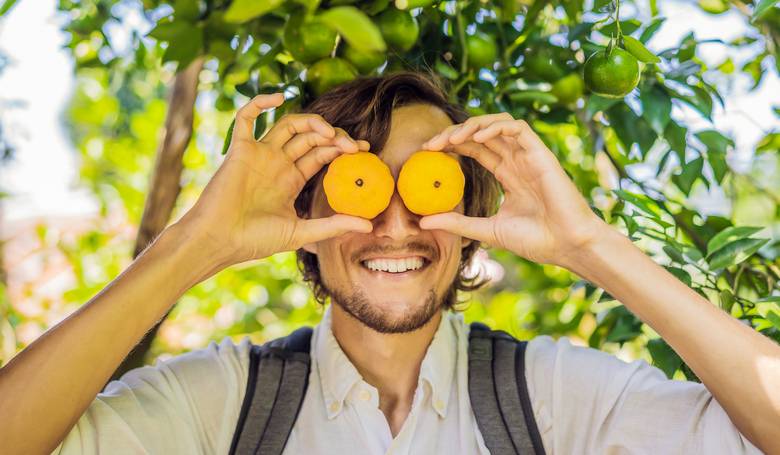
And having “spiritual sight” is not easily seen in people today. So allow a little examination of your spiritual sight: What do you see when you look at the hills? What do you see when you look at a person? What do you see when you get an orange? What do you see when you go to eat raspberries? What do you see when you find an oak tree?

In addition to physical reality, you should also see this: Behind the hills is strength, “artistic creativity,” and a feeling for the beauty of the Creator. The presence of the Lord Jesus in man. Behind the orange is the goodness of the one who gives it.

Behind the raspberries, as the Lord set it up here to refresh us. Behind the oak, what an inventor the heavenly Father is.

And that it is all here for us, because he loves us very much. Well then, what is your spiritual sight? Are you blind, or have “at least” fourteen spiritual diopters?

WHAT CAN BE SEEN

Of course, with the eyes. Material reality can be seen through them. You can look into things with your mind. The spirit can see “behind things” – what the thing “carries,” what is “stuck” on it, what atmosphere it brings…

But there are also other optical means. By faith, one can see how God connected everything here, arranged it, prepared it for us, and put it in context. By faith, one can s, see how this world is set up.

With hope, you will see that everything here has a meaning, that everything leads to joy and ends in eternal, continuous, maximum joy.

And finally, with love, you will see how much good there is in everything; you will trace God’s goodness and that he did it here for us out of love. Looking around you, you will find that he did not spare us at all…

So what do you “see”? Only colors, shapes, tastes, sounds, profit, how will this or that do you bodily good, bring pleasure? Do you only have a “flat” view of things and the world? Do you miss the 3D dimension? Do you need to see a spiritual eye doctor?

SEE THE WHOLE REALITY

So what to do if one cannot see it all? He has to find the cause, the “beam” in the eye. Find out how he is internally set up, what glasses he wears – or what someone put on him, what he is focused on in life…

He has to find out if his body and the pleasures oozing from it do not reflect reality. Doesn’t his carnal lust destroy everything spiritual, i.e. complex vision?

But isn’t that a call to the desert of human hearts today? Even in the time of the Lord Jesus, they were like that, and the Lord told them: “He who has ears to hear, let him listen!” (Mk 4, 9).

We are on vacation, so let’s clean our eyes and ears. Let’s practice “seeing by faith” – that there is meaning here. In “seeing with hope,” let’s practice seeing beauty and joy in things and situations.

And let’s also practice “seeing with love” – ​​how much goodness is around us. Each exercise has certain phases. They would also be found in this spiritual exercise: discovering a secret, awakening wonder, and establishing admiration and thanksgiving that awakens love.

And for this, it is necessary to adjust your inner attitude to a fundamental attitude: to have silence, peace, relaxation, surrender, joy, and love in your heart. Will you try to welcome the sun?

TO LOVE HIM WITH YOUR HEART

Mystics advise us: “Look at life through God’s eyes.” What would it be about? About trying to see love and the Lord’s perfection all around. But also try to love with his heart…

God longs for the unification of hearts – ours and his, but he sees how many waste time, how they stop at trivial things, how they float in pleasantness and do not come to him.

If you put those little things behind you, you are getting closer to him… You feel more peace, relaxation, and joy until you rest with him, and you find good is an effortless, straightforward love and the best good you have ever met .

By questioning your conscience, you will discover how far you are from him and whether you are wasting time. Unfortunately, today many are stuck with “pecking” their mobile phones…

STUFF FROM LIFE

Life brings much out of God, but we often don’t see it. We cannot decipher his “holy flirtation,” his affectionate nudges.

We keep the mind too connected to matter; we have it on material rails. We need to relax our spirit and tune into God’s frequency. To “feel the Bridegroom” to be awakened in us, we must be capable of admiration, and w andren know this, which is why they are so happy. “Unless you turn and become like little children, you will not enter the kingdom of heaven” (Mt 18:3).

Indeed. To experience something beautiful, you must “sensitize” to mystery, wonder, admiration, gratitude… Life wants to draw us to God through mystery, to draw us into another dimension.

We discover someone beautiful, wise, and good when we explore and behind it. We disband the Lord God, who is in our reality and adds a spiritual dimension to it.

WHAT SO MUCH TIME

Go on the offered experiment. Perhaps the following advice will also help you spend the holiday season beautifully:

1. Which significant events are significant to you during the holidays? (holiday, pilgrimage, staying home, voting grandma, combing…)

2. Write them down on your calendar in chronologies. I will give you an overview, and you will l not have confusion.

3. Schedule a regular holiday day, especially its spiritual life – prayeth morning, during the day, in the evening, Holy Mass, and rosary.

4. When planning the day, it is recommended to follow the proven criteria: first, do what is necessary, then do what is essential, and finally, what is fun.

5. Beware of bad friends. Some people want to make money from the misfortune of others – for example; they trade in death – drugs. Watch out for the challenge: Don’t worry, try it just once!

6. Even if it is not taught in school, many people learn, for example, foreign languages, play the guitar, cook, take photos, “edit” something…

7. If you’re planning a vacation, don’t forget to find out in advance when holy mass is on Sundays and public holidays. And it’s not enough to find out, but you also have to go for it. The prescribed holiday during the holidays is August 15 – Assumption of the Virgin Mary. Saturday evening mass is usually valid for Sunday.

8. A good book can encourage a person, bring him closer to God, inspire him, and fill him with and h beautiful thoughts. If you waved your hand, let the Holy Scriptures be your guide. You can carry it even in the mountains.

9. Don’t forget to rest actively. A few suitable tips can diversify your holiday “repertoire”: pilgrimages, spiritual exercises, music festivals, visits to castles, ridge hikes, sports tournaments, river rafting… There are many activities. “move the skeleton.”

10. It’s probably enough because before we know it, it’s September 1…

SEEK GOD BEHIND EVERYTHING

Sure, particulars are sitting on a hill and admiring the beauty of the mountains. “That’s a beauty,” he said. Then he got up and went to chase another beauty. Another tourist sat nearby; he sighed: “Oh, it’s beautiful,” but added, “thank you, heavenly Father, for creating this for us…”

And he remained in this gratitude for a long time. You can travel around the world, see beautiful things, and admire the perfection of nature, but if you do not see the goodness of God the Father behind it, your heart will be dissatisfied because it has not rested in him, in the Lord.

Seeing the Lord, thanking him for his beauty, feeling how he loves me, feeling like I’m in his house, that’s the meaning of our journey through this world. I wish you to come to that.

Posted in Nezaradené | Leave a comment

Sunday A in the 15 t week. Mt 13,1-23

What experiences do we have with God’s word, the Holy Scriptures, and human words? Do you agree that our time is hungry for God’s word? What do the Holy Scriptures mean to me? Do I read it and follow it? Have you experienced that the human word attacks from all sides, that it pours down? An inappropriately and needlessly spoken word makes our heart restless for twenty-four hours. We know we are masters of our words, but we must also bear responsibility when we speak them. You need to learn the principles: Speak well of everyone! Talk about others as you would like others to talk about you. Don’t forget that good and bad words, when you say them, can have the same long-lasting response, but one causes joy, enriches, and the other destroys, hurts, and injures. Therefore, let our words be a light that enriches.

Jesus draws attention to the importance of the word of God and man with the parable of the sower, which ends with the lesson: “And whoever sowed on good ground, that is the one who hears the word and understands it, and it brings forth a harvest: one a hundredfold, another sixty fold, and another thirtyfold” (Mt 13:23).

At the beginning of the parable, the evangelist Matthew reminds us that Jesus taught everywhere and under all circumstances. It was also the case when he told the parable of the sower: “He got into the boat and sat down; and the whole crowd stood on the shore” (Mt 13:2). When Jesus spoke about the four types of the field into which the seed of the sower falls, he wants to prepare all the sowers of God’s word for their effort and also so that they do not become disheartened and influenced by failure in their work and diligence. The preacher of the gospel, the sower, must be a realist. Problems and difficulties must not be taken more seriously than necessary.
The soil and human hearts are different. He does not live in a false illusion but faithfully fulfills his duties. He feels the importance of the need for his involvement. One must not be discouraged by anything, not even failure. The announcer, that is, not only the priest preacher, but every believer and parent who announces the gospel to their children, brother to brother, that is, all of us who have received baptism, we are the sower, but we are also the seed. It is said about the martyrs that they were the seed for new disciples, believers, and witnesses of Christ. The prophet Isaiah already predicted about Christ’s followers: “My word that goes out of my mouth will not return empty, but it will do what I wished and accomplish what I sent it for” (Is 55,11).
The parable does not speak of those who have not heard God’s word, to whom God’s word has not been proclaimed, but of those who have heard and can take their stand on it. Matúš talks about four possibilities. The reactions of human hearts to God’s word are different. Jesus uses a familiar thing, the image of a field, along which paths lead, which is stony, on which bushes grow, but which is also fertile. Even if the sower strives to achieve a rich harvest, he cannot avoid the fact that the seeds will fall on different soils and hearts of people because each person is free. Reactions to grain are different. The square field does not mean a different state of the heart but a different attitude towards God’s word. How many times has God’s word been announced, and although they have heard it, their lives go on as if they did not hear it? They listen, and they don’t hear. “For whoever does not love the brother whom he sees cannot love God, whom he does not see” (1 John 4:20). Reactions after hearing God’s word speak volumes. Concrete deeds and behavior towards others are the measure of authentic listening.
It is not enough to accept God’s word with enthusiasm and joy. This would be the case for grain in rocky soil. That’s when everyday life, with its difficulties, destroys enthusiasm. Enthusiasm does not belong in the church. God’s word must be like a hammer that breaks a rock. “For the word of God is living, effective and sharper than any two-edged sword…” (Hebrews 4:12). Whoever is genuinely touched by God’s word will sober up from sin. Illusions will dissolve, especially those about oneself, one’s abilities, and holiness. God’s word makes one sober. Enthusiasm does not last. Why is a person immediately angry, upset…? Only with Christ can we resist the wind, storm, and frost of life.
Character traits, hereditary character traits, inclinations, and others are thorns that quickly grow and choke the word of God. How many times does such a person start the new year, Lent, after a good confession, after a pilgrimage or other celebration with the resolution to improve – and the result? The remark applies here that the more such a person moves away from the moment of resolution, the faster he moves away from God. Why? You have to do what a good gardener does. It will destroy the weeds. In the struggle for faith, with God’s help, a person first pulls out the weeds of character flaws and shortcomings, then lives God’s word so that hereditary burdens do not prevail during everyday life, but God’s word, which is to be strengthened.
Who does not desire a rich harvest? Who can enjoy it? “Blessed are those who hear God’s word and keep it” (Lk 11:28). In life, it is valid for them that to listen correctly means to listen “carefully” even during weekdays, and with God’s word, they are formed, and cooperate with the Holy Spirit.

The parable of the sower covers the whole breadth of life. It is and will always be timely and up-to-date. It touches us because we have accepted baptism, and thus also the obligation to proclaim the gospel, that is, to be a sower and to receive God’s word, that is, to be a grain, to be a role. And what is the purpose of our life? Or not bring a rich harvest? God wants to reward us. But?

When the Spanish conquered new territories, they committed many acts of violence. This also had terrible consequences. A Cuban was sentenced to death for being petty. The Catholic priest took pains to prepare him for eternal life. The convict asked him the last question: “Will Spaniards be in heaven?” When he received a positive answer from the priest, he refused to be baptized, saying: “If there are Spaniards in heaven who commit injustice, I don’t want to be in that heaven!” And today

? The “believers” declare that he confesses his dishonesty and everything is fine. What soil can we talk about here? The world needs those who are genuinely salt, light, and leaven.

A new priest came to the parish on the border. In front of the church, a man tells him: “Don’t think that you can easily attract someone to the church here. Many indeed went to church here. Especially when they suffered from poverty, injustice, and no money, now people have money, they can travel, and don’t need the church anymore.” And the man continued down the road to the pub. And the priest? He didn’t force anyone; he didn’t order anyone… Several years passed. Indeed, the church was rarely attended. But the situation slowly began to change. Those born earlier began to return first. Did they feel the proximity of eternity? Perhaps. But they saw the life of a priest. He preached but also lived God’s word. One parishioner even advised him to stop preaching because a scoundrel would remain a scoundrel. The priest believed in the power of God’s word. He used to say: “If a tree is to bear fruit, it needs years of care. To tame a wild beast, she needs a lot of love. And a person who has turned his back on God also needs someone to help him save his soul.”

Allegedly, some magazines turned to graphologists to say something about the people whose writing and handwriting they presented to them. They were not told to whom the scripture text belonged. They were St. František Salesky, Bishop of Geneva, and St. Katarína Sienská, Church teacher. The answer of the graphologists was: “The woman was sensual. She had the character traits of a street girl. The man had the nature of a troublemaker and a violent man. The magazine concluded this examination by stating: And the Church elevated such people to the altar, as saints.”

The result of the research of the graphologists can also be presented as follows: Look – they managed to become saints with such natures! And shouldn’t we prove it? St. says to Augustine at the beginning of his conversion: “If this one was able to do it, and if that one was able to do it, why couldn’t you, Augustine?” It is enough to realize what Jesus is telling us with the parable of the sower and to fill in the part where it is said: “And with whom was sown on good ground, that is he who hears the word and understands it, and it brings forth a harvest: one a hundredfold, another sixty fold, and another thirty fold” (Mt 13:23).

The proverb says: “Words move, examples attract.” St. Catherine and St. František are proof of that. God’s word does not lose its power, meaning, or necessity; it just needs to be accepted as Jesus wants us to. Yes, our human words are also necessary. It is time for us to ask for, acquire, and adopt the right relationship to God’s word and our honest and faithful relationship to the word of man.

Posted in Nezaradené | Leave a comment