


-
Recent Posts
Recent Comments
- XRumerTest on St. Godhard, bishop
- Devin Hogan on IS THERE A GOD?
- Jeremy Zimmerman on IS THERE A GOD?
- XRumerTest on St. Florian
- Lula Sparks on IS THERE A GOD?
Archives
- May 2026
- April 2026
- March 2026
- February 2026
- January 2026
- December 2025
- November 2025
- October 2025
- September 2025
- August 2025
- July 2025
- June 2025
- May 2025
- April 2025
- March 2025
- February 2025
- January 2025
- December 2024
- November 2024
- October 2024
- September 2024
- August 2024
- July 2024
- June 2024
- May 2024
- April 2024
- March 2024
- February 2024
- January 2024
- December 2023
- November 2023
- October 2023
- September 2023
- August 2023
- July 2023
- June 2023
- May 2023
- April 2023
- March 2023
- February 2023
- January 2023
- December 2022
- November 2022
- October 2022
- September 2022
- August 2022
- July 2022
- June 2022
- May 2022
- April 2022
- March 2022
- February 2022
- January 2022
- December 2021
- November 2021
- October 2021
- September 2021
- August 2021
- July 2021
- June 2021
- May 2021
- April 2021
- March 2021
- February 2021
- January 2021
- December 2020
- November 2020
- October 2020
- September 2020
- August 2020
- July 2020
- June 2020
- May 2020
- April 2020
- March 2020
- February 2020
- January 2020
- December 2019
- November 2019
- October 2019
- September 2019
Sunday A on the 19th. Walking with Jesus (Mt 14:22-33)
Those who live with Jesus have no fear.
Who and what are we afraid of? Children of darkness and evil people. Adults bad people and their mistakes. Students of exams or disappointments in love. In addition, we fear illness, failure, job loss, old age, and death. Many fear for their lives, savings, and property.
I remember a woman, a mother, who was lying for six months with a high-risk pregnancy. She was apprehensive about her child, although she already had four children at home.
I know a father who calls at least briefly every night to see how his family is doing when he is away from his family.
In the religious program Prameň (STV, 22 November 1992), there was an interview with international students about faith in God. Daniel Dalohoun, a student from Africa who came to us to study medicine, confessed: “When we were leaving, our parents told us: You can forget everything but Jesus!” There is no fear like fear. The history of fear goes back to the event of Adam’s Sin and Eve. They hid from the Lord God in paradise. The genesis of corruption at the end speaks of the justification of fear.
When the disciples saw Jesus walking on the sea, they excitedly said: “Myth!” And they cried out in fear. But Jesus immediately told them, “Get up. It’s me, don’t be afraid” (Mt 14:26-27).
Jesus urged the disciples to leave as soon as possible the place where the miraculous feeding of the crowd with five loaves and two fish took place. And he knew why. The group quickly realized their idle satiety and wanted to make Jesus king, which would suit them best (cf. Jn 6:14). Jesus is worried about the disciples, that under the influence of the miracle and thoughts about the earthly Messiah, they could get into a lousy enthusiasm. Jesus is known to go into the silence of prayer so that at the end of the day, he would meet the Father in prayer.
Jesus prepares the disciples for a new experience of faith. Man often finds himself in a situation where Jesus is invisible. It is a lesson in trusting the invisible God. Jesus is invisible, yet close. Although most of the apostles are fishermen, the situation in which they find themselves weighs more. In the middle of the sea alone, at night, in a storm, in the wind, with big waves. Isn’t it supposed to evoke fear and awareness of danger?
Isn’t the life of Christians similar to this situation? Anxiety, fear, and restlessness creep into hearts. The Christian is not freed from worries and mortal concerns about the world. When a Christian finds himself in any difficulties, trials, or threats, although he believes God knows about everything, he must do everything in his power. God can send help, give help, provide salvation, and nurture hope. However, a Christian must never claim a painless course of his earthly life. That is why even a Christian suffers, fears, and fears the actual values of body and spirit.
The disciples were tough men, they were fishermen, they did everything to save themselves. How could people become convinced that Jesus is far from them. Often only later, even after tragic events, do we realize that God has the right to remain silent in man’s need. A person proves himself even in situations where everything is at stake. An accident, even if a person loses his life, is not the greatest tragedy. Behavior is appropriate to the inside of a person. It is also subject to the pressure of the environment, the state of the situation, but the spirit can win over the body. You can talk about fear in everyone, but there is a difference between fear and fear. The life of a Christian is a life of faith. Faith manifests itself in different ways. In faith, the experience with Christ in need and distress manifests itself in a different way. Faith and fear have gradation and decay. The proverb says: “When the need is greatest, God’s help is closest”. Even those who do not believe in God are aware of this. They pray, beg, promise. Where all else has failed, rescue often comes. When a person cries out in fear: “Matoha!”, the answer comes: “Get up! It’s me, don’t be afraid” (Mt 14:27)! Nothing can stand against the power of God, only man with his “Non serviam!” “I will not serve!” God’s ways are incomprehensible to man. God stands by man even in the most difficult trials, even in dying. Heaven and earth will pass away, but the word of God will not pass away. God created man to live forever. A person should think about his soul. We cannot condemn anyone who, in difficult situations and in death, calls out to God, begs God, reconciles with God. It is a gift when a person sees God in need. Nothing can stand against the power of God, only man with his “Non serviam!” “I will not serve!” God’s ways are incomprehensible to man. God stands by man even in the most difficult trials, even in dying. Heaven and earth will pass away, but the word of God will not pass away. God created man to live forever. A person should think about his soul. We cannot condemn anyone who, in difficult situations and in death, calls out to God, begs God, reconciles with God. It is a gift when a person sees God in need. Nothing can stand against the power of God, only man with his “Non serviam!” “I will not serve!” God’s ways are incomprehensible to man. God stands by man even in the most difficult trials, even in dying. Heaven and earth will pass away, but the word of God will not pass away. God created man to live forever. A person should think about his soul. We cannot condemn anyone who, in difficult situations and in death, calls out to God, begs God, reconciles with God. It is a gift when a person sees God in need. reconciles with God. It is a gift when a person sees God in need. reconciles with God. It is a gift when a person sees God in need.
Situations of danger open the eyes of the body to realize the value of the world, but they also open the eyes of the soul. Conversions after life-threatening, near-death experiences are proof. “Lord, if it is you, command me to come to you on the water” (Mt 14:28). Faith means going to Christ. Faith is a risk. Faith is not a leap into the dark, a risk of uncertainty. Peter does not go into uncertainty. He goes to Jesus, after all. Jesus calls him. The darkness is breaking. Jesus rightly asks to detach himself from his boat, the way of life, people, attitudes, opinions, and relationships he has lived until now. Faith always means detachment. God becomes the only certainty. Every other assurance must give way. Jesus’ “Come” (Mt 14:29) is not yet a victory. The return to the old life, and its values, is solid; it seduces and questions the conversion. It is not surprising that after a while, even a short time, the ground under one’s feet is lost again, the state of health deteriorates, they leave their strength, and Peter’s cry remains: “Lord, save me” (Mt 14:30)! The love of God is incomparable to human sin. God helps. Even if the righteous God must say: “You of little faith, why did you doubt” (Mt 14:31)? Apparent silence, well-being, return of health, success know how to do their thing, make a mistake. Silence can do many evils when the conversion to God is not decisive, true, apparent peace.
However, God has power over little things, human hearts, and living and non-living nature. God’s love will not leave as long as there is a grain of love for God in a person’s heart. Everyone does not have to experience the struggle for the bare existence of life. The words will always apply: “Blessed are those who have not seen and have believed” (John 20:29).
Friendly, encouraging thought! Belief in God has an essential place in a person’s life. That’s why we also have to ask ourselves: What place does God have in our lives? Do we believe in God in all circumstances, or only if it costs nothing?
R. Wurmbrand, in his book Believe, but Why, quotes the words of master Eckhardt: “If you are looking for something for yourself, you will never find God, because you make God a candle with which you look for something.” When you find it, you throw away the candle. Some desire to love God as a man loves a cow… for the milk, the cheese, and the benefit he gets from it.
” Christians do not love God for what they can get from him, but they love him because he is. Those who left him never knew him.
We must always know what place God has in our lives. It is faith in God, which we need not only on Sundays and holidays but also in our daily worries. True Christians are always faithful to God, even if he seemingly forgets them… The Old Testament sufferer Job says that even if God kills him, he will still believe in him: “I am convinced that my Defender lives… My eyes will see him …” (Job 19, 25; 27). Jesus also addresses the question of a healed blind man: “Do you believe in the Son of Man” (Jn 9, 35)? Our answer should be the same as his: “I believe, Lord” (Jn 9, 38).
The world will always be just as full of fear. Like the apostles on a stormy sea, the devil is always ready to fill hearts with fear. Jesus is willing to help us, to save us. We are not to be overcome by the hopelessness of fear. With him, we will be invincible. Without Jesus, we are nothing!
The French writer Francois Mauriac said: “At the end of my life, I feel no remorse… I have never stopped trusting in Christ; I have never been ashamed of Jesus and my faith.” Thank God!”
This example of a person who was and is considered a personality is also a challenge for us: not to sit back when we have to build our faith. Work on your relationship with God even when you are comfortable, and don’t put it off until tomorrow. Tomorrow, we don’t know, there may be a storm, a wave, a gale, or rain, and we may be alone at night. A life of faith is not a life of fear. It is suitable to build your life on the fear of God. Let God have an honorable and first place in our hearts, duties, and anxiety.
A martial arts student sat over a cup of tea with his teacher. He said, “I have mastered all that you have taught me. I would like you to teach me one more thing. To understand God’s ways.” The teacher didn’t say a word. He took the teapot and began pouring tea into his student’s cup. The cup was quickly full, but the teacher did not stop running. The tea spilled out of the cup, spilled over the table, and flowed onto the floor. The student said, “Enough! Enough! The tea is spilling! The cup won’t fit anymore!” The teacher looked at him and said, “You look like this cup. You are full of yourself, so there is no room for God in you. You cannot understand God’s intentions until you learn how to make room for God in yourself.”
A woman is also an opposite example and role model of a believer:
At first glance, there lived a pretty ordinary woman in one district town. But she had one exceptional ability. She could subtly enter other people’s lives and change them for the better. He always seemed to be there to help. She knew how to say the right words to those who couldn’t decide. She subtly encouraged the children when disappointment made them lose their courage. She was able to recognize the valid reasons for tension in the family, at the workplace… and find a cure for them. And at the same time, she remained inconspicuous, quite ordinary. At the end of the year, when the local newspaper announced a poll for the «Woman of the Year in their city,» her daughter decided to nominate her. When this woman heard about it, she was very touched. But she said to her daughter: “Thank you. I appreciate it. But I don’t think I would be the right candidate. I’m not doing anything special. I only do
What about our testimony of faith in God in moments of fear? Therefore, Let us be encouraged by the words that the parents said to this African student: “You can forget everything but God.” Let these words be an excellent lesson for us. Then, at the end of our life, our conscience will be clear and without reproaches. Parents are right to fear for their children. But when they give them God, they entrust them to God; they strengthen them with the gifts that God gave us, such as prayer, the sacraments, and an example of life, and they don’t have to be overly afraid.
Posted in Nezaradené
Leave a comment
St.Clara.
A former chaplain wrote: “I don’t understand one thing, and I keep returning to it in my mind. How is it possible that so many were able to believe in me.”
He mentions the bishop who ordained him, the seminary rector who recommended him and pushed him to further studies, and the parish priest who accepted him, listened to him, and was his role model. And he finished: “I don’t understand. Where would I be without those people?!” I replied: “That’s easy. God guides us in his ways through others. This is how you now help others”.
This occurred to me in connection with today’s holiday. What would she be without St. Francis? God guided her through him. On Palm Sunday, March 18, 1212, eighteen-year-old Klara Offereduccio, the daughter of an important noble family in the central Italian city of Assisi, secretly runs away from home under the cover of darkness. Why? Because she saw the happiness St. Francis experienced in consistently following Christ. She wanted it too. She expressed how much influence he had on her in the time of pain on the bed of suffering before her death. Even though she could no longer take any food during the last seventeen days, the Lord endowed her with such strength that she encouraged all who came to her to serve Christ. When Brother Rainaldo called on her to be patient in the long martyrdom, she replied: “Dearest brother, since I came to know the grace of my Lord through the servant of God Francis, no punishment is too heavy for me,
And wasn’t it the other way around? Was she, not St. Klára reinforcement for St. Francis? She was.
Klara harbored feelings of childlike devotion and love towards Francis. She was interested in the serious problems of the “lesser brothers” (that’s what Francis’ monks were called) and tried to contribute to their successful solution in her way. Once, Francis asked her to help him in making an essential decision about whether he should join his brothers in hermit life or whether they should devote themselves to the apostolate. Clare encouraged him to the apostolate and then, together with the sisters, supported the lesser brothers with prayer and sacrifices in their efforts for the Christian renewal of life at that time. Is it presumptuous to say that St. Clare gave the seal to the Franciscan order? Perhaps not, But only God knows how, together with her sisters, she helped them with prayer and sacrifices in their efforts to restore the Christian life of that time and, ultimately, of their present life.
Posted in Nezaradené
Leave a comment
Who is Jesus Christ? Who is Jesus Christ to me?
Have we ever been tested by actions, people, and circumstances? What kind of Christians are we? Did we know the correct answer?
Jesus asks us, like Peter: “And who do you think I am” (Mt 16:15). The surroundings of Caesarea Philippi gave Jesus space to withdraw into silence. Jesus performs miracles, signs, and wonders before the eyes of the apostles. He teaches and explains what they need help understanding. The apostles grow in faith. Their relationship and view of Jesus mature. It is here that Jesus asks them fundamental questions. People also asked themselves many questions about Jesus: “Who do people think the Son of Man is” (Mt 16:13)? They answer: “Some for John the Baptist, others for Elijah, and others for Jeremiah or one of the prophets” (Mt 16:14). The disciples do not agree with people’s opinions. They cooperate more with the Spirit. Jesus devotes himself more to them. And that is why he asks the second question: “And who do you think I am” (Mt 16:15? Peter answers. Peter identifies Jesus as the Messiah: ” You are the Messiah, the Son of the living God” (Mt 16:16). The answer goes beyond the previous view of the apostles and people on Jesus. They realize that the words of the prophets apply to Jesus.
In Aramaic, Messiah means that Jesus is the One, the Unique. An eloquent and conscious contrast can be seen in the whole answer of Jesus. In the naming “Son of the living God,” one can see something extraordinary and unheard of until then. Peter receives an assurance from Jesus that Peter will mean strength and steadfastness for Jesus’ Church, where Jesus himself will be the cornerstone. Jesus himself places Peter as a rock, the Church’s foundation stone. Although even today, some theologians and churches do not accept the teaching of Rome that Jesus entrusted the whole Church to Peter, Peter is the first among the apostles. He receives the promise of power: “I will give you the keys of the kingdom of heaven” (Mt 16:19). These words indicate that Peter is the true representative of Christ on earth. Peter’s primacy passes to Roman bishops, popes.
Who do I think Jesus is? Words are not enough. Our life, actions, attitudes, and opinions, daily without realizing Jesus’ question, say who Jesus is for me. A high school professor was on a week-long trip with his class. The students were next to him. They knew him from school as a moral, well-rounded, brilliant teacher who knew how to explain and evaluate correctly. They did not know his life outside of school. Now they knew him as a person and a Christian. It took their breath away when, after dinner, before the program they had for the evening, he asked them if they would like to pray the rosary. Many did not even know the secrets of the rosary. Then, during the evening program, he entertained them, made them laugh, and at the same time, did not utter a single vulgar, ambiguous word or insult to anyone. That Sunday, many of them were happy to be in the church for mass after a while. And when they saw him go to communion, several boys from the class said to themselves that they had to be like him, and several girls said they wanted to have a man like him. The teacher did nothing extraordinary, just what he did every day.
Posted in Nezaradené
Leave a comment
Only the saints can.
Indeed, I must be holy or separated from the world – and especially from the world in myself, from pride and the desire for something of my own, different from God and not of God. This world within me then desires a world outside of me, where it seeks its own – possessions, recognition, power, or at least entertainment and pleasure of the flesh.
As long as I am even partially a part of the world in this way, I am also a part of its struggle and the struggle of men for these worldly things. And while I am a part of all this, I cannot at the same time desire these things and compete with other men for them, and at the same time be merciful and forgiving like God and therefore love like God.
One contradicts the other. As long as we live in lust for worldly and
earthly things and are concerned about them, we cannot live God’s Life of love manifested in the perfect, unconditional, unconditional and never-ending receiving and sharing of forgiveness and mercy.
Only when we have indeed left the world behind in our hearts are we free from everything – from things, from the judgments and opinions of the world, from the demands and expectations of people, from their approval; we are even free from our earthly health, life, comfort, everything. Not in some Stoic indifference but in the freedom of God’s children, which Christ has won for us by the Father in Him “delivering us from the power of darkness and into the kingdom of his beloved Son, in whom we have redemption, the forgiveness of sins” (Col 1:13-14). In this freedom, standing firm on the rock of Christ and nothing else but Him, we can finally accept and live the Life of God.
For this is the mystery of God: he has nothing in common with us, the people of the world overlapping interests that He has to fight over with us. He does not desire anything that we have, nor anything that the world offers, as he says at one point flatly: “Do I eat beef or drink the blood of goats” (Ps. 50, 13)? And we humans, in turn, do not have the power to take away nor harm nor diminish nor in any way affect anything of what He is, that He should have to worry about it and to fight with us about it, as the Scriptures also say: “Exalted is the Lord above all nations, and his glory above the heavens” (PS 113:4). This is the holiness of God, the first, perfect separation from the world. In it, then, He can be – and He chose to be indeed He will be – merciful and forsaking, unchangeable, permanently, to everyone equally and indiscriminately, for to Him there is no in-between in this respect. “For God despises no one” (Rom 2:11).
Therefore, the words to which I return again and again are valid: “Do not drag the yoke with unbelievers! For what part has righteousness in iniquity? Or what has light to do with darkness? … Wherefore come out from among them, separate yourselves, saith and touch not the unclean thing; and I will receive you and will be your Father, and you shall be my sons and daughters, says the Lord Almighty” (2Cor 6:14, 17- 18), “Love not the world, neither the things that are in the world. If anyone loves the world, he is not in its Father’s love. For nothing in the world, neither the lust of the flesh, the lust of the eyes, nor the boasting of riches, is not of the Father, but the world.” (1Jn 2:15-16). How deeply and all this is true! What does it need to hear? Do we need help understanding? Do we need to see?
The Christian is a man with his whole heart removed from the world and moved into Heaven, to the Kingdom, to God. That’s what baptism is all about. “By baptism, then, we are buried with him in death, that we, as Christ was raised from the dead by the glory of the Father, shall live a new life. If we have been made new with him and become like him in death, so shall we be like him in the resurrection. For we know that our old man was crucified with him, that sinful flesh was destroyed so that we would no longer be enslaved to sin. He who has died is justified from sin” (Rom 6:4-7).
This is the starting point and presupposition of the entire Christian life. Without it, it is impossible to be a Christian and live the Life of God. This is the first thing: to move and leave the world behind. Jesus also says: “Fear not, little flock, for it has pleased your Father to give you the kingdom. Sell what you have and give it away as alms! Make for yourselves purses that shall not be worn out, an inexhaustible treasure in heaven, where the thief cannot enter, and the moth does not destroy. For where your treasure is, there where your treasure is, there will your heart be also” (Lk 12:32-34)! Therefore, it is infallibly true: “Whoever loves his [present worldly] life will lose it, and whoever hates his life in this world will save it for eternal life” (Jn 12:25).
At the moment when our heart is entirely in God, when we do not desire anything of this world, and thus our desires and interests are no longer in any way anything with the people of the world overlap, there is no longer anything for which we have to compete with them, nor anything for which that we have to fear them for and that we have to fight for in the world to worry about; therefore, if by this first holiness, we are holy like Him, we are after the pattern of God, we are also prepared to be merciful like Him and to forgive like Him, and thus proving that we have genuinely become His sons and daughters – and this is the second holiness, perfection in love, “without which no one will see the Lord” (Heb. 12, 14). “And the peace of God, which surpasses all understanding, will keep your hearts and your minds in Christ Jesus” (Phil 4:7) – because that is precisely how the Life of God
is lived: not in inner tension and agitation.
Posted in Nezaradené
Leave a comment
St. Theresa Benedict of the Cross.
1891 – 1942
memory 9.08
In any case, life is too complex to approach with a cleverly devised plan for improvement and to clearly and definitively prescribe how it should be.
She was born on October 12, 1891, in a Jewish family in Wroclaw, where she finished high school and began studying psychology, German studies, and history. After a few semesters, she went to Gottingen to study philosophy with the founder of phenomenology, Edmund Husserl. After her studies and doctorate, she became his assistant. Until age thirty, she characterized herself as an atheist with a strong inclination toward ethical idealism. The long-term search for the truth and the effort to personally say “yes” to Christ, whom she knew thanks to her excellent “masters” in philosophy, Adolf Reinach and Max Scheler, ended on January 1, 1922, with baptism in the Catholic Church. Faith in God deepened her bonds with the Jewish people and strengthened her joy that she “belongs to Christ not only spiritually, but also through blood relations.”
From the moment of her baptism, she longed to enter Carmel to unite with the Lord in a complete sacrifice of everything with which he had gifted her so abundantly, especially scientific work, for which she was mainly disposed of by nature. She subordinated all science to the “wisdom of the cross” so that, in spiritual union with the Savior, she “helped lift the manifold sufferings of people and make satisfaction for the crying injustice in the world.” She was convinced that in the hiding of Carmel – participating in Christ’s prayer and sacrifice – she would help people more effectively than with her scientific work and lectures responding to the pressing social, pedagogical, and feminist problems of the time. When entering Carmel, she had to accept a delay of up to ten years because the Germans needed a person of such intellectual and religious stature then. So she calmly continued her lectures while giving them a consistently Catholic direction, which was sometimes criticized as excessive piety. She found one answer to that: “After all, if I didn’t have to talk about it, I probably wouldn’t go to any podium. Indeed, I always try to tell only one small and simple truth: how to start life, holding the hand of the Lord”.
She entered Carmel in Cologne in October 1933. National Socialism was coming to power in Germany then, and the persecution of Jews was intensifying. “She sacrificed herself – as St. Father John Paul II. during her beatification on May 1, 1987, in Cologne – for the salvation of her nation, her Church, the whole world, as an atoning sacrifice for true peace”. She had not experienced peace except in the depths of her heart, resulting from trust in God. Since the Carmelites were threatened by her presence, and at the same time, they wanted to save the monastery from dissolution and her from destruction, they sent her to their branch Carmel in Echt, Holland, which Hitler did not yet occupy. When the Germans occupied the Netherlands in August 1942, the Gestapo imprisoned Edita and her sister Ružena. They were first sent to Dutch concentration camps and later deported to the Auschwitz death camp. She was gassed to death in Birkenau on the 9th.
John Paul II. in his sermon on the occasion of the canonization, strongly followed up on this fact, underlining that Edita consciously rejected the proposal for her liberation and motivated it by the fact that she would consider her life wasted if she did not share in the fate of her sisters and brothers. She was always convinced that there are no “strangers” in the human family, and “our measure of love for our neighbor is the measure of love for God,” which knows no bounds.
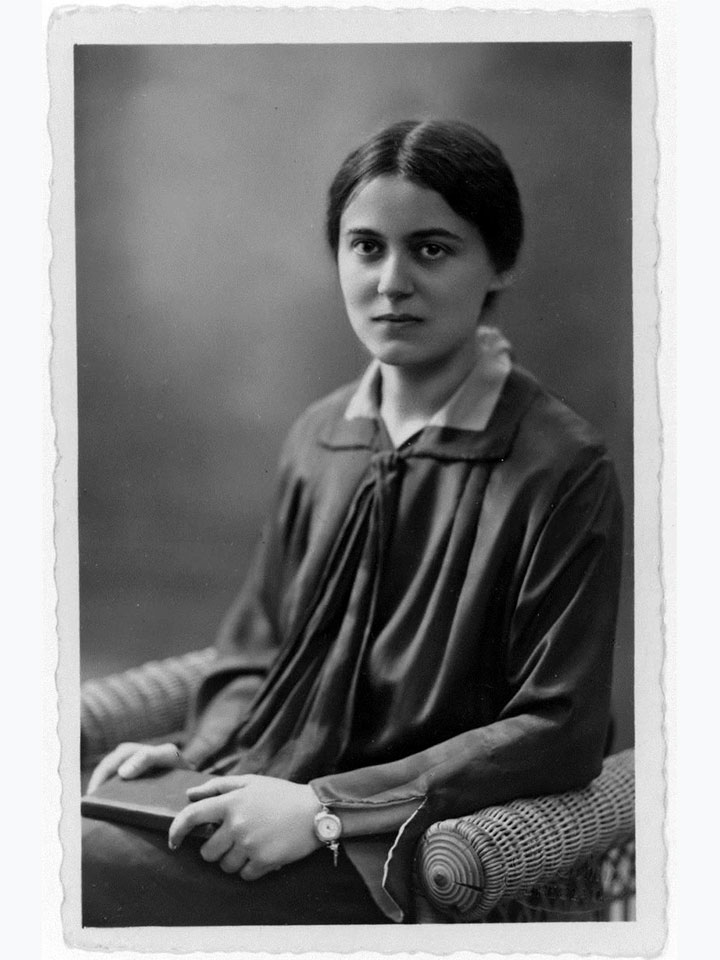
Reason and faith in the life and work of Edita Steinová
As a scientist and a modern-day intellectual, Edita shows her generation new possibilities of knowledge, faith, and new paths that she has trodden in that area. Her efforts so that all transformations in the world and her soul are involved in building God’s Kingdom on earth are before II. By the Vatican Council, the first essential announcers of the aggiornamento in the Church. By combining philosophical thinking with faith, in her lectures at the German Institute of Scientific Pedagogy in Munster, she boldly pointed out the need to supplement the philosophical view of man with a theological aspect. In the IX. lecture on the structure of the human person, she discussed with the students the pedagogical significance of Eucharistic truths. She ended the course with a characteristic statement: “The science of education will not reach its perfection if he does not include the entire content of the revealed Truth in his research; this, in turn, means living the faith and, through it achieving the goal of life.”
Edita Stein’s aggiornamento can include her new perspective on the Church, salvation, and ecumenism. With her, everything comes together in harmony: thinking rooted in solid science and its highest dimension enlightened by Revelation. Her passion for seeking to understand, originality of believing with simplicity, and conviction of one’s limitation, give direction and a point of reference to our research. As a model of the “thinking interior,” he can say a lot to those who find it challenging to combine science and faith, the intellect and the spiritual soaring of the heart.
“Examine everything and hold on to the good,” – she said with St. Paul in his ontology Finite and Eternal Being. But she learned the art of choice for a long time, and the sown seed of faith slowly ripened in her soul. When she first tried to search for the Incomprehensible through the path of philosophical knowledge, God responded to her eager search with a grace that preceded her and gave her faith. On that memorable autumn night in 1921, the Truth appeared to her as a Person “as the personal nearness of a loving and merciful God, and endowed her with such certainty as is not inherent in any natural knowledge.” Edita knew that a philosopher would not come to such a conclusion on his own, much less understand that that person is Love. Only God can appear to him as the One who exists for himself and, in his freedom, chooses, disturbs, and finally firmly grasps the hand that gropingly reaches out to him. In one moment, the Lord changed her basic philosophical understanding to an attitude of freedom with which, in the thirtieth year of her life, she responded with a radicalism of her own: “I will grasp the hand that touches me, and I will find absolute support and protection.” Almighty God is a God of goodness, “our support and strength.”
The vision of Truth as a personal God-Love showed her a new “something” in the colorful mosaic of life’s realities – the inexpressible truth about the soul’s communion with God.
Edita understood that God chose and “elected” her from the ancient world where she grew up and that this election was a concrete form of the love of the One who invited her. Her response was love in return, obedient, yes, submission to his will. Since she understood the nature of the experienced “liberation” – she was, after all, a Jew who had been told since she was a child that Israel had been freed from slavery to the freedom of the Promised Land – she allowed God to lead her to his space. He, in turn, led her beyond everything that the world offers, although he did not significantly show another way, but increased her faith that He Himself is the Way. She was ready to give everything for the found pearl of the heavenly kingdom (Mt 13, 44 n.), even the current form of his life in the world. She wanted to enter Karmel immediately because that creative “something” was seemingly closer there, more attainable. With her faith deprived of all certainties, Carmel acted on her as a place of particular friendship with the Crucified, where her contemplative intimacy with the Lord could be fulfilled and her preparation for another “mission.
Thus began Edita’s mystical ascent. She was accepted to Carmel only after ten years of spiritual maturation in Catholic philosophical and existential philosophy. This emergence and development can be seen in her work. The “something” that the philosophizing Edita was trying to achieve led her into an increasingly perfect mystical experience, revealing the secrets of God and the soul. She stopped philosophizing and dedicated herself to contemplating Truth and educational work in a small convent of Dominican sisters in Speyer. However, not long after – under the influence of God’s light – she resumed her scientific work because she was convinced that the Redemption begun in the silence of the Trinity, fulfilled in the Incarnation, continued in the Sending of the Holy Spirit must take place in the witnesses of faith. “Not to be of this world” (Jn 18, 36) does not mean to enter some “worlds outside the world” but to leave the world internally and live in the consciousness that we gave up on the planet. Such a renunciation enlightened her with new knowledge: “I believe that the more someone immerses himself in God, the more he must come out of himself in the same spirit, that is, enter the world to bring God’s life to him.”
He gradually finds his spiritual rhythm, a deepened faith in the love of the Crucified One. In every situation, she tries to find what pleases God, and God surprises her with more and more new challenges in which she has to engage repeatedly. “It requires a high level of personal maturity, and it is not easy to achieve such an attitude when a person does not have faith that everything comes from God’s hands and when he does not consider work as God’s service, in which God-given talents are to be developed for his praise.” She is convinced that the one who lives by prayer cannot burn with love. It contemplates Christ in his prayer and respectful relationship with the Father. He sees the secret of his inner life in her, “the intimate unity of the Divine Persons and the dwelling of God in her soul.”
Before her conversion, when she was passionately interested in the person and the community, she wrote the characteristic words that she intuitively sensed that the individual lives, feels, and acts as a member of the community, and to the extent that he does so, the community lives, feels and acts in the individual self. And through him. After ten years, this barely sketched “something” took the shape of the community of the Church, the mystical body of Christ, in which the soul becomes a living member without time and space, forming a unity with it (the Church) and with Christ. It was only the beginning of contemplative enlightenment. The political situation in Germany and the “Jewish question” forced her to do something to which she willingly agreed, saying God’s fiat to every challenge. During the prayer, she understood that the Lord was putting the cross on the Jewish people to come to their senses and that she – who has Jewish roots – rested the responsibility for this community. He wants to receive her and carry the cross with his people so that she can bring them into the Church’s communion and the Crucified One. At that time, she did not yet know that God had invited her to participate in the suffering and burnt offering of the Old and New Testaments. More and more, she discovered the vocation to participate in the suffering of Christ and cooperate with his saving work.
“Union with the Lord, we become members of his mystical body. Christ prolongs His life in His members, and He suffers in them. Suffering in union with the Lord becomes his suffering; it is involved in the great work of salvation and is, therefore, fruitful.
Posted in Nezaradené
20 Comments
God and humanism.
There is no more humanistic vision for man than God’s.

Illustration photo: cathopic.com
“Let’s talk about God,” 11-year-old Sofia asked during one family visit, and I realized two facts. First, I love to talk about God, and second, how rarely anyone is interested. Talking about God is not as easy as it might seem initially.
Could you try suggesting it to someone? Although that someone will also be a close person, for example, a family member, at first, he will probably look at you with a look that reflects certain doubts about your mental condition. Then he will realize that he is currently busy with something significant.
It is considering that in a country where more than two-thirds of the population professes the Christian faith, you have no one to talk to about God. There is an exciting lack of freedom to speak about God. It’s as if we agreed in Slovakia that God is an embarrassing topic to start talking about, and social etiquette will require that talk about God be avoided at all costs. Accurate, except for swearing when it’s supposed to be funny.
I believe God represents the highest and most noble goal of the human spirit. The ability to think and talk about God more than anything else shows the transcendent dimension of man. I cannot find a more important subject for conversation, and it often amazes me; on the contrary, what trifles can be considered necessary by people who think themselves wise?
Today’s text will also discuss God because I don’t know a more significant topic.
God, the creator of everything and above all creation, is not a competitor of human freedom but the giver of human life and its greatest benefactor.
Since God is only one, He is very close to us all. After all, when we turn to him, we cannot make a mistake and invoke someone else. There is no other besides God.
Based on the experience of evil and suffering, it is easy to succumb to distorted ideas about God and think he is distant, unfeeling, uninterested, or non-existent.
Jesus brought us the actual image of God. The cross of Christ vindicates God’s justice in a way that no man could devise. At the same time, the cross reveals the unimaginable depth of God’s mercy over the human world.
By revealing the mystery of the Father and his love, Christ fully reveals the secret of man to man. Whoever wants to elevate man to greater dignity and freedom must respect the truth about man. Whoever does not recognize that man has an immortal soul and God calls him to resurrection can only enslave man, despite his best humanistic intentions and efforts for progress.
Jesus appeared to his disciples on Mount Tabor in his divine glory. The apostle John, who directly witnessed this event, wrote: “Beloved, now we are God’s children, and it does not yet appear what we will be.” But we know that when he appears, we will be like him because we will see him as he is.”
There is no more humanistic vision for man than God’s.
Posted in Nezaradené
17 Comments
Eucharist. Being full – just food is not enough.
We can sit in a sought-after restaurant and stay full. And home cooking is enough, and we are happy. Today’s Gospel tells about one such event – about the multiplication of five loaves and two fish in a desolate place, where a large crowd was fed, and where they collected twelve full baskets of crumbs; the Gospel says: “They all ate and were filled” (Mt 14:20).
The Eucharist is the most significant manifestation of Love and the living presence of the Lord Jesus under visible signs. It is a fundamental truth about the Eucharist bearing the divine seal of authenticity. After all, Jesus said: “As the living Father sent me, and I live from the Father, so he who is mine will live from me” (Jn 6:57). Jesus teaches clearly and comprehensibly that whoever wants to obtain eternal life that without communion (that is, by rejecting this bread), he cannot gain this life. Once, Jesus said he would not retract anything. We see that this is something significant because the Lord Jesus does not use alternatives. Indeed, the mystery of Jesus’ body under the form of bread is connected to difficulties, but Jesus insists that we accept this mystery and live from it.
On another occasion, he said: “Blessed are those who have not seen and have believed” (Jn 20:29). Yes, we can be happy when we receive Jesus in this mystery of love, with which he miraculously feeds us in our souls, as he fed the hungry crowd on the desert with loaves and fishes. God himself, Jesus Christ, prepared food for us, his own body when, for the first time, parting with the apostles, he took bread and wine and said: “Take and eat: this is my body…this is my blood” (Mt 26,26-27). This event was preceded by other events during which Jesus prepared the disciples for a fundamental matter.
The crowd, where there are only about five thousand men and women and children, forgets the need for the body and food while listening to Jesus. Jesus does not ignore this fact, either. The apostles see only the lonely place where they are. There is no such thing as a hopeless situation for Jesus. Jesus’ wish is for the event to remain deeply in the memory of the apostles so that they will forever remember that there is no such situation in which Christ cannot help. Faith is needed. How does a priest need to have confidence when the bread becomes the Body of Christ in his hands? The incident from the desert teaches about the inexhaustible treasure of the Lord Jesus. He always has, even if he gives away a lot; Jesus will never be missed. If priestly activity were based only on human wisdom, it would be exhausted quickly, but it is based on God’s word. Whoever cooperates with God, who thinks more of God than of himself, can never recognize a lack, a bottom, a bottom. Just like the Body of the Lord Jesus, thanks to God’s grace, it can never be exhausted, but the further it goes, the more it can be convinced of the love of the Lord Jesus. A priest who faithfully represents his Master will never find himself in a situation where his hands are empty. His hands will always have something to offer, gift, and enrich. Whoever believes in the miracle of the multiplication of loaves and fishes will never experience a state of need and crisis.
Posted in Nezaradené
14 Comments