
-
Recent Posts
Recent Comments
Archives
- May 2026
- April 2026
- March 2026
- February 2026
- January 2026
- December 2025
- November 2025
- October 2025
- September 2025
- August 2025
- July 2025
- June 2025
- May 2025
- April 2025
- March 2025
- February 2025
- January 2025
- December 2024
- November 2024
- October 2024
- September 2024
- August 2024
- July 2024
- June 2024
- May 2024
- April 2024
- March 2024
- February 2024
- January 2024
- December 2023
- November 2023
- October 2023
- September 2023
- August 2023
- July 2023
- June 2023
- May 2023
- April 2023
- March 2023
- February 2023
- January 2023
- December 2022
- November 2022
- October 2022
- September 2022
- August 2022
- July 2022
- June 2022
- May 2022
- April 2022
- March 2022
- February 2022
- January 2022
- December 2021
- November 2021
- October 2021
- September 2021
- August 2021
- July 2021
- June 2021
- May 2021
- April 2021
- March 2021
- February 2021
- January 2021
- December 2020
- November 2020
- October 2020
- September 2020
- August 2020
- July 2020
- June 2020
- May 2020
- April 2020
- March 2020
- February 2020
- January 2020
- December 2019
- November 2019
- October 2019
- September 2019
A saint not talked about much. St Josef wormann
Just open your heart. The truth of revelation is shown wherever, from the moment God became man, people show by their behavior that every person can be a mirror of God’s face. It is not necessary to run away from human nature to find it. We can meet, serve, and love every person. We don’t have to do something extraordinary at all, open our hearts and set our palms, become a servant, and lose our lives by giving it. This is precisely what Saint Joseph did when he accepted his role in caring for him who „ although rich, became poor for you so that you would get rich from his poverty“.
Posted in Nezaradené
1 Comment
In the service of the love and conversion of sinners.
FOR TODAY’S HOLIDAY the liturgy of the Church puts this prayer on our lips: „ God, you inflamed warm love in St. Catherine when she meditated on the Lord’s passion and served your Church; at her intercession, indulge, that your people, to whom you have given participation in the mysteries of Christ, may be eternally pleased when Christ appears in his glory“. These words describe the life of the saint we celebrate: a warm love for Jesus Christ, which led her to dedicate herself to serving others and the Church.
Catherine Benincasa was born in 1347 in Siena in a large family. From childhood, she cultivated a deep piety that led her to dedicate her life to the Lord, despite her family’s misunderstanding. At the age of eighteen, she was accepted among the Dominican tertiary girls in the city. She continued to live at home with her parents and led an intense life of prayer amid the natural rush of a family with many children. At the age of 21, Catherine had an experience that marked her life forever: she realized that God was calling her to devote herself wholeheartedly to acts of love and work for the conversion of sinners. St. Jose Maria was interested that this saint „was on the streets and created an inner cell in her soul, so wherever she was, she did not leave her cell. This decision marked the beginning of several years during which the young woman moved around the city of Siena to care for the sick, capturing the hearts of many people with her love for God and her neighbors.
„ A city built on a hill cannot be hidden. They don’t even light the lamp and put it under the meter, but on the candlestick so that it shines for everyone who is in the dome“ (Mt 5, 14-15). Catherine was enlightened by Jesus’ loving face and understood that his light could not remain enclosed in the walls of her house. Thus, she caused a revolution around her, which consisted of prayer and acts of service.
True wisdom is to be in harmony with God’s heart …
IN LETTERS, St. In Catherine’s well-known work Dialogue, the harmony between teaching and mystical experience is astounding, especially considering that the saint did not have the opportunity to acquire a wide cultural formation. From a young age, however, she attended the sermons of the Dominican Fathers in her city: there she listened attentively to interpretations of the Scriptures, examples from the lives of saints, and catechesis on faith. Over time, she also cultivated her inner life under the leadership of a local spiritual leader.
On St. Catherine, the words that Jesus uttered one day full of joy were fulfilled: „ I praise you, Father, Lord of heaven and earth, that you hid these things from the wise and understanding and revealed them to the little ones“ (Mt 11, 25). „Even true wisdom comes from the heart, it’s not just understanding thoughts (…). If you know many things, but your heart is closed, you are not wise. Jesus says that the mysteries of his Father have been revealed to the little ones, those who confidently open themselves to his word of salvation feel that they need him and expect everything from him; they have an open and trusting heart towards the Lord. Saint Catherine accepted the lights that the Lord gave her, and thus achieved a deep knowledge of God’s mystery. „O, priceless, sweetest love,“ wrote. „Who won’t such great love ignite? Which heart can resist without fainting? You, abyss of love, as if you are mad for your creatures, as if you cannot live without them, even though you are a God who does not need us. Your greatness does not grow by our good deeds, for it cannot change; no harm arises from our evil, for you are the highest and eternal Good. Who will move you to such mercy?
Driven by this intense contemplation, the saint from Siena shared God’s love with the people around her. She started with those who gathered to listen to her and be encouraged in the spiritual life. However, this spillover of her inner life did not end there: she wrote letters over the years to many people, including many public figures of the time. More than once, her letters were accompanied by calls for the addressees to live according to the Gospel and seek God’s will. She drew energy from her intimate relationship with Jesus to speak clearly and gently about God.
Sharing your faith with others …
AMONG MANY CHRISTIANS, those who were inspired by the life of St. Catherine can also be found in St. Josemaria. From his youth, he had a special respect for her; for example, he called the notes he made about the events of his inner life“. „ I fell in love with the power of St. Catherine,“ says the founder of Opus Dei, “who tells the truths to the most important people, with burning passion and transparent clarity“. Therefore, in 1964, the founder of Opus Dei decided to appoint her as intercessor of the apostolate, which he held in special esteem, for informing a wide field of public opinion with the love of Christ.
Jesus is the truth that will enlighten every person and save them from darkness. Offering this light to others – striving to be ignited first in our own lives – is one of the works of mercy. Bringing your faith to others means making revelation visible so that the Holy Spirit can work in people through your testimony, as a witness, or through service. Service is a way of life (…). If I say I’m a Christian and live as one, it attracts (…). Faith must be passed on: not convinced, but offering treasure“.
Saint Catherine spent a lot of time caring for the sick in her city before urging someone to come closer to the faith. The same love that led her to devote herself to the most needy later moved her to write letters inviting them to be faithful children of the Church. The credibility of her message was based on a life from which love for God and neighbor radiated. Let us ask Saint Catherine and our Heavenly Mother to intercede with God to give us love that feeds on prayer, manifests itself in acts of love, and proclaims the truth that leads to life. „ The most profound teaching we are called to impart, and the surest certainty that melts doubt, is God’s love by which we were loved God, but that he loved us, and sent his Son as the atoning sacrifice for our sins (compare 1 Jn 4, 10).
Posted in Nezaradené
1 Comment
Better justice.
That story is called: „Better justice“. An old legend tells of monks who argued with each other about better justice. They could not agree because each of them felt that they were in the right. Finally, they presented their case to the abbot and asked him to settle the dispute and ensure justice. The abbot wanted a night to think. The next morning, he answered two monks: „ Do you want to know about greater justice? Justice exists only in hell, mercy reigns in heaven, and on earth there is a cross“!
Yes: „The world is unfair,“ many contemporaries say, and do not understand why they should be fair. And in the Speech on the Mount, Jesus also says that the righteousness of his disciples, and therefore our righteousness, should be even greater than the righteousness of the Pharisees and scribes. Of all the people who repeatedly disrespected the righteous law of Moses, who healed on the Sabbath, who questioned the Jewish dietary and fasting laws, and criticized the temple cult, it is the one who, in Matthew’s Gospel, warns against the abolition of even one of the commandments. How does it all fit together?
The decisive sentence that gives meaning to this contradiction is the word Jesus says about himself: ‘I have come to fulfill the law. ‘ I believe that fulfillment is the key to understanding. God’s commandment, that is, the will of God, is not fulfilled by the one who outwardly follows the law, that is, the letter of the law; especially not by the one who always transforms himself; nor by the one who is self-righteous rather than acts in his way. Only those who love fulfill God’s will, because they return their original meaning to the commandments, namely, to enable life and protect life. In love, the law was fulfilled, and all the prophets, Jesus once said. Greater justice means nothing more than putting love and thus people at the center!
We all still have a lot to learn – in politics, in business, in society, and especially in our church communities, parishes, and families. Greater justice, that is, justice in the eyes of God, is a permanent task for us, but it is also an invitation from God to find a way back to the inner freedom of God’s children. That is, to freedom that does not calculate, recalculate, and count. To freedom that wants justice, loving justice that does not condemn, but is able and strong to forgive, that is generous and wants to give generously. Justice that remains on the path of love. This is illustrated by a story titled „New Justice Story.” One day, a thief sneaked into the rabbi’s garden and wanted to take a bag of potatoes.
But the bag withstood its weight. Meanwhile, the rabbi was looking through the window from behind the curtain and observed the thief. The thief bent over the bag and fought. Then the rabbi quietly helped the thief lift a sack of potatoes onto his shoulders and let the thief leave with them.
The rabbi’s family and other residents of the house shook their heads: „How can you help this thief, this scoundrel, carry a bag of potatoes?” The rabbi replied: „ Do you think that just because he is a thief, I am not obliged to help him“? This is a higher justice college for everyone. The pressure on us Christians to always do the right thing seems to be growing.
Now, many will say, ‘But aren’t these standards too high? ‘ Isn’t this demand that Jesus established for the kingdom of God unattainable? Who can deliver? Well, look: the same God who makes these radical demands reminds us that He is a merciful God who does not want our destruction or rejection, but our salvation. He is not a world policeman, nor a prosecutor, nor a fear-inducing god. Instead, God is a perfect father and a loving mother. With him, a way back is always possible. His door is always open. Where there is repentance, forgiveness is offered. Let’s ask for participation in God’s merciful love.
Posted in Nezaradené
Leave a comment
Fifteen-year-old modern apostle.
A backpack on his back, a laptop under his arm, a camera in his hands, and Jesus in his heart. An example of a modern halo guy is Carlo Acutis (March 5, 1991 – October 12, 2006), who is worth following. He was supposed to be canonized on Sunday, April 27, but the canonization was postponed due to the death of Pope Francis.
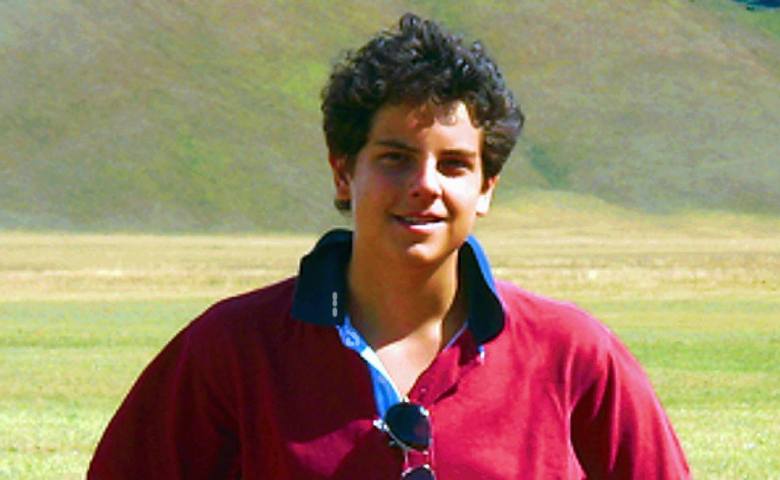
Image: profimedia.eu
Carlo Acutis was a normal boy – straightforward, spontaneous, and likable, look at his photo. He loved nature and animals, played football, and had many friends among his peers.
He was attracted to modern means of communication and was an enthusiast of computer science. As a self-taught artist, he created programs to transmit the gospel and communicate values and beauty. He had the gift of attracting and was seen as a role model.
He attended Mass every day and stayed in adoration before the Blessed Sacrament for a long time. Carlo used to say: „ Go straight to paradise if the Eucharist is approached every day!“
Excerpts are from a homily by Cardinal Agostino Vallini, delivered at the beatification ceremony of Carlo Acutis on 10 October 2020 in Assisi.
„Carlo Acutis is very easy to follow in a sense. He didn’t do anything that each of us couldn’t,“ says priest, university teacher Martin Majda.
„ When we compare him with Padre Pio, who had supernatural gifts that man does not normally have, we might think that holiness is unattainable. But we can all imitate Carl’s example, both the elderly and the youth.“
PILGRIM OF HOPE
The canonization of the Eucharistic pilgrim in the jubilee year, with the motto Pilgrims of Hope, is incredibly apt. Although Carlo did not live to see the 2025 Jubilee, he was an exemplary pilgrim of hope during his fifteen years.
„ He grated it from the benevolent Lord God and continued to give it. At home in the family, at school, to friends, to the poor – to everyone he met,“ emphasizes Martin Majda.
„He was sure that God was good and would forgive us; that we should not be sad when sins trouble us. Nor are we to fall into hopelessness and despair when the test of sickness and death comes. In all this, Jesus shines for us and brings light to these realities. Carlo was aware of this and encouraged this hope.“
Posted in Nezaradené
Leave a comment
Jesus calls everyone to be an apostle …
FIRST REVELATION: The resurrected Christ was given to Mary Magdalene; that’s what the evangelist Mark tells us. Jesus then accompanied the disciples to Emmaus and finally appeared to the eleven apostles (compare Mk 16:9-15). In all these revelations, Jesus wanted to restore their peace, stimulate their faith, and revive the apostolic mission to which they were called. It is true that when Master needed them the most, his disciples were cowards. Even after the resurrection, they were still confused and full of doubts. Christ „ revealed himself to the Eleven as they sat at the table and reproached them for their unbelief and hardness of heart for not believing those who saw him resurrected“ (Mk 16, 14).
Despite everything, Jesus did not hesitate to confirm them in their vocation: they were chosen as his witnesses, and he did not want to replace them with others. God’s commission ended this visit: „Go into the whole world and preach the gospel to all creation“ (Mk 16, 15). The gift of a vocation for an apostolic mission belongs to them, even if they are not particularly strong or exceptionally well-prepared. This explains the commotion caused by Peter and John when they healed a paralyzed person after a few weeks: „ They knew that they were unlearned and simple people, so they were shocked “ (Acts 4, 13).
Apostles with their gifts and faults will be „fishermen people“ sent to all the seas of the earth. This is how everyone realizes that salvation is God’s work. „Every man and every woman is a mission, and that’s why they live on earth (…). The fact that we are in this world without prior decision of our own leads us to realize that there is an initiative that precedes us and calls us into existence. Each of us is called to think about this fact: I am a mission on this earth, and therefore I am in this world“[1].
God reckons with our strengths and weaknesses …
SAINT PAUL he understood well what it means to be an apostle of Jesus Christ and expressed it in these words: „ So I will rather boast of my weaknesses, so that the power of Christ may dwell in me. That is why I delight in weaknesses, in disgrace, in need, in persecution, and anxieties for Christ’s sake; for when I am weak, then I am intense “ (2 Cor 12, 9-10). Our own weakness can be a strength for the disciple, because when we find ourselves without our own resources, we find that we have the greatest gift that always remains to us: God, who gives himself entirely to us. That is why the apostle of the nations boasts of his weaknesses. „ He does not boast of his actions, but of the action of Christ, who works precisely in his weakness“.
When proclaiming Christ’s message, the experience of our own vulnerability does not have to shake us if we have a humble attitude and complete trust in God’s action. The evangelization of the Church belongs to him, and not to us. We feel, like St. Paul, that we are a „ clay vessel“ (2 Cor 4, 7), which God fills with the treasure of his grace, and thus in it we undeservedly receive priceless jewels.
The kingdom of God is not realized only because of a good human strategy, nor does it rely only on our ability to face new challenges. Although all this can certainly be part of our contribution, we find strength and knowledge for our mission in God. The Lord unites us with his kingdom because he wants to count on us to expand it: and that is wonderful. „ As our union with the Lord grows, and our prayer intensifies, we too go to the essence of things and understand that it is not the power of our means, our virtues, our abilities that bring about the kingdom of God, but that it is God who works miracles precisely through our weakness, through our inadequacy to the task.
Finding strength in the Risen Christ …
„GO WORLDWIDE and preach the gospel“ (Mk 16, 15). This is the imperative command of the Master. They were gathered in the same house, perhaps at the same table, where Jesus gave them his Body to eat and his Blood to drink. The apostles did not apologize for their lack of fidelity or moral strength. They did not even speak to the Risen Lord, although they certainly thought that the mission was too great. How did they feel when they heard those words of Jesus? They certainly felt as if they were dizzy, having been entrusted with such an ambitious message. „Shall we reach the whole world?“ they asked. „ After all, we couldn’t even show ourselves to those in our own city“.
When they only looked at themselves, it was easy to convince themselves that this mission was utopian. But the sight of the Risen Lord changed everything: they looked at the palms of his hands, at his side, at his eyes; if Jesus wanted them to travel the whole world, they would do it in his name. For this mission, St. Josemaría proposed the following itinerary: „Know Jesus Christ; make him known to others; take him with you everywhere. This mission, which concerns all the baptized, is carried out primarily by allowing ourselves to be attracted by Jesus. „ Let yourself be loved by him, and you will be witnesses whom the world needs so much“. As with St. Peter, our own experience with the Lord’s love is the starting point for attracting others to this love: “We cannot fail to talk about what we have seen and heard” (Acts 4, 20).
Faith grows through personal testimony, it is strengthened in mission. This is how we are sure that making Jesus known to other people is the most precious gift we can give. As a good mother, Mary encourages us to be able to give our best with God’s grace.
Posted in Nezaradené
Leave a comment
Second Sunday of Easter-Divine Mercy Sunday, John 20,19-31
When I was young, an aspiring chaplain, I had a bit of a culture shock. I was in Austria, and a young man there was supposed to take me somewhere by car. It was just a short drive within a village. When we got into the car, before he started it, he put on his seat belt. I wanted to break the silence, so I asked him: “So the police check your belts and give you fines?” “No, why do you ask?” “Well, if you buckle up right away, even though we’re only driving a little.” He answered me: “I don’t wear a belt because of the police, but for my safety.” That was the first time, and then many more times in my life, that I realized the difference between my ” thinking and the thinking of others… We are somehow more taught to obey the rules, not because it’s right, but so we don’t get caught and punished… We lack awareness. And so we want safety and consideration on the roads, but we aren’t disciplined or considerate ourselves. And it’s not just about traffic rules… We would also like to have order around us, like the Swiss have…
But we’re not orderly ourselves… We’d also like to see laws obeyed and prosperity and well-being like in Germany, for example. Still, we’re not as conscious as they are, disciplined, and we often evade taxes and tolerate corruption when it suits us… We would like to have the security of our property like in Finland, where an unlocked bicycle is more likely to rust than be stolen, but we are not very honest ourselves… We would also like strangers on the street to be nice to each other (be friendly), to say hello and smile, but we don’t do that…
Furthermore, we would like to have a promising future, but we are raising young people without values… Not only that, but we’d like to have moral politicians, but the immoral nation has no place for them… In society, awareness of rights must be combined with understanding of responsibilities. Someone must build values… If most people are doing well, he’ll pull the handful of those who can’t… But on the contrary, it doesn’t work…
Even in our religious life, we’re quite inconsistent… We know very well what we want, what we desire… We certainly want to go to heaven when we die… we also want to be blessed, protected and gifted by God… healthy and content… But what is behind it? What is his offer, his journey? What values should we profess and what should we strive for? This is what we should be interested in!
Today’s Gospel is powerful in this respect. After the resurrection, Jesus comes to his disciples, shows them his wounds, and makes a mysterious gesture accompanied by powerful words: “Receive the Holy Spirit. Whoever you forgive sins will be forgiven, and whoever you hold back sins will be held back.” Interestingly, the Holy Spirit of forgiveness is the first gift of the Risen One to His Church. This is what the Lord chose. And it is not just a matter of establishing the Sacrament of Reconciliation. This fact must be seen in the context of the whole Gospel message. The essence of God’s life in us is love. Forgiveness is one of the most significant and demanding forms of love. I don’t think Jesus was ever so insistent and yet so uncompromising in any other demand. He repeated it so often that if we want forgiveness, we must forgive our neighbor from the heart. To live without forgiveness and in forgiveness is a tragedy.
When I was a boy, I wondered why priests talk so much about forgiveness in their sermons… It’s so natural and easy: I make my parents angry every day, or I argue with my friends, and in a moment everything is fine again… Only with age, when a person encounters real human wickedness in his life, will he understand that forgiveness is not a small thing. That it goes beyond us and that we need the Holy Spirit for it, because it is beyond our human strength.
There is so much forgiveness among us. Many people don’t want to forgive, and they still defend and label their bad condition with nice names, such as a sense of justice, the return of what was borrowed, or peace with everyone. And so many people can’t forgive…
But we should not give up in the search for forgiveness, because we have received it from the Risen Holy Spirit. Forgiving big things is like healing; it’s a process, and it can’t be done all at once. And our whole personality should be involved. If I can’t forgive emotionally, and I have negative feelings towards the offender, I still have reason and will… Even if I can command myself not to wish him harm, even if I can pray for the culprit and ask the Lord to change him or convert him, I still really wish him well, and that’s a big step on the path of forgiveness…
Interestingly, Jesus kept the wounds he showed on his glorified body so perfectly. After all, wounds could be understood as something imperfect. But you kept them… The wounds caused by the triumph of evil became a symbol of the victory of good after the resurrection.
Some years ago, I had an interesting conversation with a young archaeologist. It took place in Petra’s parish garden. It was fall. I told him that the side chapel of the church there was not originally part of the church, but was separated by a wall and served as an ossuary. It was filled to the ceiling with old human bones. I explained to him that when this chapel was connected to the church in the 1950s, all the bones were moved into a large pit and covered with earth. That’s when the archaeologist said to me: “And I’ll show you exactly where the pit was.”
He pointed to a spot in the garden near the church, where the grass on a square plot of land, about four meters by four, was a slightly different color than the surrounding terrain. And then he showed me another “anomaly” after excavations for power lines and heating. Although the terrain was perfectly flat, the color of the vegetation showed that it had been dug before. He explained to me that one of the research methods of archaeologists is based on this phenomenon: at a time when the growing season is weaker, i.e., in autumn, they take aerial photographs of the terrain and, by the change in color of the vegetation, they can see where it was sometimes dug. “Because,” he said, “once a scar is made on the face of the earth, it remains an indelible mark forever.
We, because we are sinful and do evil, create scars in our relationships. They are created when evil triumphs. They cannot be removed. But when we experience true forgiveness, when goodness triumphs as the ultimate victor, these wounds become a symbol of victory. Let us allow the risen Jesus to breathe upon us. Let us receive the Holy Spirit and forgive, let us always forgive, let us forgive small things and big things. It is a great value that the victorious Christ offers us, which will bring quality to our lives.
Posted in sermons
Leave a comment
By what power did you this?
We humans often lose heart, just like the apostles who witnessed the end of their beloved Master. Only very slowly do they begin to perceive the events that had paralyzed them. And after the testimony of women who bring fragrances to anoint Jesus’ body and discover, with astonishment, that the great stone guarding the entrance to the tomb is rolled away, the apostles begin to act.
Jesus of Nazareth, who was crucified, was resurrected! The reality of the empty tomb is preached to the disciples by the women. When the women announce what has happened, they are to remind the disciples of the meeting that Jesus spoke about at the Last Supper. The testimony of the empty tomb in them renews the courage and interest to follow the Master again, and they still have no idea how much power the Master will fill them with. After a personal encounter with Jesus and the surrender of the power of the Holy Spirit, the apostles are truly transformed. The same apostles who, fearing for their lives, leave their Master and hide so that no one can convict them, enter the temple to testify about what they have seen and heard.
To the dismay of the powerful, they testify that the case of Jesus of Nazareth is not over. The disciples even perform in the temple, proclaiming the resurrection and fully aware of the power they received from Jesus. They announce, heal, and testify! Therefore, the council gathers, powerful forces are concentrated, and they are furious that someone threatens their power again. They feel threatened by the news about Jesus, which they now have to deal with once more. The event of Peter healing the sick is especially unpleasant for them because they have to admit that something truly special had happened.
And now he is afraid of the reaction of the people, but especially of the transformation of the apostles. Peter is invited to explain who allowed him to do good deeds! Great tension and confusion can be felt from the speech of the apostles present, and they try to avoid the question that would lead them to the already solved case of the Master of Nazareth. Peter, already another Peter, new, strong, and filled with the Holy Spirit, testifies to the essence of his deeds. Everything I do is in the name of the one you wanted to silence, Jesus of Nazareth. Now Jesus acts and speaks through the new Peter.
Posted in Nezaradené
1 Comment
Personalities about Francis’ pontificate. What was the greatest contribution of Pope Francis, and what did he surprise the most?
Bernard Bober, František Trstenský, Lucian Bogucki, Herman’s sister, Bohuš Živčák and Michal Zamkovský answer.

On the occasion of the 12th anniversary of the pontificate of Pope Francis on March 13, we asked some personalities two questions:
1. What do you consider to be the most significant contribution of the pontificate of Pope Francis?
2. What surprised you the most?
Archbishop Bernard Bober of Košice, former leader of the confessors in the Basilica of St. Peter, Lucian Bogucki, leader of the River of Life community and lay missionary, Bohumír Živčák, Spiš diocesan bishop František Trstenský, Redemptorist Michal Zamkovský, and sister of Herman.
.jpg)
Archbishop Bernard Bober. Photo: Attitude
Archbishop Bernard Bober, Archbishop of Košice and Chairman of KBS
1. I respect Pope Francis for his humility and the deep dimension of humanity, which makes him the Pope of closeness and meeting in the eyes of many, not only Catholics. Although painful war conflicts marked his pontificate, he never lost the courage to promote a just and sustainable peace. He is a man of hope who encourages brotherhood and reconciliation not only with words, but with the whole being. For me, he is an example of a bishop who opens the church’s doors wide to all who desire to draw closer.
2. The Pope developed, for example, ecological topics, which were previously more external. He also dared to appeal to pastoral work with couples in irregular situations, but had to contend with a wave of criticism. I think he did so because he placed the man of the 21st century, his fragility and beauty at the same time, in the center of his pontificate.
The Pope’s desire to be understandable and authentic in announcing the good news has, in my opinion, found a great response. I wish we would not stop in our determination to be a listening, outgoing and missionary church.

Lucian Bogucki. Photo: Attitude
Lucian Bogucki, Minority, Former Superior of the Confessors at St. Peter’s Basilica. Petra
1. For me, Francis is the Pope who escorted the church to the peripheries in the broadest sense of the word. Whether the peripheries are social, political, economic, or religious. In the center, some are gifted, bright, supported by others, or simply those on whom fate smiled. And conversely, there are many more people on the periphery for various reasons, often not at fault. František notices them and wants others to see them as well.
Pope Francis began his apostolic journeys in countries where Catholics are in the minority. There is always someone from the Vatican service staff in his entourage. He escorted the liturgy of Holy Thursday from under the basilica to prisons and social facilities. He invites the homeless to the birthday table instead of the cardinals. During the COVID pandemic, he also thought of transsexuals from Torvaianica who found themselves in need.
For those who found themselves in trouble of conscience, he appointed missionaries of mercy and extended permission to absolve abortion from sin to all priests. He takes children to the papa mobile during general audiences to make them happy. There are many more such examples. For me, Francis is a pope with a human face who has made Peter’s office more accessible to people.
2. In March 2014, during the celebration of the Liturgy of Reconciliation in the Basilica of St. Peter, on the occasion of the 24 Hours for Lent initiative for the Lord, we knew that Pope Francis would hear confessions in one of our confessionals. How great was the surprise to the master of ceremonies, photographers, and to us Vatican confessors when the Pope knelt before one of us and asked for a holy confession before sitting in the confessional.
I don’t know if the modern history of the Church knows such an image, when the bishop of Rome publicly kneels before a priest and confesses his sins. The roommate who admitted to the Pope asked the Vatican photographic service for a photo. They refused to give it to him, saying they didn’t have permission to share it. Shortly thereafter, with the Pope’s consent, the photo appeared in all newspapers.
In my memory, Pope Francis will be remembered as the Pope of the Sacrament of Reconciliation. Everything he said about this sacrament should become a guide for contemporary confessors and penitents. At the beginning of his pontificate, when the Pope had more strength, he used every opportunity to administer this sacrament personally. His wish is that the Jubilee Year 2025 will become an opportunity to rediscover holy confession.

Bohumír Živčák. Photo:
Bohumír Živčák, leader of the River of Life community and lay missionary
1. I see the pontificate of Pope Francis as the continuity of the popes after the Second Vatican Council. Academic, intellectual style of communication, Vol. John Paul II and Benedict XVI. He was able to translate it into the practical language of the people.
He was uncompromising in his poverty, simplicity, and closeness to people. In my opinion, the most significant contribution is clearly in developing dialogue within the church and with the world, right to the very edge. The level of opposition he was able to bear exceeded all ideas. He waged a decisive struggle with formality and corruption in the church. Sodality stirred up stagnant waters.
2. A surprise, though not a complete one, might be that despite predictions of complete untying of rules in the church, it stands firmly on tradition. So those who expected dramatic changes in direction may be disappointed.
.jpg)
Bishop František Trstenský. Photo: Attitude
František Trstenský, diocesan bishop of Spiš
1. Patient reminder of three principles: Live faith in the community of brothers and sisters – so-called the principle of sodality. To be open in communication with everyone, the so-called principle „todos“ – „all“ are invited. The evangelical principle of a narrow gate and a narrow path, i.e., not to resort to cheap or violent persuasion of others, but to authentically bear witness to the Gospel of Jesus with one’s own life.
2. He was 77 years old when he was elected Pope. That’s why I was surprised by his enthusiasm and tirelessness. Despite his age, he made many apostolic journeys, choosing often pastoral and socially demanding countries. Furthermore, it is a significant reorganization of the Roman Curia. Many spiritual activities appealed to me in particular, for example, the Year of Mercy, the Year Dedicated to St. Joseph, a wonderful encyclical on respect for Jesus’ Divine Heart, Grandparents’ and Seniors’ Day, and Sunday of God’s Word.

Sister Herman. Photo: Attitude
Hermana Matláková, Congregation of the Sisters of Mercy St. Vincenta – satmárky, pedagogue and collaborator of the World of Christianity
The pontificate of Pope Francis is unique in many ways – the first ecological encyclical and the first appointment of a woman to a disaster relief role. However, on the other hand, these are not surprising things. Still, they are a natural outcome of the steps that his predecessors took.
For me, it is a continuation of the line established by John XXIII through the convening of the Second Vatican Council. Francis focuses more on the approach to people and individuals. He does not take humanity as a whole, but looks at every drop in the whole. In this, his view is unique and often surprising when he highlights the particularities and given characteristics of each person.

Michal Zamkovský. Photo: Attitude
Michal Zamkovský, Redemptorist and missionary
1. I still remember the shock and pleasant surprise when Cardinal Karol Wojtyła of Kraków was elected Pope in 1978. It was a promise of great hope for Christians living in communist countries. And today I know that he did not disappoint.
Pope Benedict XVI, with his profound theology, anchored my faith more and, I think, the faith of the whole church in Jesus Christ. And a surprise from 2013 – Pope Francis, who leads the church and the world to ever-new surprises precisely because he is open to the blowing of the Holy Spirit.
He often reminds us that the Holy Spirit is a God of surprises and invites us to expect them. As the newly elected Pope, he surprised the world by choosing the name Francis and thus also by drawing attention to the poor and the protection of creation.
Perceptive to the blowing of the Spirit, Pope Francis constantly calls on the Church to go out to the peripheries to the lost sheep and offer mercy without borders. The Church, as a field hospital, should be close to people and offer the compassion and tenderness of God himself.
I have to admit that the service of the missionary of mercy, to which Pope Francis invited me and still inspires me, really helps me in this. I learn from him that the mercy of God is announced in every intercession I make. From him, I took the way of preaching in three points, where there should be thought, image, and feeling.
Pope Francis cares that our hearts warm at the heart of Jesus, because otherwise our proclamation and service are dry and ineffective.
2. For me, the Pope’s visit to Slovakia in 2021 and how he accurately described our situation was a big surprise. His urgent invitation to be open to the influence of the Holy Spirit and thus to step forward to new challenges was also a surprise.
For me, Pope Francis is a great prophet of this time and a man of great hope. But I know that the Holy Spirit governs the church, and he can always surprise us.
Posted in Nezaradené
1 Comment
We need God’s grace.
Grace is God’s gift that helps us live a good Christian life. Without grace, we cannot believe, convert, or do good.
Our strength cannot save us. The sixth central truth of our faith says: God’s grace is necessary for salvation. „If we open ourselves to God’s grace, the impossible will become a reality“
„ A person called to bliss but wounded by sin needs salvation from God. God’s help comes to him in Christ through the law that governs him and the grace that strengthens him“(KKC 1949). To understand the power of grace, we must first understand the power of sin. The better we understand how strong sin can be, the better we know how much we need God’s grace.
To find the answer, we must embark on a journey within ourselves, into our conscience. What will we find there? We have to say that we are not who we can and should be. People who are benevolent, kind, devoted with all their souls to God and neighbor.
Sad reality
We live in a sinful world, that’s why we meet so many injured people, we see so many broken marriages, and so many destroyed or broken relationships.
This world of ours, big and small, is in disarray: it is a world in which hatred, violence, and selfishness have taken hold of people to an unprecedented degree. We are horrified by this because we know that man’s heart was created for goodness and love.
God’s grace is necessary for salvation.
What does it prove when someone today can kill in cold blood, or have a journalist killed, for example? Evil and depravity for which we have no words!
Such events cause us a legitimate fear for our lives, the lives of our loved ones, the property we’ve bravely acquired, and safety in general! In other words, sin is here, among us, perhaps even within us, and it seems to thrive.
Of course, we look for the culprit and place the responsibility on systems, groups, social classes, or simply on others. Today, we easily blame politicians, priests, the Church, and thus we want to get rid of responsibility for disorder and sin, which is no longer personal and immediate, that is, mine, in a „ cunning“ way, but impersonal and distant and therefore foreign.
Each of us bears a certain degree of responsibility for the community to which we belong and for what is happening within it. The truth is that the root and source of evil and sin are in the heart of man, as Jesus often reminds us: What comes from the heart defiles a person (porov. Mk 7:15).
If there is discord in my family, dishonesty and lying in employment, corruption in public places, injustice, poverty, and hunger in our world, we are all somehow responsible for it. Placing all the blame on other persons or systems is essentially an escape from responsibility, childish behavior: ‘It’s not me, it’s him! ‘
We should never belittle the effects of sin. Wherever we go or whatever we do, we must always count on the power of sin. Nevertheless, as the apostle Paul says: „But where sin abounded, grace abounded even more“ (Rim 5, 20).
We should never belittle the effects of sin.
What is God’s grace?
Benedict XVI says that „mity is a touch of God’s love.“ „Grace is not a thing, but God’s self-giving to man. God never gives less than himself.“ (YouCat 338)
In the Catechism of the Catholic Church, we read that grace „ is favor; the undeserved help that God gives us to respond to his invitation to become God’s children, adopted sons, partakers of God’s nature and eternal life.“ In another part, we learn that „mity is participation in God’s life“. „ The undeserved gift with which God gives us his life, poured by the Holy Spirit into our soul to heal it from sin and sanctify“ (KKC 1999).
God’s grace is a supernatural spiritual gift that God voluntarily offers us through the merits of the Lord Jesus for our sanctification and salvation. Supernatural because it transcends our earthly needs and is intended to ensure eternal life. It is a spiritual fact, beyond our sensory knowledge and understanding.
God’s grace is a personal and undeserved gift of God that helps us grow in faith and live a holy life. We don’t have to earn it. In reality, however, we cannot even deserve it, because it is a gift that God gives happily to all who come to Him. Man has no right to God’s grace. God gives it to us out of his goodness and quite freely.
Why do we need it?
Without it, we are „incapable“of securing eternal life.
At the Last Supper, the apostles, together with Jesus, were united in one. Lord Jesus drew their attention to two important things: „stay in my love“ (Jn 15, 9) and „ you can’t do anything without me“ (Jn 15, 5).
He explained it by saying: „I am the true vine and my Father is the vinedresser… As a branch cannot bear fruit on its own if it does not remain on the vine, neither can you if you do not remain in me… Whoever remains in me and I in him bears much fruit“( Jn 15 1 5). Where does a branch get the strength to grow and bear fruit? From the vine from which it grows.
What happens to the branch they cut from the vine? Dries. Only then can we do true good if we are one in love with Jesus. Only then can we please God when we live in Jesus and Jesus lives in us. „ It is necessary to distinguish the sanctifying grace (gratia habitualis), i.e. the permanent disposition to live and act according to God’s call, and the current (helping) grace (gratiae actuales), i.e. God’s interventions so at the beginning of conversion, as well as during the work of sanctification“ (KKC 2000).
Every day, we realize that protecting and developing God’s life within ourselves is beyond human strength. Man is very weak and in everything he depends on God’s help. God does not leave us at our mercy and grants us helping grace because he wants everyone to be saved. Without the grace of God, we are unable to do anything to save ourselves. Jesus said clearly: „Without me you can do nothing“ (Jn 15, 5).
Helping grace enlightens reason so that we know good; strengthens the will to do good and avoid evil; drives the heart and ignites it with love, so that we love God and are afraid to offend him.
God’s grace is a personal and undeserved gift of God that helps us grow in faith and live a holy life
A helping grace does not force a person to do good and protect themselves from evil, but leaves the human will the freedom to voluntarily decide to act as the helping grace encourages it. Therefore, a person may act contrary to God’s help, opposing it and refusing to cooperate. In such a case, a person disrupts the power of helping grace.
Sanctifying grace is God’s life in us, which we received in baptism. Since our baptism, we have shared in God’s life and in the grace of the Lord Jesus. Sanctifying grace cleanses us from sin, makes us God’s children and heirs of heaven. With sanctifying grace, we enter into a living connection with Jesus, remain in His love, and live our lives with Him.
Sanctifying grace makes us the temple of the Holy Spirit. „ Only through mortal sin can one lose the divine life, the life of grace in us, not through imperfections“, says Saint Francis de Sales. After committing a grave sin, a baptized person can obtain sanctifying grace by receiving the Sacrament of Reconciliation. Without the grace that helps, we cannot follow Jesus. Without sanctifying grace, we cannot please God.
God’s life develops and grows in us when we give him the opportunity to do so, when we freely accept God and his love
God’s life in us
„Thanks to the sacraments, God constantly accompanies us on our journey, gives us grace, thereby integrating us into his life. The sacrament of baptism unites us with Jesus, like a vine with its branches. It is a remarkable unity. What Jesus said happened: „Stay in me and I in you“ (Jn 15, 4).
And so a new life began in us; the life of grace, the life of God’s child. Jesus himself works in all the sacraments invisibly, as he said: „ without me you can do nothing“ (Jn 15, 5). When God is in us and we cooperate with him, we can not only maintain his grace, but also improve and strengthen it. God’s grace is God’s life in us. Where there is life, there is growth.
God’s life develops and grows in us when we allow him to do so, when we freely accept God and his love. We grow in God’s grace when we often approach the sacraments, especially Holy Communion, in which the originator of God’s grace, Jesus Christ, gives Himself to us. St. John Bosco emphasizes: „Access communion as often and warmly as possible.
When you receive Jesus into your heart often, grace will thus restore your soul that the body will be forced to obey the spirit.“ At baptism, the priest speaks to the parents and godparents with the words: „ You brought this child for baptism. The good Lord God will give him a new life in this sacrament. Strive to raise this child so that the divine life within him is constantly improved.
Protect him from sin, because sin threatens God’s life in man.“ Let’s not forget that sin destroys God’s grace in us. The words of St. John Paul II. they are understandable: „ protect yourself from sin, which is the greatest misfortune of human history“. The greatest evil that wants to deprive us of eternal bliss. „Be sober and watch! Your adversary, the devil, walks around like a roaring lion looking for someone to eat“ (1 Pt 5, 8).
We are all inclined to deny Jesus. Saint Justin Popovič adds: „A person in this world must solve the problem: to be with Christ or to be against him.“ Only his love, goodness, and grace keep us in our love for him.
Let’s not forget to ask for mercy.
Let’s learn to examine our conscience every evening as a good preparation for the sacrament of reconciliation. Because whenever we regret, Jesus shows us the grace of forgiveness seventy-seven times, if necessary! „God does not tire of always offering his forgiveness every time we ask for it“ (tvít Pope Francis, September 23, 2016).
He never tires of helping us overcome our weaknesses. God gives us grace, and she prompts us to change our lives.
Saint Philip Neri prayed every morning: „Lord, hold your hand over Philip even today, because if you don’t, Philip will betray you.“ He once pointed his finger at a criminal on the gallows and said: „ Behold Philip Néri without God’s grace.“ Grace has not only changed the lives of great saints in the past, but it can also change you. Saint Vincent Pallotti states: „ Never think that you cannot do what the great saints have done in the Church.
With the help of God’s grace, you can achieve even greater things, because God perfects us with the infinite wealth of his grace.“ In the apostolic exhortation Gaudete et exsultate, there are words „Let the grace of your baptism bear fruit on the path of holiness. Allow everything to be open to God and choose it with this goal in mind, always making a new decision for God. Don’t lose courage because you have the power of the Holy Spirit to make it possible, and holiness is, after all, the fruit of the Holy Spirit in your life.“
Posted in Nezaradené
Leave a comment
Easter Sunday 2025 C Joh 20,1-19
Brothers and sisters, Jesus’ resurrection is, without a doubt, a demonstration of God’s power. Today, I do not want to dwell on how God did it. We know that the resurrection of a dead body is incomprehensible and impossible from a rational point of view. We can only marvel and remain standing in silent amazement at how God works. Furthermore, we can rejoice that the power of death does not have the last word. We can let the peace and certainty pervade us that just as God acted in the case of his beloved only-begotten Son, he will one day act in the case of us.
I want to reflect on, above all, the reactions that Jesus’ resurrection has provoked among people. This unique event in history divides people basically into two groups. Unbelievers and believers.
Let’s look at how the evangelist Matthew describes the reaction of unbelievers to the event of Jesus’ resurrection. The guards before him were trembling with fear. They remained dead. For the unbelieving man, the resurrection of Jesus Christ is a terror, a calamity, an unmitigated disaster. Why? Simply because the “Judge” is alive. If we have not accepted Him as Savior, or rejected Him as Savior, what can we expect from Him as “Judge” from a human point of view? That He would be gracious to us? That He would have mercy on us?
We see the Roman guards of the tomb, trembling with fear and remaining as dead – an accurate illustration of what awaits the unbeliever when he meets the risen Christ – fear… We may not like to hear it, but it is the truth.
And whether that is why the unbelieving man tries to keep Jesus “dead”, to keep Him in the grave. After all, the dead will no longer admonish us, the dead cannot and will not prove to us that we have misunderstood anything. The unbeliever would rather invent a fairy tale about how Jesus was stolen at night from the tomb guarded by professionals by His amateurish, frightened, and determined disciples, who waited until the Roman guards were peacefully asleep and then began to announce everywhere that He had risen from the dead… How sad and pathetic it is when one cannot look the truth in the face!
And what is the reaction to the resurrection of believers? There appears to be awe. It is a mixture of wonder and awe at the mystery of the resurrection. Awe is a typical human reaction to something unknown. The awe of the believer, however, is different from the fear experienced by unbelievers. The German religionist Otto describes this difference very nicely when he speaks of the mysterious tremendous and the mysterious fascias. The mystery is the fear of a God who is inscrutable and unreadable, who can hurt us and punish us.
On the other hand, there is the mysterious fascination. This is a fear that, at the same time, attracts us, fascinates us, and fills us with joy and inner peace. Hence, also among the women we read, they went quickly from the tomb, and with fear and great joy they ran to tell his disciples. For believers, then, this is joy.
This joy cannot remain only in the private sphere. It must be shared. It needs to be proclaimed, to be spread. The women of the Gospel understand this and act: they run to tell his disciples. Let us run too! Let us proclaim to our neighbors that Jesus is alive! Let us proclaim this good news of the Gospel to all those who grieve and mourn! To those who are depressed in life! Let us proclaim that there is still hope for man. Dear brothers and sisters, the resurrection of Jesus not only shook the earth at that time, but also.. Where are we in all this? For me, today is the day of Jesus Christ’s resurrection, a day of joy and gratitude. For in the risen Christ I recognize my personal Redeemer, and I know that my eternal salvation is sure. I wish you joy, appreciation, and assurance of salvation today.
Posted in Nezaradené
Leave a comment

