Acceptance

Posted in Nezaradené | Leave a comment

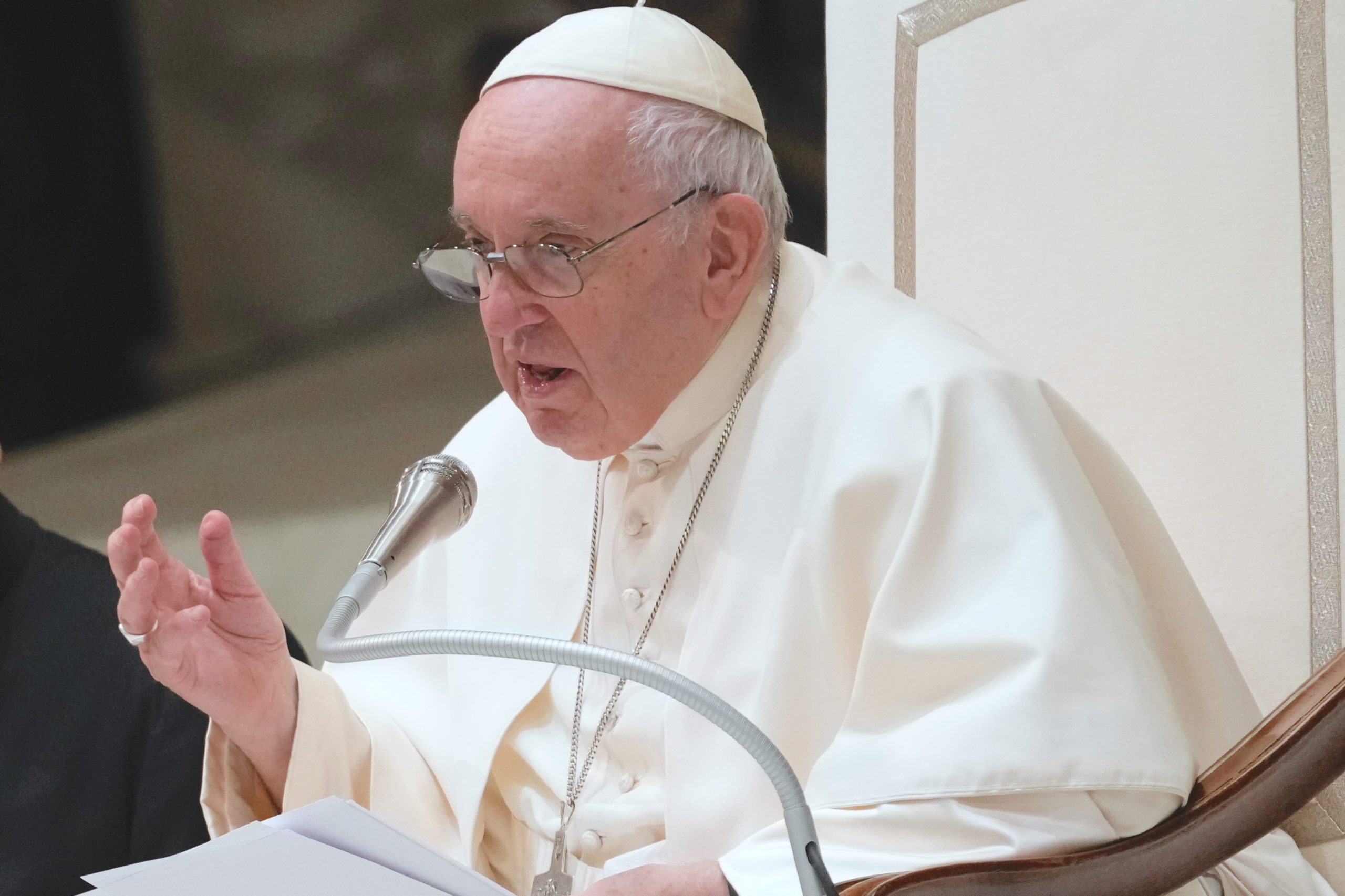
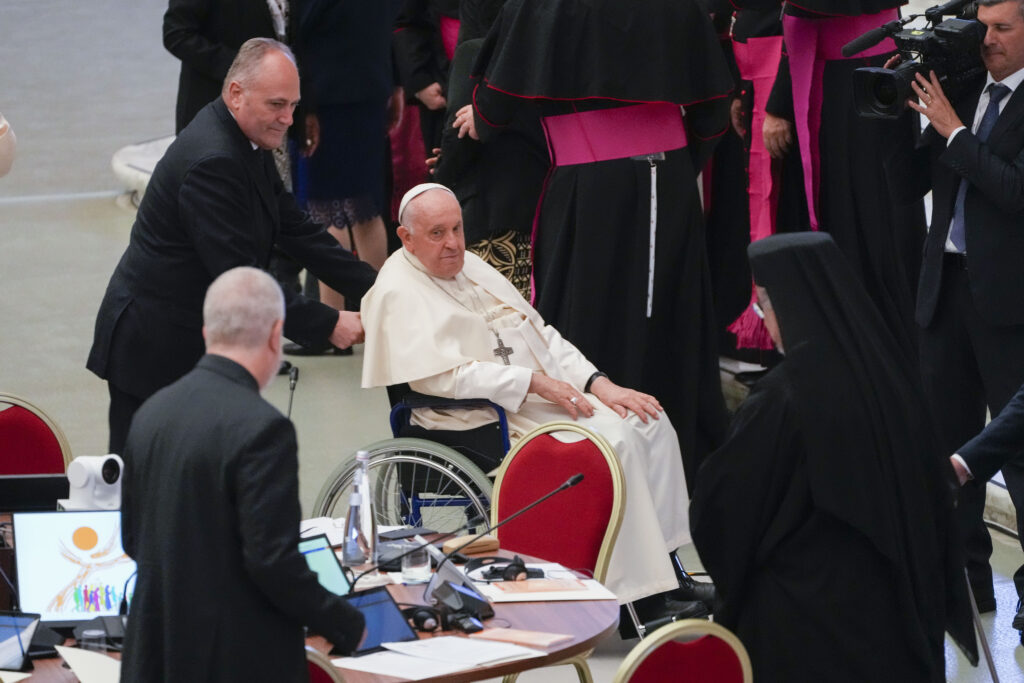
Pope Francis did not propose blessing same-sex unions but did not say a clear no either.

Pope Francis does not propose to bless same-sex unions. However, his answer to this question raises more questions than it offers solutions.

Media worldwide are making headlines about Pope Francis’s proposal to bless same-sex unions. The Pope is not saying any such thing, and his words are taken out of context. Paradoxically, the mentioned media also have part of the truth. How is it possible?

Controversial Synod on Synodality

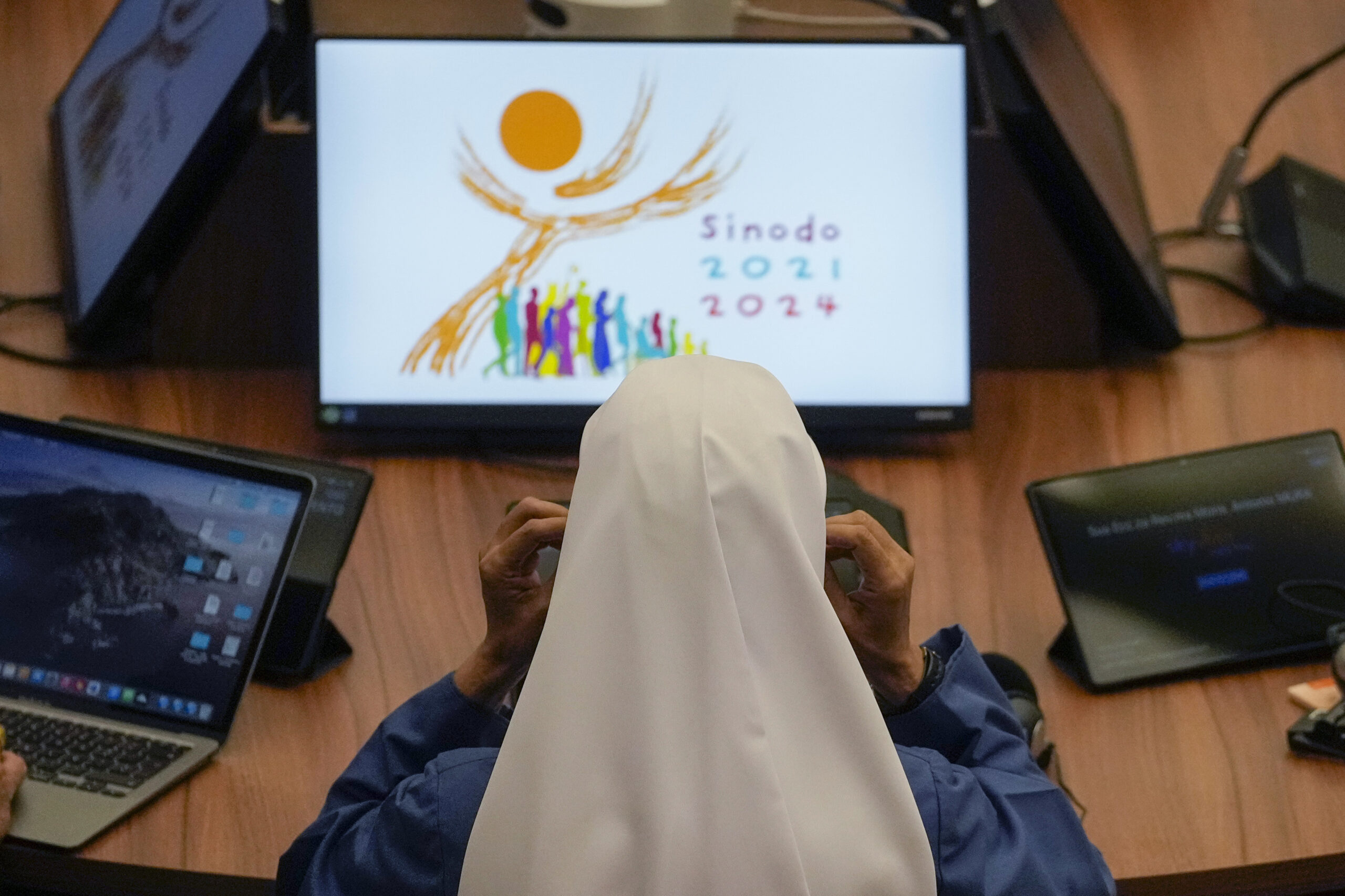
To understand what is happening, it is necessary to know the context in which the Pope’s statements were made. The whole situation is related to the Synod on synodality. Its final phase, which will bring bishops worldwide (and for the first time also women and lay people), begins on Wednesday.

The synod itself has been taking place since 2021 and is accompanied by many controversies, which are taking place mainly in Western Europe and America. It is often discussed in connection with the acceptance of homosexual marriages, the canonization of women, or other changes in the church doctrine. Therefore, a significant part of the faithful and several bishops fear that the synod is not a sincere effort for dialogue but rather an attempt to change Catholic teaching.

The last few days’ events testify that these doubts are indeed severe. On Monday, just two days before the beginning of the final phase of the synod, the five cardinals published the text of the five questions they sent to Pope Francis on July 10, precisely in connection with the synod.

Dubai

The so-called dubia, as such questions are called, were sent to Francis by German Cardinal Walter Brandmüller, American Cardinal Raymond Burke, Chinese Cardinal Joseph Zen Ze-Kiun, Mexican Cardinal Juan Sandoval Íñiguez, and Guinean Cardinal Robert Sarah. The questions related to the development of doctrine, the blessing of same-sex unions, the Synod’s authority on synodality, the ordination of women, and holy confession, specifically the absolution given by the priest during admission.

The cardinals above published their questions on Monday, just two days before the start of the final phase of the synod, but still need to show the Pope’s answers.

They defended their move by saying that Francis did not answer questions with the traditional yes or no but with developed answers. The cardinals, therefore, reported that on August 21, they sent the Pope reformulated questions that encouraged more apparent yes-or-no answers.

So, the public saw only the cardinals’ original questions on Monday, a brief commentary on the Pope’s answers, and a reformulated wording of the questions. Their output can be read in English, for example, here.

Naturally, such an action provoked the displeasure of Cardinal Victor Manuel Fernández, the new prefect of the Dicastery for the Doctrine of the Faith, who criticized the five cardinals and published the answers of Pope Francis a few hours after them.

Francis’ words

Of course, the question regarding the blessing of homosexual unions resonated most strongly in the world. In it, the Pope writes that “the Church has an evident conception of marriage: an exclusive, stable and indissoluble union between a man and a woman, naturally open to the procreation of children. He calls this union “marriage.” Other forms of union realize it only “partially and analogously” (Amoris Laetitia, 292) and therefore cannot strictly be called “marriage.”

He adds, “For this reason, the Church avoids any rites or sacraments that could contradict this belief and give the impression that something that is not marriage is recognized as marriage.”

But then the tone of the answer changes to less definite. The Pope continues: “However, in dealing with people, we must not lose pastoral love, which must permeate all our decisions and attitudes. The defense of objective truth is not the only manifestation of this love, which also consists of kindness, patience, understanding, tenderness, and encouragement. That is why we cannot become judges who only deny, reject, exclude.”

“For this reason, the pastoral balance must adequately distinguish whether there are forms of blessing requested by one or more persons that do not spread the wrong idea of ​​marriage. When a blessing is requested, a request for help from God is expressed, a request for a better life, trust in the Father who can help us live better,” the pontiff continues.

In conclusion, he adds, “Decisions that may be part of pastoral prudence in certain circumstances should not necessarily become the norm. It is inappropriate for a diocese, bishops’ conference, or any other church structure to constantly and officially approve procedures or ceremonies for all kinds of matters.”

Canonical law should not and cannot cover everything, nor should episcopal conferences claim to do so with their various documents and protocols, because the life of the Church takes place in many other ways in addition to normative channels,” the pontiff concludes his answer. The full text of the questions and the Pope’s answers in Czech can be read here.

It won’t solve the problems.

Three things can be gleaned from his answer. The first is that the Pope clearly says that the church should only bless marriages. Second, in individual cases, it allows the possibility to bless a homosexual couple as well. And the third, that he would not elevate it to official practice.

Although it may look acceptable at first glance, it seems that it will not solve the problems in the church, but on the contrary, it will deepen it even more.

In Germany and Belgium, blessing homosexual couples is no longer just a matter for a few priests. Still, in many cases, it is a practice that is also approved by diocesan bishops, who even organize mass blessings of such couples. These priests and bishops will rely mainly on the second part of the words of Pope Francis and will present the blessing of homosexual couples as a manifestation of “pastoral prudence.”

It will be possible to guess from the headlines of the liberal media that many believers, priests, high-ranking bishops, and cardinals harbor hopes for a change of course in the Catholic Church. One of them is Cardinal Fernandez, the new prefect of the Dicastery for Doctrine. He said he “doesn’t smell Francis” in his predecessor’s document, which officially confirmed in 2021 that the church cannot bless homosexual unions.

Today, when Francis communicates through Fernández that he can imagine such a blessing in some cases, the enthusiastic media presents it according to the template that several leading representatives of the Synod have been living in them for a long time about synodality as a shift. And they are correct. Because until now, the Vatican has said a clear no to such practices.

The problem with the whole situation is that this way, the division in the church will deepen even more.

Posted in Nezaradené | Leave a comment

It is not enough to ask who is my neighbor.

There are people around us who are not written about or talked about, yet it would not be easy to imagine life without them. Let’s remember what they do for us. Quietly, modestly, with a smile, a kind word, and so for years… Jesus says to the expert in the law: “Go and do likewise” (Lk 10:37). These words are the last words spoken by the Lord Jesus at the end of the parable of the “good Samaritan.” Jesus talks about love for God and neighbor and teaches this love, and his life, every word and deed, is a testimony of this love. Today, we know why Jesus died.

We are to see Jesus in the Good Samaritan. We could express it in ten points:

1) The Samaritan comes to the wounded man. Jesus comes into the world.
2) The Samaritan looks at the wounded man. Jesus took the nature of man.
3) The Samaritan is excited by the condition of the man who fell into the hands of robbers. Jesus knows the consequences of the sin that our grandparents committed and that we commit.
4) The Samaritan comes even closer to man. Jesus appears as a teacher to remind people of what God has already announced through the prophets and explain new things necessary for salvation.
5) A Samaritan heals the wounds of a wounded person. Jesus appears as a physician not only of the body but also of the soul.
6) The Samaritan put a man on his cattle. Jesus takes on his shoulders the lost sheep, every sinner.
7) The Samaritan led the man to the inn. Jesus promises his kingdom to every person who perseveres.
8) The Samaritan took care of the person. Jesus promised the Holy Spirit to us, who will remind us of everything and teach us everything that he taught us.
9) The Samaritan took out two silver coins and gave them to the innkeeper. Jesus paid the debt to the Father for us.
10) The Samaritan promises the innkeeper that if you spend more, I will pay you when I return. Jesus promises to reward us with every good deed, word, and thought at the hour of our death.

These words say that this is not a momentary matter, but the parable speaks of our eternity, which has already begun and which we decide by our approach to God, our neighbor, and ourselves. The problem: “Who is my neighbor?” Jesus clearly and comprehensibly explains when he points to the priest and the Levite who cut corners, do not respect the command, or serve the person who needs help. We cannot choose our neighbors; instead, they choose us when they require something, and we can help them. Robbers can ambush even a Samaritan who stays back, just like that man, but Jesus also teaches about this.

We thank Jesus for his love, which we see in the “good Samaritan” parable. Jesus pierced his heart out of love for us. He died but rose from the dead. Even today, it is a reminder that inspired by his love, we love God above all else and our neighbor as ourselves. Our neighbors require love. What good would we do to learn the Scripture by heart and not serve our neighbors?

Posted in Nezaradené | Leave a comment

Does the papal monarchy interfere with synodal democracy?

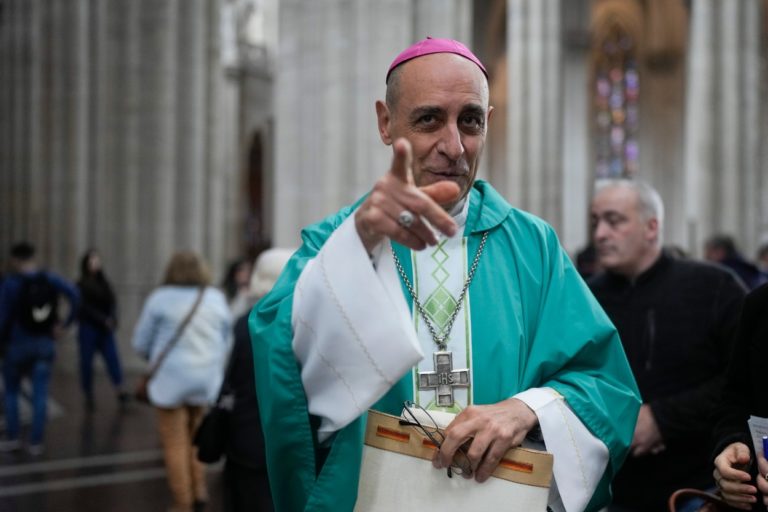
The bishop from Argentina and a longtime collaborator of Francis spoke. ,”     

A picture from the General Assembly of the Synod of Bishops.

Paradoxically, some critics accuse the current Synod of synodality (among other things) of hypocritical formalism and worldliness. From October 4, 2023, its third stage, the so-called Synod of Bishops, will occur in the Vatican, the second part of which will happen in a year. It started at the local level in 2021, with a continental phase at the beginning of the year.

Pope Francis arrives at the opening of the general assembly of the Synod of Bishops. 
Posted in Nezaradené | Leave a comment

Our heavenly mother, the Virgin Mary.

To encourage believers to have tremendous respect for the heavenly mother, the Virgin Mary, through the prayer of the Holy Rosary.
Are we happy? At least today and now, do we feel some joy? I think so because today is the feast of the Virgin Mary, our mother. And I also believe that it is embedded in every person that he likes his mother. And he wants her more, the kinder, more admirable, and more beautiful she is. And I ask, where is it kinder, friendlier, and more beautiful than in the prayer of the Holy Rosary? What can we realize in praying the rosary? “An angel came to her and said: Hail, full of grace, the Lord is with you!” (Lk 1,28)

We read the gospel that we just heard today – on the feast of the Rosary Virgin Mary, during the annunciation and Christmas. We ask why. This passage from today’s Gospel describes her whole life – a humble and devoted servant of the Lord and, at the same time, our Mother. Therefore, it is the most important, the most beautiful, and the most joyful event ever in Maria’s life. During this annunciation in Nazareth, the Virgin Mary heard the fantastic greeting: “Hail, full of grace, the Lord is with you!” Was it the announcement of a small transformation? Or was it a confirmation of an ancient fact? The Church tells us here that the angel does not express some new situation with his greeting; when he says “full of grace,” he sounds like something already there before, already here as a gift of God. Mary has been in God’s love for a long time. This greeting is only meant to highlight and confirm this fact. With this greeting, Mary should know her status – that she is ultimately God’s. The angel’s hello is like a look back at Mary’s life and attitude up until now, and thus also the long-ago entrusted mission and what it consists of. An angel announces the birth of a son. Well, she already had this mission; she already had it before the proclamation; after all, her whole life up until now had been directed towards him! However, her mission was hidden in God’s heart before that. But look here for the human factor of the Virgin Mary because she was human. When he hears God’s call interpreted by an angel, he gets a little worried as he wonders what such a greeting means. Here, it gets a new name and designation. He suddenly finds himself in the light. She is so humble that she is almost afraid of this light and distinction. He does not consider it wrong or want to reject it. However, she feels tiny and unworthy because she is humble. Although she accepts everything that God offers her, it still worries her. Until now, Maria imagined her mission would be inconspicuous, as if on the sidelines. She thought that she could fulfill God’s intentions in secret, unseen, and unknown by anyone. But this concern is not at odds with her essential willingness. On the contrary, Mary pronounces her “fiat” and agrees, indeed her “become,” her agreement with God’s will is so deep, firm, and devoted that everything – every worry, not only now but throughout her life, dissolves in it. Mary gave herself and still gave herself entirely to God. She did not separate her life from her mission. She understood her life in God as a mission. And here is the true meaning of praying the holy rosary – to connect with Mary and appreciate your whole life in God.

To give your life to God as the Virgin Mary teaches us. And this is exactly how she created great value from her life – before people and God. The Virgin Mary experiences restlessness and sees that giving oneself entirely to God means not only happiness, things that are certain and safe, regular and sound, but also includes things that are surprising and dangerous, often demanding and challenging, and perhaps she will not be spared even the most difficult things. But the Virgin Mary is deeply rooted in God with her whole heart. When he sees and suspects all this, he does not refuse, resist, or fall into confusion. She feels that she has encountered something she did not foresee. She is humanly surprised and trembles. However, she is willing to accept everything, even this concern. She is willing to do anything – even if it escalates to the cross. She agrees with God’s path, so she always fulfills God’s will!

Let’s ask ourselves now: which way am I going? God, by which the Virgin Mary walked? Once and for all? Or do I keep changing the roads, always looking for more comfortable ones lined with flowers? Have I found my way yet? Have I already uttered my “become”? Am I hesitating? Am I calculating? We often ask ourselves what all this says to us personally. Perhaps for a long time, we do not know precisely what we live for, what God expects from us, and our mission. We are waiting for a sign, for God’s greeting, for knowing God’s will. But we must realize, brothers and sisters, that the angel who announces God’s will to us comes through a priest, a parent, a school teacher, a friend, a husband… God sends us daily our “announcements”; let’s think if we accept them with as much willingness as the Virgin Mary! Do we care about them at all? However, our mission does not begin with priestly ordination, sacramental marriage, or religious vows. This is just his sealing. It starts much earlier –it is already hidden in God’s heart. In one moment, the Lord will instill it in us, let us know it – in an experience or sadness, in some situation, after some conversation, while reading a book, or in the middle of prayer. He will let us know His plans for us. Therefore, every day, following the example of the Virgin Mary, we should open up and deepen our willingness to accept God’s will once we know it. Can we say to God at least once a day: “Be it done according to your will,” just like the Virgin Mary, who was always ready to say to God with great humility her lifelong Fiat – “Behold, servant of the Lord, may it be done to me according to your word? ” With this willingness, which we achieve through prayer, especially the prayer of the Holy Rosary, we unite more deeply with our mother – this is how we walk the path with her, we fulfill our mission in life.

Today is the Feast of the Holy Rosary. One of the most beautiful and contemplative prayers that we all have the opportunity to pray and which is given to us by our Mother, the Virgin Mary herself, and is highly recommended by the Church, is the prayer of the Holy Rosary. It is a supplicating prayer to our Mother Mary, who helped us, helps us, and will always help us if we ask her through this prayer. He will certainly hear us, and at the same time, he will ask for countless graces. For many of us, the monotonous repetition of the Lord’s Prayer, Hail Mary’s, is “against the grain.”… But it does not falter; let’s not lose heart; trust in our heavenly Mother. Let’s try to accept this rosary prayer as an offer to hold the hand of our Mother Mary through the rosary! Holding her hand, let us meditate in the spirit of the mysteries of the joyful, painful, solemn rosary and the rosary of light…

The fact that our Mother in Heaven constantly intercedes and prays for us with her son begs for grace for us, and brings us to her son is also evidenced by this story of a young virgin, Suzana, and how she became a happy Catholic. She was raised in an atheist wealthy family in such a way that she felt an excellent resistance, even hatred, towards Christianity. This hatred prompted her to look closely at Catholicism and discover its faults. But while studying the Catholic faith, she sometimes admired the faith’s truths and began to search for God. And the Lord Jesus said that he who seeks will find. With the help of the Virgin Mary, she found faith as follows: Her younger cousin, who was studying in a priestly seminary, gave her a book called Our Lady of Fatima. While reading it, she felt that the heavenly mother, who appeared to the three children, was becoming more and more light and robust for her daily. Even her unbelieving parents, enemies of the Catholic faith, noticed it. The local priest who was to baptize her was afraid that her parents would disinherit her. She replied: “I am not afraid of anything. I don’t care about wealth. The Lord Jesus, to whom my heavenly mother brought me, is enough for me.” Her heroic courage moved the priest and baptized her with great joy. Thus, Suzana achieved true happiness and joy through the heavenly mother Mary in the Catholic faith.

At this moment, dear brothers and sisters, do you feel that our heavenly mother also cares about our happiness when she strengthens us in faith with her example and help? Therefore, dear brothers and sisters, do not be afraid, and let us trust the Virgin Mary in every situation. Whether in joys or sorrows – he will never leave us; he will never leave us alone. After all, what child wouldn’t trust their mother? Let’s fall in love with this prayer of the Holy Rosary and so with our heavenly mother. She will surely lead us to her son, Jesus. Per Mariam and Jesus – through Mary to Jesus.

Posted in Nezaradené | Leave a comment

Twenty-seventh Sunday in Ordinary Time, Year A Matthew 21, 33-43

After wrongdoing, an urgent desire for a higher justice than human arises in a person’s soul. God’s revelation gives us believers a satisfying answer: God is supremely just—the only one who can deservedly reward and punish everyone. Even in early life, his justice will be manifested more than once, but it will be fully applied only in eternity.

Lord Jesus spoke more about the love, goodness, and mercy of the heavenly Father than about his justice, but quite obviously, he also talks about God’s justice in several parables. Even today’s fable about the tenants declares the characteristic of God’s will – righteousness. The tenants did not keep their word; they caused him further wrongs and wrongs.

The chief priests and elders knew that this applied to them, but they could give no other answer than we heard, “He will destroy the wicked without mercy and will rent the vineyard to other vine dressers.”  God truly has a sense of justice and will justly hold accountable anyone who commits iniquity and punishes him righteously. But he will not miss even the slightest good that a person does. Not even a glass of water, according to the words of the Lord Jesus – given out of love, will not go unrewarded (cf. Mt 10:42). God will punish others for doing evil and punish us justly.

And on the other hand, he will reward for good, not only us but all those who do good. Even those we do not indulge, are angry with or have a heavy heart. Therefore, the truth about God’s justice, on the one hand, should fill us with peace and certainty that nothing good we do, even if hidden from people and the world, even that tiny, almost invisible good deed, will not remain without a deserved reward. On the other hand, the exact truth about God’s justice should fill us with awe and lead us to avoid sin and be afraid to commit even the most minor sin. The conclusion from this reasoning can be the following: God is just, but he is not cruel or merciless. Therefore, let us be filled with confidence.

However, many miss her. They can say: An innocent child died. Is it justice? – I got hit by a car, and it ruined my life. Why did God allow this? – I have been saving all my life to build a house. And the flood took it from me. Why didn’t God intervene? – I was happy in my family with my wife and children. And I got an incurable disease – leukemia. Is that fair? It is not easy, brothers and sisters, to answer these questions. The answer is faith. Faith is God’s dimension in us. We will fully understand God’s justice only in eternity. We are made in the image of God. Let us also strive to be fair to God and people.

We often complain about the injustice of others. Let’s start with justice! We already know (from the speech on Sunday, August 30) that Thomas Morus, a martyr for loyalty to Rome, was unjustly convicted and executed in England. When he was led to the gallows, he held a cross and occasionally raised his head to heaven. He was praying. Only the crowd confused him at times. Some, especially his enemies, shout at him blindly. A kind of foolish woman who had lost a court case with him accompanied him, screaming that he had condemned her unjustly. Exhausted and weakened by prison, Thomas Morus raised his head, looked at the woman, and said: “Lady, I remember your case well. And I can tell you: If I had to decide your case today when I stand before the Judge of heaven and earth, I would pass the same sentence.”

In that awareness, winter, brothers, and sisters, let us act that one day we will be accountable before God. Our mission is to do good. This is how today’s thought from the verse before the Gospel will be fulfilled in our lives: “…I have chosen you and appointed you to go and bear fruit and that your fruit should remain.” (Jn 15, 16)  So we can also manage our desire for higher justice.

Posted in sermons | Leave a comment

Contempt. It’s painful.

Did someone look down on you? It hurts. A friend suffers when a friend despises him. A parent also suffers when a child hates him. Young people suffer, and older people suffer because of contempt. The Lord Jesus also sustained similarly. In Korozaine, Bethesda performed several miracles and Capernaum, but they did not accept him as their Lord and God. Addressing them, but also for our instruction, he said: “He who listens to you listens to me, and he who despises you despises me.” But whoever despises me despises him who sent me” (Luke 10:16).

Every contempt also offends. He can hurt very deeply. We know the Lord Jesus came out of love to bring the world back to the Father. He showed his love more than once in the mentioned cities with his miracles. Yet, he sighed sadly: “Woe to you, Korozain! Woe to you, Bethesda! For if miracles had happened in Tire and Sidon that happened to you, long ago they would have been in penitent clothes sitting in ashes and repenting” (Luke 10:13).

Why does it hurt? Because love is rejected. Contempt calls forth a just punishment. Whoever denies the Lord Jesus rejects the God who sent him because, according to the old diplomatic law, the ambassador is like the one who sends him. We know that it happens occasionally that whoever insults a diplomat who represents his nation somewhere insults his entire country. So it is with God. Whoever insults the Lord Jesus does not accept his love, despises it, insults and despises the same God in all three Divine Persons.

In your imprudence rashness, under the pressure of crosses and difficulties, you already wished for a miracle to confirm the truth of faith and God’s existence. We know that even if it did happen, it might not work. No benefit will disprove human objections and bring about conversion. We see it in the performance of the Lord Jesus. What did he do? His miracles, healing, resurrections, and feeding in the desert did not convert most Jews. They persisted in their bias towards the Lord Jesus. Faith does not have to be based on miracles, but we are to believe the words of Jesus. The same was true then and today. People indeed saw the Lord Jesus face to face and could touch him. Today, we have the teaching of the Church that Christ is the same yesterday, today, and tomorrow, and although he is veiled, we believe in his presence in the sacraments. He says that wherever two or three are gathered together in his name, he is also present among them. Let’s accept the Lord Jesus’s words, listen to them, and not despise his love. Whoever despises the teachings of the Church hates Christ himself because Christ is the same in the Church.

Indeed, children who are ashamed of their father or mother and have no place for them in the house must realize that they are calling down punishment on themselves. The heart of both father and mother can break from the pain. The nature of Christ was pierced on the cross. But let’s ensure that the Golgotha drama and do ​​is not repeated through our actions.

Posted in Nezaradené | Leave a comment

Jesus calls. It is possible to serve God in every state of life.

Many of us might think that today’s gospel only touches priests or those preparing for this service of the Church. “The harvest is great, but the workers are few. Therefore, ask the Lord of the harvest to send workers into his harvest! Go!” (Lk 10:2-3a). With these words, Jesus invites us to pray to the giver of every calling for those who will one day spread this good news to the ends of the earth. The evangelist Luke places the mission of the seventy-two disciples in the path of Jesus to Jerusalem, which is an obvious foreshadowing of the Church’s journey and the Christian’s life in the world. He is to ascend to the city where Jesus will complete his redemptive work.

The mission is expressed in two commands: Pray and go. The harvest is ready for harvest; humanity is made for God. The task is carried out primarily by asking the Lord of the harvest to let them escape their fear and insecurity, set themselves on fire for the harvest, and accept the Lord’s intentions as their own. To walk like the quiet and humble Lamb, to bring peace to people’s homes. The kingdom of God approaches people by becoming a bearer of peace and caring for the sick. The disciples return with joy to Jesus, who is the beginning and the end of their mission. He shows them how he sees the goal of their mission – to free man from evil and introduce him to God’s life, to heaven.

Have we also heard God’s call? Have we responded to this invitation? How? The Lord chose us to be with him. He wanted us as we are. He was not bothered by our mistakes and shortcomings. That’s why we don’t need to worry about what we can’t change. On the contrary, we should strive to live as Jesus lived. He is our role model. He is an example for us to follow. Let’s take a good look at the characteristics of Jesus. After all, he was similar to us in everything except sin. He had typical human factors. He experienced joy and sadness, enthusiasm and disappointment. Jesus was always willing to offer a good word to someone who needed it or to serve someone in need. Are we true disciples of our Lord? Or are we still somewhere at the beginning of our journey? Perhaps we see ourselves as incapable of being Christ’s witness. But we must remember that Jesus does not call the table but gives the ability to the anointed! He chose the seventy-two and appointed them to bear fruit. Based on the grace of baptism and the power of the Holy Spirit, God in us can and will do miraculous things.

What does our life mean to us? Is it just a specific designation or privilege that sets us apart from other people or represents for us something that is foolishness in the eyes of the powerful of this world? However, it is inevitable that for those who accepted and responded to this call of God, God gave them the power to become God’s children, those who were born of God’s will (cf. Jn 1:12-13). 

Posted in Nezaradené | Leave a comment

Saint Francis of Assisi.

Dies enthält ein Bild von:

Posted in Nezaradené | Leave a comment

Care for God’s creation—Saint Francis of Assisi.

Posted in Nezaradené | Leave a comment