
-
Recent Posts
Recent Comments
Archives
- September 2026
- August 2026
- July 2026
- June 2026
- May 2026
- April 2026
- March 2026
- February 2026
- January 2026
- December 2025
- November 2025
- October 2025
- September 2025
- August 2025
- July 2025
- June 2025
- May 2025
- April 2025
- March 2025
- February 2025
- January 2025
- December 2024
- November 2024
- October 2024
- September 2024
- August 2024
- July 2024
- June 2024
- May 2024
- April 2024
- March 2024
- February 2024
- January 2024
- December 2023
- November 2023
- October 2023
- September 2023
- August 2023
- July 2023
- June 2023
- May 2023
- April 2023
- March 2023
- February 2023
- January 2023
- December 2022
- November 2022
- October 2022
- September 2022
- August 2022
- July 2022
- June 2022
- May 2022
- April 2022
- March 2022
- February 2022
- January 2022
- December 2021
- November 2021
- October 2021
- September 2021
- August 2021
- July 2021
- June 2021
- May 2021
- April 2021
- March 2021
- February 2021
- January 2021
- December 2020
- November 2020
- October 2020
- September 2020
- August 2020
- July 2020
- June 2020
- May 2020
- April 2020
- March 2020
- February 2020
- January 2020
- December 2019
- November 2019
- October 2019
- September 2019
Eternity, or the temporal limitation of the universe.
Although this question has been controversial since the earliest times
Posted in Nezaradené
Leave a comment
Twenty-eighth in Ordinary Time,Year A Matthew 22,1-14
Several Old Testament prophets used the image of a feast to portray a relationship and encounter with God. We also heard it in today’s first reading (Is 25, 6-10). And it’s a nice picture: dining with God.
Jesus often used similar images. For him, however, it was not only about words; dining was also essential in his teaching. While dining, he often talked with sinners; while eating together, he left a memory of himself. Some exegetes say [1] that if we ignored his dining, the very words he spoke while he was eating would have a completely different meaning.
Today, we heard Jesus’ story about the feast again. In it, he mentions mainly two groups of people. The first group was chosen and invited people to the royal banquet. However, they talked about it: some to their field, some to their business. If we were to use Luke’s Gospel as well, we could cite excuses such as: “I got married, so I can’t come,” “I bought oxen, I have to try them,” “I bought a field, I have to go see it.” Essentially, we could say that these people are telling the king that they do not need him. They don’t need him, his feast, or his son’s wedding.
In the words “I need – I don’t need,” I see a fundamental key to understanding current behavior. Sometimes, it is precious if we find that we do not need something: so many clothes, so much food, so many useless things. Then, it is usually the beginning of a good turn. But sometimes, the “I don’t need” attitude can signify turning away from the good. If the child says he “doesn’t need that school, ” he indicates how he will continue treating it. If a teenage child says he “doesn’t need his father’s or mother’s advice,” it suggests his parents’ paths will diverge more from his own. If someone says that they “don’t need faith,” “don’t need decency,” “don’t need honesty,” if society declares that they “don’t need old people”… these are all severe statements that indicate problems.
Let’s be glad that we live in a society where we can express ourselves this way, where no one will expel us from the community when we claim something similar. We can still live and survive, even if we don’t need other people. But at the same time, it’s good to remember that saying “I don’t need” may not be a correct assessment of the situation.
The second group of people mentioned in today’s Gospel are people invited from the Ways of the Cross, both bad and good people. This part reflects what Jesus often said about the Heavenly Father. The king in the parable ordered the servants to go to the crossroads and invite everyone. The crossroads was not just a crossroads. They were the places where the official roads of the Roman Empire ended, and all kinds of roads and paths into the country began. And so they were also places where a different society, a different group of people started. The word “periphery” is used in Greek [2], which reminds me quite a bit of Pope Francis. He often uses this word; he sees the periphery as a place where we should find our place of work – i.e., with people who, for various reasons and in multiple ways, are on edge, misunderstood, singled out, and pushed aside. So, the king in the parable invited these people from the periphery. We could see that the story talks about the bad guys first and then the good ones who came. Participating in the feast was not a reward for goodness but an excellent gift for the needs of the people. That is why it is about God, as Jesus often presented Him. God’s love is not given as a gift to the good but to all. It’s up to us what we do with it.
I will try to simplify what this parable can mean for us a little. During one mission, Richard Rohr – an American Franciscan – found indigenous people who begged God never to build houses of stone. When he asked them what such a prayer meant and why they prayed like that, he received the answer that he must know: where there are houses made of stone, there will be doors, then locks, then fences… And the natives did not want to set up their lives this way. They wanted to preserve the fact that nothing is stolen from them, that they look out for each other, that they see the needs of others… The story does not want to say that we should leave the “houses of stone” to renounce the achievements of culture. We wouldn’t be able to do it, nor would it be good. But he wants to remind us that despite all the achievements of culture, we are all one family; we are all invited to “dining with God.” “Dining with God” is also a move toward one another. God’s invitation is the opposite of those above: “I don’t need anyone.”
Posted in Nezaradené
Leave a comment
Division and non-compliance. Could you point out the dangers of sin?
A father meets his son one day, and the son asks him. “Daddy, are you a penguin?” “Yes.” “And Grandpa is also a penguin?” “Yes, Grandpa is too.” “And great-grandfather is also a penguin?” “Yes, great-grandfather was also a penguin, just like us.” “And I’m a penguin too?” “Sure, you’re a penguin too; why do you ask?” “Then why am I so cold?” The coldness or disinterest in our lives often makes us wonder what our lives are like.
Jesus, in today’s Gospel, speaks prominent words about division and its consequences. “Every kingdom inwardly divided will be broken up” (Lk 11:17). Jesus’ words are apparent and certainly understood by those who listened to him. But some of them understood it as something that could endanger them in the future, so they began to refer to him as deranged, or possessed by an evil spirit. The holy one is likened to the damned? God is a generous Giver, but He has allowed man to be tested: ‘From the tree of the knowledge of good and evil do not eat’ (Gen. 3:1). But man disobeyed and sinned.
We know from Holy Scripture the tragic consequences of man’s fall. Despite everything, Jesus wants us to live in unity and not in division. That unity, the foundation of every other unity, is unity with God. It is the condition of all our harmony, whether in ourselves or about others. If there is no sin in our soul, we invite God into our lives, and He heals every wound that sin has inflicted. Union with Christ is the prerequisite for our harmony and concord. We know where our problem is, and we know the way to solve it. Even so, we often try and long to live life to the fullest, but apart from God, we only remember Him on Sunday morning because it is the right thing to do. After all, our parents taught us to do it. Let us not pretend we are so good that we can live entirely without Christ’s friendship. We might often have to be ashamed of ourselves during the day if we were so consciously aware that Jesus is our constant companion. Sin is the cause of our shame, and why not do something about it when Jesus so desires our holiness…?
Sincere prayer, in which we talk to Him, is a prerequisite for improving our relationship. Let us often ask ourselves, what would Jesus do in my place? How would he behave in this or that situation…? What would he do to save that person…? Would he have been as indifferent to shortcomings as I am? He is always near us and wants to be helpful in our lives; we need to open the door of our souls to Him and invite Him to come in. Every act of ours also has a repercussion in our surroundings; it either builds up or tears down, depending on what it is.
We often experience different situations in our lives. We have problems with others and with ourselves. Jesus is our torch that brings light and warmth into our lives and not only into our lives but also into the lives of those with whom we form a community. Winter symbolizes sleep and rest, and summer, on the contrary, of life and harvest.
Posted in Nezaradené
Leave a comment
Whoever asks will learn a lot
Evangelist St. Luke recorded these words of Jesus for us: “Ask and you shall receive!” Seek, and you shall find! Knock, and they will open to you! For everyone who asks receives, and he who seeks will find, and to him who knocks it will be opened” (Lk 11:9-10). The fact that Jesus prays and the way he does it evoke a request that is interpreted by one of his disciples: “Lord, teach us to pray” (Luke 11:1). Thanks to this unknown disciple, the world receives instructions for the most beautiful prayer, the Lord’s Prayer, a conversation with God. The words of St.
James the Apostle: “You have nothing because you do not ask.” You ask, and you do not receive, because you ask badly, you want to use it for your passions” (James 4:3-4).
The prayer must be true. It should be imbued with hope because we turn to God. There is no bargaining with God in prayer. God is not a machine that will give us what we wish on the flip of a coin. Prayer is not a crucifix around the neck or an agnustka in the pocket, which we would understand to be enough as a ticket to heaven. True prayer is not calculated prayer. God is mindful. God educates us. We can quickly forget resolutions from the Sacrament of Reconciliation, pilgrimages, and solemn events. God cannot be deceived. God cannot be imagined as a sclerotic older man. Knowing God only when it suits me is an insult, not a sign of friendship. God wants to give us great things, but He also asks us to do equally great deeds. Isn’t this how a father and mother act when they raise their child? And don’t parents love their children, then? Jesus’ words apply: “If you, though you are evil, know how to give good gifts to your children, how much more will the heavenly Father give the Holy Spirit to those who ask him” (Lk 11:13). Who asks he realizes that he is delivered into the hands of the one he is begging. It is good if we recognize this while praying. We must not neglect to ask with faith, pure heart in a state without sin. The priest remembers one family in his parish. When he came to the parish, he was experiencing an internal crisis. It was difficult for him to leave the previous one. In the new one, he saw St. masses of certain spouses who took turns every evening. One evening, the wife came; the following evening, the husband. He could see they were having difficulties, but they didn’t complain. On the contrary, he felt peace and special joy from them at every meeting. After half a year, they invited him to visit. The priest says: “I will never forget that evening! They showed me their only child. It was lying in the crib. His head was as big as a grown man, and his body was like a one-year-old child. That’s when I understood their situation, and my crisis disappeared.”
Prayer, prayer, prayer. That’s not a phrase. That’s medicine. Hope. It is knowing God’s love. Prayer is undoubtedly one of the most needed forces in history. Prayer does not change the world, but it changes people, and people change the world. Prayer is like a golden ladder reaching heaven, on which one ascends to God. He saw St. masses of certain spouses who took turns every evening.
Posted in Nezaradené
Leave a comment
How will people today judge obedience?
The French magazine Christs once wrote a questionnaire about obedience and published the most interesting answers. What did they reveal? First, young people must understand the young compliance adequately. They need Subordination at home, at school, and in the barracks. Therefore, they know it Only as a guardianship, a guardianship, a restriction of freedom.
This is not to say that they are all fundamentally opposed to this subordination. Some feel weak not independent. So they think that if they live in an institution, a religious society, they will find those who will look after them. “They will use my abilities better than I could do alone,” wrote one novice. Interestingly, however, even those who seek obedience support for weakness sometimes fear that irresponsible leaders might take advantage of them and throw them apart when unneeded. It is mostly girls who fear this abuse of authority. Boys are not so afraid of superiors but instead of the system. By entering, for example, into an order, they condemn themselves to a job that won’t match their talents. Some young people have such an ideal image of obedience that it does not equate with real life and its weaknesses. A girl who did not marry because no bridegroom corresponded to her lofty view of marriage can scarcely find a religious society in which she does not see outstanding defects in the spirit of the Gospel.
A study of this questionnaire thus leads to a rather exciting conclusion. It is not true that all young people have an aversion to obedience. Many of them value this virtue very highly. They say that they are even willing to sacrifice much for it. For the most part, but for the most part, they are afraid that they can’t do the right thing nowadays,
Typically, Christian virtues
Therefore, by obedience, they would get into the tow of the older adults, who don’t understand youth, in tow with the old systems, which are no longer for today’s world. The picture from the processed questionnaire is instructive, but it would be great if you could complete it. It speaks only of a specific part of the youth who have grown up both in a religious upbringing and in a free environment where the principle of personal freedom is quite self-evident. Can they understand, therefore, that one can renounce this treasure and voluntarily become dependent out of love for the greater good? But care must be taken not to
Could you do it right?
Those who seem to have a more refusing attitude towards obedience have never known true freedom and have been too constrained since childhood. Independence seems such a lofty ideal to them that all submission is only a coarser or finer degree of slavery. These disobedient ones, understandably, touch upon the problem of obedience at its roots. How can this virtue compare with the unwavering privilege of rational creatures – freedom?
Obedience and freedom
The answer to obedience must be sought in nature, the structure of man. The Church Fathers often explain what Scripture calls man God’s image (Gen 1:26). The so-called Alexandrian school exalts
as a divine attribute that we can know. The Antiochian school instead emphasizes that man is the master of the world. By his upright stature, he is distinguished from the other animals. He has reason and free will. God has built him in the center of paradise to give all others names. In the spirit of the Semitic mentality, this is to have control over everything and power. Thus, man is not created to obey but rather to rule.
This is confirmed by psychological observation. The child is developing where he can be independently active. Freedom is necessary for man to act morally and humanly dignified. We can know the truth that is independent of the world from men, which is absolute. Fact is meant to guide us; we must be guided by it. So is the human soul something so great that it can only submit to God, who is truth? To the Lord thy God shalt thou worship, and to him alone shalt thou serve him’ (Mt 4:10).
To man, however, this was not enough. He wanted more. He wanted to be like God, absolutely independent. In the first sin, the man denied the only worthy obedience, submission to God. As a punishment followed by the loss of total freedom, we were delivered into slavery to sin. The enslaved person must obey even where he is with his human dignity. Sin has made man a slave to his passions and sensual movements. Some men enslave others. The same is true in society, where so-called democratic freedom and liberty reign and so-called public opinion leads away from the pure truth. All human systems somehow force us to do even what we disagree with. But freedom is the necessary foundation of morality. If God wanted to redeem us from sin, He had to restore us to the freedom and glory of the children of God (Rom, 21). The work of salvation thus begins with the gradual restoration of freedom. God leads man to disobedience to the world, to all that is inferior, and speaks to him in his voice as once in paradise. Abraham, the father of all the elect, leaves the land of his ancestors and is led by the voice of the Lord, even if he asks of him the sacrifice of his child. Moses escapes from the slavery of the Egyptians, and at Sinai, he speaks with God.
Typically, Christian virtues
Despite many difficulties, the Jews were put to their land, whereas a free people, they had over themselves only God’s word contained in the Law, which they interpreted to their prophets, men enlightened by the Spirit of God. They demanded, though, that they, too, should have a king over them, but God promised he would stand by his side. David and his successors were to lead the nation of Israel only where God wanted them. Thus, in the entire history of the Old Testament, God had never relinquished his absolute right. If He requires that Jews obey the written law because they are his own words. The prophets interpret the exact words. The Jews must also submit to external circumstances and the king’s orders, but God always clarifies that he has arranged it. We offer only to man, Scripture, and events because God speaks in them and only where we are sure that God says in them.
The culmination of this work of liberation is in the person of Jesus Christ, the God-man. Here, we are pretty sure we are listening to God, even though He speaks with human lips. From this point of view, it is clear that faithful Christian obedience is not only not against freedom but, on the contrary, sets us free. It teaches us to hear again the voice of God Himself. In the New Testament, this voice is heard by a human voice in Jesus Christ and resounds worldwide in those who speak in any way in his name. He set the example of obedience to his Father unto death. Therefore, God also gave him the power that every knee should bow to him in heaven, earth, and the underworld.
(Hp 2:10)
Posted in Nezaradené
Leave a comment
Our prayer. Encourage persistent and humble prayer.
We know when we don’t want anything and we fail! At that time, we take everything, even with prayer, as a burden, something we “have to” and not what we want! Even Jesus knew what, among other things, would await us in life, and therefore: “One of his disciples said to him: Lord, teach us to pray!” (Luke 11:2)
Today’s Gospel tells us precisely about prayer! And not just any prayer, but about the blessing of our Lord Jesus! If we read carefully not only today’s Gospel but all four Gospels where the life of Jesus is described, we see Jesus in them praying often. He prays with them in front of them. But now he prays alone in a lonely place, all night long… He prays not because he wants to teach them how to pray, not because he wants to give them a “good example.” Simply because it is his own, it is a spontaneous, ever-present manifestation of his connection with the Father, and this inner devotion and warmth shines through his entire external action, attitude, and style that he is always an example. He is the same when praying alone, with disciples, among crowds. But his prayer excites the disciples. They were, after all, men of worship, but they did not yet know and did not hear how to pray and ask. That is why they beg him: “Lord, “When you pray, say: ‘Our Father. . .’
He taught them the prayer “Our Father,” which consists of one address and six requests. The first three express our interest in the kingdom of God, which will be among us if we do God’s will. The other three express our desire for bread, forgiveness, and protection from sin, i.e., the desire for what we need daily to fulfill God’s wishes and thereby bring God’s kingdom closer. The address with which this prayer begins and the requests with which it continues are a brief but, at the same time, very comprehensive creed. This text is shorter in Luke than in Matthew, but it does not change that even though we have it in two variations, God is here for us as a Father, a representative of justice and love, gratitude and mercy. With this prayer of the Lord’s Prayer, Jesus indicated that the requests we present to God should be humble like the requests of subjects when they stand before a king, trusting like the requests of children when they stand before their father, and benevolent like the requests of those who have decided to help as many of them as possible, and they should also be persistent.
So we can confidently say it is the most sublime and complete prayer ever uttered by man’s lips. It is the Lord’s prayer, the prayer of our St. mass. He is the father of our joys and our pains. Jesus himself told us how to pray and what to ask for. He tells us this today and wants to teach us to pray like his apostles. The question is: Do I like to learn from him? Let’s not be afraid and trust him. Let us never forget and always remember that if we pray to our Father, we open the way to his heart!
Posted in Nezaradené
Leave a comment
Acceptance
Magdeleine Hutín, the founder of the Community of Little Sisters of Jesus, once said: “If you only knew how the heart enlarges when it is received with love. But how it diminishes when it is received with reluctance.” Psychoanalysts know very well what it means for human development to “be accepted,” to suffer,” or “to be rejected.” The whole subsequent life of a person depends on it. Reception is one of the crucial moments of human life. A few days ago, we read Jesus’ statement: “The son of man has nowhere to lay his head,” yet in the Gospel, we find several stories about how people welcome him into their homes. They are Pharisees, scribes, tax collectors, sinners, or their disciples. But acceptance is not the same as acceptance. Today’s passage dwells on this difference in reception.
Some exegetes emphasize the two attitudes of the nation of Israel towards the coming Messiah. Israel is so enthusiastic about constant activity and fulfillment of the commandment that they lose the knowledge of the present moment and the ability to know the person of the Coming One. And the image of Israel, recognizing the visitation of the Lord, therefore stops any activity and rejoices in the presence of the Lord. On the way to Jerusalem, Jesus can stop and rest as a pilgrim. On his way, there is a house that accepts him. Martha receives him as a pilgrim whom the Law commands to receive and take care of him. Marta is also in it, who does not see the pilgrim but the Lord who speaks. It would be petty for her to miss this moment and not accept the words of life.
Church has always looked at this event from two angles: the position of action and the position of contemplation. They are two halves of the disciple’s and community’s lives. It is nice to serve Christ and your neighbor, but it must have a deeper motive than not to shame yourself or to be praised. We find that motive in listening to his words and staying in his presence. Even today, it is suitable for such a step of ours.
Posted in Nezaradené
Leave a comment
Pope Francis did not propose blessing same-sex unions but did not say a clear no either.
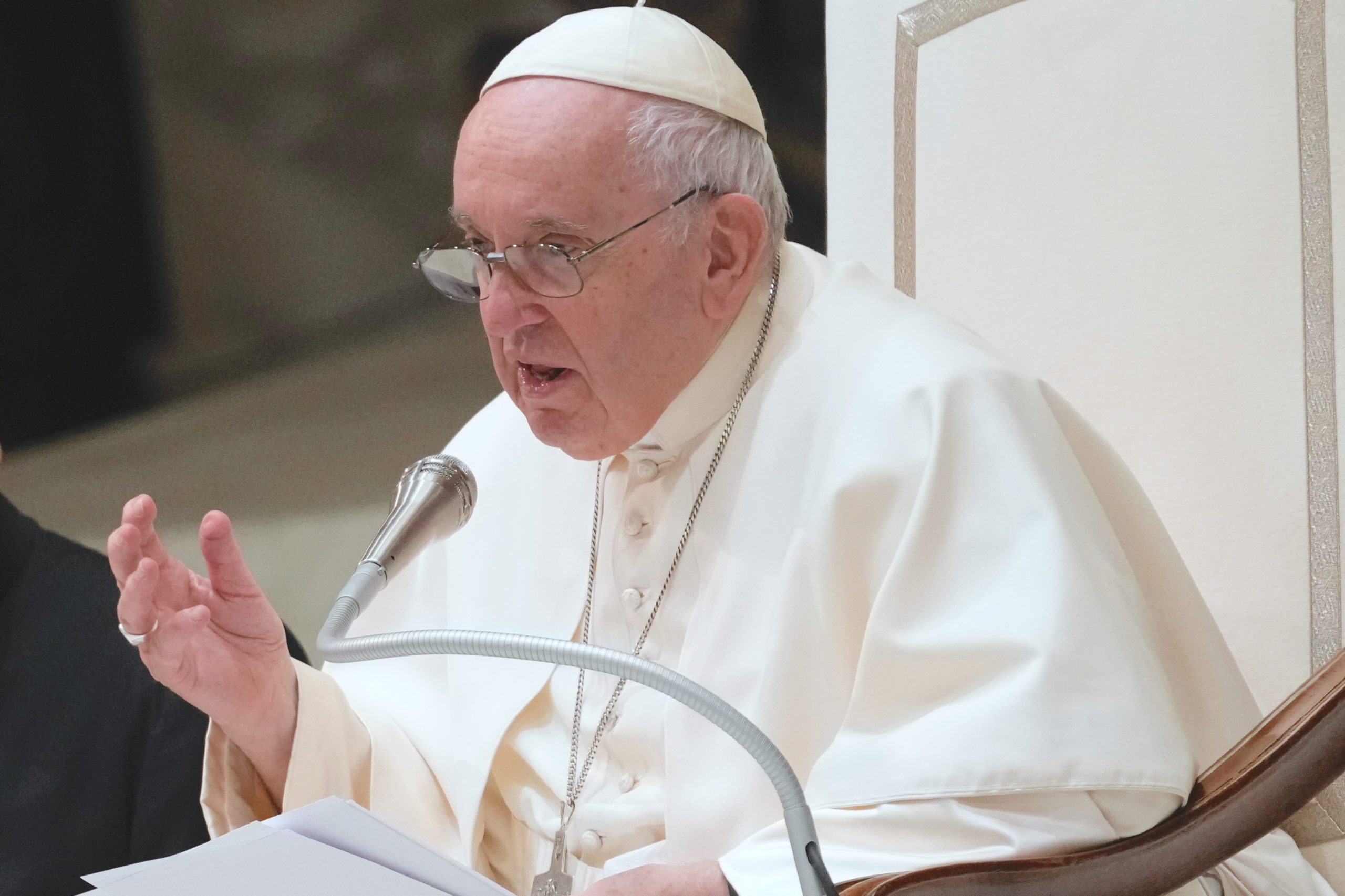
Pope Francis does not propose to bless same-sex unions. However, his answer to this question raises more questions than it offers solutions.
Media worldwide are making headlines about Pope Francis’s proposal to bless same-sex unions. The Pope is not saying any such thing, and his words are taken out of context. Paradoxically, the mentioned media also have part of the truth. How is it possible?
Controversial Synod on Synodality
To understand what is happening, it is necessary to know the context in which the Pope’s statements were made. The whole situation is related to the Synod on synodality. Its final phase, which will bring bishops worldwide (and for the first time also women and lay people), begins on Wednesday.
The synod itself has been taking place since 2021 and is accompanied by many controversies, which are taking place mainly in Western Europe and America. It is often discussed in connection with the acceptance of homosexual marriages, the canonization of women, or other changes in the church doctrine. Therefore, a significant part of the faithful and several bishops fear that the synod is not a sincere effort for dialogue but rather an attempt to change Catholic teaching.
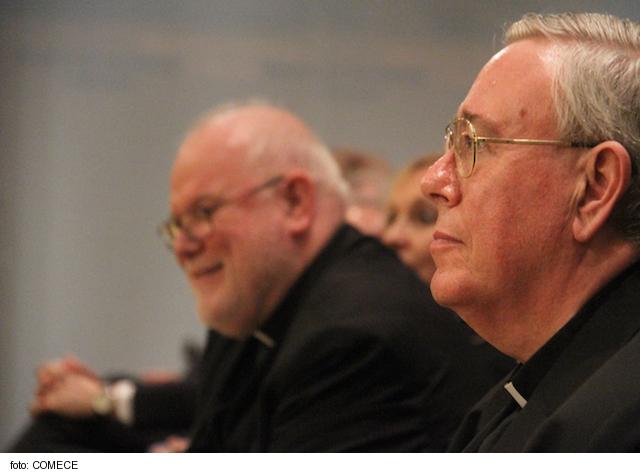
The last few days’ events testify that these doubts are indeed severe. On Monday, just two days before the beginning of the final phase of the synod, the five cardinals published the text of the five questions they sent to Pope Francis on July 10, precisely in connection with the synod.
Dubai
The so-called dubia, as such questions are called, were sent to Francis by German Cardinal Walter Brandmüller, American Cardinal Raymond Burke, Chinese Cardinal Joseph Zen Ze-Kiun, Mexican Cardinal Juan Sandoval Íñiguez, and Guinean Cardinal Robert Sarah. The questions related to the development of doctrine, the blessing of same-sex unions, the Synod’s authority on synodality, the ordination of women, and holy confession, specifically the absolution given by the priest during admission.
The cardinals above published their questions on Monday, just two days before the start of the final phase of the synod, but still need to show the Pope’s answers.
They defended their move by saying that Francis did not answer questions with the traditional yes or no but with developed answers. The cardinals, therefore, reported that on August 21, they sent the Pope reformulated questions that encouraged more apparent yes-or-no answers.
So, the public saw only the cardinals’ original questions on Monday, a brief commentary on the Pope’s answers, and a reformulated wording of the questions. Their output can be read in English, for example, here.
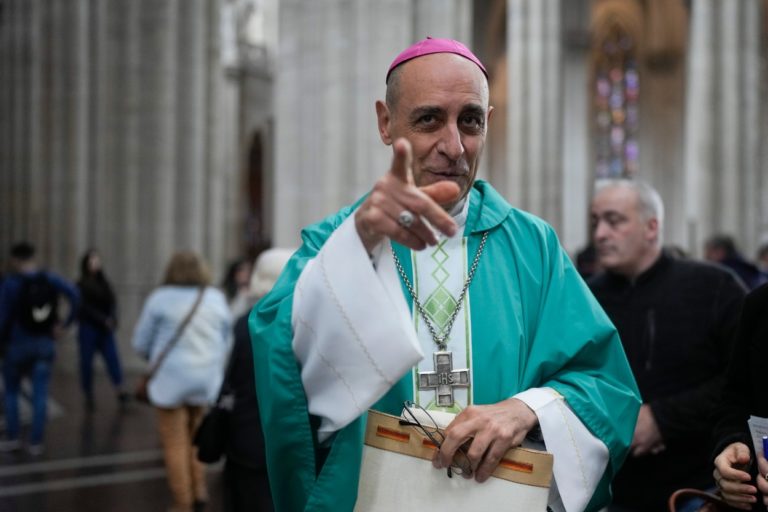
Naturally, such an action provoked the displeasure of Cardinal Victor Manuel Fernández, the new prefect of the Dicastery for the Doctrine of the Faith, who criticized the five cardinals and published the answers of Pope Francis a few hours after them.
Francis’ words
Of course, the question regarding the blessing of homosexual unions resonated most strongly in the world. In it, the Pope writes that “the Church has an evident conception of marriage: an exclusive, stable and indissoluble union between a man and a woman, naturally open to the procreation of children. He calls this union “marriage.” Other forms of union realize it only “partially and analogously” (Amoris Laetitia, 292) and therefore cannot strictly be called “marriage.”
He adds, “For this reason, the Church avoids any rites or sacraments that could contradict this belief and give the impression that something that is not marriage is recognized as marriage.”
But then the tone of the answer changes to less definite. The Pope continues: “However, in dealing with people, we must not lose pastoral love, which must permeate all our decisions and attitudes. The defense of objective truth is not the only manifestation of this love, which also consists of kindness, patience, understanding, tenderness, and encouragement. That is why we cannot become judges who only deny, reject, exclude.”
“For this reason, the pastoral balance must adequately distinguish whether there are forms of blessing requested by one or more persons that do not spread the wrong idea of marriage. When a blessing is requested, a request for help from God is expressed, a request for a better life, trust in the Father who can help us live better,” the pontiff continues.
In conclusion, he adds, “Decisions that may be part of pastoral prudence in certain circumstances should not necessarily become the norm. It is inappropriate for a diocese, bishops’ conference, or any other church structure to constantly and officially approve procedures or ceremonies for all kinds of matters.”
Canonical law should not and cannot cover everything, nor should episcopal conferences claim to do so with their various documents and protocols, because the life of the Church takes place in many other ways in addition to normative channels,” the pontiff concludes his answer. The full text of the questions and the Pope’s answers in Czech can be read here.
It won’t solve the problems.
Three things can be gleaned from his answer. The first is that the Pope clearly says that the church should only bless marriages. Second, in individual cases, it allows the possibility to bless a homosexual couple as well. And the third, that he would not elevate it to official practice.
Although it may look acceptable at first glance, it seems that it will not solve the problems in the church, but on the contrary, it will deepen it even more.
In Germany and Belgium, blessing homosexual couples is no longer just a matter for a few priests. Still, in many cases, it is a practice that is also approved by diocesan bishops, who even organize mass blessings of such couples. These priests and bishops will rely mainly on the second part of the words of Pope Francis and will present the blessing of homosexual couples as a manifestation of “pastoral prudence.”
It will be possible to guess from the headlines of the liberal media that many believers, priests, high-ranking bishops, and cardinals harbor hopes for a change of course in the Catholic Church. One of them is Cardinal Fernandez, the new prefect of the Dicastery for Doctrine. He said he “doesn’t smell Francis” in his predecessor’s document, which officially confirmed in 2021 that the church cannot bless homosexual unions.
Today, when Francis communicates through Fernández that he can imagine such a blessing in some cases, the enthusiastic media presents it according to the template that several leading representatives of the Synod have been living in them for a long time about synodality as a shift. And they are correct. Because until now, the Vatican has said a clear no to such practices.
The problem with the whole situation is that this way, the division in the church will deepen even more.
Posted in Nezaradené
Leave a comment
It is not enough to ask who is my neighbor.
There are people around us who are not written about or talked about, yet it would not be easy to imagine life without them. Let’s remember what they do for us. Quietly, modestly, with a smile, a kind word, and so for years… Jesus says to the expert in the law: “Go and do likewise” (Lk 10:37). These words are the last words spoken by the Lord Jesus at the end of the parable of the “good Samaritan.” Jesus talks about love for God and neighbor and teaches this love, and his life, every word and deed, is a testimony of this love. Today, we know why Jesus died.
We are to see Jesus in the Good Samaritan. We could express it in ten points:
1) The Samaritan comes to the wounded man. Jesus comes into the world.
2) The Samaritan looks at the wounded man. Jesus took the nature of man.
3) The Samaritan is excited by the condition of the man who fell into the hands of robbers. Jesus knows the consequences of the sin that our grandparents committed and that we commit.
4) The Samaritan comes even closer to man. Jesus appears as a teacher to remind people of what God has already announced through the prophets and explain new things necessary for salvation.
5) A Samaritan heals the wounds of a wounded person. Jesus appears as a physician not only of the body but also of the soul.
6) The Samaritan put a man on his cattle. Jesus takes on his shoulders the lost sheep, every sinner.
7) The Samaritan led the man to the inn. Jesus promises his kingdom to every person who perseveres.
8) The Samaritan took care of the person. Jesus promised the Holy Spirit to us, who will remind us of everything and teach us everything that he taught us.
9) The Samaritan took out two silver coins and gave them to the innkeeper. Jesus paid the debt to the Father for us.
10) The Samaritan promises the innkeeper that if you spend more, I will pay you when I return. Jesus promises to reward us with every good deed, word, and thought at the hour of our death.
These words say that this is not a momentary matter, but the parable speaks of our eternity, which has already begun and which we decide by our approach to God, our neighbor, and ourselves. The problem: “Who is my neighbor?” Jesus clearly and comprehensibly explains when he points to the priest and the Levite who cut corners, do not respect the command, or serve the person who needs help. We cannot choose our neighbors; instead, they choose us when they require something, and we can help them. Robbers can ambush even a Samaritan who stays back, just like that man, but Jesus also teaches about this.
We thank Jesus for his love, which we see in the “good Samaritan” parable. Jesus pierced his heart out of love for us. He died but rose from the dead. Even today, it is a reminder that inspired by his love, we love God above all else and our neighbor as ourselves. Our neighbors require love. What good would we do to learn the Scripture by heart and not serve our neighbors?
Posted in Nezaradené
Leave a comment