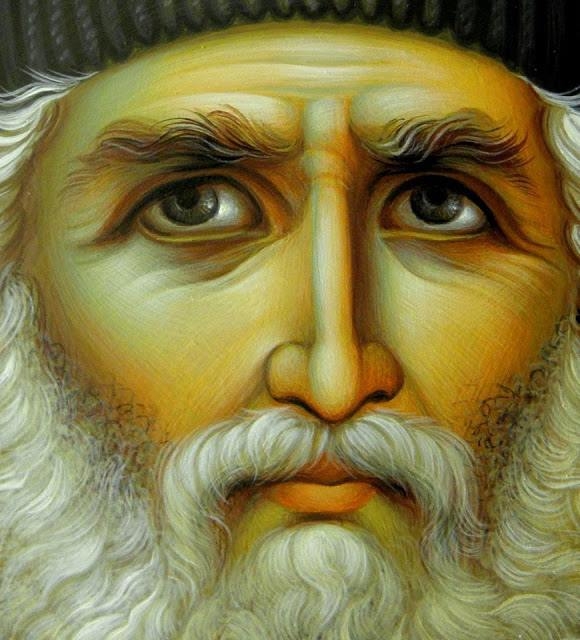
St. Andreas Kim Taegon, Pavel Chong Hasang and their Companions-Martyrs

A look at history: The Christian message arrived in Korea from China around 1780. Korean travelers brought it, and the first Christian communities began to form in Korea thanks to the laity. Soon after, missionaries from the West arrived in the country, particularly those from France. Around the middle of the following century, they and many local martyrs gave their lives spreading the faith in Korea. Their blood became the seed of new Christians. As was the case elsewhere, the initial spread of Christianity was associated with significant persecution, supported by the 1802 law that prohibited the propagation of the Christian faith under penalty of death. Among those who believed that God should be obeyed more than the powerful in this world was Pope John Paul II. 6. During a pastoral visit to South Korea on 5 October 1984, he declared 103 saints. This was the first canonization to be held outside of Rome since 1369.

THE FIRST MARTYRS IN KOREA

The first recorded instance of Christianity in Korea dates back to around 1620. However, in this isolated country, Christ’s teachings were quickly suppressed. More than a hundred years later, lay people who believed in Christ and his saints brought great spiritual benefits. They finally sealed their testimony with their blood.

In 1784, Mr Yi Song-hun, a member of the Korean delegation, received baptism and the name Peter from the French missionary Jean Joseph de Grammont in Beijing. Not only did his group bring the Holy Scriptures to Korea, Peter also successfully spread Christian faith, particularly among the intellectuals.

Ng-hun was baptized and given the name Peter by the French missionary Jean Joseph de Grammont in Beijing. His group not only brought the Holy Scriptures to Korea, but Peter also successfully spread Christian faith, particularly among the intellectuals.

Seven years later, a significant number of Christians began to cause concern for the government. In 1794, the Chinese priest Jakub Cho arrived in Korea and worked tirelessly in the country for seven years. He was then captured and condemned alongside around three hundred Christians. The government expressed concern that the spread of foreign culture and civilization could threaten its sovereignty. Despite the bloody oppression, the local church gained strength and sent a petition to Rome, asking for a priest and a bishop. However, Pope Pius VII, who was a prisoner of Napoleon at the time, could not comply. It was not until the election of Pope Gregory XVI that an apostolic vicar from France was appointed to Korea in 1831; however, he died en route. It took about two years for the new bishop to reach the country. Two French priests, Petr Maubant and Jakub Chastan, accompanied the newly appointed bishop, Lawrence Imbert, as well as the Chinese priest Patrick Ryu. In 1839, the French clergy were arrested for organising the church on the 21^(st). September, they were martyred (see overview nos. 42–44 for more information). They were replaced by: Bishop Ferréol, missionary Antonín Daveluy, and the first indigenous priest, Ondrej Kim Taeg.

As the first Korean priest, Andrew Kim Taegon is remembered here by the local layman Paul as the first, although he would be in 72nd place in the subsequent chronological overview.

Born in 1821 in Solmoe, Chungcheong, Korea, he was the son of the farmer Ignatius Kim Chejun, who died on 26 April 1839. At the age of 15, he travelled to Macau with two companions to prepare for the priesthood. He first attempted to return to his homeland in December 1842, but did not succeed until almost three years later. He was ordained in Shanghai on the 17^(th). August 1845. One of his first tasks was to organize the transportation of French missionaries from Shanghai to Korea by boat. This was accomplished on 12 October. At the request of Bishop Ferré, he liaised with Chinese fishermen to facilitate correspondence with foreign countries. In 1846, he was arrested and imprisoned for being a Christian.

During the interrogation, the mandarin asked Andrew Kim if he was a Christian, to which he confirmed. When asked by the king why he practiced the forbidden religion, he answered: ‘Because it is true. It teaches me to honor God and will grant me eternal bliss.” When threatened with beatings if he did not renounce God, he replied: ‘As you wish. I will never leave my God.’ They then tied a large wooden board around his neck and threw him in a dungeon. The board prevented him from moving or lying down. His hands were handcuffed, and ropes were wrapped around his body at the kidney area. Two imprisoned sailors and curious onlookers watched his suffering, and Andrew Kim preached to them. After a few days, he was taken to Kim Kaitsu, the governor. There, too, he preached the fundamental truths of the faith, determined to lay down his life for it. During the interrogation, they demanded that he reveal the names of other Christians. However, he emphasized that this would go against the commandment of love. He was sentenced to death. He was tortured in Saenamt’o, near Seoul, and on the coast on the 16^(th). Likewise, he was beheaded. Christians buried his body in the mountains.

Pavel Chong Hasang was born in 1795 in Marae (now Neung-ne-ri), Gyeonggi-do Province, South Korea. His mother, Cecilia Yu Sosa, was 23 years old. 11. He was beaten with sticks in prison and died in 1839 at the age of 78. His younger sister, Elizabeth, was executed on 20 November 1839. In December 1839, his older brother and father were already imprisoned. 1801.

Pavel Chong is said to have lived in Seoul and helped the poor there since the age of 20. Not only did he pray for priests to be sent to his homeland, but he also wrote to the Pope to request it. During the winter of 1836–37, he assisted Bishop Imbert and his two priests on their missionary journey. They arrived in Korea on 31 December. 12. 1836. Interpreter Pavel remained with them, acting as a catechist. At that time, it is estimated that there were 9,000 Christians in Korea, a number that could no longer be concealed. Three missionaries were arrested on the 6th. 9. 1839, and were executed on the 21^(st. 9. The zealous layman Paul Chong Hasang was also caught. When questioned about defending and extolling the religion of foreigners, and perhaps depicting kings and mandarins as wrongdoers for banning it, he replied: ‘I have nothing to object to these words. So I have to die.’ He was beheaded in Seoul on 22 September.

Both Korean martyrs were among the 79 people who died for Christ between 1839 and 1846, and Pope Pius XI beatified them in July 1925. This group was canonized alongside the 24 martyrs from 1861 to 1867, who were beatified on 6 October 1968 by Pope Paul VI, during Pope John Paul II’s pastoral visit to Korea.

Posted in Nezaradené | Leave a comment

Richard DawkinsThe, the famous apostle of atheism, was afraid of the consequences of his work. And today he wants to live in a Christian country.

When the general of the army of infidels himself nostalgically describes himself as a cultural Christian after a successful crusade against religion, it must mean something.

The famous apostle of atheism was afraid of the consequences of his work. And today he wants to live in a Christian country
Richard Dawkins during a discussion in São Paulo in 2015. Photo: wikipedia.org (Greg Salibijan)

„Most of you are too young to remember, but atheists of the 80s and 90s didn’t really deal with what other people believed in,“ Christian philosopher and YouTuber David Wood begins his video essay about the future of atheism.

He claims that the Western world was awakened from its tolerant sleep mainly by terrorist attacks like the one on the Twin Towers. With screams „God is great“ extinguished thousands of lives.

In this atmosphere, the New Atheists began to preach their gospel about the perniciousness of any religion and the saving power of scientific atheism, secularism, and humanism. They argued that if everyone became an atheist, the world would be better.

In addition, the Internet and social media have expanded, allowing „ use of certain manipulation tactics at the global level“.

According to Wood, atheists recruited into their ranks in the style of „join this group and you will be better than everyone else“. Unlike „religiotardov“ (a combination of the words religion and retard), infidels are intelligent adherents of science. Believers, therefore, deserved ridicule (as Dawkins himself called for.

New Atheism gained prominence during a specific period. Today, however, as the spirit of the times has changed, even its sworn enemies speak kindly of Christianity. The most prominent figure in this shift is Oxford evolutionary biologist Richard Dawkins. He embodies the strengths and weaknesses of New Atheism himself. His change of opinion, albeit slight, is nevertheless significant, and shows that the Western story of faith and secularisation is far from over.

The God Delusion
The criticism from the new atheists was often superficial yet attention-grabbing, which may explain their success on the early internet. To this day, quotes, paraphrases and ideas originating from the works of this movement’s members circulate on social networks.

The crowning achievement was Dawkins’ 2006 book The God Delusion. Its proponents used it as a weapon against Christian superstition.

In the book, Dawkins echoes the view of the writer and philosopher Robert Pirsig that ‘when one person suffers from a delusion, it is called insanity; when many people suffer from a delusion, it is called religion’.

Dawkins seeks to defend the idea that religion is “an accidental by-product — a malfunction of something useful”. From a social perspective, he argues that faith “undoubtedly represents a divisive force”, and describes the God of the Old Testament as “the most unpleasant character in all works of fiction”.

He compares religious education to indoctrination or mental abuse.

The book concludes by asserting that, while religion does provide comfort, secular alternatives are superior in this respect. The benefits of science and philosophy far outweigh the distractions of faith.

Philosopher Dawkins
Dawkins routinely mocked attempts by philosophers and theologians to refute the theory of evolution. And rightly so — they were dabbling in a field they did not sufficiently understand, which led to embarrassing mistakes. However, Dawkins himself is guilty of the same error.

In The God Delusion, he used a variety of disciplines to refute and criticise religion. However, as a biologist with no background in sociology, political science, philosophy or theology, he ventured into unfamiliar territory.

‘The God Delusion makes me ashamed of being an atheist,’ wrote philosopher of science Michael Ruse. According to Ruse, Dawkins would not pass even an introductory course in philosophy or religion because he ‘proudly criticises what he knows nothing about’.

Czech priest and philosopher Tomáš Halík expressed a similar view: ‘I respect Dawkins’ contribution to science, but I cannot take his pseudo-philosophy seriously now he’s become an ideologue. After mocking the biblical Book of Genesis, he was asked by Rabbi Sacks if he had read any of the extensive professional theological literature on interpreting the Bible. It turned out that he was unaware of any of it.”

‘Mocking religion and not knowing contemporary religious thought is as wrong as wanting to discredit science by pointing out the mistakes and naivety of early modern naturalists,’ Halík concludes.

Several philosophers have demonstrated that the ‘central argument’ of this book, which its author was particularly proud of, is worthless. Dawkins argues that a god capable of explaining our complex universe would have to be even more complicated and thus require an explanation himself. However, if we were to describe one improbable complexity (our ordered universe enabling life) by another improbable complexity (an all-powerful and all-knowing God), we would not be explaining anything; we would merely be increasing improbability.

Is there a designer who designed it? Dawkins asks. In contrast, Darwinism is intended to provide a satisfactory explanation of how complexity arises from simplicity.

This argument is intended to demonstrate ‘why God almost certainly does not exist’, as the title of one of the chapters suggests.

However, the famous Christian philosopher William Lane Craig asserts that this is a ‘logically invalid argument’. He criticises Dawkins for several philosophical errors, but here we will mention only one.

Asserts that this is a „logically obviously invalid argument“. He blames him for several philosophical missteps, but here we will mention only one.

Suppose God is an immaterial, incorporeal mind without parts or composition. In that case, it is, from the point of view of our universe, a much simpler entity than the most primitive material being.

„Dawkins is baffled by the fact that while ideas in the mind can be very complex, the mind itself is a simple entity,“ thinks Craig.

Criticizing something without taking it seriously can only be successful when our readers don’t take it seriously either. And so God’s error it remains the work of an ignorant preacher for an uneducated audience that was no longer seriously interested in Christianity anyway.

Tendent Dawkins

Therefore, it is a pity that Dawkins never discussed with Craig. Even though he received a lot of invitations, he always beat them away; the excuses changed often.

„ I will be happy to debate with the bishop, archbishop, cardinal, pope. (…) But not with people who became famous only as professional debaters. They must have something more. I don’t have time for that,“ explained once.

However, Dawkins debated non-clerical opponents several times. And Craig is a renowned academic philosopher, not only famous as a „professional debater“.

That is why many came to what Halík, already cited, alluded to. Dawkins only wants to criticize the caricature of religion, which he presents as religion itself.

Recently, there have been signs that he may be similarly biased in his presentation of his own field of study, natural science, and, in particular, evolutionary biology.

In his first bestseller, The Selfish Gene, he popularised the genocentric model of evolution. This model posits that life evolves through random gene mutations, with natural or sexual selection allowing only the most suitable to survive.

In this model, the decisive unit is the gene, and, as Dawkins writes, humans are merely ‘survival machines — robotic creations blindly programmed to preserve selfish molecules known as genes’. Dawkins claims that instead of God, it is genes, body and mind that created us.

A few years ago, he engaged in a discussion with Denis Noble, an Oxford biologist and, coincidentally, a member of the committee that awarded Dawkins a PhD.

Noble is one of the leading representatives of the so-called Third Way in evolutionary biology. Its members highlight that the latest knowledge contradicts the idea that life developed randomly and in a gene-centric way.

In short, research shows that evolution is not senseless or accidental; individual species are not merely a means for genes to spread endlessly through random mutations and natural selection. Instead, organisms manipulate their genes creatively according to their own needs through cells, thereby ‘driving their own evolution’. (The reader can learn more about this process here.)

Will the West be Christian again?
A surprising return of faith. Will the West be Christian again?

Science as a promotional tool for atheism:
However, Dawkins was unable to refute Noble’s arguments.

In an interview with British journalist Justin Brierley, Noble claims that genocentric evolution had a strong dogmatic presence in academic circles, distorting scientific knowledge and significantly slowing cancer research, for example.

Paradoxically, Dawkins did precisely what he accused Christians of: by clinging to his ‘holy’ truth, he prevented scientific development and the discovery of the truth about humanity.

The question, then, is whether he himself is closed-minded and clings to a particular scientific explanation – I suspect the goal is to deny God and promote atheism.

If scientific knowledge showed so clearly and sharply the improbability of the existence of the Most High, why would even more prominent scientists like Dawkins himself profess the Creator? And it was not infrequently their scientific work that brought them to faith.

One such person is Francis Collins, who led the international Human Genome Project to map the human genome. Among other things, Collins helped his friend and Dawkins’ brother, Christopher Hitchens, with his expertise as he died of cancer.

Collins, in his book The Creator’s Language: Defending the Honest Search for Scientific Truth and Christian Faith, shows that Christianity is compatible with evolutionary science

Richard Dawkins’ 2009 London streets campaign with the inscription God probably does not exist. So stop worrying and enjoy life. Photo:

Secular reform
Dawkins did not discover new evidence of God’s non-existence or formulate an irrefutable argument about God’s error. Aquinas had already addressed the arguments he used in his own Summa Theologica, and he was one of many Christian apologists to do so. Even the evolutionary theory of genocentrism, which was supposed to support his unbelief, seems to be waning.

So what was the supposed benefit of the New Atheism?

As many have already said, he was not offering anything new. Similar tropes can be found in the anti-religious texts of Enlightenment philosophers writing in France, the now somewhat dilapidated bastion of modern secularism.

In his poem Les Éleuthéromanes from 1772 on the liberation of all people, Diderot writes, ‘If only humanity dared to listen to the voice of its heart, his hands would weave the intestines of the priest, for no other rope would be found to seize kings.’

The idea that religion is the biggest obstacle to a better future was also central to the emergence of social science at the turn of the 19th and 20th centuries.

In his book Slain God, historian Timothy Larsen illustrates this, exploring the relationship between Christianity and social anthropology. The founder of the discipline, Edward B. Tylor, considered one of the primary missions of his work to be enabling Western audiences to see through the smokescreen of religion, eliminate it, and thus create a better society.

Western intellectual reformists repeatedly target religion, which they see as binding society to the past.

In this spirit, Dawkins’ efforts can be viewed as part of a cultural-political movement that builds on the legacy of Western secularists, employing compelling rhetoric to address contemporary issues and strive for social change.

Notable in this context is his 2009 campaign in London. He put posters on buses that read: God probably doesn’t exist. So stop worrying and enjoy life.’

However, what sets the British biologist apart from his predecessors is that he has fully realised the outcome of his reforms. People got a little scared of him.

The experiment went through, but the results were not pleasing

During the few years that the New Atheism was at its peak, secularization in the West was reaching record numbers. The new atheists, led by Dawkins, could thus test whether the decline of religion would bring the expected improvement in society’s quality of life.

But it seems that the problems are somehow not decreasing, rather the opposite. Several observers even claim that they are increasing due to the loss of faith.

Greater secularization correlates with an increase in depression in the population, more broken families, with the rise of Islam, an increase in loneliness, and the support of extremist or populist currents. And in the end, even misinformation or scientific theories did not disappear.

Many promoters of atheism (, including Dawkins), were also pleasantly surprised by progressivism, which replaced their favorite, classical liberalism.

It does not mean that all problems are caused by faith waste. But all the vigor with which the New Atheists marched against religion in the name of bright tomorrows was useless. The decrease in religiosity itself does not have salvific effects, as they believed in their myopic diagnosis. And today they have evidence for that.

In an interview with the British LBC a year ago, Dawkins said something that would have been unthinkable a few years ago. When asked what he would bequeath to his nation at Easter, he replied: ‘I have to say that I was a little scared when I heard that Ramadan was being promoted. I think we are a culturally Christian country. I consider myself a cultural Christian.’

Although he is pleased that the number of believers is declining, he would hate to see Christian culture disappear because he feels at home in the Christian ethos. If another religion were to replace it, he said it would be ‘horrible’. Compared to Islam, Christianity is considered an ‘essentially decent religion’.

He therefore realised that he prefers to live in a Christian country, even though he does not believe in any of the articles of faith, and he hopes that Christianity will serve as a fortification against the Islamisation of the world.

In an interview, several viewers criticised Dawkins for wanting to eat the fruit from the tree he had spent his whole life cutting down. Christianity has been his number one enemy all his life, yet today he is praising it?

It’s a strange situation.

It’s as if the general of the army of infidels himself is looking back nostalgically after a successful crusade against religion, hoping that he hasn’t mortally wounded his life’s enemy.

After all, Christianity is basically a nice religion with which to live. If he dies, much worse people will take his place.

Like other secular intellectuals, Dawkins realised in his old age that all the alternatives to the Christian worldview were leading him in a direction he didn’t want to go in.

Posted in Nezaradené | 1 Comment

Twenty-fifth Sunday in Ordinary Time,Year C Lk 16,1-13

Posted in Nezaradené | Leave a comment

Priesthood is a gift that must be contemplated and protected.

Appropriately, we should approach the gift of the priesthood with awe. However, if we view it merely as a function, we miss its essence. If we do not recognize it as a gift, we miss the essence of service, whether episcopal or priestly. Paul tells his disciple, ‘Do not neglect the gift that is in you’. The priesthood is a service, but first and foremost it is a gift from the Lord who looked at us and told us, ‘Follow me!’. It is certainly not a function or an employment contract..

If we do not protect the gift, there is a risk of deviation.
 It’s an employment contract. I have to do this and that; the doing comes second. First, I must accept the gift and treat it as such; everything else stems from contemplating the gift. When we forget this, we appropriate the gift and transform it into a function. The heart of the minister is lost, as is the look with which Jesus looked at us and said, ‘Follow me.’ Selflessness is lost. All the departures we know stem from this lack of contemplation of the minister as a gift, from the ugliest, which are terrifying, to the everyday, which leads us to focus on our own priesthood and not on the selflessness of the gift or the love of the one who gave us this gift: the gift of the priesthood. This gift was given through a prophetic word and the laying on of hands by presbyters. This applies to both bishops and priests.  Let’s do our best with goodwill, intelligence, and wit, but always to protect this gift.

It is not work that decides, but sensitivity to the gift

Of losing the central importance of the gift is human, we see it today in the Gospel. The Pharisee hosts Jesus in his house and neglects many rules of hospitality, including the gift of hospitality. Jesus shows it to him, pointing to a woman who gives him everything that the host has forgotten: water for his feet, a kiss to welcome him, and anointing his head with oil. There is this good man, a good Pharisee, but he forgot the gift of courtesy, the gift of coexistence, which is also a gift. We forget gifts whenever there’s some interest of ours in the background, when I want to do something myself, and do and do… Yes, we priests all have to do things, and the first task is to proclaim the Gospel, but it is necessary to protect the center, the source from which this mission springs, and that is the gift, which we received for free from the Lord. Let’s ask God to help us protect this gift, to perceive our ministry first as a gift, then as a service“, so that we do not destroy it „a do not become priests-entrepreneurs, producers“, focused on several things that distance us from the contemplation of the gift and distance us from the Lord who gave us the gift of the priesthood.

Posted in Nezaradené | Leave a comment

Nuncius Nicola Girasoli’ve always seen something special in Robert Prevost. He is a shepherd who has extraordinary qualities


I've always seen something special in Robert Prevost. He is a shepherd who has extraordinary qualities
Photo: Attitude/Andrej Lojan

‘We must be careful not to turn our churches into museums,’ says Apostolic Nuncio Nicola Girasoli. We also discussed his strong presence among believers, the challenges facing the Slovak church, and the length of sermons.

 
During his three years in Slovakia, he visited dozens of cities and towns from east to west. He invited the people he met to visit him. ‘The more you know, the more you love,’ reasons the apostolic nuncio Nicola Girasoli, explaining his travels across the country.
When he started his diplomatic mission in Slovakia in 2022, he was surprised by the faith and religiosity of the Slovak people. ‘I often mention this to my superiors in Rome and invite them to visit you. This is how Cardinal Parolin came to Slovakia. Cardinal Parolin was also supposed to come; everything was ready,” he says with his typical enthusiasm..

However, he also points out that you cannot rest on your laurels and assume that everything is fine. ‘I am grateful to generations of Slovak Catholics for keeping the faith. But the challenge is to open up a bit. Faith is also transmitted through openness,” emphasises the sixty-eight-year-old archbishop. ‘We have to keep moving, not stop. This is especially true when it comes to working with younger generations.”

You gave us an interview to celebrate the seventieth birthday of Pope Leo XIV. There is another notable event for our editorial office to celebrate this year: the fortieth anniversary of my diplomatic service to the Holy See. I went to Jakarta on 1 May 1985, and I have been abroad almost constantly since then. I only worked in Rome for three years.

I know your diary is highly regarded in Slovakia, so I am glad to be able to make a small contribution with my testimony. I feel like a pilgrim in Slovakia. Of course, my role is primarily one of service, and I try to walk alongside people.

We would also like to talk about one of the last countries where you worked: Peru. Due to the current Holy Father, you have not been able to visit this country for five years. How do you remember Bishop Robert Francis Prevost?
I worked in Peru from 2017 to 2022, during which time the current Pope was bishop of the Diocese of Chiclayo and vice president of the Peruvian Bishops’ Conference.

Of course, during the years that we knew each other, we met many times. We both left Peru in August 2022, and I called him to Rome a few months later. I see it as an intense experience, and I was able to talk to Bishop Prevost about many topics at the time.

Did it ever occur to you that he might one day become Pope?
Certainly, when Pope Francis called him to Rome to head the Dicastery for Bishops, one of the most important offices of the Roman Curia, it became clear what a strong character he was. For example, he is from North America, but he spent many years as a missionary in Latin America and also served as the superior general of a large religious congregation.

All of this demonstrated his strong qualities, which could one day influence the conclave. 

I am referring, of course, to the idea of him becoming Pope, rather than my belief that he definitely will. However, I admit that I have always seen something special in Monsignor Robert. He is the kind of leader who possesses extraordinary qualities in the best sense of the word.

Do you remember how you felt after his election?

I was very happy. I was also happy because, like with the election of Pope Francis, I know him personally. I lived in Argentina for five years when he was a cardinal and archbishop in Buenos Aires. At that time, I was not yet an apostolic nuncio; I worked at the nunciature as a counselor.

What has changed for you as apostolic nuncio since the election of Pope Leo XIV?
We continue with joy, in continuity. In this sense, we can speak of a new enthusiasm to do our task even better.

Photo: Attitude/Andrej Lojan

We know what shaped Pope Francis in his native Argentina. For the current Pope, this is a Peruvian experience. From the perspective of an ordinary Slovak, it is probably the same, as it is in South America; however, are there significant differences between Catholicism in Peru and Argentina?

These are different experiences, because Robert Prevost is, after all, a missionary. He arrived in Peru with missionary zeal relatively young with other Augustinians from North America. Robert Prevost’s fundamental life dimension is missionary.

You speak in the present tense.

Yes, because he is a missionary, and he will continue to be one as Pope. Pope – missionary.

In the case of Cardinal Bergoglio, who later became Pope Francis, it was different. Born and raised in Argentina, he naturally had a vision of the Church in harmony with his people.

What about the differences between Peru and Argentina?
Religiosity in Latin America shares specific characteristics, such as popular piety, sensitivity to faith, and strong Marian reverence. However, there are also differences, though I didn’t see any fundamental ones.

You have been working in Slovakia for three years. How would you describe this period? What surprised you?

As you know me a little already, I won’t reveal anything new: I have always placed a strong emphasis on pastoral care. The beginning was difficult, especially with regard to the language. It was hard for me to preach and read, but I still started travelling and visiting people.
It became easier later on because I learned to read in Slovak. I think I’m doing pretty well. (Smile.)
So, what brought you here?

Above all, I was surprised by the religiosity and faith of the Slovak nation. It was a beautiful and joyful fact for me that I had not heard of before. By the way, I came to Europe in 2022 after twenty-four years spent outside our continent.

I was affected by the strong faith and religiosity of the people, as evidenced by great pilgrimages, for example. I go everywhere – I was recently in Liptovský Mikuláš, and before that in Levoča and Šaštín. I also attended the Godzone and Lumen festivals, and I see that they are all focused on religion – they are not cultural events.
When we hold such large-scale festivities in Italy, they are always cultural events. Prayer and faith are present here. I often mention this to my superiors in Rome and invite them to visit you. This is how Cardinal Parolin came to Slovakia. Cardinal Prevost was also supposed to come; everything was ready… (Smile.)

I am encouraged by the number of young people and families present. When I realized this, I started working with your bishops to strengthen your faith. In other words, we need to be more enthusiastic.

People respond well to this type of preaching and approach. So I will continue to do so. I visited 85 cities in Slovakia, from west to east. Initially, I visited parishes incognito, as they didn’t know me yet. During the summer, I attended a different parish every Sunday.

You also visit tiny parishes and villages.
I want to be close to people because I feel that the Slovak nation longs for this and responds positively to it. I continued this approach, and through interacting with people, I identified some features that are typical of the Slovak church.

What’s going on?

Compared to the other European countries where I lived, I managed to pass on the faith to young people in Slovakia. In Italy or Spain, however, my generation did not succeed. In Slovakia, however, you have families who have passed on the faith.

The risk is that the next generation will do the same, so it is crucial to reach out to young and middle-aged families to ensure the transmission of faith. That is why I rely heavily on pilgrimages, especially those for young people and families, which are essential.

Is that enough?
Another important point to note is the emphasis on communities. Many countries are experiencing a crisis of institutions and institutionalism. Not only in Slovakia, but in many other countries too, such as Italy, people perceive institutions as very distant. They no longer engage with them. This is why we must be careful not to turn our churches into museums.

Institutions no longer seem cosy, if you see what I mean. We need to engage with communities and continue to do so. These are ideas that were very close to Pope Francis, and we can see them in the early days of Leo XIV’s pontificate too.

I personally visited several communities in Slovakia, both large and small. They invited me to come and pray and encourage them, so I accepted.

Photo: Attitude/Andrej Lojan

What has been your experience of working with the Godzone project and this generation of young Catholics?
I’ll tell you how it all started. I arrived in Slovakia in August 2022, and by the end of October, I had celebrated a Mass at St Elizabeth’s in Košice, at the invitation of Archbishop Bober. The next day, someone called the nunciature. They told my secretary, Father Andrej, “We heard the nuncio in Košice. Tell him that he must go to Godzone. Let him go; there will be ten thousand young people.”

That phone call took place in the afternoon, and that evening, Godzone was in Bratislava’s Incheba. At first, I had no idea what it was exactly. I asked Bishop Jozef Haľek’s father to accompany me.

Had you encountered something like this before?

I experienced something similar in Central America, where mass pre-evangelisation meetings are often used for proclamation. I have confidence in these meetings because they aim to inspire people. There is quality music and good speakers and preachers. I find them beneficial, and of course, over time, I got to know the Godzone project even better.

The Church in Slovakia officially declared that only around forty percent of parishes took part in the national phase of the synodal process. Do you think synodality could nevertheless become an integral part of how the Church functions in our country?
You asked a good question because you used the essential term ‘synodal process’ in it. All processes take time. Pope Francis often says that he only provided the initial impetus. In a critical address to the Italian Bishops’ Conference, the current Holy Father, Leo XIV, said that synodality must become a mentality. I often repeat this nice statement in my homilies. If we want something to become a mentality, it takes time.

What does synodality mean to you?
As I often say, we have to stick together. In the day-to-day life of dioceses and parishes, this may not always be easy, but I sense that the synodal process is gradually becoming more widespread.

Let’s not forget that it progresses only gradually everywhere in the world. The Synod on Synodality was exceptional in that we had the pre-synodal phase, then the Synod itself, and now the post-synodal phase is underway.

It is also common for the document, the apostolic exhortation, to be published after a standard synod, at which point the synod ends. In this case, however, it is different because synodal walking requires a change in people’s mentality, and that takes time.

However, we must remain faithful to the identity of our faith and tradition. So, when we talk about synodality, this does not mean abandoning your identity.

In the parishes I visit, I can see where they embrace synodality and foster a sense of community and participation. Conversely, I can also see where the focus is solely on the institutional dimension. But I’m optimistic.
What should the concrete result of the synodal process be? Let’s try to name one or two things.
One thing that is already happening in many places is the greater participation of lay people in the life of the Church. Greater involvement

In my sermons, I emphasise that we should not only be present at Holy Mass, but also participate in it. During my visits to parishes, I often remind believers that they must participate. As Pope Francis said, we cannot just stand in the choir.

But what exactly should that expression be?
Let’s talk about the critical role of parish councils and pastoral councils. In some countries, this topic is a necessity due to the low number of priests. Thankfully, there are still priests in Slovakia, so the issue of parish councils does not seem to be at the forefront. However, as I said, believers should be included in church life; they should not just be seen as numbers.

I think that even here in Slovakia you can already see lay people in positions and tasks that were previously held exclusively by priests. But it’s also a process.

There is still a missionary dimension. However, a mission is possible only based on credibility. The more credible we are, the sooner we can consistently testify in front of people.

I also want to emphasize that we do not underestimate great pilgrimages and evangelization events, we have enough vocations from there. That’s why we need to continue and evaluate it. It assumes that we, as priests and bishops, will encourage people to feel integrated into the active life of the church. We talk a lot with the bishops about how to do it.

How?

This is where the synodal process comes into play. We can’t afford to say it’s good as it is and that we’re happy with it.

We have to keep moving forward. This is especially true when working with younger generations. It’s great that there are religious orders dedicated to working with them, for example. We recognise that young people often feel abandoned, and the Church can support them and connect with them.

I am writing a book on these topics, which will be published at Christmas. This is also to mark my forty years of service in the Holy See’s diplomatic service.

Photo: Attitude/Andrej Lojan

Pope Francis delivered a powerful message in Slovakia, calling for creativity and an end to rigidity. Do you think any of this is being implemented?
Before my arrival, I read and reflected on his speeches in Slovakia. From them, you could sense the Pope’s deep affection for your country. He said that he is poetry and a bridge, which are very nice and honest words. I repeat: honest.

Then there’s the topic you mentioned in your question, which doesn’t only concern Slovakia. Throughout his pontificate, Pope Francis has emphasized openness. He believed that we had to open up a bit because, if we didn’t, we might feel stronger, but we would actually be weaker.

I think that the Slovak bishops accepted it, the church as such accepted it, although, I repeat, some things take time.

At the start, I mentioned why I travel so much to see people.

We didn’t finish discussing that at all. So why?
It’s because a person loves more when they know more. You can’t say you know and love a person if you haven’t seen them. Through the visits I make, I get to know more and therefore love your country more. I have noticed that many people really want to open up. Even small-scale pilgrimages are a way to openness. After all, the pilgrimage is all about leaving one place and going to another.

I am grateful to generations of Slovak Catholics for keeping their faith. However, the challenge lies in opening up a little more. Faith is also transmitted through openness.

One of the specific topics that Pope Francis discussed in Slovakia was homilies. He urged priests to keep them to a maximum of seven minutes. What are your thoughts on this?
Pope Francis has also mentioned this on several occasions outside of Slovakia. He was a great shepherd with experience of working in parishes and managing the diocese of Buenos Aires, which has a population of four or five million. He was very practical and had a strong sense of pastoral care.

Personally, I believe that the content is as important as the length. My homilies usually last between thirteen and fifteen minutes. Of course, it also depends on whether I have an interpreter or read in Slovak, as I did last time in Levoča.

However, I also try to avoid homilies that are too long and aim to convey two or three key points that believers can remember and take away.

The day after the pilgrimage to Levoča, we stopped to refuel. Two men approached me and said, ‘Here we are! Here we are!’ They were referring to the words I had repeated in the sermon. (Laughter.)

Photo: Attitude/Andrej Lojan

Returning to the fact that you are very sociable, some people suggest that this may be intentional, as it gives you a good overview of the church, which will be helpful when choosing new bishops.
As I mentioned, I visit parishes and communities voluntarily and gladly, to get to know people better and love them more. I also get to know priests better, of course. I would never have met some wonderful priests if I had stayed shut away in the nunciature.

You know what else I’m doing? Every time I visit a parish, I invite its members to visit us at the nunciature. Although only about fifty people can fit here, the pastoral council of the parish and some others will come, and we will talk. Two parishes are due to arrive this month, and two more in October.

This is also an opportunity for people to familiarise themselves with the nunciature, as many have no idea what it is. For example, we have the chair that Pope John Paul II used during his last visit to Slovakia in 2003.

So, you have intensive contact with ordinary priests?
I get to know priests better over lunch and dinner. It makes a difference; it’s as if I had a meeting with two hundred priests at once. I did the same in my previous roles – I still leave the door open.

The selection of bishops is a more complex question. However, yes, the better you know people, the more you see.

The topic of selecting bishops was also included in the final document of the Synod on Synodality. The idea of lay people playing a greater role in the selection process is also mentioned. But what might this look like in practice?
We follow the instructions given to us by the Holy See, and lay people are already involved in the selection process as much as possible. We are currently studying the conclusions of the synod, and we are awaiting the final provisions of the post-synodal documents.


Posted in Nezaradené | 1 Comment

Memorial of Saints Cornelius and Saint Cyprian

16 September, commemoration

Position: Pope and Bishop, Martyrs

Patron: Cornelius: peasants; invoked for convulsions, nervous diseases, and villains; Cyprian: invoked against the plague

Attributes: Cornelia: tiara, horn; Cyprian: book, sword, palm tree

BIOGRAPHY

Cornelius was elected Pope only when the imperial ban on the election of a Roman bishop began to weaken. The opponents then elected antipopes, and the issue of accepting apostates back into the Church became an extraordinary problem. Emperor Gallus renewed the decree to sacrifice to idols, and Pope Cornelius testified his faithfulness to Christ by martyrdom.

Originating from Carthage in the northern part of Africa, Cyprian had a speaking education and knowledge of law. He became a Christian only after being more than 30 years old. He began to study the Scriptures of St. and follow them faithfully. He became a priest and bishop of Carthage. Here, he addressed the issue of accepting apostates, which he wrote about to Bishop Cornelius, and subsequently experienced double persecution. He lost his life the second time.

BIOGRAPHY FOR MEDITATION

“THERE IS NO SALVATION OUTSIDE THE CHURCH”

This is the famous statement of Cyprian of Carthage, who was born around 205 in modern-day Tunisia. He was raised in a pagan family belonging to the local aristocracy and, thanks to his talent, quickly mastered public speaking and law. As a pagan advocate, he led, in his own words, ‘a long ungodly and vile life’. Then he became friends with Cecil, who was a priest (perhaps they had known each other since their youth). Their conversations led Cyprian to convert to the faith, which he embraced with great sincerity. He studied the Scriptures and gave his fortune to the poor. He was baptised and began his journey towards the priesthood. Soon after his ordination, he also received episcopal ordination and was put in charge of a part of Africa.

An edict was soon issued by Emperor Decius ordering all inhabitants of the Roman Empire to sacrifice to pagan gods, with severe punishments for those who would not obey, which concerned Christians.

Those, especially their representatives, were primarily targeted by the persecution. Cyprian then thought it prudent to direct his church out of seclusion by letters. At that time, he was also writing his most important work, “On the Unity of the Church.”

It was only after the emperor had been occupied with warfare against the Goths that he could fully resume his position. Among the first issues he had to deal with were the apostates, or ‘lapsi’. He proceeded gently, recognising the large number of apostates in Carthage itself. After the initial order to sacrifice to idols, many obtained certificates in various ways so that they could sacrifice to the gods and ensure peace. Some bought them without sacrificing. All the weak and those who had been severely embezzled suddenly wanted to return to the Church. However, the original practice was that the Church punished apostasy with lifelong repentance..

Some of Cyprian’s followers who had passed through prison became filled with pride and haughtiness. They even began ordering the bishops around. Led by five priests, Cyprian’s enemies demanded that he accept everyone back without distinction, regardless of the severity of their guilt. According to them, a note bearing the words ‘Let him be accepted into the church!’ was sufficient for someone to be readmitted after intercession by a martyr. The imperative method raised doubts, however, and Cyprian disagreed with such a practice. He wanted to wait for the Church’s decision.

The Church of Rome was without a bishop for about 14 months after the death of Pope Fabian, because the secular government strictly prohibited the election of a pope. While Cyprian was in seclusion in Africa, a priestly congregation led by Novatian took over the leadership of the church in Rome. He impressed his friends with his education and eloquence, but some Christians saw his unreliability and other flaws.

With the cruel persecution subsiding, the election of the Pope was being prepared, and from Carthage, Cyprian’s enemies, led by the priest Novation, set out for Rome to influence the election of the Bishop of Rome, held in mid-March. They failed; the priest Cornelius, who was the son of the Roman Castings, was elected. The defeated party rebelled and eventually elected Novatian as antipope as its bishop.

Before addressing the issue of the return of the renegades, Cornelius reached a resolution at the episcopal assembly of Carthage, which Cyprian governed. This stated that all apostates who repent sincerely may be admitted to the sacrament of repentance and reconciled with the Church, at least at the hour of death. The severity of the punishment was to be proportionate to the offense committed. Cornelius agreed with these views and convened a council of Italian bishops for final approval; 60 bishops appeared. The decision was upheld.

Posted in Nezaradené | Leave a comment

Memorial of Our Lady of Sorrows, Joh 19,25-27

The greatest message of the Bible is a message to man about God who forgives, about God who loves even man who sins, about God who knows about human weakness. God wants man to acknowledge and confess his sin and to repent of it. At the heart of today’s readings is the belief that Christ came to save sinners.

Dear brothers and sisters, yesterday was the Feast of the Exaltation of the Holy Cross, and today is the Feast of the Virgin Mary of Sorrows. “Stabat Mater Dolorosa” – We meditate on the Sorrowful Mother, on her suffering. It was under the cross that the Mother of God became the Mother of the new generation of humanity, redeemed by the most precious blood of Her Son, Jesus Christ. Yes, it would not be an exaggeration to say that the Virgin Mary is the most blessed, most extraordinary person to come out of the hands of the Creator. After all, she was chosen to become the Mother of His only-begotten Son. Let’s imagine how happy she must have been to raise the Savior of the world, even though it must have been a very challenging task. Throughout her life, Mary reflected on God’s actions, kept these thoughts, and took pleasure in seeing God’s plan realized through her. Maria recognized the deepest human pains anyway. Only a few days after Her Son was born, the prophet Simeon said, “I Sword “will penetrate Your own soul.

These words could certainly have discouraged Mary from accepting the task that God had set before her, or at least drained all enthusiasm for her calling from her. But it didn’t happen. On the contrary, Mary accepted them, thought about them, and continued to live by faith in God. Maria certainly suffered, but she was a woman of joy and hope. Her intimate relationship with God was a source of comfort and trust that was able to overcome every tragedy. We title Mary as Seven Sorrowful not because of what happened to her, but because of how she was able to unite her heart with God’s heart. She saw her Son enduring the hatred of some Israeli religious leaders. She saw his disciples leave Him when He needed them most. Furthermore, she saw Him imprisoned, trampled, and killed.

In all this, Mary perceived how deep the love for the rebellious people echoed in the Father’s heart. Her pains were those of Him who knows the pain in the world and longs to see all people return to Jesus to heal and save them. All readings of today’s Sunday testify to this fact. Saint Paul says, “Jesus Christ came into the world to save sinners. I am one of them, to begin with. But that is precisely why I came to mercy, so that Jesus Christ would show all his benevolence to me as the first; I was to be an example to those who believe in Him in the future, and so they reach eternal life “. Yes, God can transform a person’s heart. This truth strengthens our trust in God’s mercy.

No sinful hunter who has known his misery and truly desires conversion can always count on God’s compassion and forgiveness. Today’s parables, “o lost sheep “and “Lost Coin “are among the most beautiful places of the Gospel. A sinner is like a lost sheep and a coin. When a person finds a lost thing, he is happy. Such is the joy of God when the sinner returns to Him. That is why God also seeks the sinner, as a shepherd seeks a lost sheep and a woman seeks lost money. That is why Jesus associates with “lost “people to help them convert and thus save them. Dear brothers and setters, When Mary stood under the cross, her heart was truly pierced, not only by the suffering of Jesus, but also by the suffering of the whole world. Even now, when she prays with her Son in heaven, she is the Mother of all who suffer in any way. Even today, she is constantly crying over the horrors of the contemporary world. As Mary, let us raise our hearts and pray for all those who feel lost and hurt. 

Painful Mother of God is a loving and infinitely loved woman. That is why the Christian finds solace in her for his pains. When we suffer, then we have two options: either accept the cross with Mother Sorrowful and suffer with Christ, or curse our destiny. We are believers, that is why today we experience with Mary Her lot, Her pain, and when my lot, pain, and cross come, I want to accept it, because there is suffering in the cross, salvation is also eternal in the cross.

Posted in Nezaradené | Leave a comment

Christ Jesus came into the world to save sinners; and I am the first of them. 1 Tim 1:15

Students at one school discussed the emotional isolation experienced by some of their classmates during a meeting. They saw how unhappy and sometimes desperate they were. To help them, they agreed to sell small mirrors. On the other side, they printed words from the Gospel of St. John: ‘For God so loved the world that he gave his only-begotten Son…’ (John 3:16). They added a question to these words: ‘If you want to know who it was that God loved so much, look on the other side.’ Looking in the mirror, each person saw themselves and realized that they are not alone, that they are not abandoned, and that God cares about everyone, because he gave his Son for their salvation.

God so loved the world… These words, which the Lord spoke to Nicodemus on that memorable night, convey the immense love of God for humanity and the condemnation of those who reject God’s love and forfeit their salvation. ‘He came down from heaven for us and our salvation…’ (I believe). For all, for each one of us… However, we know that this immense love of God has set its own limits, namely, human freedom. Only then will we come to salvation if we want to be saved. We will find eternal life, eternal light, and truth only if we accept God’s gifts of light, truth, and grace through our own fault.

Posted in Nezaradené | Leave a comment

The famous name of the Virgin Mary.Lk 1,39-47

The month of September, apart from May and October, can also be considered the Marian month, because in it we celebrate three mysteries that concern the Mother of God. Today, we remember her name, which has the original Hebrew shape of Miriam. We cannot explain its exact meaning with certainty. According to some experts, it comes from the Hebrew word márar, or márah, which expresses bitterness and pain. Every mother knows that anger and pain are also associated with the joy of motherhood. How much more this must have been true of the one who became the mother of the Crucified One.

Guy Gilbert, a Parisian priest, recalls his childhood and relates that he loved his father but feared him. When his mother told him about his troubles after returning from work, immediate punishment followed, so he always tried to agree with his mother and interceded heartrendingly for himself. How many such requests did the mother hear before the father returned home? There were a total of fifteen children at home. A promise to her mother that she would get better was often enough, and she did not complain to her father. “I adore Mom very much, she is eighty, and I always see a fantastic look in their loving eyes, adds Guy Gilbert.

Well, we can understand the Virgin Mary by the way our mothers look at us. They certainly have difficult children who were abandoned by their mothers immediately after giving birth, or who were oppressed by their mothers. They were terribly guilty of it. When a man has a loving mother, he has received a great gift from heaven.

Saint Bernard, the great Marian worshiper of the Middle Ages, encourages us:

“Jif in this earthly life you are more tossed about in the midst of gales and storms, do not turn your eyes away from the light of this star. When a whirlwind of temptation blows you away, when you get between the pitfalls of tribulation, look at the star and call Mary. When waves of pride, ambition, gossip, jealousy toss you around, look at the star and call Mary. “

When anger or avarice, or the desire of the body, shakes the boat of your soul, look at Mary. When you are afraid of a strict judgment and you already want to be consumed by grief and overcome despair, think of Mary. In danger, anxieties and doubts, think of Mary, invoke Mary.

Let her name not be lost from your mouth, let it not disappear from your heart. And to gain the support of her intercession, do not forget the example of her life. Please her, and you will never be without hope. Think of her and you’ll never be wrong. You don’t know fear under her protection. And so you will experience on yourself, as the evangelist rightly says: “And the name of the Virgin was Maria. “

Posted in Nezaradené | Leave a comment

Feast of the Exaltation of the Holy Cross Joh 3, 13-17

Christ on the cross took away the poison of the evil serpent and freed Christians from the vitriol …The cross is the gallows leading to death, and yet on this festive day, we celebrate the elevation of Christ’s cross. For on that wood Jesus took upon himself our sin and the evil of the world and defeated them with his love. That’s why we celebrate today. The word of God we have heard tells us about it and contrasts the poisonous snakes whose bite causes death and, on the other hand, the snake that saves. Let’s stop at these two paintings. Above all, there are snakes, attacking people who have fallen into the sin of grumbling for the umpteenth time with their bite. To grumble against God is not only to speak evil of him and to complain about him; it means that trust in him and in his promises has failed in the hearts of the Israelites. For God’s people, who walk through the desert towards the promised land, are overcome by fatigue and cannot endure the journey (see Num 21:4). People therefore lose their minds, lose hope, and at some point seem to forget the Lord’s promise: these people no longer have the strength to believe, that He is the one who leads their way to the rich and fertile land. It is not by chance that people whose trust in God has been exhausted are subject to snakebite. Deadly snakes resemble the first snake mentioned in the Bible in the book of Genesis, a tempter who poisoned the human heart to make him doubt God. In fact, it is in the form of a snake that the devil mistrusts Adam and Eve by convincing them that God is not good, but rather envies their freedom and happiness. And now, in the desert, snakes return, “poisonous snakes “(v. 6); that is, original sin returns. The Israelites doubt God, distrust him, grumble, and rebel against the one who gave them life, and so they go to their deaths, when the distrust of the heart leads here! Dear brothers and sisters, this first part of that story encourages us to take a closer look at the moments in our personal history and the history of the community when trust in the Lord and among us has failed. How many times have we hardened ourselves, disappointedly and grumpily, in our deserts, losing sight of the destination of the journey! Even in this great country, there is a desert that, although it offers a beautiful landscape to look at, at the same time speaks to us about the effort and aridity that we sometimes carry in our hearts. These are moments of weariness and trial, when we no longer have the strength to look up to God; they are situations of personal, ecclesiastical, and social life, when we are bitten by a snake of mistrust, which will inject into us the poisons of disillusionment and despondency, pessimism and resignation, lock us into our ego, and extinguish enthusiasm.

However, there have been other painful bites in the history of this country: I mean the poisonous snakes of violence and atheistic persecution, that often troubled path on which people’s freedom was threatened and their dignity wounded. It is good for us to keep memories of what we have endured: we must not cut sure dark sides out of memory, otherwise we might think that they have already passed away like water and that the path of goodness is forever marked out. No, peace is never won once and for all; it must be fought for every day, as well as achieved through the coexistence of different ethnic groups and religious traditions, integral development, and social justice. If Kazakhstan is to grow even more “in brotherhood, dialogue and understanding […], build bridges of solidarity and cooperation with other people, nations and cultures “(sv. John Paul II, speech at the welcoming ceremony, September 22, 2001), everyone needs to be involved. Before that, it is necessary to renew the act of faith towards the Lord: to look to Him, to look at Him, to learn from His universal and crucified love.

So we come to the second image of the snake that saves. While the people were dying from the snake bite, God heard Moses’ intercessory prayer and said to him: “Make a snake and raise it on a stake; everyone bitten when he looks at it, stays alive “(Nm 21.8). And indeed, “when the snake bit someone and they looked at the copper snake, they remained alive “(v. 9). However, we can ask ourselves: why did God not simply destroy the poisonous snakes instead of these laborious instructions to Moses? This way of acting reveals to us his actions in the face of evil, sin, and people’s distrust. Then, as today, in the great spiritual struggle that will inhabit history until the end, God does not destroy the meanness that man freely commits: poisonous snakes do not disappear, they are still there, lurking, they can bite at any time. So, what has changed? What does God do?

Jesus explains this in the Gospel: “As Moses exalted the serpent in the desert, so must the Son of Man be exalted so that everyone who believes may have eternal life through him “(John 3,14 15). Here comes the turning point: the serpent that saves has come among us; it is Jesus who, after his exaltation on the cross, will not allow attacking poisonous snakes to bring us death. Compared to our mundaneness, God gives us a new height: if we fix our gaze on Jesus, gnawing evil can no longer control us, because He on the cross took upon Himself the poison of sin and death and defeated His destructive power. This is precisely what the Father did in the face of the spreading evil in the world; he gave us Jesus, who approached us in a way we could never have imagined: “S the one who was without sin, he acted for us as the greatest sinner, so that through him, we might be righteous with God “(2 Cor 5,21). Therein lies the infinite greatness of God’s mercy: Jesus, who “became a son” for us, Jesus, who on the cross so to speak “stayed the hand of death “, so that at the sight of him we can resist the poisonous bites of the evil snakes that attack us.

Posted in Nezaradené | Leave a comment