Was fascinates us about the papacy.

It is good that the Pope no longer has worldly power. Still, it is also good that he had it at certain times, say historian and Dominican Gabriel Hunčaga and lawyer Igor Augustinič, who also deals with church law.

In the interview, we will also answer the following questions:

  • Why the Pope wears a white robe.

  • Can Catholics reject the authority of the Pope?

  • How the papacy will develop in the future.

The attention of the whole world these days is focused on the personality of the late Pope and especially on the election of his successor. What attracts people so much to it?

Gabriel Hunchaga: As the head of a church of more than a billion people, the Pope has no alternative in the Catholic environment and is also an essential societal figure. There is only one, although there have been episodic periods of two or even three papacies in history.

Igor Augustinič: The events we are experiencing these days remind me of the funeral and subsequent coronation of the new British monarch. Somewhere inside, we like the rituals and ideals associated with these ceremonial steps. We hope for something good and beautiful.

At the same time, the Pope is currently the only global authority, regardless of whether one of us accepts him as their religious leader or only observes him from afar. Many people who do not even have a formal relationship with the church look up to this figure and this office in their subconscious.

A few days ago in the church calendar we had the memory of Saint Pope Pius V, who is interesting for several reasons: he was a Dominican like you, Gabo, he went down in the history of the Battle of Lepanto, where in 1571 the combined Christian troops defeated the Ottoman Empire, and he is buried in Santa Maria Maggiore, where not long ago the body of Pope Francis was also stored. But I didn’t mention one interesting thing related to him, I’m leaving it up to you…

Gabriel Hunchaga: It is said that after he was elected pope, he kept his white Dominican habit, and it became so established in the church that his successors remained with the white garment.

Will the Dominicans also have their representation at the next conclave?

Gabriel Hunchaga: One of the electors will be the former top official of our order, Timothy Radcliffe. It is interesting that after his appointment as a cardinal, he did not receive episcopal ordination and remained a religious priest. At the age of almost 80, he is one of the oldest electors.

Photo: Attitude

In a few days, the cardinals will elect the 267th head of the Catholic Church. The apostle Peter was the first after Jesus Christ, but he probably wouldn’t understand the Pope’s address. Do we know when this title first came into use?

Gabriel Hunchaga: The name Pope is derived from the Greek term pappas, by which every bishop was referred to in the early church.

However, as the Roman bishop’s importance grew, he began to be perceived as vicarious Petri, whether vicarious Christi, and his seat as sedes apostolic, so the name Pope settled just for him. Pope Liberius, who lived and died in the 4th century, was the first to have it listed directly on his tombstone.

On the other hand, the patriarch in Constantinople, which was the second most important spiritual and power center after Rome, used the title patriarch universalis (ecumenic patriarch).

Can it be said that during this period, the papacy begins to be born as an institution?

Gabriel Hunchaga: Yes, because the Roman bishop is already perceived as the first among equals, to whom other bishops turn as a natural authority in causae maiores, that is, in the more critical issues.

Who is the Pope in terms of canon law? Otherwise, even if I probably don’t ask it in legal language, but rather in human language, what makes the Pope the Pope? What is the most essential essence?

Igor Augustinič: Canon law most often refers to the Pope as Romanus Pontifex. Although Pontifex means high priest, in literal translation, it is a bridge builder, which was also used in ancient Rome to denote emperors.

Later in antiquity, as already mentioned, every bishop was referred to as a pontiff, but in time, it was the Roman bishop whom they called Summus Pontifex or Pontifex Maximus. The highest high priest, that is, the guarantor of unity, who unites everything.

The bishop of the Roman Church, the office that Jesus Christ entrusted to Peter, the first of the apostles, and which is handed down to his successors, is the head of the college of bishops, Christ’s representative, and shepherd of the whole church here on earth. It is on the basis of this office that he has the highest, full, immediate, and universal regular power in the church.

In summary, the Pope is the Bishop of Rome. In the first speech after his election, the late Francis also referred to himself not as a pope but as a Roman bishop. To put it another way, someone becomes pope on the basis of being elected bishop of Rome, and not the other way around.

Did it help the papacy that popes ceased to be secular rulers controlling large parts of the Apennine Peninsula and became almost exclusively spiritual leaders?

Gabriel Hunchaga: The answer depends on the specific historical context. The Papal State was created in the middle of the 8th century and lasted until 1871, i.e., one whole millennium.

This was thanks to Pippin the Short, Charlemagne’s father, who was anointed king of the Franks, befriended Pope Stephen II., and took Patrimonium Petri under the protection against the expansionism of the Lombards and Byzantium. Later, this monarchical state unit was headed by the popes themselves.

In some historical periods, it played a positive role so that the Pope also had real worldly power, for example, at the time of the expansion of the Muslim Ottomans, who were also stopped thanks to the aforementioned Pope Pius V.

In the current context, however, probably most people—including me—see it as a positive thing that the Pope gradually became an exclusively spiritual authority again.

Igor Augustinič: I agree with what was said. I would add and underline just one thing: Past events can never be examined from today’s point of view, and current criteria must be applied to historical events.

What does the fact that great saints held this office, but on the other hand, also by great sinners, say about the papacy?

Gabriel Hunchaga: It testifies that the church is a living and dynamic organism. Metaphorically speaking, the body can function even when everything is not right with the head.

But the opposite is also true: the head may be fine, but the body may experience a kind of depression. There is not always a mutual symbiosis, but there is always Someone above it, thanks to whom all such situations can be overcome. The Church is simply God’s work administered by human means.

We experienced periods of antipopes that represented a significant decline from a moral point of view, but despite this, even in those days, holy people lived. We had the so-called two papal obediences, which differed in the exercise of power, but not in the confession of the same faith and morality. Thanks to this, today, as saints, we worship Catherine of Siena, who was obedient to the Roman obedience, and Vincent Ferrers, who converted thousands of people with his sermons, but was obedient to the Pope in Avignon.

Of course, it was not ideal, and fortunately, we have not experienced anything like it since 1417.

Igor Augustinič: Then and today, a lot of handsome and holy things happened and are happening in the church, but at the same time, the entire history of the church is also the history of divisions and scandals. Pope Francis often warned against Monophysitism, i.e., against the perception of only the good or only the bad.

He also talked about the church as the mother we should love as she is because she is simply our mother, with her strengths and faults.

Gabriel Hunchaga: The opposite is also true: a mother loves her children even when they may not behave as she would expect them to.

Throughout the history of the church, there has also been another mischief—the rejection of a pope as a person or the papacy as an office. Is it possible to act like this and remain Catholic?

Igor Augustinič: It is necessary to distinguish different levels between rejecting the Pope and criticizing some of his actions or statements.

Therefore, not every disagreement with the Pope or his criticism means breaking the bond with the church community. Finally, even among the cardinals themselves entering the conclave, we can see those who have been called critics of the late Pope. We may not like it, but in my opinion, they have never crossed the red line defined by canon law.

If we look at it from the opposite end, can the Pope, as the earthly head of the church, do what he wants, so to speak, or does he also have any ecclesiastical limits?

Igor Augustinič: Even if the Pope is the supreme legislator and the principle applies prima sedes a nemine iudicatur, that is, no one judges the first chair, it has its limits.

The first is that each person, no matter in what capacity, operates, and it is bound by natural law. Every believing person is also bound by God’s right contained in the Holy Scriptures and Tradition. Not even the Pope stands above this.

And although he has the highest, full, immediate, and universal regular power, he must always exercise it in communion with other bishops and the whole church. He is not detached from her and cannot command whatever he wants.

 While a council was held every 25 years from the 12th to 14th centuries, that is, every generation has experienced it, since the 16th century, when the Council of Trent was held, we have only had two councils in almost 500 years. Isn’t the papacy and conciliarity fighting a little?

Gabriel Hunchaga: No, because the council has never acted as an institution that wants to absorb papal authority. On the contrary, the Pope was the moderator and, mostly, the convener of councils, thereby showing that he cares about thinking with the entire church community. The Council has always been like that locus theologicus, the center of the presence of the Holy Spirit. One plane supports the other and thus creates mutual synergy.

I ask this because the First Vatican Council in the 19th century approved the dogma of the Pope’s infallibility, which seemed to further strengthen the papacy’s importance. And then, when John XXIII. Decided to convene the Second Vatican Council in 1959, many asked what we need a council for when the Pope is infallible and can decide for himself.

Gabriel Hunchaga: We can look at it differently. When John XXIII convened the council, it showed its importance and close connection with the performance of the papal office, which I spoke about a moment ago.

We should not take the dogma about the Pope’s infallibility out of its historical context. Pope Pius IX’s position on this issue was relatively open. Before its approval,—as with the dogma of the Immaculate Conception of the Virgin Mary in 1854 —a survey among the bishops was conducted, which showed that both dogmas had strong support.

So, the Pope did not proceed directly; we could say that only synodally, with today’s dictionary.

Five hundred thirty-six bishops spoke in favor of declaring the aforementioned Marian dogma, 36 agreed, but considered the timing inappropriate, and only four were outright against it. When Pius IX took a kind of trial vote on papal infallibility, of the 601 council fathers present, 451 were in favor, 88 against, and the others did not appear for the preliminary ballot.

The dogma was finally approved by 533 votes in 1871. Two bishops opposed it, and the remaining, mainly German-speaking, left the council as a sign of disapproval.

Igor Augustinič: Each dogma results from a longer process, which is ended by a solemn and exact declaration of what was already part of the treasure of faith until then.

On the very topic of infallibility of the Pope, it should be added that it does not apply to any of his statements, but only to specific situations when solemnly and definitively – ex cathedra – declares some truth in the realm of faith or morals that is certain to be binding.

Gabriel Hunchaga: Papal infallibility has been applied to this day for the only time, namely by Pius XII, who declared the dogma of the Assumption of the Virgin Mary in 1950. Thus, fears that papal infallibility would lead to the burial of conciliarity did not materialize.

What development of the papacy do you expect in the future?

Gabriel Hunchaga: I believe the church will be more apostolic and less administrative, because even a flawlessly managed institution will not be attractive if it does not seek and offer new pastoral models and solutions. For this to be the case, she must first be more listening and exploring.

My favorite Pope Innocent III, who was only a deacon, already came up with the concept of distinctions at the turn of the 12th and 13th centuries. I also wish for the new pope and the church under his leadership.

Igor Augustinič: I can think of the image of the inverted pyramid, which says that the higher I am in the church hierarchy, the more I should serve and not be served. I’m not the one at the top, and you’re all below me, but I’m down and carrying you all.

The second image is the principle of subsidiarity, which increasingly penetrates canon law from the church’s social teaching. It says that what can be done at a lower level should be done there, and only what is really necessary should be moved to a higher level. Pope Francis also navigated the church in this direction.

Posted in Nezaradené | Leave a comment

Lord, do not impute this sin to them › Acts 7, 51-8,1a

 How could Stefan forgive the people who were going to stone him to death? It wasn’t just out of the blue. Scripture describes Stephen as a man, „full of Spirit and wisdom“, who did „great signs and wonders“ (Acts 6, 3. 8). His whole life was undoubtedly changed by the Holy Spirit, to such an extent that at the hour of death he became quite like his Master, Jesus, who begged his Father to forgive his murderers. 

Can you imagine the reaction of the men who stoned Stefan and heard these words? Instead of cursing them for what they are doing and calling out God’s vengeance on them, Stephen did the exact opposite. It probably really shook them. Forgiveness is a hallmark of Christianity. It is the heart and soul of the Gospel message, and anyone who experiences forgiveness will somehow change it. However, sometimes some specific forgiveness shakes us, especially when we read stories about people who have been given the grace to forgive even the terrible crimes someone has committed against them or their loved ones. In such cases, forgiveness is downright supernatural; it is much easier to get angry and feel resentment and desire for revenge.

Although forgiving is not always easy, we religious people know it is our duty. After all, God himself commands us to forgive those who sin against us. These people also include family members or friends who hurt, betrayed, and didn’t help us when we needed it most. God expects us to forgive even the slightest insults—for example, when someone despises us, ignores us, or makes sarcastic remarks toward us.

To struggle with forgiving someone right now, you have the grace of the resurrected Christ at your disposal. If it’s an insult so severe that you don’t know how you could forgive it, ask Bob first to forgive the person for you. Then ask him day after day to gradually help you forgive, too. It will probably be difficult at first, but over time, you will free yourself from anger and experience the joy of the Lord’s resurrection.

Posted in Nezaradené | Leave a comment

Mistakes or wisdom of Pope Francis?

Mistakes or wisdom of Pope Francis?
Photo: 

Around Pope Francis’s funeral, the newspaper reported several negative evaluations of his pontificate. Since, as he writes, his conscience will not allow him to remain silent about the late Pope’s mistakes, I would like to offer some reflections so that Mr. Joch can remember Pope Francis with an easier conscience, above all as a kind shepherd, and perhaps understand more the wisdom of his actions, which he considers mistakes.

Mr. Joch writes about three mistakes: China, oaks during exhortation Amoris laetitia, and the death penalty. 

What were his mistakes?

Francis, what were his mistakes?

I don’t have much to say about China. Mr. Joch mentioned Cardinal Zen, Posture these days, and other cardinals who defended the agreement with China. Since neither Mr. Joch nor I has read the agreement, it is probably useless to count how many cardinals are for and against, or which one of us is willing to believe. Therefore, I prefer to move on to the problems from the texts.

Amoris laetitia and dubia

Mr Joch criticizes some of the wording in Amoris Laetitia as ambiguous. He also blames the Pope for not answering the cardinals’ doubts. Even if we omit the fact that the cardinals, for some reason, published their dubious findings less than two months after they were sent, perhaps the cardinals chose an unfortunate form of discussion. They only wanted a yes or no answer from the Pope. This is the usual procedure for oaks. 

We can see the problem already with the first dubia: cardinals ask whether people in irregular situations who live together as spouses can receive absolution and receive the Eucharist. However, in his exhortation, Pope Francis shows at length that in considering this question, one must distinguish the condition of these people, take into account mitigating circumstances, and examine whether the people in question are really in a state of mortal sin and whether they cannot be in a state of grace. 

So, it is not possible to say yes or no in all cases. However, when the cardinals ask the Pope for just this, the Pope has nothing to answer them.

Finally, it can also be seen in the oaks sent to the Pope by the slightly changed line-up of cardinals, also in connection with the synod on synodality. The Pope did not answer yes or no to those either, and he tried to show a distinction. 

Maybe this bothers someone; they want to be clear, and they don’t want any ifs. However, as the Latin statement says, bene docet qui bene distinguit – is well taught by one who distinguishes well. This approach is well known to Thomas Aquinas readers, who build the vast majority of his answers to questions on the distinction, so Dante also creates it in his Divine Comedy. Let’s speak:

Because he’s even deeper under the fool,
who, without distinction, just plano húta
In agreeing or denying such:
Because they often collapse until they lie,
What a quick opinion they admit to the world,
because simultaneously, the mind is shackled with feeling.

(Raj, 13, 115 – 120)

Pope Francis also wanted to apply this distinction. Dubies that allow only yes or no to be answered do not appear to be the best tool for such a discussion. Therefore, it seems that the Pope did not answer precisely for this reason, and when he answered, he did not answer yes or no.

Capital punishment and human dignity

The second „literary“ topic is the death penalty. Mr. Joch does not like the Pope’s argument that we better understand human dignity today. Mr. Joch asks whether the Pope understands human dignity better than St. Paul, St. Augustine, Vol. Thomas Aquinas or Kant.

This suggestive question is perhaps best answered by examining what these holy men say about the death penalty.

Saint Paul does not say anything directly about the death penalty. But death penalty advocates quote Paul’s words from the Epistle to the Romans:

After all, she [moc vladárov] is God’s servant for your good. But if you do wrong, then fear, for it is not in vain that he carries the sword; she is God’s servant, the executor of anger on the one who does wrong. (Rim 13, 4)

That’s it. Saint Paul speaks these words in the context of submitting to worldly power (v. 1 and 5), namely „not only for fear of anger, but also for conscience“ (v. 5). So St. Paul mentions „meč“ in the context of another topic. He doesn’t discuss it much; he mentions it as a fact that his sheep have to take into account, but they don’t do much with it. That’s why he doesn’t even have much reason to criticize him.

Moreover, the question is whether St. Paul has the death penalty in mind here and whether he does not use the word sword in general as a symbol of punishment or coercion. When Christ said that he did not bring peace but the sword, he understood this term as family disputes (Mt 10, 34 – 35).

But let’s face it, St. Paul means the death penalty. We will say that if he does not criticize him, why should we? Just look at another topic, slavery. St. Paul devotes himself to this much more, he commands slaves to obey their masters and commands masters to treat slaves humanely (Ef 6, 5 – 9), not to set them free. True, in individual cases, he asks for dismissal, he does not command (Flm 8 – 16). But does this mean that we should not have a principled problem with slavery when St. Paul did not?

The situation is similar to St. Augustine. A fleeting remark in another context with unclear binding and the opposite personal practice. V God’s state Augustine discusses the sack of Rome and mentions how some holy women committed suicide for fear of rape. He rejects such a solution, contrary to the order You shall not kill. And just marginally notes: 

Therefore they did not act against the commandment »Nonkillesh« those who waged wars at God’s command or who, because they had power from the state or office according to the laws of God, that is, according to the command of the most just reason, they punished criminals with death. (God’s state I, 21)

It continues about Abraham’s sacrifice of Isaac, Jephthah’s sacrifice of his own daughter, and Samson’s death together with his enemies. Therefore, there is also the question of whether Augustine even talks about the death penalty in all states or only in Israel, which alone followed the „ laws of God,” which would also indicate the placement of this mention among other Old Testament events.

Augustine’s position on the death penalty is also illustrated by the fact that this influential bishop mixed in with the competencies of civil authorities and asked them for clemency for several death row inmates.

Thomas Aquinas already deals with the death penalty in more detail. In the context of human dignity in this punishment, it states:

When a person sins, he deviates from the order of reason and thus falls away from human dignity (, thanks to which a person is naturally free and is for himself) and in a certain way falls into animal slavery, to handle it as it is helpful for others (Theological sum II-II q. 64 a. 2 ad 3). 

So this is what Pope Francis seems to mean when he says that today we know more about human dignity. One does not lose it even when one sins, even though perhaps Saint Thomas claimed otherwise.

The death penalty and its need

Mr. Joch rightly says that Pope Francis does not claim that the death penalty is always wrong, only that it is inadmissible. In this teaching, Francis follows the teachings of his predecessors, especially John Paul II, who only called for the death penalty in case of extreme necessity and questioned its need in practice. 

Pope Francis only sharpened his wording: since there are other ways to punish criminals, the death penalty is inadmissible because it hurts human dignity.

The claim of unnecessaryness or inadmissibility inevitably alludes to the jealously guarded competence of secular superiors before clerics who would like to interfere in everything (a, therefore, they are even more suspicious than always suspected civil servants). However, it also seems questionable whether this is so suspicious in this case. 

The states that rely the most on the death penalty are countries such as China or North Korea, about whose judgment in the fair administration of public affairs, Mr. Joch already expressed doubts in the article about Pope Francis. Iran, Saudi Arabia, and Somalia follow. ( Other countries, such as Russia, have a moratorium on the death penalty, but rely on other ways to remove threats to their regime.)

However, to avoid a global search of the death penalty states, a separate chapter consists of the United States, which is also why this topic is a topic. In this context, two approaches to this punishment are worth noting. Is the death penalty to protect the public or for the criminal to receive fair retribution? Mr. Joch also takes us from protecting society in times of war to punishing assassins and ends with Chesterton’s bon mot about hanging politicians. 

In his consideration of the death penalty, Thomas Aquinas is more for the first option. According to Aquinas, the death penalty is for the protection of the community. Although he also discusses the second option (Theological sum II-II q. 11 a. 3) and has some understanding of it, Christian society, in his opinion, practices mercy, and the death penalty is ultimately for the protection of the community (Theological sum II-II q. 64 a. 2 co). 

On the contrary, American supporters of the death penalty refer to the statement from the Book of Genesis 9, 6: „ Whoever sheds human blood, let man shed his blood, because in God’s image I created man.“ ( Kant) sees it similarly. However, it seems that this and similar provisions „nie canceled, but fulfilled“ Christ in the speech on the mountain, when he rejects the law of retribution „oko per eye, tooth per zub“ (Mt 5, 38). Many requests for remission of the death penalty from Saint Augustine can also be seen in this light.

I hope I have been able to show at least a little that Pope Francis’s actions, with which Mr Joch has a problem in his conscience, are not really mistakes. They follow the best in the Church’s tradition: careful discernment in difficult issues and the fight for human dignity, which is also manifested by mercy to the greatest sinners.

Posted in Nezaradené | 7 Comments

Feast of Sainta Philip and James Apostles Joh 14, 6-14


Philip was married and had daughters, but his natural humanity remained. He enthusiastically accepted Jesus’ invitation to follow. After the Holy Spirit was sent, he preached in Asia Minor, and his life ended with his stoning on the cross in Hieropolis.

James Jr., son of Alpheus (Cleophas) and relative of the Lord Jesus, represents life by grace, a man of prayer and asceticism. He became the first bishop of Jerusalem. He was thrown from the battlements and stoned with prayer on his lips. Likewise, he teaches us through life, and in his letter, he states that faith without works is dead.

Their common holiday, listed in the old calendar on 1 5., is related to the transfer of their remains, mainly to the consecration of the Roman Basilica of the Twelve Apostles on 1 5. 570.

In the new liturgical calendar, the holiday was moved by two days, apparently in memory of Joseph the Worker and Athanasius, UC. Church. (For similar reasons, previous moves were Np. Vol.. Sigismund. )

LEAVE EVERYTHING AND FOLLOW JESUS

Apostle Philip was born in Bethsaida by the Lake of Gennesaret, like the apostles Peter and Andrew. He married and had daughters. He was called among the first apostles (. John 1:43n). The first three synoptic gospels mention him only in the list of apostles, always in fifth place. John writes of him:

“Jesus decided to go on a journey to Galilee. He sought out Philip and said to him: Follow me! – Philip again sought out Nathanael and said to him: We have found him about whom Moses wrote in the Law and the prophets, Jesus, the son of Joseph from Nazareth”(Jan 43-45)..

Philip was pleased with Jesus’ invitation; he could not keep it inside him, he had to communicate with his friend ( later, apparently, Bartolomeo) and invite him to follow. P. Šuránek wrote in today’s memory of the apostles: “They could leave everything and follow Jesus. That’s the lovely love the world lives.” Jesus’ presence, in which the heart of God’s kingdom is also hidden, is the excellent and precious pearl worth selling the wise merchant absolutely everything he has, and bought it (cf. Mt 13,46).

“Follow me!” This is how Jesus invites each of us. And it only depends on whether we take the “pearl of his friendship. ” Like Philip and James, we will believe that the ‘pearl’ for which we must give everything will eventually lead us to captivating infinite happiness?

In the Gospel of John, Jesus turned to Philip before the miraculous feeding of the crowd (Jan 6.5n). We also read there that Greek pilgrims, wanting to meet Jesus, asked Philip to mediate (Jan 12,21). And later Philip asks about the Father. Christ answers him with a gentle reproach of incomprehension: “…I’ve been with you so long, Philip, and you don’t know me? Whoever sees me sees the Father too…” (Jan 14,8-11).

After sending the Holy Spirit, he preached in Asia Minor. In the last years of his life, he preached the gospel in Phrygia. He died stoned on a cross in Hieropolis.

Apostle James the younger, or Alphaeus (chi Cleophas’), is listed in ninth place in the Synoptic Gospels. Although he was a cousin, he is called Jesus’ brother (Mt 13.55; Mk 6.3; Gal 1:19). In Hebrew speech, close blood relatives and even friends were called brothers.

His mother, Mary, is featured with women on Calvary, between Mary of Mandala and Salome. Together, they are remembered as having cared for Jesus when he was in Galilee (viz Mk 15.40n). She is also remembered among those who heralded the resurrection (Lk 24,10).

In the East, it happened more often that two different names belonged to the same man. This also applies to Jacob’s mother’s husband, Cleophas Alpheus.

From some data, e.g. Acts 12:17, where Peter, after being freed from prison, asks them to inform James and his brothers, the vital place of James Jr., who became bishop of Jerusalem, is revealed. At the Jerusalem Diet in 49-50, James proposed some norms for the coexistence of Christians with Judaism and paganism (Acts 15, 13-21). Him ap. Paul reported (Acts 21,17-26) after returning from the third mission trip. Paul also writes in the Epistle to the Galatians: “James and Peter and John, who were recognized as pillars of the Church..” The critical position of Jakub (Acts 21,18) is also evident from other places.

Therefore, the leaders of Judaism urged this influential apostle to stop preaching about Christ, and when he did not comply, they decided to silence him by force. Nevertheless, some Jews held him in high regard for his qualities, and many accepted Christianity. The historian Eusebius wrote about his impartial justice, respect for the Old Testament tradition, and piety.

The apostle James also wrote a letter addressed to the circle of Christian communities, in which he calls for a life of faith, demands justice for his neighbors and good deeds, and points to the evil of abusing language for sin. It also condemns pride. Finally, it recalls the administration of the sacrament of the sick: “Are any of you sick? Let the elders of the church call, let them pray over him and rub him with oil in the name of the Lord. The prayer of faith will save the sick, the Lord will lift him up, and if he has committed sins, he will be forgiven. Confess your sins to each other and pray for each other to be healed. The fervent prayer of the righteous has great power”(Jak 5,14-16).

In 62, after the death of the procurator Festus, i.e., during the absence of the Roman ruler, the high priest Hanan II. ordered James to be thrown from the temple wall. However, he is said to have risen to pray for his enemies after the fall. They stoned him for it, and one man dealt him a fatal blow with a wooden club. He was buried at the place of torture. The tombstone located there has survived to the time of Emperor Hadrian, who ruled in 117-138. Then until IV. century, his grave was not precisely known, but ignorance ended with the discovery of his remains and the burial in the church built on the site. Part of the relics were transferred to Rome in the 6th century, and with the relics of the apostle Philip, were placed in the basilica of the “Twelve Apostles.”

RESOLUTION, PRAYER

I will meditate on Jesus’s love and beg to know her. I need this knowledge to dare everything to give up for her and follow Jesus, to love like him.

We rejoice, God, in the annual celebration of the holy apostles Philip and James, and we ask You: give us, at their intercession, that we may share like them in the suffering and resurrection of Your Son, to also achieve blissful belonging on Your face. Through Your Son Jesus Christ, our Lord, for He lives and reigns with You in the unity of the Holy Spirit throughout all the ages.

Posted in Nezaradené | Leave a comment

Third Sunday of Easter Year C Joh 21,1-19

Brothers and sisters, as I said at the beginning of the Holy Mass, in this revelation, Jesus comes to the environment in which those disciples lived. What is the environment? The Evangelist says, at Lake Tiberias or the sea. It is a lake, otherwise it is also called Lake Gennesaret. But Tiberias is a city that was built in honor of Emperor Tiberius as a pagan city. So the halo says that Jesus also comes to an environment that does not know him or is even hostile to him. He comes and waits for acceptance. It also comes, we would say, into those troubles. They didn’t catch anything all night. This is actually where the situation that St. Peter has already experienced is repeated. At first, when Jesus calls him, it is very similar. „We’ve been straining all night, we haven’t caught anything.“ That is, they are the apostles at the moment wet, tired, dirty, hungry, and most importantly, their existence is threatened in some way, because if they were to sell, buy more things for their families that they needed. The Lord comes into our daily problems; He wants to enter our daily existence, but it’s up to us to let Him in. The Gospel of John has at the beginning, in Chapter 2, a beautiful story about how Jesus enters human life at the wedding in Cana of Galilee. He enters into joy and saves that joy because he turns water into wine. And the last sentence of that story is that Jesus’ disciples believed in him. Jesus does this not to show himself or build a position for himself, but to believe in Him. Here, this story is at the very end of the Gospel of John, and again tells about the disciples. Now, they are not experiencing any joy, but rather worry, and above all, they have a kind of hopelessness within them. We must realize that this happened before the Holy Spirit was sent, and they ask: „What are we going to do? What will our full life be? Until now, he was full of Jesus Christ by being with Him, by listening to Him, or by listening to what He says, and we absorbed that into our lives. But what do we put there now? Because Jesus is gone.“ And Jesus comes into this, we would say, void, into this moment of decision, and comes as one who asks: „Do you have anything to eat?“ It’s a paradox. It is a paradox that only God can do. Because one would say, „Do this, this, this, this.“ But Jesus wants to win that person over, engage him. Jesus comes as the one who is needed: „Don’t you have anything to eat?“ „We don’t.“ Jesus is not picky. Jesus does not dictate and does not say: „This is what I want,“ or: „It is what I want.“ Jesus is content. But what he asks for and what he expects is that we will answer his attention. He always addresses it first, but there’s an answer waiting.

That answer is honest: „We don’t have.“ He knows they don’t have it, but he came to have us. And asks for cooperation from a person: „Throw the network. Bring a few of those fish you caught.“ Jesus gives, but it’s not just that a person sets his hands and keeps saying: „Lord God, give.“ It’s according to that saying, do it and God will bless you. Or you can tell it the other way around: God blesses you, so try. God does not despise our abilities, however small or weak they may be. „Bring a few, a little. To what I give you, you add your share – what you can do, what you are good at.“

We see one more such interesting thing there. They didn’t recognize him first. Realizing that Jesus, God, comes to me in my daily life is not easy. He comes so inconspicuously, it could have been any of the locals; he could have stood on that shore. He goes unnoticed, so it takes work to get to know him. The disciple whom Jesus loved, according to tradition, is Saint John, says: „The Lord is it.“ Jan is the youngest of them. Jan has no function there, no role. Petr controls the whole thing: „I’m going to fish.“

„We’ll go with you. You are the leader here.“ The youngest recognized Jesus. He could have said to himself: „ So I’ll use it to climb those steps to make them feel that I also mean something, that I have some abilities too.“ Won’t do. He will share this joy with them. And the critical thing, brothers and sisters, so that our community can divide each other in a good way, we would say, and encourage each other in a good way. „The Lord is it.“ And then it’s all set in motion, and it’s all different, because the gap, the question: „What are we going to do now? Who do we entrust our lives to? Who will we rely on? Who will we follow?“That question has already been answered. Lord, it is.

Brothers and sisters, there are moments in each of our lives when we make decisions. The scripture says that Jesus was standing on the shore when it dawned. When dawn comes, a new day begins. We are starting a new activity. The shore of that lake is also a symbolic place. Something starts there. A person sits in a boat, bounces off, and sets off on a journey. Or he will come to the shore with that boat again, get out, and the journey is over. So a constant beginning, a constant end, a blending, it’s just life. And the halo writer wants to say: „And it is in these situations, in these everyday beginnings, but after all also the ends, the conclusions, the moments of decision-making, that Jesus wants to enter into all this. He comes and waits. He will wait to see if we include him in our plans, in our thoughts, in short, and well, if we count on him. Likewise, he would like it and is waiting for it. And when we finally stop by for breakfast. The Risen Jesus makes breakfast for the apostles. As I said, they are soaked, hungry, and thirsty. Jesus takes care of them.

Brothers and sisters, no one would invent such a God who cares for man. After all, we believe that God created the world and that He constantly cares for it, but we should realize that He cares so well and so carefully because He knows us and cares about us. Let’s accept this care of his, this concern of his, and invite him into all our plans, into what we want to start, and thank him for it. With his help, we can, for example, complete things.

Posted in Nezaradené | Leave a comment

A saint not talked about much. St Josef wormann

 It is not that long in the liturgical calendar. It was introduced by Pope Pius XII in 1955 to highlight the value of human labor. The current Pope Francis also has a very close relationship with this saint. St. Joseph is a saint who is not often discussed, although his role in the mystery of the Incarnation is essential. When we realize how modern psychology views the importance of the father’s role in a child’s personality development, we are struck by the enormous task taken on by the one who served the incarnate Son of God in this way.

He did not fight for the place of God. It seems to me that this humble and inconspicuous figure has something to say to our culture, which is looking for a new identity and therefore a new fatherhood. He did not have a child to care for, yet he fulfilled the mission entrusted to him to the end. He did not fight for God’s place, but neither did he leave his profession. Furthermore, he did not appropriate the gifts of his Lord, but he completely took upon himself the responsibility that was placed on him. And in this constant dialogue with his God, whom he loved and worshiped with confidence, he discovered his own paternal identity while allowing the child to find his own. The viewing of the Holy Family of Nazareth illuminates our whole life in all its aspects, down to the last detail. In the existence that God himself has taken upon himself, suddenly nothing seems banal: prayer, work, family life, life around us, culture, rest – everything can be restored by the presence of the Word in the everyday lives of all people.

Just open your heart. The truth of revelation is shown wherever, from the moment God became man, people show by their behavior that every person can be a mirror of God’s face. It is not necessary to run away from human nature to find it. We can meet, serve, and love every person. We don’t have to do something extraordinary at all, open our hearts and set our palms, become a servant, and lose our lives by giving it. This is precisely what Saint Joseph did when he accepted his role in caring for him who „ although rich, became poor for you so that you would get rich from his poverty“.

Posted in Nezaradené | 1 Comment

In the service of the love and conversion of sinners.

FOR TODAY’S HOLIDAY the liturgy of the Church puts this prayer on our lips: „ God, you inflamed warm love in St. Catherine when she meditated on the Lord’s passion and served your Church; at her intercession, indulge, that your people, to whom you have given participation in the mysteries of Christ, may be eternally pleased when Christ appears in his glory“. These words describe the life of the saint we celebrate: a warm love for Jesus Christ, which led her to dedicate herself to serving others and the Church.

Catherine Benincasa was born in 1347 in Siena in a large family. From childhood, she cultivated a deep piety that led her to dedicate her life to the Lord, despite her family’s misunderstanding. At the age of eighteen, she was accepted among the Dominican tertiary girls in the city. She continued to live at home with her parents and led an intense life of prayer amid the natural rush of a family with many children. At the age of 21, Catherine had an experience that marked her life forever: she realized that God was calling her to devote herself wholeheartedly to acts of love and work for the conversion of sinners. St. Jose Maria was interested that this saint „was on the streets and created an inner cell in her soul, so wherever she was, she did not leave her cell. This decision marked the beginning of several years during which the young woman moved around the city of Siena to care for the sick, capturing the hearts of many people with her love for God and her neighbors.

„ A city built on a hill cannot be hidden. They don’t even light the lamp and put it under the meter, but on the candlestick so that it shines for everyone who is in the dome“ (Mt 5, 14-15). Catherine was enlightened by Jesus’ loving face and understood that his light could not remain enclosed in the walls of her house. Thus, she caused a revolution around her, which consisted of prayer and acts of service.

True wisdom is to be in harmony with God’s heart …

IN LETTERS, St. In Catherine’s well-known work Dialogue, the harmony between teaching and mystical experience is astounding, especially considering that the saint did not have the opportunity to acquire a wide cultural formation. From a young age, however, she attended the sermons of the Dominican Fathers in her city: there she listened attentively to interpretations of the Scriptures, examples from the lives of saints, and catechesis on faith. Over time, she also cultivated her inner life under the leadership of a local spiritual leader.

On St. Catherine, the words that Jesus uttered one day full of joy were fulfilled: „ I praise you, Father, Lord of heaven and earth, that you hid these things from the wise and understanding and revealed them to the little ones“ (Mt 11, 25). „Even true wisdom comes from the heart, it’s not just understanding thoughts (…). If you know many things, but your heart is closed, you are not wise. Jesus says that the mysteries of his Father have been revealed to the little ones, those who confidently open themselves to his word of salvation feel that they need him and expect everything from him; they have an open and trusting heart towards the Lord. Saint Catherine accepted the lights that the Lord gave her, and thus achieved a deep knowledge of God’s mystery. „O, priceless, sweetest love,“ wrote. „Who won’t such great love ignite? Which heart can resist without fainting? You, abyss of love, as if you are mad for your creatures, as if you cannot live without them, even though you are a God who does not need us. Your greatness does not grow by our good deeds, for it cannot change; no harm arises from our evil, for you are the highest and eternal Good. Who will move you to such mercy?

Driven by this intense contemplation, the saint from Siena shared God’s love with the people around her. She started with those who gathered to listen to her and be encouraged in the spiritual life. However, this spillover of her inner life did not end there: she wrote letters over the years to many people, including many public figures of the time. More than once, her letters were accompanied by calls for the addressees to live according to the Gospel and seek God’s will. She drew energy from her intimate relationship with Jesus to speak clearly and gently about God.

Sharing your faith with others …

AMONG MANY CHRISTIANS, those who were inspired by the life of St. Catherine can also be found in St. Josemaria. From his youth, he had a special respect for her; for example, he called the notes he made about the events of his inner life“. „ I fell in love with the power of St. Catherine,“ says the founder of Opus Dei, “who tells the truths to the most important people, with burning passion and transparent clarity“. Therefore, in 1964, the founder of Opus Dei decided to appoint her as intercessor of the apostolate, which he held in special esteem, for informing a wide field of public opinion with the love of Christ.

Jesus is the truth that will enlighten every person and save them from darkness. Offering this light to others – striving to be ignited first in our own lives – is one of the works of mercy. Bringing your faith to others means making revelation visible so that the Holy Spirit can work in people through your testimony, as a witness, or through service. Service is a way of life (…). If I say I’m a Christian and live as one, it attracts (…). Faith must be passed on: not convinced, but offering treasure“.

Saint Catherine spent a lot of time caring for the sick in her city before urging someone to come closer to the faith. The same love that led her to devote herself to the most needy later moved her to write letters inviting them to be faithful children of the Church. The credibility of her message was based on a life from which love for God and neighbor radiated. Let us ask Saint Catherine and our Heavenly Mother to intercede with God to give us love that feeds on prayer, manifests itself in acts of love, and proclaims the truth that leads to life. „ The most profound teaching we are called to impart, and the surest certainty that melts doubt, is God’s love by which we were loved God, but that he loved us, and sent his Son as the atoning sacrifice for our sins (compare 1 Jn 4, 10).

Posted in Nezaradené | 1 Comment

Better justice.

That story is called: „Better justice“. An old legend tells of monks who argued with each other about better justice. They could not agree because each of them felt that they were in the right. Finally, they presented their case to the abbot and asked him to settle the dispute and ensure justice. The abbot wanted a night to think. The next morning, he answered two monks: „ Do you want to know about greater justice? Justice exists only in hell, mercy reigns in heaven, and on earth there is a cross“!

Yes: „The world is unfair,“ many contemporaries say, and do not understand why they should be fair. And in the Speech on the Mount, Jesus also says that the righteousness of his disciples, and therefore our righteousness, should be even greater than the righteousness of the Pharisees and scribes. Of all the people who repeatedly disrespected the righteous law of Moses, who healed on the Sabbath, who questioned the Jewish dietary and fasting laws, and criticized the temple cult, it is the one who, in Matthew’s Gospel, warns against the abolition of even one of the commandments. How does it all fit together? 

The decisive sentence that gives meaning to this contradiction is the word Jesus says about himself: ‘I have come to fulfill the law. ‘ I believe that fulfillment is the key to understanding. God’s commandment, that is, the will of God, is not fulfilled by the one who outwardly follows the law, that is, the letter of the law; especially not by the one who always transforms himself; nor by the one who is self-righteous rather than acts in his way. Only those who love fulfill God’s will, because they return their original meaning to the commandments, namely, to enable life and protect life. In love, the law was fulfilled, and all the prophets, Jesus once said. Greater justice means nothing more than putting love and thus people at the center! 

We all still have a lot to learn – in politics, in business, in society, and especially in our church communities, parishes, and families. Greater justice, that is, justice in the eyes of God, is a permanent task for us, but it is also an invitation from God to find a way back to the inner freedom of God’s children. That is, to freedom that does not calculate, recalculate, and count. To freedom that wants justice, loving justice that does not condemn, but is able and strong to forgive, that is generous and wants to give generously. Justice that remains on the path of love. This is illustrated by a story titled „New Justice Story.” One day, a thief sneaked into the rabbi’s garden and wanted to take a bag of potatoes. 

But the bag withstood its weight. Meanwhile, the rabbi was looking through the window from behind the curtain and observed the thief. The thief bent over the bag and fought. Then the rabbi quietly helped the thief lift a sack of potatoes onto his shoulders and let the thief leave with them. 
The rabbi’s family and other residents of the house shook their heads: „How can you help this thief, this scoundrel, carry a bag of potatoes?” The rabbi replied: „ Do you think that just because he is a thief, I am not obliged to help him“? This is a higher justice college for everyone. The pressure on us Christians to always do the right thing seems to be growing. 

Now, many will say, ‘But aren’t these standards too high? ‘ Isn’t this demand that Jesus established for the kingdom of God unattainable? Who can deliver? Well, look: the same God who makes these radical demands reminds us that He is a merciful God who does not want our destruction or rejection, but our salvation.  He is not a world policeman, nor a prosecutor, nor a fear-inducing god. Instead, God is a perfect father and a loving mother. With him, a way back is always possible. His door is always open. Where there is repentance, forgiveness is offered. Let’s ask for participation in God’s merciful love.

Posted in Nezaradené | Leave a comment

Fifteen-year-old modern apostle.

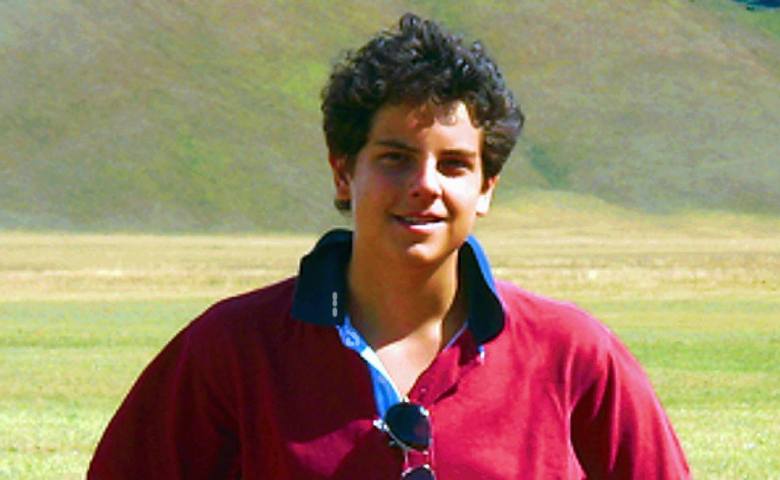
A backpack on his back, a laptop under his arm, a camera in his hands, and Jesus in his heart. An example of a modern halo guy is Carlo Acutis (March 5, 1991 – October 12, 2006), who is worth following. He was supposed to be canonized on Sunday, April 27, but the canonization was postponed due to the death of Pope Francis.

Fifteen-year-old modern apostle

Image: profimedia.eu

Carlo Acutis was a normal boy – straightforward, spontaneous, and likable, look at his photo. He loved nature and animals, played football, and had many friends among his peers.

He was attracted to modern means of communication and was an enthusiast of computer science. As a self-taught artist, he created programs to transmit the gospel and communicate values and beauty. He had the gift of attracting and was seen as a role model.

He attended Mass every day and stayed in adoration before the Blessed Sacrament for a long time. Carlo used to say: „ Go straight to paradise if the Eucharist is approached every day!“

Excerpts are from a homily by Cardinal Agostino Vallini, delivered at the beatification ceremony of Carlo Acutis on 10 October 2020 in Assisi.

„Carlo Acutis is very easy to follow in a sense. He didn’t do anything that each of us couldn’t,“ says priest, university teacher Martin Majda.

„ When we compare him with Padre Pio, who had supernatural gifts that man does not normally have, we might think that holiness is unattainable. But we can all imitate Carl’s example, both the elderly and the youth.“

PILGRIM OF HOPE

The canonization of the Eucharistic pilgrim in the jubilee year, with the motto Pilgrims of Hope, is incredibly apt. Although Carlo did not live to see the 2025 Jubilee, he was an exemplary pilgrim of hope during his fifteen years.

„ He grated it from the benevolent Lord God and continued to give it. At home in the family, at school, to friends, to the poor – to everyone he met,“ emphasizes Martin Majda.

„He was sure that God was good and would forgive us; that we should not be sad when sins trouble us. Nor are we to fall into hopelessness and despair when the test of sickness and death comes. In all this, Jesus shines for us and brings light to these realities. Carlo was aware of this and encouraged this hope.“

Posted in Nezaradené | Leave a comment

Jesus calls everyone to be an apostle …

FIRST REVELATION: The resurrected Christ was given to Mary Magdalene; that’s what the evangelist Mark tells us. Jesus then accompanied the disciples to Emmaus and finally appeared to the eleven apostles (compare Mk 16:9-15). In all these revelations, Jesus wanted to restore their peace, stimulate their faith, and revive the apostolic mission to which they were called. It is true that when Master needed them the most, his disciples were cowards. Even after the resurrection, they were still confused and full of doubts. Christ „ revealed himself to the Eleven as they sat at the table and reproached them for their unbelief and hardness of heart for not believing those who saw him resurrected“ (Mk 16, 14).

Despite everything, Jesus did not hesitate to confirm them in their vocation: they were chosen as his witnesses, and he did not want to replace them with others. God’s commission ended this visit: „Go into the whole world and preach the gospel to all creation“ (Mk 16, 15). The gift of a vocation for an apostolic mission belongs to them, even if they are not particularly strong or exceptionally well-prepared. This explains the commotion caused by Peter and John when they healed a paralyzed person after a few weeks: „ They knew that they were unlearned and simple people, so they were shocked “ (Acts 4, 13).

Apostles with their gifts and faults will be „fishermen people“ sent to all the seas of the earth. This is how everyone realizes that salvation is God’s work. „Every man and every woman is a mission, and that’s why they live on earth (…). The fact that we are in this world without prior decision of our own leads us to realize that there is an initiative that precedes us and calls us into existence. Each of us is called to think about this fact: I am a mission on this earth, and therefore I am in this world“[1].

God reckons with our strengths and weaknesses …

SAINT PAUL he understood well what it means to be an apostle of Jesus Christ and expressed it in these words: „ So I will rather boast of my weaknesses, so that the power of Christ may dwell in me. That is why I delight in weaknesses, in disgrace, in need, in persecution, and anxieties for Christ’s sake; for when I am weak, then I am intense “ (2 Cor 12, 9-10). Our own weakness can be a strength for the disciple, because when we find ourselves without our own resources, we find that we have the greatest gift that always remains to us: God, who gives himself entirely to us. That is why the apostle of the nations boasts of his weaknesses. „ He does not boast of his actions, but of the action of Christ, who works precisely in his weakness“.

When proclaiming Christ’s message, the experience of our own vulnerability does not have to shake us if we have a humble attitude and complete trust in God’s action. The evangelization of the Church belongs to him, and not to us. We feel, like St. Paul, that we are a „ clay vessel“ (2 Cor 4, 7), which God fills with the treasure of his grace, and thus in it we undeservedly receive priceless jewels. 

The kingdom of God is not realized only because of a good human strategy, nor does it rely only on our ability to face new challenges. Although all this can certainly be part of our contribution, we find strength and knowledge for our mission in God. The Lord unites us with his kingdom because he wants to count on us to expand it: and that is wonderful. „ As our union with the Lord grows, and our prayer intensifies, we too go to the essence of things and understand that it is not the power of our means, our virtues, our abilities that bring about the kingdom of God, but that it is God who works miracles precisely through our weakness, through our inadequacy to the task.

Finding strength in the Risen Christ …

„GO WORLDWIDE and preach the gospel“ (Mk 16, 15). This is the imperative command of the Master. They were gathered in the same house, perhaps at the same table, where Jesus gave them his Body to eat and his Blood to drink. The apostles did not apologize for their lack of fidelity or moral strength. They did not even speak to the Risen Lord, although they certainly thought that the mission was too great. How did they feel when they heard those words of Jesus? They certainly felt as if they were dizzy, having been entrusted with such an ambitious message. „Shall we reach the whole world?“ they asked. „ After all, we couldn’t even show ourselves to those in our own city“.

When they only looked at themselves, it was easy to convince themselves that this mission was utopian. But the sight of the Risen Lord changed everything: they looked at the palms of his hands, at his side, at his eyes; if Jesus wanted them to travel the whole world, they would do it in his name. For this mission, St. Josemaría proposed the following itinerary: „Know Jesus Christ; make him known to others; take him with you everywhere. This mission, which concerns all the baptized, is carried out primarily by allowing ourselves to be attracted by Jesus. „ Let yourself be loved by him, and you will be witnesses whom the world needs so much“. As with St. Peter, our own experience with the Lord’s love is the starting point for attracting others to this love: “We cannot fail to talk about what we have seen and heard” (Acts 4, 20).

Faith grows through personal testimony, it is strengthened in mission. This is how we are sure that making Jesus known to other people is the most precious gift we can give. As a good mother, Mary encourages us to be able to give our best with God’s grace.

Posted in Nezaradené | Leave a comment