
-
Recent Posts
Recent Comments
Archives
- September 2026
- August 2026
- July 2026
- June 2026
- May 2026
- April 2026
- March 2026
- February 2026
- January 2026
- December 2025
- November 2025
- October 2025
- September 2025
- August 2025
- July 2025
- June 2025
- May 2025
- April 2025
- March 2025
- February 2025
- January 2025
- December 2024
- November 2024
- October 2024
- September 2024
- August 2024
- July 2024
- June 2024
- May 2024
- April 2024
- March 2024
- February 2024
- January 2024
- December 2023
- November 2023
- October 2023
- September 2023
- August 2023
- July 2023
- June 2023
- May 2023
- April 2023
- March 2023
- February 2023
- January 2023
- December 2022
- November 2022
- October 2022
- September 2022
- August 2022
- July 2022
- June 2022
- May 2022
- April 2022
- March 2022
- February 2022
- January 2022
- December 2021
- November 2021
- October 2021
- September 2021
- August 2021
- July 2021
- June 2021
- May 2021
- April 2021
- March 2021
- February 2021
- January 2021
- December 2020
- November 2020
- October 2020
- September 2020
- August 2020
- July 2020
- June 2020
- May 2020
- April 2020
- March 2020
- February 2020
- January 2020
- December 2019
- November 2019
- October 2019
- September 2019
A heart without closure, intricacy and compromise…
Be careful that none of you has an evil and unfaithful heart and falls away from the living God › Heb 3, 12.
Liturgical reading from the Letter to the Hebrews (Hebrews 3.7-14) warns the Christian community of the danger of „slipping to the corruption of the heart“. These words apply to all members of the Church, including priests, sisters, and bishops. There are three words, three threats to the heart, against which God’s word warns: hardness, stubbornness, and succumbing to seduction. We can ask ourselves: Do I have a hard heart? Do I have an inaccessible heart? Am I making my heart grow? Am I afraid of its growth? It always grows through trials and difficulties; it grows, like all of us, since childhood: we learn to walk by falling. How many times have we lost while we went from toddling to stepping? But through difficulties, it grows. The hardness of the heart is related to its closure. This attitude is harmful, and it is small-mindedness. Small-mindedness is an ugly attitude in a Christian; he lacks the courage to live. It closes. He’s small-minded.
The blunt warning in the Letter to the Hebrews reading is before “hardening” heaven with „spiritual stubbornness. “ Such an attitude was blamed on St. Stefan by those who stoned him. It is the attitude of “ideologists” that “conceited” Ideology is a burden. God’s Word, the grace of the Holy Spirit, is not an ideology: it is a life that allows you to grow, to keep moving forward, and also to have your heart open to the signs of the Spirit, the signs of the times. But stubbornness is also conceit; it’s pride. It is stubbornness, that stubbornness, that does so much evil. Stubborn and stubborn, as the text says, these are ideologues. But don’t I have a stubborn heart? Let’s all think. Am I able to listen to other people? And if I have a different opinion, I say: „Well, I’m of this opinion…“ Am I able to discuss this? Stubborn people don’t discuss, they don’t know because they always defend themselves with ideas, they are ideologues. And how much evil do ideologies do to God’s people? How much evil! Because they prevent the action of the Holy Spirit.
About the third is a dangerous attitude of succumbing to seduction and mutilation. It is an avalanche to reach a kind of compromise and simultaneously be on both sides. Yes, I follow the Lord, but I like this seduction, so just a little… And you start living a double life as a Christian. Let’s use the word that the great Elijah said to the people of Israel at a particular moment: „ You cry on both legs. “ Limp with both legs, and neither is firm. That’s a life of compromise. – „Yes, I’m a Christian, I follow the Lord, yes, but I leave this and this is a pass…“ – And these are the lukewarm ones who always compromise: Christians compromise. We too often do it: a compromise. When the Lord shows us the way, both with the commandments and with the inspiration of the Holy Spirit, I like this and try to follow two tracks, limping on both feet.
Posted in Nezaradené
Leave a comment
Human evolution. Hoe it evoled and what staped it.
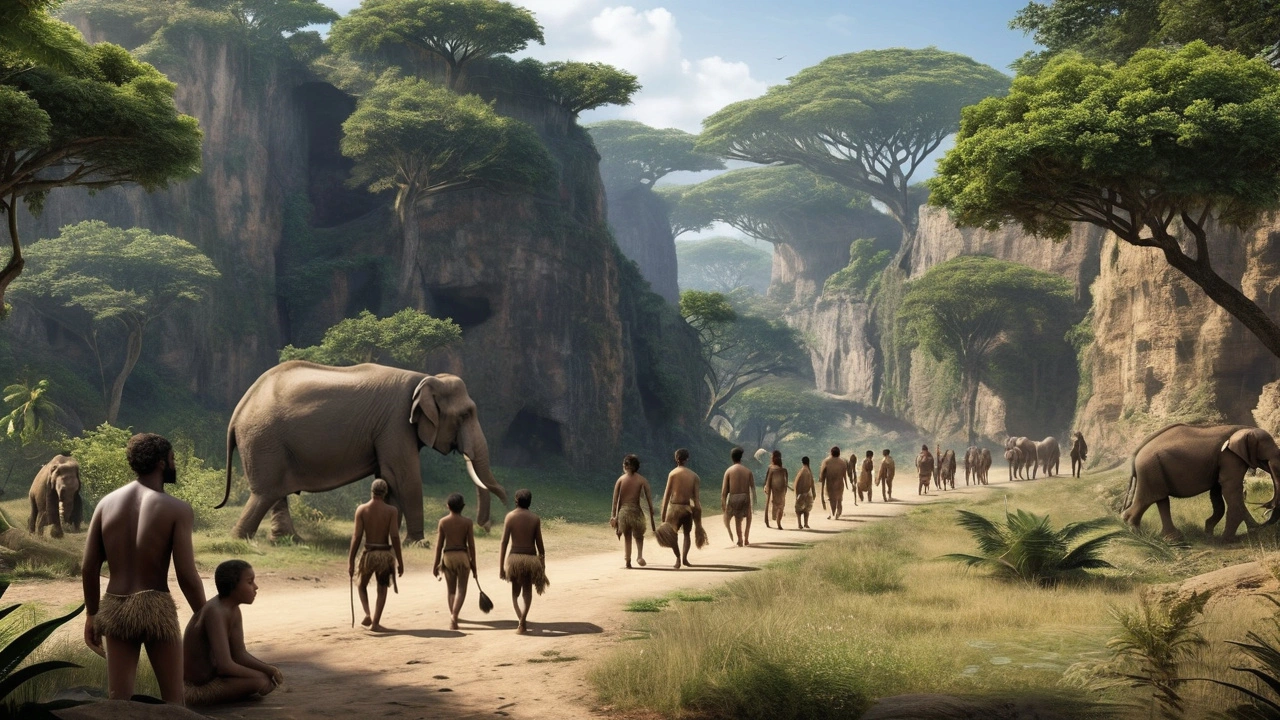
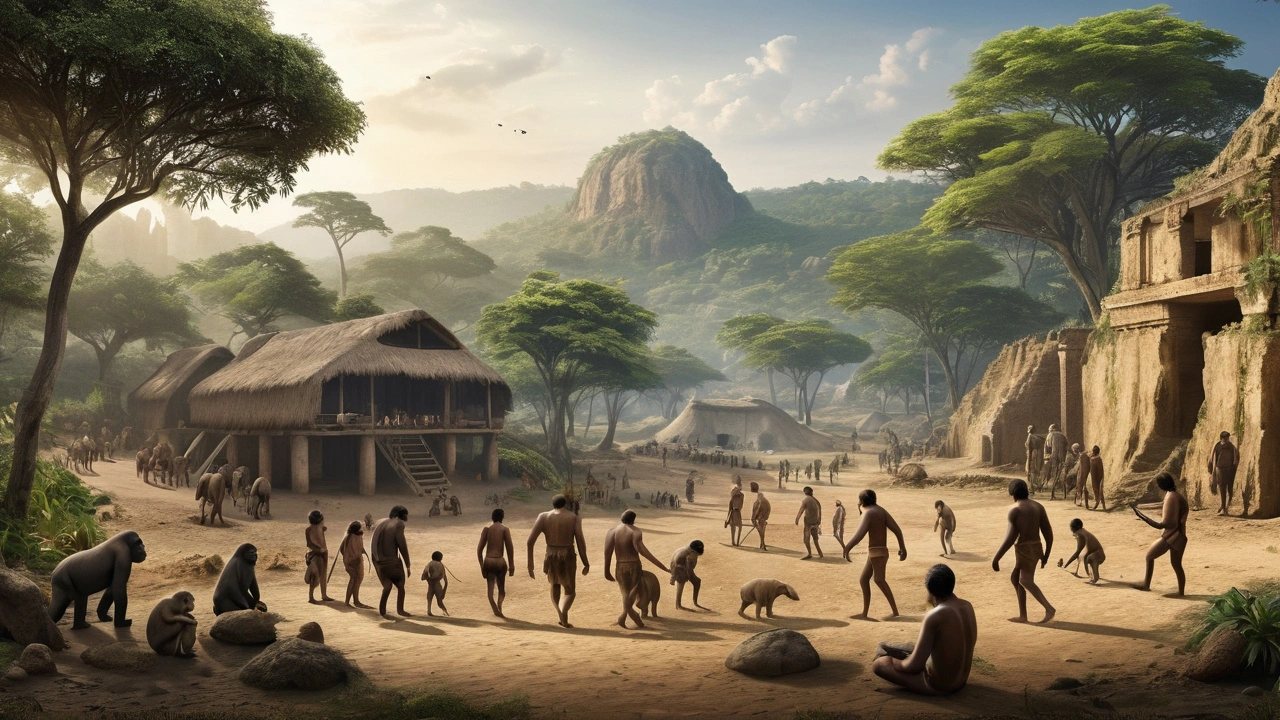
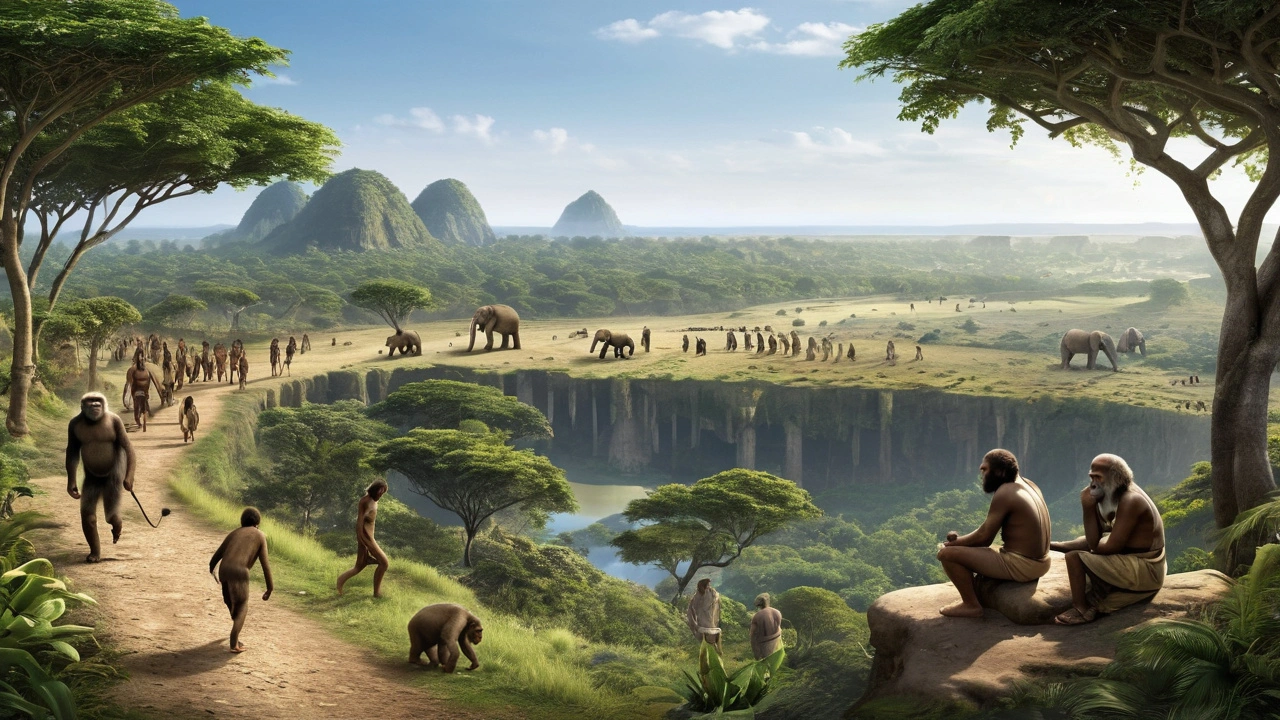
Human development is a fascinating story that begins millions of years ago when our ancestors began to differentiate themselves from other primates. The first hominids appeared in Africa, and since then, humans have come a long way towards what they are today.
This process is much more complex than it might seem at first glance. Not only were these physical changes, but changes in behavior and culture also played a vital role. This article will scrutinize the key milestones of this development and the factors that influenced it.
From the original Australopithecines to Neanderthals and modern Homo sapiens, every step of human evolution is full of discoveries and moments that shaped the world as we know it today. We will also examine how migration and changes in the environment have influenced the development of our species and what cultural and social factors have played a key role in the formation of contemporary.
Human origin
Human development begins in the deep past when our ancestors shared common ancestors with today’s chimpanzees. About seven million years ago, these lines split. The first hominids, known as australopithecines, appeared in Africa. These creatures were still very similar to monkeys initially, although they already walked on two legs. Their movement was more like swinging, and walking was often a combination of climbing trees.
Notably, the first signs of tool use began to appear in these early hominids. For example, Australopithecus afarensis used sharp stones to facilitate access to food. This moment could have been a turning point for our ancestors, as the incipient use of tools signaled the onset of higher cognitive abilities.
Then, about two and a half million years ago, the first representatives of the genus Homo, Homo habilis, appeared. An interesting fact is that it was with these people that the first tools appeared, which were already purposefully worked. Homo habilis not only used tools but also produced them, reaffirming the growing complexity of our ancestors’ thinking.
Subsequently came Homo erectus about 1.9 million years ago. These people were the first to control and use the fire in a controlled manner. Fire has changed the way Homo erectus lives incredibly. It was a source of heat and protection and helped prepare food, leading to better health and a longer life. Homo erectus was also the first to leave Africa and go on long journeys to Asia and Europe.
One significant step in evolution was the discovery of Homo sapiens roughly 300,000 years ago. These people distinguished themselves not only in their physical form but also in their cultural aspects. The first Homo sapiens began to create art and left behind cave paintings that still fascinate us today. This shows that they began to think abstractly and develop symbols with deep meaning.
As famous paleoanthropologist Louis Leakey puts it:
„Without understanding our origins, we would never truly understand who we are.“
It is fascinating to see how our ancestors were able to adapt to the changing environment and how their innovations led to the fact that today, we are able to live in such diverse conditions.
The Origin of Man is a story full of discovery, adaptations, and overcoming challenges. We can draw lessons and inspiration for the future from our roots. Even though we have gone down a long and difficult path, every stage of our development has played a key role in what we are today.
Neanderthals and Homo sapiens
Neanderthals and Homo sapiens are the two best-known species in human evolution. Neanderthals, known scientifically as Homo neanderthalensis, inhabited Europe and part of Asia approximately 400,000 to 40,000 years ago. They were more robust and had larger skulls than modern men. Despite the depiction common today, it must be realized that Neanderthals were not primitive. They had advanced tools, skills, and even funeral rituals, indicating a certain level of spiritual life.
Homo sapiens, which is the species we belong to today, appeared in Africa about 300,000 years ago. It gradually spread throughout the world. Scientists have long argued about whether Neanderthals and Homo sapiens fought wars with each other or whether they established friendly relations with each other. Recent genetic studies show that the two species interbred with each other. Up to 2% of DNA in some modern humans outside Africa comes from Neanderthals.
In addition to the physical differences between the two species, there were also fundamental cultural differences. Neanderthals were hunters and gatherers who used simple tools. However, Homo sapiens was able to produce more complex tools, allowing it to better adapt to different environments. They also had advanced artistic expressions, as evidenced, for example, by the painting’s outline in Spanish caves.
An essential aspect of Neanderthal and Homo sapiens life was the interactions between the two species. According to genetic evidence, several encounters between them led to gene exchange. These interactions could have taken place in different ways. Some theories discuss peaceful coexistence and trade exchange, while others mention possible conflicts. In his book, the anthropologist Svante Pääbo states that “the genetic traces left by Neanderthals in the DNA of modern humans are a valuable window into our evolutionary past.”
Although Neanderthals eventually became extinct, their genetic traces live on in us. Researchers are still debating the exact cause of their demise. Some scientists suggest that climate change may have played a vital role, while others believe that competition with Homo sapiens or epidemics may have contributed to their demise.
Migration and cultural development
Since the earliest times, people have been constantly on the move. One of the most fundamental moments in human history was the spread of Homo sapiens from Africa to other parts of the world. This process began approximately 60–70 thousand years ago and significantly affected not only the physical appearance of people but also their culture and social structures.
Migration was not just about moving from one place to another. With each new environment, people had to adapt to new conditions. This meant not only a different diet but also different survival techniques. In Africa, humans hunted large animals; in Europe and Asia, they had to adapt to harsher climates and hunt more minor game.
Not only natural conditions but also interactions with other groups of people significantly impacted the development of culture. When people came into contact with new groups, goods, technology, and even genes were exchanged. One of the most famous examples is the interaction between Homo sapiens and Neanderthals in Europe. Although Neanderthals eventually became extinct, traces of their genes can be found in the genetic makeup of today’s humans.
This cultural development also involved the emergence and diffusion of various technologies, from simple stone tools to more complex weapons and tools. For example, making fire was revolutionary because it allowed people to cook food and warm themselves in colder climates. The creation of dwellings and clothing has also improved, allowing people to survive even in the harshest conditions.
In addition to technological advances, there have also been significant cultural developments. The first works of art, such as paintings in caves and statuettes, show us how people began to express their creativity and spiritual life. The discovery of fishing grounds and tools points to how people learned to share knowledge and pass it on to future generations.
The agricultural revolution also had a significant influence on the development of humanity. While humans used to be hunters and gatherers, the transition to agriculture around 10,000 years ago marked the beginning of a new period. This transition enabled the creation of the first permanent settlements and, with them, the first cities. People began to settle in one place, which led to the further development of culture, technology, and social structures. Migration and cultural development are about physical transfer, mutual influence, and exchanging knowledge and skills. As people traveled from one place to another, they influenced and were influenced by the environment in which they found themselves. This process shaped our physical body, mind, and culture.
Modern man
Unlike his predecessors, modern man could create complex tools, build dwellings, and develop large-scale social structures. A significant milestone was the individual’s physical survival and ability to communicate and cooperate within the group.
Climate and environmental changes have had a significant influence on the development of modern man. As people migrated from Africa to other parts of the world, they had to adapt to different – conditions, from the icy plains of Europe to the tropical rainforests of Asia. This migration has contributed to the diversity of the modern human gene pool. An example would be the archaeological finds in a cave in Morocco, where the skeletons of our ancestors, about 300,000 years old, have been discovered, which shows that, even then, there were several types of people with different looks and abilities.
One of the most essential qualities of modern man is the ability to think abstractly and express himself artistically. In rock paintings in caves worldwide, we can see the first attempts to record the world around us. These paintings are not only works of art but also important historical documents that provide us with insight into the lives of our ancestors.
The introduction of agriculture some 10,000 years ago marked a huge turning point. People began settling down, forming settlements and, thus, more complex social structures. Agriculture allowed the emergence of food surpluses, which led to the specialization of labor and the creation of the first cities. Developing writing, science, and technology is also related to this.
“People have become creators of their own evolution,” says paleontologist Chris Stringer of the Natural History Museum in London. “Our cultural capabilities have transformed us into the most complex species on Earth.”
Interestingly, modern man shares his genes with Neanderthals and Denisovans. According to genetic studies, most of today’s population has a small proportion of Neanderthal genes, indicating that these species have interbred. As a result, we gained several genetic benefits that helped us survive and thrive in different conditions.
Modern man has significantly influenced the planet in recent centuries – from industrialization to technological revolution to global climate change. Our ability to change the environment around us has no parallel in the animal world. However, the fundamental question remains: what effect will these changes have in the future, and how will humanity cope with them?
There is no doubt that the development of modern man is a fascinating and complex story. Our ability to adapt and innovate has brought us here, but the future depends on our decisions and actions.
Posted in Nezaradené
Leave a comment
Stewardship.
God did not conquer the whole world with angels! But already in the Book of Genesis (Gn 1, 28-29) we learn that he entrusts the entire work of creation to man. Today’s first reading and the Psalm remind us of this, even at this time of pandemic in the world: „What is man that you remember him, and the son of man that you take him in? You made him only a little less than the angels, you crowned him with glory and honor, and you have put all things under his feet.“ God has given us everything to manage – He is the Owner of the gifts we have received or are yet to receive – „ man what you have that you would not have received.“ (1 Cor 4,7)Beloved, let’s stop today and think about how I manage the property entrusted to me – I am not wasting it. Do I respect him? … But let’s not stop at managing material possessions and goods – yes, that is also necessary, except that none of us will take with us into eternity anything that he has naked in this world. Everyone comes before God once, and nothing big, nothing special will be required of us – maybe to show „the palms of our hands. “ The message does not mean only ” wisdom“ command but works for the common good for me and others. In practical life, it’s about the willingness to rub one’s hands for another, admit calluses on one’s palms, and give one’s hand to a good work… so that not only the tongue works, but also the hands, not to mention the heart, which in my hands can I can give … My dears, what will my palms be like…? Beautiful without calluses – but empty …, or sore, torn off – but full …?
Posted in Nezaradené
Leave a comment
A stage in which our ancestor was conscious neither of himself nor of God.
When did the Creator appoint the time to begin man’s evolution? We don’t know, and we won’t know exactly. It could have been sometime in the early Neogene, 23 million years ago. The important thing is that from then on, God led our ancestors, slowly, step by step, to greater and greater perfection. We can speak of one unbroken line leading up to today. Other branches have gradually started to branch off and diverge from this line. Side lines of development and ended blindly. Either they became extinct or the present-day great apes. We find in them the remains of what in the past were considered to be the direct ancestors of man. But we know little of the actual ancestors from the direct human line. The chipped-off blind layers serve as circumstantial evidence for the existence of the leading human evolutionary line. We find few direct remains because they did not constitute 5 percent of the population in their very existence. Of all actual and false hominoids/human-related species./ Of the 20 or so human remains found, only one belonged to a direct ancestor.
The man began to evolve in East Africa over several million square kilometers. And they are indeed found. They are sleeping the sleep of peace beneath the deposits of the ages. From there, men and other relatives moved to Europe and Asia. Thus, the area of the range of man’s ancestors increased to several million kilometers. Then, too, what has been found is worthy of admiration.
In 1856, Dr. Fontana of France discovered a hominoid skeleton in a lignite mine near Toulouse; by research, anthropologists concluded that it may have belonged to the direct ancestors of man. It was given the name Dryopithecus. It was about the size of today’s 12-year-old child, who lived in forests and was fed on plant food . More than half a thousand finds of this creature have been found in Africa and Asia. They showed considerable variability according to the conditions in which they lived. It is almost impossible to know which genus continued to evolve and moved on to man. One thing we can say for sure, however, is that the great apes, orangutans, gorillas, and chimpanzees alive today have diverged from the evolutionary lineage of the Dryopithecus and have gone their way. God did not choose and ordain their descendants to develop further to greater maturity. It is like when, out of many applicants, many failures drop out. If today a chimpanzee or gorilla can help itself gather food with a stick or build a footstool out of logs to reach an unreachable banana, Dryopithecus did it 14 million years ago. But later dryopithecus did more, but chimpanzee evolution remained at the same level, When did today’s great apes diverge from dryopithecus? The orangutan about 8 million years ago. The chimpanzee and the gorilla once formed a single rof that also branched into two lineages. This happened about 5 million years ago. And this is also the end of the first evolutionary Man, who finally said goodbye to his animal ancestors and embarked on a path of self-development.
Posted in Nezaradené
Leave a comment
About how man came to be.
A Christian can believe in evolution as an ongoing work of God in which God is constantly involved, and can also believe in the origin of man’s evolution. It is unlikely that God would use two different methods in creation. Recently, there has been speculation that animals and nature came into existence through evolution but that God created man directly, as recorded in the Book of Genesis. However, God does not need to change the methods of creation.
There is one strange phenomenon in the universe. There is the fact that life exists only on our planet. Scientists have observed that life evolves from the less perfect to the more perfect. Life needs a tremendous amount of energy for its existence. But how did it begin? Who gave the first impulse? Who decreed that the energy generated by thermonuclear reactions in the stars and in the sun should be used precisely for a form of existence of matter that would be directed against the natural process within entropy? Matter decays and dissipates in vast spaces, uselessly releasing immense amounts of energy into enormous spaces. On the other hand, there is the Earth on which energy is used. How ingenious. But who arranged it that way? To say that the jet of coincidence is unsustainable. The probability of such a coincidence is zero. According to Oparin’s theory of the origin of life in water, coacervates of organic molecules are at the origin. Imagine the mighty flow of a swollen river. I throw a newborn baby kangaroo. Materialists claim this baby will exist in the river and even evolve successfully. But it has to be said that this is unlikely. If the baby kangaroo survives, it will be a miracle. And it wouldn’t help if we threw thousands of babies into the river; they’d all die.
We need energy to make steel from iron ore. The process must be controlled. We don’t need energy to rust a fence, which happens spontaneously. The emergence of life so randomly, without control, is nonsense. And those who claimed this were posing as geniuses of modern science. All creation, starting with the Cambrian period, which began about 600 million years ago, to the beginning of the Neogene, were preparations for the creation of man. The birth and development of man can be divided into four stages.
1 A stage in which our ancestor was conscious neither of himself nor of God.
2 The stage in which our ancestors became conscious of themselves but not yet of God.
3 The stage in which our ancestors became aware of both themselves and God and became truly human.
4 The stage in which man rejects God and commits sin.
Posted in Nezaradené
Leave a comment
Can one who does not care about his brother love God?
Love is concrete and expressed by doing good; on the contrary, indifference reveals a lack of love towards God and one’s neighbor. The apostle John understood what love is, experienced it, and, entering the heart of Christ, understood its expression. And so, in his letter, he tells us how to love and how we are loved. God is the one who loved us first. And when showing love to others, we must not be afraid „ get our hands dirty“. God loves first.
The eyes of love come from God. I begin to love, or I can start to love because I know He loved me first. If he didn’t love us, we certainly couldn’t love. If a child were born and could speak after just a few days, it would certainly explain this fact: I feel loved by my parents. And what parents show their child is what God shows us: he loves us first. And this gives birth and growth to our ability to love. This clearly defines love: we can love God because he loved us first. „If someone says: «I love God» and hates my brother, he is a liar. John does not say about such a person that he is “uneducated,” or you are wrong, “but calls him a „liar. I’m praying, I’m getting ecstatic… and then I’m writing other people off: I hate them, I don’t love them, or I’m indifferent to them… It doesn’t say: „You got a “ wrong, but it says: „You are a liar. This word in the Bible is clear because being a liar is intrinsically proper to the devil: he is the Great liar, and he tells us in the New Testament that he is the father of lies. This is the definition of Satan that the Bible gives us. And if you say that you love God and you hate your brother, you are on the opposite side: you are a liar. There are no concessions on this. Whoever doesn’t love a brother is lying about the love of God ...feet can find excuses for unloved, e.g., someone can say: Father, I have no hatred, but so many people hurt me, I can’t stand their rudeness and rudeness. John writes: «For whoever does not love the brother he sees cannot love God whom he does not see». If you cannot love people, from the closest to the most distant, with whom you are in contact, you cannot tell us that you love God. You’re a liar. It is not only about direct feelings of hatred, but it can also be about indifference to the problems of others. However, love is expressed by doing good.
Posted in Nezaradené
Leave a comment
Feast of the Baptism of the Lord C Lk 3,15-22
When we listen to the expression of an unknown person, for example, on television or social networks, we often ask: Who is it? What does he think of himself? By what right does he speak like that? And that times do not change, we also see from the Gospels. People who listened to Jesus, saw his deeds, and followed his ways also asked: Who is this? Who gave him the power to act like this? However, these questions are still relevant after two thousand years. They are put by children in religious classes and by adults in various conversations. At the same time, it makes no difference whether believers or non-believers, simple or educated people set them.
Today’s holiday answers these questions first through the mouth of the prophet Isaiah: Behold, my Servant, I will bring him; summoned mine, I am well pleased with him. I put my Spirit on him… Then, through the mouth of the heavenly Father himself: You are my beloved Son, I am well pleased with you. And finally, the apostle Peter, led by the Holy Spirit, declares: He is the Lord of all! It is clear from these words that Jesus is Servant, Son, Lord!
My Servant – indicates Jesus’ belonging to the human race. He became our brother and came to serve. The psalmist puts a testimony about it in the mouth of the Messiah: You do not wish sacrifices and gifts; you have opened my ears. Thou askest not the sacrifice nor the sacrifice of atonement ⁇ Renia, therefore said I, Behold, I come. Jesus himself confirms the psalmist’s words when he says: The Son of Man did not come to be served, but to serve. Therefore, at the very beginning of his public ministry, he enters the waters of the Jordan as an ordinary human servant and is baptized.
When the expression My Servant comes from God’s mouth, he breathes with intimacy, closeness, respect, and love. In the Old Testament, God calls the noblest men by this expression, whom he calls to a special mission. Although he does not give them superstition documents, he endows them with his Spirit. Jesus is a servant in the fullest sense of the word: he is the most faithful; the Father brings him to himself, has a crush on him, puts his Spirit on him, and participates in the intimate life of the Father.
The Lord’s Servant is a noble messianic address that the first Christians also used in their prayers. Excerpts of the ⁇? Vol of one of the prayers can be found in the Acts of the Apostles: Stretch out your hand so that healings, signs, and wonders may take place through the name of your holy Servants of the ⁇? Nik Jesus.
Beloved Son – this address surpasses all other addresses. The writer of the letter to the Hebrews also dwells on him when he says: After all, when did he say to any of the angels: You are my Son, I have begotten you today? Let’s notice what wealth of love and emotional relationships is hidden in the words of the heavenly Father. These words are robust even when spoken by a human father or Mother, but how much stronger are they when spoken by God himself? The Father reveals the Son as a reflection of his glory and an image of his essence. All our intimate addresses addressing Jesus are only a tiny echo of the voice heard from heaven at his baptism: You are my beloved Son.
Lord of all people – Jesus, the Son of God, receives with God’s name: Lord, Lord, Kyrios… also rule over all people. This is how Peter sees him when he says in a sermon to the centurion Cornelius: He is the Lord of all. And so Paul also saw him, writing to the Philippians: That every tongue should confess: Jesus Christ is Lord for the glory of God the Father. Jesus is Lord by his Divine origin ⁇ d and ransom offering on the cross. His Father gave him the nations as an inheritance, and he appropriated them as brothers and sisters through the mystery of the Incarnation and his blood shed on the cross. Earth kings also subdue nations but become masters by shedding the blood of others. Jesus shed his blood as a sacrifice of infinite love. Therefore, all power in heaven and on earth is given to him – he is the Lord of all people.
Saint Teofan Zatvornik (1815–1894) talks about the reasons that cause the loss of baptismal grace. First, it leaves the Church and the sacramental life. This causes the shoot of the Christian life to dry up. The second is submission to the body’s appetites, which causes various passions to take root in the heart. Third, it is the loss of the ability to see the primary goal of life and follow temporary goals that satisfy bodily pleasures and quench the thirst caused by pride and vanity. The fourth is forgetting the soul. Many other things overshadow prayer, God’s fear, or conscience. A fifth is the failure to gain order in life, created by keeping the commandments. Saint Theophan says that all these reasons for losing baptismal grace are interconnected and often cannot be distinguished. Parents who have neglected the proper formation of their children are responsible for this condition.
Through our baptism, we became partakers of the mystery that appeared at the baptism of Jesus. We have become his servants and share in his official mission, just like his Mother, who expressed it with the words: I am the Servant of the Lord! God also called us at baptism: My Servant. I no longer call you servants, but I have called you friends. Baptism gives us a great right: In Christ to serve God, our Father, and all our brothers and sisters! In Christ, we became beloved children over whom heaven opened, and God’s love poured out on our souls. And although we may be afraid of the mission that comes from our baptism, Jesus assures us: Do not be afraid, little flock, because it pleased your Father to give you the kingdom.
Let us protect baptismal grace as the greatest gift, give thanks daily for the gift of baptism, and serve God as faithful sons and daughters so that we may share in the kingdom of Christ.
Posted in sermons
Leave a comment
How did the universe come into being?
We must humbly admit that we don’t know. And we probably won’t. There are many different explanations for the origin of the world throughout history. These include various mythologies, fables, and fables. There was a time when people believed them. If the world existed for another 500 years, people at that time might look back with a smile at the current conception of evolution. The atheists of the communist era lumped together mythology, fable, and the biblical interpretation of the world. To them, the book of Genesis was mythology—a great mistake. A believer is, therefore, a believer who does not believe in mythology but in the message of God. The book of Genesis does not describe the mechanism of creation. It focuses on a more important fact. God says. I am the creator. Man, look around you at all that I have created for you. See how I love you. Do you see the beauty here? The book of Genesis is understandable to everyone.
Whether rich or poor, educated or uneducated. The Book of Genesis could only have been written by the inspiration of the Holy Spirit. The Book of Genesis is not a scientific study of the world’s origin but a proclamation of God’s omnipotence, greatness, and love. It is necessary to interpret the Book of Genesis correctly, not literally. For example, it says that God created the world in 7 days. As we know, a day is short. The day mentioned in the Bible is God’s day, not ours. We don’t know how long God’s day lasted. There is no problem accepting evolution, of course, as interpreted by religious scientists and many Nobel Prize winners. God has written the universe’s history and life for billions of years.
Posted in Nezaradené
Leave a comment
Last judgment.
Can you imagine coming to God’s judgment, hearing the assessment of your life, and saying, “What are you talking about? I don’t remember it that way. When have I seen you like this and like that?” It would probably be like a bad dream, wouldn’t it? Those from the left were somehow surprised by today’s Gospel.
And now, try to imagine a young woman being courted by a young man. He keeps telling her he loves her. He invites her to dinner, gives her flowers, and tells her how beautiful she is. But he makes almost no effort to get to know her, to get to know her heart. He never tries to comfort her when she’s struggling, nor to help her when she’s sick; he doesn’t ask her how she feels, what she’s going through; he doesn’t listen to her; he doesn’t care what she experienced that day; and she doesn’t even remember what makes her happy. One day, he proposes to her. Should he be surprised when she rejects him?
We could compare this young man to the “caps” from today’s Gospel reading to those from the left. They don’t understand why Jesus doesn’t want to let them go to heaven. Maybe they confessed their love to Jesus but didn’t show it. Jesus does not want to drive us away; he does not want to lose us. But how do we know him when we talk about Him and love for Him but do not show Him love here? Is it true love? Does the young man from that example love the young woman?
To truly love is to know whether God or the people around you genuinely. This expression is even used by Scripture to express love: Adam knew his wife Eve, that is, he loved. And we can only know when we notice. It starts with noticing Jesus, who is with me.
“Jesus, I don’t want to miss you!”
Posted in Nezaradené
Leave a comment

