
-
Recent Posts
Recent Comments
Archives
- September 2026
- August 2026
- July 2026
- June 2026
- May 2026
- April 2026
- March 2026
- February 2026
- January 2026
- December 2025
- November 2025
- October 2025
- September 2025
- August 2025
- July 2025
- June 2025
- May 2025
- April 2025
- March 2025
- February 2025
- January 2025
- December 2024
- November 2024
- October 2024
- September 2024
- August 2024
- July 2024
- June 2024
- May 2024
- April 2024
- March 2024
- February 2024
- January 2024
- December 2023
- November 2023
- October 2023
- September 2023
- August 2023
- July 2023
- June 2023
- May 2023
- April 2023
- March 2023
- February 2023
- January 2023
- December 2022
- November 2022
- October 2022
- September 2022
- August 2022
- July 2022
- June 2022
- May 2022
- April 2022
- March 2022
- February 2022
- January 2022
- December 2021
- November 2021
- October 2021
- September 2021
- August 2021
- July 2021
- June 2021
- May 2021
- April 2021
- March 2021
- February 2021
- January 2021
- December 2020
- November 2020
- October 2020
- September 2020
- August 2020
- July 2020
- June 2020
- May 2020
- April 2020
- March 2020
- February 2020
- January 2020
- December 2019
- November 2019
- October 2019
- September 2019
The Lost Son Lk 15,11.32
Since the Father’s love for his son is highly significant, he can forgive him when he shows the will to correct everything he has messed up by his actions. It is precisely the same a million times over in the relationship between God and man, who loves him immensely, which he has already proven countless times. It is a pity that man is blind, deaf, and inattentive to the perfect God, and even in this case, Christ’s statement applies: So even in heaven there will be greater joy over one sinner who repents than over ninety-nine righteous people who do not need repentance ( Luke 15:7).
God is a benevolent Father, which is the main lesson of the parable. We first see how the Father in the parable respects human freedom, even if the son abuses it, and then waits for his return. When he returns, he restores his filial dignity, gives him a ring, the best clothes and shoes, and seems to like him even more. A cold silence or a word that would humiliate and punish the son does not come from the Father. He does not set any time for the test, as the son probably expected when he tells him: Take me as one of your day laborers. That’s how God is to convert sinners! Let’s turn away from sin and return to the Father. The essential element of conversion is God’s goodness, and only then does man’s cooperation consist of recognizing one’s guilt and the willingness to return.
God also wants to use a parable to say that even a Christian must be merciful. He wants a person to understand his merciful action, accept it as his own, rejoice in the conversion of the wandering ones, and be willing to behave in a friendly manner towards them. A person is instead a harsh and ruthless judge of the faults of others, which is pointed out by the second part of the parable. Although the older son was his Father’s devoted and diligent helper, he was more distant from God’s mindset than his prodigal brother. The older son was a person “without a heart”; for him, the younger brother was “paid,” and he was not worth addressing or forgiving (Lk 15:1-2; Mk 2:15-17). The Gospel does not want to influence a person’s free decision and, therefore, leaves the question of whether the older brother obeyed his Father’s warning unanswered. But no one can doubt that the elder son, in the case of stubbornness, was more profligate than the younger. Public opinion can make it very difficult for people who have slipped into guilt or suspicion of guilt to return to society, not to mention released prisoners.
How do I treat people with a sinister past? I say unchristian: Let’s look at him?! He did not want to know about God for years, and now he has come to the cross. When they go to communion, I have nothing to look for in front of the altar! Our presumption can very quickly exclude us from the kingdom of God because if the Spirit says that we are all sinners (Romans 3:23), then we should not presumptuously claim with the elder son that we have never transgressed the Father’s commandments (Luke 15:29). God wants to forgive. Still, we often want to block the flow of God’s love by playing the guardians of morality. We prefer to thunder or condemn sinners, the ungodly, and the evil world rather than do good. For a person to be able to follow the path of God’s order again, he needs, in addition to God’s forgiveness, human understanding, and acceptance into brotherhood. In the “elder brothers” community, a weaker and wounded Christian should know God’s benevolent love, which opens the door to a better future. The words: All that is mine is yours… refer not only to material possessions but also to participation in a benevolent fatherly relationship with others.
God patiently waits for man’s conversion, and at the same time, he does not prevent him from going astray, where he quickly learns what an ungodly life tastes like and what perspectives of hopelessness open up for him. Individuals, but also entire nations, testify to this in history. Returnees from a sinful world are usually more faithful than those who have never seriously left God’s ways. The path of sin is often the path to tremendous gratitude for God’s sonship, and wandering is often the felix culpa – the happy fault of the path to God. However, this fact is not an excuse for sin but a celebration of God’s grace. The presumptuous justification of the older son was primarily the Lord’s warning to Israel, who believed they were guaranteed salvation and thus ignored his message. At the same time, it is also a condemnation of our similar attitudes because none of us has a reason to consider ourselves better than others, to curse the ungodly and the immoral, and to call down God’s punishments on them.
Sin always leads to a dead end, as the younger son must have seen. The only way out of it is conversion, the sacrament of reconciliation with all five parts as we see them in the prodigal son: examination of conscience, remorse and good resolution (Lk 15:17-19), confession and the will to satisfaction (Lk 15:21). We also see in history that abandoning God’s ways and leaning towards power, mammon, and sexuality led to a dead end of wars, selfishness, and the destruction of health. In any place we open the Scriptures, we will encounter joy in every description of the return of prodigal sons and daughters, which Jesus himself testifies to when he talks about the joy that God’s angels have over one sinner who repents (Lk, 15, 10).
Posted in Nezaradené
Leave a comment
To bless or not to bless?
Priest Anton Ziolkovsky explained in the introduction what blessing means according to the Catholic Church and who can receive it.
“A blessing is understood as a sacrament, that is, it is the invocation of God’s favor on a person or a situation, and it must be said that anyone can receive it,” Ziolkovsky said, adding that what is required of a person for a blessing is a basic openness to what we call the transcendent, i.e., to God.
A person is always in some moral situation, but this is not completely decisive in whether or not he can receive the blessing, added the parish priest in the subtropical village of Nová Lesná.
Ziolkovsky also pointed out that just as in the case of prayer we say that it should lead to the sacramental life, so “the sacraments should also lead to the sacramental life.”
Many people do not perceive the validity of the controversy surrounding the document Fiducia supplicans, since after each Mass all those present in the church receive a blessing.
“The point and the idea of the blessing is that what is blessed should be by God’s plan and God’s will, and then there is no problem,” responded philosopher and president of the Ladislav Hanus Society, Juraj Šúst.
According to him, the Church is pleased and willing to bless sinners who, however, have the goodwill to purify themselves and direct themselves on the path of the Gospel.
Anton Ziolkovsky noted that the document Fiducia supplicans is specific in that it speaks of the non-liturgical blessing of couples who are in irreligious situations, or same-sex couples.
“With blessings in general, if I go to a rally in the square and I would give a blessing to everybody, of course, the effect of that blessing depends on how internally disposed and open people are to it,” Priest Ziolkovsky said.
The problem with blessing couples of persons with homosexual tendencies, according to Juraj Šúst, is that it is assumed that the relationship of two people is being blessed, but they do not live a pure sexual life, which, according to the Church’s teaching and natural reason, is only possible in a marriage between a man and a woman.
A case of such blessings would not be likened to some corrupt businessman, but rather to a situation where, for example, a cartel would be blessed.
“We probably shouldn’t do that, but, of course, individual sinners have always been blessed and can be blessed by the Church; it presupposes an openness to reform, to repent,” Shust stressed.
Priest Karol Moravcik sees the origin of the uproar over Fiducia supplicans in the Vatican dicastery’s intention, with the Pope’s signature, to bless these couples who, according to the norms of the Church, do not live a regular way of life. “Although some would say that only the Lord God knows,” Moravcik said.
Moravcik, a parish priest in Borinka near Bratislava, pointed out that in the past people married in different ways, for example, by parental agreement or for property. “There was a lot of sin and pain, even in these regular marriages, but culture and society have changed,” he concluded.
“Many people today live in couples and are not married, plus homosexual couples are mentioned more and more often, and a mood has developed in society that pities them and sympathizes with them, tries to understand them – all this has some reflection in the Church as well,” Karol Moravcik continued, adding that he does not consider the blessing of couples to be a complete novelty.
He pointed out that in Cardinal Victor Fernández’s response to the so-called dubia of the five cardinals of last September, signed by Pope Francis, “everything was said in a nutshell that is in the Fiducia, that is, that the Church has a clear understanding of marriage, that we should avoid holding rituals that would imitate the celebration of marriage where marriage is not the issue, but it is written that we must not lose pastoral charity in our relationship with people.”
Karol Moravcik emphasized the sentence that “the defense of objective truth is not to be the only expression of this pastoral love, because it is also to consist of charity, patience, understanding, kindness, and encouragement; we cannot be judges who only deny, reject and exclude…”
“When someone asks for a blessing, he is expressing a request for help from God, a request to be able to live a better life of trust in the Father,” he added.
For such people to come and ask for a blessing at all, presupposes some relationships, friendships, helpfulness, and understanding, Fr. Moravcik thought.
As an example, he cited the situation when in such a context, for example, a priest is invited to visit, something is celebrated, children and grandchildren are introduced to him, and among them, there are those who, despite their life situation, have remained in some type of relationship with the Church and ask for a blessing. “These are not some brash, eyeless people who would brag about their sins and ask for approval. I’ve never experienced that in my long life,” Moravcik said.
According to Anton Ziolkovsky, the question is not whether we agree or disagree with the blessing of irreligious couples, because we must understand the nature of the document Fiducia supplicans, which is, from a purely formal point of view, a document of the ordinary magisterium.
“It is a manifestation of the teaching office which is binding – not infallible, but binding. This means that in this sense there must be a normal respect for the document,” Ziolkovsky said.
He went on to say that the statements of the popes or the offices of the Roman Curia seem to be in a process of “verification,” or in theological terminology, reception. “This means that the life of the Church subsequently verifies whether or not what has been produced is accepted within the Church,” the former secretary of the CCC added.
According to Ziolkovsky, there is no need to create panic or hysteria from this document, although it is a solution that “is new for us, we must respect that it is a decision of the dicastery with the approval of the Pope, so it has a certain gravity, and it makes us think whether the arguments that are used are relevant or not, and then, of course, the future will show to what extent it is right,” he said.
Priest Ziolkovsky sees in Pope Francis a long-standing effort to give signals of openness and welcome to all people on the ecclesial community’s peripheries. “In my opinion, he is not concerned with anything other than simple expressions of humanity and acceptance,” Ziolkovsky mused.
Although we can, in his opinion, argue about whether the instruments the Pope chooses are appropriate or not, we have to admit that we have reserves in this area. “We owe these people a lot – in the human sense and the question of acceptance,” he added.
Ziolkovsky sees as a second, subsequent motive that this document is meant to be a kind of barrier that the Pope has erected to the Church in Germany. “The Church there is much more progressive in this, mentally they have been elsewhere for a long time, but this document has set a boundary for them that we can still imagine this and this again we can’t,” he added.
Blessing as approval?
Juraj Šúst agrees that it is necessary to maintain respect and reverence and to have the will to accept the magisterium, even if it is sometimes difficult, according to him, “but at the same time this quality must be complemented, as it were, by an effort of honest reasoning and justification”.
“It seems to me that if we compare the document of the dicastery of 2021 – that is the so-called note or response, which answers ‘no’ to the question of whether it is possible to bless couples of persons with homosexual inclinations – with this declaration of Fiducia supplicants, we must see a certain tension, even contradiction,” Šúst said.
According to him, the contradiction lies in the fact that when blessing same-sex couples, it is almost impossible to avoid the impression that by blessing them we are endorsing this lifestyle.
“The document explicitly says that this is not the purpose of the blessing, that it does not change the teaching on marriage, but the symbols have their language regardless of the intentions we have when we offer those symbols,” Juraj Šúst recounted, giving an example:
“If I gave a red rose to a colleague with whom I had, say, spent some interesting conversations over coffee before, I might have the intention that it was just a thank you for good cooperation, but in our culture, this symbol has certain romantic connotations,” he said.
Similarly, he said, it’s true of blessing, which involves calling something good to the object of the blessing itself. “But if it’s a relationship that’s unestablished, then there’s confusion. And that is why there is so much resistance in the church to this latest document,” he said.
Juraj Šúst went on to talk about how it is good pastorally to show that we accept people who are not living in a sacramental marriage, that we take the time to go and talk to them, or that we work with them on many good projects. “But part of that approach has to be that we don’t abandon the truth of how we are to live,” he opined.
“If in a situation like that we were to say to those people, but it’s okay that you’re not married, but otherwise you’re good people, you’re against corruption, you pay your taxes, in some ways that would not be a demonstration of pastoral love from my point of view, but perhaps even in some ways a certain indifference, because in this way we can reassure people that times have changed and that along with the secularization of culture and society, the Church must also necessarily secularize,” said the president of the Ladislav Hanus Community.
Karol Moravcik responded that the Church is learning and that when under the previous Prefect of the Dicastery for the Doctrine of the Faith, Cardinal Ladaria, they rejected blessings, they meant ritual blessings, i.e. quasi-gay marriages. “Now there is a differentiation of blessings, it is not a contradiction, there is a shift,” said the priest of the Archdiocese of Bratislava.
Discussants also commented on whether the talk is about blessing individuals or couples in the sense of the couple as such. In other words, in this context, whether there are two blessings or one blessing and how they perceive the pastoral guidelines of the Slovak Bishops’ Conference.
“It is clear from the position of the KBS that when two persons who form a couple come and ask for a blessing, the meaning of the blessing is to be explained to them; if they do not accept the explanation, the blessing is to be refused,” said Anton Ziolkovsky, saying that in the case of a blessing, a sign of blessing is to be made over the individuals. “It is not the couple as a whole that is blessed, but the individuals,” he concluded.
“I would not worry about such theorizing, rather about the fact that it is not so common for people to come and ask for blessings in these situations,” responded Karol Moravcik to a question.
He went on to talk about his experience when people who seemed to be completely on the periphery of the Church, after years, stood on their feet and began to live according to the Church’s norms as well. However, according to him, this will not happen if an atmosphere of acceptance is not created for these people if they do not feel that something important is happening in the Church.
Priest Ziolkovsky admitted that the Fiducia Supplicans document, by the terminology it adopts and how it explains it, “comes across as relatively vague.”
“It has to be said that even the non-liturgical blessing of couples looks de facto like a simulation of the blessing that happens at the celebration of marriage, this is the root of the whole problem, which is why all the consternation has arisen,” he noted.
“I even think that this document is in a sense a prefiguration of Francis’ pontificate,” he said, adding that he doesn’t know if we have any similar document, apart from Humanae Vitae from the 1960s, that has been so massively disapproved internally by the Church.
Ziolkovsky pointed out that Cardinal Fernández had issued an interpretative note as early as January and, amid much opposition, had to interpret the document and narrow the rules. Then Africa stepped in when the President of the African Bishops’ Conferences declared that they would not accept the Fiducia Supplicans and, together with Cardinal Fernández, drew up a letter that meant that Africa would not apply it at all.
According to Ziolkovsky, the mistake may have been that the document did not go through an internal comment process. “Because if they had asked the bishops’ conferences beforehand what they thought about it, it might have turned out very differently. Or if they had applied the principle of synodality, which is now in circulation, but this thing seems to have gone its way, and you can see that a lot of people were left in a quandary about it,” he concluded.
Posted in Nezaradené
Leave a comment
Third Sunday of Lent, Year B John 2,13-25
You all know the old saying: “The mouth speaks out of the heart.” Indeed, each of us reveals what his insides are filled with – his heart – with his gestures, spoken words, or actions. And so the heart can be a sanctuary from which the actual value of words, thoughts, and deeds radiates. But it can also be a market source of anger, dislike, and disorder about oneself and one’s neighbor. Dear brothers and sisters! So what should our heart be, the inside? The Lord Jesus shows us this in today’s Gospel when he very clearly and emphatically reprimands the salesmen for their actions: “Do not make my Father’s house a marketplace” (Jn 2:16)!
Jesus enters the temple. The temple is supposed to be a meeting place between God and man. Jesus first cleaned the temple and threw out the unclean idols; he remained and taught in their place. Those who listen to him become living stones of the new temple. Jesus was not only interested in making order in the temple. It was a prophetic act by which Jesus manifested himself as the Messiah, who took over the temple according to the prophecies. This practical external cleansing also requires internal cleansing. Jesus cleaned the temple and gave it a whole new meaning. It should not serve sacrifices but prayer, not external ceremonies, but a personal relationship with God. For us, the temple is Jesus himself. Faith in him makes us the temple of his Spirit, the abode of the Father and the Son. The New Testament people of God discover the need for a temple, a sacred place because there is a shrine. He requires a place that helps him listen to God’s word, concentrate on prayer, and establish and nourish the connection with the Lord through the sacraments. For all the people of the New Testament, the temple is Christ himself. The holiness of the temple depends on the holiness of the God who dwells in it. So, for all of us, the temple is Christ himself.
Lent is a challenge for us to clean the temple of our soul. Only after purification can our soul be a worthy temple of God. Even for the new temple, the danger remains that it will turn into a den of Lothians. Even in this case, it does not depend on the temple, but on how we enter it and what fills our hearts. Let’s try it through the nearest St., notice the mass, and spotless inside. Let’s follow where our memories or plans fly to “catch” what moves our feelings. Whether we listen to God here or negotiate and buy with him, watch how human considerations affect us.
We are fearless in answering. Ask ourselves why we came here first, what we want to be thankful for, and what to ask for. It is essential to clarify and sort it out in our soul sometimes or let Jesus come in to clean it up for us. We are in the temple where the living Jesus Christ is present. Are we also willing to prepare our hearts so that the living Jesus is present in them? Let us cleanse our temple in the Sacrament of Reconciliation. Let’s gather strength so that when we leave, the temple of our soul is not threatened. Let’s take God’s word for ourselves and talk about it with others. Do we also understand these words of Jesus: “Do not make my Father’s house a marketplace”? It is where the most beautiful and sincere conversations with God take place with us who love him. The sanctuary is the house of God, the place of our actual encounters with God. Let’s protect those places. Let’s be grateful to him for that. Let’s keep them clean. We live in the belief that this place is truly a link between heaven and earth.
Pollution reigns in our souls when we carry heavy sin. Who among us would be happy with such a state of affairs? When we realize the misery of such a state, do we not desire to purify ourselves? The soul is purified by repentance. We will make this inner return through perfect repentance and the determination to confess the regretted sin in holy confession. After such an inner return, our soul is perfectly purified and becomes a worthy temple of God. This joy, that we are in the arms of the Heavenly Father, that there is a warm personal relationship with God in our soul, surpasses all worldly joys and all the pleasures of sinful life. It is the greatest happiness of human life.
The belief that the Christian soul is the temple of the Holy Spirit was self-evident to the first Christians. After all, St. Paul emphasizes to the Corinthians: “And do you not know that you are the temple of God and that the Holy Spirit dwells in you?”
The Alexandrian Christian Leonidas, when he learned that he was denounced for Christianity and that he would be judged, the night before his imprisonment, goes to the cell of his beloved child Origin and kisses the sleeping child on the breast because there, in his soul, resides the Holy Spirit. In his thoughts, he begged for the light of true faith and persistence in it for his son. And Leonidas did not beg in vain. His son became the greatest theologian of the Eastern Church.
The Holy Spirit caused it because only He gives the light of higher knowledge; a person enlightened by him lives a whole life in God, and without him, the spiritual life cannot be led at all. What the soul is to the human body, what the eternal light in Christian temples is, the Holy Spirit is to us and to our body, which St. the Apostle called the temple of the Holy Spirit.
Lord, you said: “Do not make my father’s house a marketplace” (John 2:16)! You address these words to each of us: “Do not make your interior a home of disorder, sin, blasphemy. Disrupt us with your Holy Spirit so we never feel comfortable in sin. So that we are never left with a broken relationship towards you and our neighbor for a long time and carelessly, help us to understand that we will achieve true peace of heart when we are a living tabernacle. We want to be the bearers of your love, peace, and joy. Lord, with your help, let us remain beautiful on the inside for as long as possible.
Posted in Nezaradené
Leave a comment
God wants to give us much more than we sometimes imagine.
Contemplative prayer and the mystical life are mistakenly associated with various extraordinary manifestations.
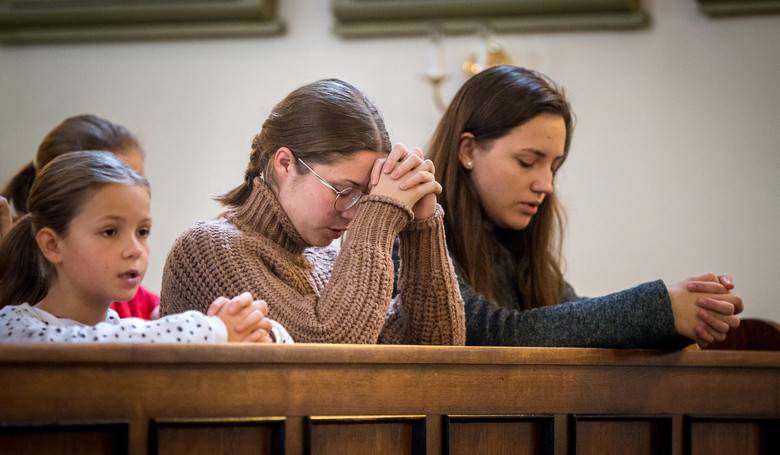
When we come to Holy Mass, we are not the only ones who go to pray. In reality, we are just entering into a prayer that is already in progress.
The various forms of prayer described in the previous parts of the spiritual renewal had one common denominator: they assumed a considerable degree of initiative and activity on the part of man. From our human point of view, they may even appear as a pure manifestation of human effort.
From this, we could conclude that prayer is the Christian version of an exercise in virtue. But if it is true that prayer is primarily a relationship, namely a relationship with God, who infinitely transcends us, prayer cannot achieve its goals only based on some kind of human perfection and virtue.
Adopting the various forms of prayer that we talked about last time can give the impression that a Christian has already reached his peak. However, the holy teachers of the spiritual life will say without hesitation: that they are only beginners.
GOD TAKES THE INITIATIVE
“Jesus took Peter, James, and his brother John with him and led them to a high mountain in solitude. There he was transfigured in front of them” (Mt 17, 1-2). All three Synoptic describe an event on Mount Tabor where the chosen disciples could see something of who Jesus is.
This event was quite extraordinary and unexpected. Peter tried to respond, but as Luke testifies, he didn’t even know what he was saying (Luke 9:33). The task of the disciples was not to talk, but to see. Even Jesus himself forbade them to talk about this vision “until the Son of Man rises from the dead” (Mk 9:9).
As spiritual growth progresses, a significant change occurs in the area of prayer: God himself takes the initiative, and the soul is increasingly placed in his hands and allowed to be guided. This surrender is not passivity — it often even makes greater demands on man than before — but spiritual life is no longer directed by man, but by God in the full sense of the word.
At this stage of spiritual life, the need for silence and solitude is felt more. Prayer acquires a contemplative character – it is our task – as disciples on Mount Tábor – to allow ourselves to be led to the mountain, leave the words behind, and look at Jesus.
NO ONE MISSES A HIGHER VOCATIONAL
Again, it may seem to some that these things are only for the chosen ones. After all, Jesus also called only three to the mountain. But now that he has risen from the dead, it is impossible to keep silent about these things, and since he has sent the Holy Spirit, no one lacks a higher calling.
This is what the Second Vatican Council teaches: “All believers in Christ, of whatever status and position, are called to the fullness of the Christian life and perfection in love” (LG 40). And Saint John Paul II. warns us: “It would be a mistake to think that ordinary believers can be satisfied with superficial prayer” (Novo millenio ineunte, 34).
Sometimes contemplative prayer and the mystical life are mistakenly associated with various extraordinary manifestations, such as ecstasies, visions, strong spiritual experiences, and the like. Whoever strives for these things will not reach the top of the mountain. Saint John of the Cross warns that whoever dares to ask God for a vision would be insulting him, and his eloquent words are also quoted in the Catechism of the Catholic Church (cf. CCC 65).
The Holy Apostle John, who witnessed the transfiguration personally, does not even describe the event itself in his Gospel but says the essential at the very beginning: “We have seen his glory, the glory of the only-begotten Son from the Father, full of grace and truth” (Jn 1, 14). The goal of contemplation is not experiences, but resting in God.
GOD ANSWERS IN THE HEART OF MAN
In contemplation we find the answer to the question posed in the previous reflection: does God answer prayer? He answers not only in creation, the Scriptures, other people, and events, but he also answers directly, in the depths of man, in his heart, where he has his throne.
God answers prayer not only in creation, the Scriptures, other people, and events, but He also answers directly, in the depths of man, in his heart, where he has his throne.
A contemplative person is aware of God’s voice within himself — a voice that cannot be heard by the senses, and he recognizes from his own experience that God has been speaking to him all the time, even in the past, only until now he was not able to perceive his voice.
At this point, we do not have the space to delve into the question of contemplative prayer and mystical life in more detail. However, we can look to the works of authors whom God has specially called to be teachers of the advanced. In particular, we are thinking here of the three Carmelite teachers of the Church, whose works are translated and available to us as well.
There are also many useful works by contemporary authors who offer not only theological analysis but also practical advice to help those who want to grow spiritually but lack concrete guidance. Among all of them, we can mention the well-known method of “prayer of consent”, which appears to be very helpful in certain periods of the spiritual journey in the perspective of higher levels of spiritual life.
OUR COUNTRY IS IN HEAVEN
We have focused this series of reflections on prayer primarily on personal prayer. However, one form of prayer cannot be neglected, which is of particular importance and which “is the summit towards which the activity of the Church is directed, and at the same time the source from which all her power flows” (SC 10). It is a liturgical prayer.
Liturgy is the prayer of Jesus Christ and his entire body – the Church. It is a common prayer, but far surpassing the simple prayer of a group of believers. In liturgical prayer, together with our Lord, we experience the events of salvation, we connect our common earthly journey with the redemptive work of Christ, and even now our future in the heavenly homeland is shown to us, where we will praise God forever.
Our Lord Jesus Christ, after his passion and resurrection, ascended to heaven to complete the Easter mystery there. The historical events that took place in the Holy Land two millennia ago found their completion before God’s face, on the heavenly altar, above the sphere of our world limited by space and time. The liturgy connects us with Christ the High Priest, with his sacrifice made once and for all (cf. Hebrews 7:26-27), and with the community of all saints and the entire Church.
ENTER THE LITURGICAL PRAYER
When we come to Holy Mass or the prayer of the Liturgy of the Hours, it is not ourselves who go to pray, but we only enter into a prayer that is already in progress, into a mystery that always transcends us, so that we can add our voice to that prayer and draw from the power and the Spirit that works in it.
Therefore, liturgical prayer also sometimes makes special demands and requires obedience to the regulations that are necessary for this common prayer and express our connection with the Church and submission to the authority of Christ, who prays as our High Priest.
One of the difficulties with liturgical prayer is that it does not always have to be in harmony with what a person is currently experiencing. Someone comes to the temple with the joy of a newborn child, and in the liturgy, the Passion of Christ is celebrated; or he wants to find consolation after the loss of a neighbor in the vespers prayer, which just presents him with exultant psalms.
This difficulty arises simply from the fact that the liturgy cannot, with our means, here on earth, express all intentions and needs. If we are to rejoice with those who rejoice and weep with those who weep, it also requires a certain degree of adaptation from us – and we can say: sacrifices.
On the other hand, this very experience should also tell us that we are not alone either. In the liturgy, we meet (although not always visibly) those who are going through similar situations and pray for us and with us.
Related to this is the topic of distraction, which many struggle with not only during liturgical prayer. Distractedness is a common experience that arises mostly from the natural endowments of our mind and that does not leave the Christian at any stage of spiritual life. If someone is hindered by distraction, it is a sign that he wants to pray well, and often this goodwill is enough to make the prayer effective.
This is especially true for the liturgy, which is too comprehensive a prayer for everyone to be fully focused at every moment. However, the effectiveness of liturgical prayer is not lost by my distraction as a personal prayer, because liturgical prayer is never just my prayer.
In four reflections on spiritual renewal, we have only outlined the subject of prayer in the hope that they will encourage readers to a deeper interest and determination to give prayer its rightful place.
Questions to think about
Do I sincerely want to achieve holiness, or do I settle for mediocrity? Am I trying to draw from the works of the saints and their experience of prayer? Is the Holy Mass the most important prayer for me?
Posted in Nezaradené
Leave a comment
Hypocrisy of the Pharisees and Scribes.
Under the impression of their position, some Scribes, and Pharisees lost sight of the real burdens that ordinary people faced. Despite good intentions, the temptation of status proved too firm, and they forgot to be there for others.
Unlike these religious elites, Jesus devoted himself to freeing his people from everything that burdened them. He freed the woman from shame for her past sins with words of forgiveness. While others grumbled against Zacchaeus’ taxes and extortion, Jesus offered him salvation and visited him at home. On the road to Emmaus, he comforted two dejected disciples and lifted their hearts with words from the Scriptures and his presence.
Do you have a burden that is difficult to bear? The feeling of guilt? Pain from a hurt relationship? Helplessness in the face of temptation? Do not think that God is too far away to help you. He became human like us. He shared in all the joys and pains that we experience. He carried the cross so that we could gain heaven. It can certainly help you even now!
As one of Jesus’ followers, you are called to accept him as your Lord. What a relief to know that our Lord is kind and forgiving, that He did not come to be served but to serve! Therefore, declaring Jesus your Lord means inviting him to care for you. The image of Jesus washing your feet may make you uncomfortable, but remember what he said to Peter: “Unless I wash you, you will have no part with me.” He wants to help us so profoundly.
Will you allow Jesus to serve you today? He wants to lighten your burdens and take away your sins. He wants you to meet him personally, regardless of your status or what you’ve been through. Let him touch your heart so you can follow him with joy and gratitude. Today, bring the burden that weighs you down to Jesus. It shouldn’t be too small – or too big – for him to handle. Could you tell him about it? And you’ll see what starts to happen. “Jesus, I accept you as my Lord.”
Posted in Nezaradené
Leave a comment
Eternity.
To many modern human beings, eternity, as Christianity speaks of it, is not something necessary. To be damned and not see God is not considered a great misfortune. Seeing God, they do not feel the ultimate happiness. Talk to the superficial person about the fulfillment of human life in knowledge and love. He will understand almost none of this and not long for a life of love. Yet eternity, life with God, does not cease to be a reality. To be interested in the eternal is to assume that we long for it. But many do not desire it. Some will say that longing for eternity is merely the confused reaction of a poor man who takes comfort in the future and, therefore, turns to eternity. Others will say that the longing for eternity is the weakness of those who cannot bear the tragedy of life.
There have been men who have claimed progress and prosperity will render the desire for the eternal useless. Every new invention was, to them, an argument against eternal life. It even seemed to them that medicine and other sciences would take care of the prolongation of life and almost eternal life on this earth without God. How cruelly life laughed them to scorn. In his book, the revolutionary Antoine de Condorcet declared that medicine aimed to eliminate death. Still, he died in the same year and in the prison of the very revolution in whose name he spoke. Science and technology have long ceased to be the salvation of modern man.
Today, however, hundreds of thousands of people are still alive. They are asking again about the meaning of life, asking about God, and searching for Him. The question of death and life after death is arousing new interest among scientists and holding their attention. Books are coming out dealing with the question of death and dying, discussing it from various sides and recording the facts. A question that should have been dead and uninteresting long ago has been revived. Humanity, however, is divided. According to him, life after death is a projection of human desires. According to him, if God is only a being of desire, it does not follow concretely for his actual existence. It is correct to say that something does not exist just because we desire it. It is wrong, however, to say that something cannot exist because we want it. It is on this claim that many base their atheism and their denial of life after death. The counterargument, As if hunger for bread, questions the existence of bread as if sm§d questions the existence of water. Will death extinguish every man in nothingness, or will he remain in being? Do all the ways of man end in the grave? And here, other points of view open up. Will the life of a criminal and a tyrant and the life of a self-sacrificing mother end equally in nothingness? Will every man’s conscience be brought once before the judgment and before the sanctified justice? Or will it turn into nothingness equally to the murderer, the tyrant, the saint? None of us wants to perish. We resist death, which we regard as extinction. Mortality is not proportionate to our desires and needs; our striving is to go further. We are unready, but we are finishing ourselves. Man is still rising. Where to?
Posted in Nezaradené
1 Comment
God writes straight even on crooked lines.
If we confidently experience God’s mystery, we will discover that illness or failure may not be less of a gift from God than health and success. Suffering then finds meaning in the mystery of the crucified love of Jesus.
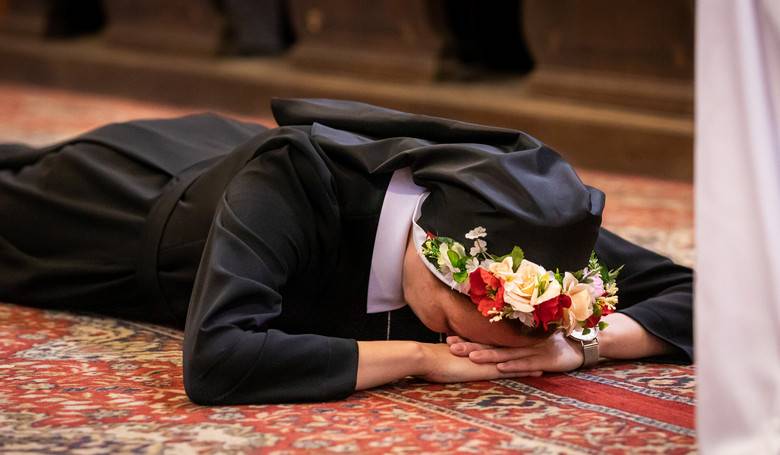
In his message for the 32nd World Day of the Sick, Pope Francis writes that “the sick, the weak, the poor are at the heart of the Church and must also be at the center of our attention and our pastoral care”. Since 1992, every year on February 11, on the liturgical memory of Our Lady of Lourdes, the Catholic Church celebrates the World Day of the Sick, which was established by Saint John Paul II, a great friend of the sick.
TRUST ME
In the Letter to the Corinthians (1, 18-25) it is written: “For the word of the cross is foolishness to those who are going to destruction, but to those who are on the way to salvation, that is, to us, it is the power of God.” After all, it is written: ‘I will destroy the wisdom of the wise and I will reject the understanding of the prudent.’ Where is he wise? Where is the code? And where is the sage of this age? Has not God turned the wisdom of this world into foolishness? When the world in God’s wisdom did not know God by its wisdom, it pleased God to save believers through the foolishness of preaching. For even the Jews ask for signs and the Greeks seek wisdom, but we announce the crucified Christ, to the Jews scandal, to the Gentiles foolishness, but to the called, both Jews and Greeks, Christ – God’s power and God’s wisdom. For what is foolish with God is wiser than men, and what is weak with God is stronger than men.”
Sooner or later, we all encounter pain, suffering, illness, and misunderstanding and we search for a meaningful explanation of what touches us so painfully. Suffering and illness often remain a mystery beyond our human understanding. At the same time, they invite us to live and love the mystery of God, which we cannot fully understand. We are asked to take the attitude of submitting in faith to God, who loves us and challenges us: Trust me, I will guide you, I will take care of you!
This is what the founders of the Sisters of Mercy of the Holy Cross teach us. Father Theodosius Florentini encourages: “Trust, God guides you!” And co-founder Blessed Mother Maria Theresia Schererová teaches: “Do not lose heart, but look to the one from whom all strength comes.”
LOCKED ROOMS
God has a plan for us, and the law of his time and grace applies here. One way or another, we often spoil his plans, but God knows how to write straight even on our crooked lines.
Poet and writer Rainer Maria Rilke speaks to us in such moments of searching for meaning: “I ask you from the bottom of my heart to be patient with all that is unresolved in your heart and… try to love the unresolved questions like locked rooms… Do not look for answers, which you cannot get because you would not be able to live them. You may not even notice it, but one day you will find that you are already living the answer.”
We cannot understand God’s thoughts or ways, but we can love questions and experience God’s mystery with confidence. Then we will discover that in our life even illness, suffering or failure may not be less of a gift from God than health and success. Finally, our suffering, sickness, and crosses can find meaningful fulfillment only in the mystery of the crucified love of Jesus Christ, who suffered, died, and rose from the dead.
SERVE THE SICK
Pope Francis emphasizes that “God, who is love, created man for community and inserted the dimension of relationships into his being. And the experience of abandonment and loneliness frightens us, it is painful and even inhuman”. That is why he invites us to serve the sick and suffering with love.
Father Theodosius said: “The demand of the time is God’s will.” Today the time demands to be in the service of the suffering, the sick, the weak, and the poor. In the Gospel, the Lord Jesus calls everyone to this, because our life will only stand up to the criterion of love for those who are hungry, thirsty, sick… At the end of our lives, we will be judged by love.
“A sick and needy person is our neighbor. His suffering, whether small or great, is a challenge for the merciful sister of the Holy Cross,” the founders of the congregation teach. Therefore, in the spirit of charisma, the heart of which lies in the merciful love of God sacrificing itself in Jesus to death on the cross, the Sisters of Mercy of the Holy Cross have been accompanying the sick and suffering on four continents of the world for almost 170 years.
They belong entirely to the Crucified One, and therefore quite neighborly, and as representatives of Christ’s love, they can be found in Slovakia in health services in various places. Also in the Bratislava University Hospital, where the Blessed Sister Zdenka Schelingová also worked in the time before totalitarianism.
“I know that Jesus burns with the desire to come into our hearts and that he values our love more than all the gifts we could offer him. Without love, all, even the most valuable works are empty, nothing. Jesus does not even want excessive work, only faithful devotion and warm love. The smallest act of pure love benefits the Church more than all other actions. God judges everything according to love, he wants our love,” encourages Blessed Zdenka when she writes about how she discovered God’s will.
AMAZING TESTIMONY
I very vividly remember a fellow sister who became seriously ill and two years ago we were able to closely accompany her through her illness and suffering. In the community, where a doctor and two nurses worked, we saw how, due to her deteriorating condition after an inoperable brain tumor, she increasingly lost the ability to express what she wanted and needed until she completely lost the ability to speak.
It was very painful for all of us, but also mysterious. We often experienced great helplessness and pain from the impossibility of understanding each other. At the same time, we saw how our sick fellow sister’s devotion and desire to be with the Lord grew.
One late evening, when she could no longer speak at all, almost in the last days of her life among us, she came to the chapel. After a moment of prayer, she got up, and when we were about to escort her to the room, she looked intently at the tabernacle and cried out very clearly from the depths of her soul and heart: “Jesus, I love you!”
We were all amazed at the mystery of the soul’s communication with God. At that time, we could not only be at the service of our sick fellow sister but also learn a lot from her.
HE WILL NEVER LEAVE US
Jesus said that we will always have the poor among us. There will always be sick, suffering, needy people who need our presence, attention, and love. Being in their service is sometimes difficult, but very necessary for them and us.
Let us strive to be at their service in the spirit of Jesus’ words: “Whatever you did for one of these least, you did for me” and in the spirit of the song that our sick sister sang to herself: “The Lord has promised to be with us, he will never leave us!”
Questions to think about
How do I accept the entrance of God’s surprising mysteries into my life? Do I realize that God is lovingly guiding my life? Do I trust him? Is my heart receptive and attentive to the needs of the suffering, the sick, the abandoned, and the poor? Am I learning to discover Christ’s suffering face in them?
Prayer
Impress your face in me, Lord, so that the Father, seeing you in me, repeats: “You are my daughter whom I love.” And that whoever meets me, sees a glimpse of the Father. Impress your face on me, Lord, so that I can witness your light, your goodness, and the infinite tenderness you have for every creature. Impress your face on me, Lord, so that I can be a sign of your love for the small and the poor, for the sick and the excluded. Impress your face on me, Lord, so that I may be a living Veronica’s scarf that bears the signs of your death and resurrection.
Posted in Nezaradené
2 Comments
Temptation under the appearance of goodnes.
The list of eight evil thoughts (or seven cardinal sins) is the basis of Christian morality manuals, which attempt to list all the instances that are “objectively” sin, and this applies to all. The ideas that prompt such acts are undoubtedly immoral. But all the thoughts that come to mind are not so exclusive. Authors who have experience in the spiritual life point out that the devil often takes the form of an angel of light (cf. 2 Cor 11:14).
And deceives under the appearance of goodness. Thus, for example, some whispering appears good at first, but only later it is seen by experience that it has led us to evil. It seemed to St. Ignatius, shortly after his conversion, that it was a holy intention to fast radically. But it had resulted in a severe stomach illness. Ignatius later admitted that he was deceived when he failed to recognize the hidden deceit beneath the appearance of goodness. This was because his soul, he confessed, was still unskilled in the art of spiritual warfare. It is not too late when a man realizes that he has had this sad experience?
Indeed, that is why it is advisable to confront with the advice of a spiritual father. Men experienced in the spiritual life acquire a finer feeling and can discern angelic thought from the devil’s “smell.” And so with men. One person said, “In the beginning, I don’t pay attention to what anyone does but rather listen to their voice. That’s how.. beautiful speeches rarely deceive me. “I do not like to be deceived by the deceiver’s words. I can tell if there is any deception in the voice.” It’s interesting to note that such observations can be applied to incoming thoughts. St. Ignatius speaks of rules “for the greater discernment of spirits” suitable for those who have already made some progress in the interior life. In these cases, one no longer gives such attention to what the thought suggests but focuses on how the thought presents itself to the soul. In this way, even St. Anthony Abbot distinguished spirits: he noticed that thoughts create different psychological states in the soul.
Posted in Nezaradené
Leave a comment
Mount Tabor.
Anyone who has been to the mountains knows that it is an exceptional place: perhaps the beautiful views, the world seen as if from a bird’s eye view, all this makes us feel closer to Heaven, closer to God in the mountains. In such an atmosphere on the hills, the Transfiguration of the Lord, spoken of in today’s Gospel, took place. The evangelists inform us that when Jesus revealed his Divinity – confirmed by the voice of God the Father: This is my beloved Son, listen to him” – he was preparing the apostles for the great days of the Easter Triduum, that is, for the harrowing experience of the suffering and crucifixion of their Master. Christ chose three disciples: Peter, James and John. He especially wanted to strengthen these three disciples because they became the pillars of the Church and supported others in their faith. Petr, Jakub, and Jan had the opportunity to convince themselves that their teacher is not only a brilliant, exceptional, and good person – the Master, but that He is a true God. This strengthening was significant because only strong faith and complete trust in Christ helped them overcome all trials, disappointments, persecutions, and problems for Christ’s Church to last until the end of the world. And it has been going on for more than 2,000 years… despite the many difficult trials we know from history and the pitfalls of today’s times… The Church lives and gives a chance for salvation to today’s people…
Today’s second Sunday in Lent, the Church also wants to take us to the Transfiguration Mountain to look at the world, at problems, at the other person differently, to look as if from above, from the point of view of God the light of Christ’s brilliance. God wants us to notice his presence in everything that happens around us. He longs for us to hear and remember forever that Christ is the beloved Son of God, whom we are to obey… “This is my beloved Son; listen to him.” And what does He say? From the beginning of his teaching, Jesus pleads: “Repent and believe in the gospel.” That is, transform your life, change it, and adapt it to the Gospel and not as some do who try to adapt the Gospel to their life and choose from it only what is pleasant, comfortable, and does not require anything from them… fundamental transformation, the conversion consists in by daily focusing our eyes on God – Jesus Christ, recognizing Him as Lord and living according to His teachings and commandments. Why? Because there is no other way to Heaven. “I am the way, the truth, and the life,” says Jesus, “no one comes to the Father except through me.”
While reflecting on the mystery of the Transfiguration of the Lord, let us ask God to transform our lives. Let us ask for faith in Him, for trust, for the conviction that He knows best what is good for us, and for the hope we express by repeating the refrain of the psalm: in the landscape of life, I will see the goodness of God. Let us ask for the hope of reaching Heaven. Possible? Can we convert, change our lives, and go to Heaven? It is possible. Christ, who, through the Church, invites us to the Mount of Transfiguration, the Sunday Eucharist, gives us this possibility. In the Eucharist, during this Holy Mass, Jesus is present; we are all witnesses of the great mystery of the transformation of bread and wine into the body and blood of Christ. Whoever eats my flesh and drinks my blood will have eternal life! Like the apostles, we, therefore, witness the Lord’s transformation. By participating in this holy sacrament, we strengthen our faith, hope, and love, transform our lives, and convert. Sunday Mass is our mountain of Transfiguration. Here, we see the body of Christ; we can touch it and take it into our hearts. Let’s take advantage of this enormous chance and opportunity, and then we can repeat with complete confidence and peace in our hearts with the author of the 116th Psalm: I will walk before the Lord in the land of the living.
Posted in Nezaradené
Leave a comment