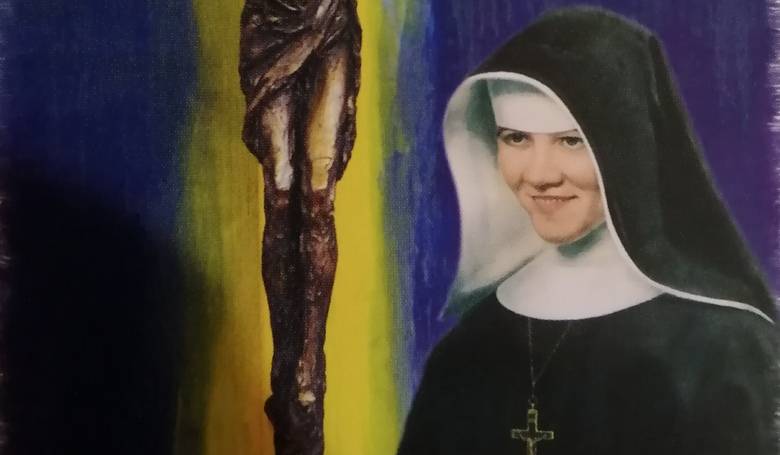
Christ’s fire, Holy Spirit. Let’s light up our life with the flame of God’s love.

Fire. It helps a person, and we all use it. As the heat radiates, or to start a fire for roasting or to light a torch during a night game, fire can also make proper mischief, such as a fire. In today’s Gospel, we heard the Lord Jesus say: “I have come to cast fire on the earth, and what do I want?” Only for it to catch fire!” (Luke 12:49).

Jesus came to bring fire to earth that moves the ice of this world. In contrast, he mentions the baptism with which he will be baptized: fire and baptism. Fire can symbolize God’s word (cf. Jer 5:14), but also God’s definitive judgment (cf. Is 66:16) and thus the coming of God’s kingdom. To the statement about the fire, Lukáš added an allusion to the baptism with which he is to be baptized, which Mark also mentions. (cf. 10,38). Baptism is an image of Jesus’ suffering and death. Luke puts these words together to reveal another meaning: casting fire on the earth will only be possible after Jesus’ death. The fire is the Holy Spirit, which will descend on the apostles on Pentecost. This is how he mentions the words of John the Baptist: “He will baptize you with the Holy Spirit and fire” (Lk 3:16). This is how he predicted Christian baptism, which began on the day of Pentecost with the outpouring of the Holy Spirit and the appearance of tongues of fire (cf. Acts 2:3). Jesus’ mission is therefore to cast fire on the earth, to send the Holy Spirit with his renewing and purifying power.

How do we see it in a specific case? The great Spanish writer Lope de Vega was on his deathbed. His life was playing before his eyes like a movie. He had many successes, and people embraced him with applause all his life. He enthused more than a thousand of them with theater plays. He lived only for success – and shouldn’t he be satisfied at the end of such a successful life? As his last hour approached, he suddenly saw things differently. But the attending physician told him, full of admiration: “You can die happy. The world will not forget you; you will go down in history as a great person.” “Mr. Doctor,” said the dying man, “now I recognize that only the great one with a good heart is before God. How I would like to give all the successes of my life now to be able to do one more good deed.”

Let us not wait for the end of our life like this writer, who realized that a good deed is more than worldly fame. Let’s not wait because we don’t have to have such grace as he had. Love is like fire. It mustn’t expire. That’s why you always have to burn something. Above all, our selfish “I.” Because whoever loves focuses on the other: God by fulfilling his will and the neighbor by helping him. If he puts himself on a lit fire, however small, it can one day turn into a big flame. The flame of love, peace, and universal brotherhood that Jesus came to throw on earth.

Posted in Nezaradené | Leave a comment

To live in the presence of God. What we should not forget?

It is interesting to follow anonymous people from your surroundings. What can be read from faces, hand movements, body posture, steps… Even more from what they talk about, how, what they talk about most often… Even more about what is their life’s priority, why they live… 

Today, writing horoscopes, creating various predictions, answers to a person’s activities, their condition, physical, psychological, intellectual, emotional… Many people are interested in the weather tomorrow before going to bed and in various burdens. On the organism, different bio predictions… Books explaining dreams, about arrangement, zodiacs, books…, …books that offer guaranteed instructions for solving all kinds of difficulties and other books provide the creation of human imagination based on “science,” maybe buy today in various bookstores, stands, or kiosks. Advertising agencies offer courses, meetings, and instructions for a successful life. Exceptional healers with extraordinary abilities are appearing… There is a wave of movements, communities, and churches that claim to be able to mediate and guarantee what people dream about and what they wish for, without effort, sacrifices, and only for a reasonable fee. And reactions to these and similar activities? After completing them, the psyche is even worse; the condition is worse, the wallet is empty, disappointed, and a feeling of greater emptiness; the subsequent condition is much worse than at the beginning. The question arises: why? There are many answers. They agree on one thing. They bet on the wrong value. They bypassed God.

Jesus tells us clearly and emphatically: “He who has received much, much will be required of him…” (Lk 12:48). Jesus encourages, leads, directs, directs, and takes care of his “little flock,” the Church. We know that the Lord Jesus always fulfills the will of the heavenly Father. He rightly requires his people to be vigilant. We are taught about the responsibility for knowing God’s will. To live in the presence of God. Today’s gospel is a challenge for us – to listen. To listen to our God, who has a kingdom prepared for us, to which entrance cannot be bought, but to which entrance is ensured by bags that do not rub, where the thief does not get and where the moth does not destroy.

In today’s society, both the economic, cultural, political, and sports fields, the principle is more and more valid: to be vigilant, to be alert, to be on the lookout if we want to prove something, to succeed, to gain…, the more to be awake means for lasting values, eternal. In our time, it is more and more often talked about as apocalyptic. We have signs that call us to be vigilant. Man’s life is genuinely waiting for our Lord. Waiting must not become inactivity, doing nothing, or dead immobility. Christ – our Judge, has the right to come at any time.

Posted in Nezaradené | Leave a comment

The art of living. God rightly asks us to approach life responsibly.

Jesus said not only to his disciples: “Where your treasure is, there your heart will be also” (Lk 12:34). Jesus teaches responsibility for entrusted values. A call to approach life on earth responsibly. We believe that Jesus will come to the world once more at the end of time. He illustrates his second coming with two images from everyday life: the vigilance of the householder against thieves and the vigilance of the servants who await the return of their master from the wedding feast and, therefore, are dressed in work clothes and have burning candles in their hands, to immediately open to the Lord, when he comes and knocks on the door.

Through the Gospels, we are given advice and instructions to use our hands to enrich ourselves by working for others. Jesus’ words remind us: “He who has received much, much will be required of him, and to whom they have entrusted much, more will be required of him” (Luke 12:48).

Have you read that 90 out of 100 people can be called suicide? Why? Because they sleep little, sit in a smoky room, poison themselves with alcohol, overeat, spend a long time in front of the television and other things – drugs, games… Let’s not underestimate the slavery of the senses of sex. Even 99 people out of 100 do not live in the present. Some cannot escape the past, while others worry about the future. And they do not live the present moment, the present life; they spoil it, they make it unpleasant, and therefore such a life cannot be called art! Let’s not be the gravediggers of our happiness. The words of Jesus apply: “Be people who wait for their master…” (Luke 12:37).

How often does personal, family, and social happiness collapse? It is suitable to learn to live with others. Knowing how to watch over your senses, reactions, feelings, will, nature… Being masters of your nerves, keeping them under control. Whoever knows how to live correctly does not lose sight of life’s clear and noble goal because he learns repeatedly to be a child of God before God, people, and himself. The art of living teaches you to manage yourself, demands, requirements, values, etc… Yes, you need to have the right teacher, demanding, strict, who loves and to whom we should reciprocate our love with our obedience, loyalty, and fulfillment of his will. It is the Teacher – Jesus. Life is not a game, but constant cooperation and readiness to meet expectations. The world will enrich the human art of living. The words of Jesus lead to appropriate responsibility: “He who has received much, much will be required of him, and to whom they have entrusted much, of him they will ask more” (Lk 12:48).

The responsibility for the nation lies with the president, prime minister, deputy, and every person. The responsibility for their diocese rests with the bishop, the priest, and every believer. That’s how it is in the family, workplace, and school. Whoever considers life a great gift from God approaches the events in his life responsibly. Therefore, a wise Christian learns from the mistakes of others and lives fully with God. This is how the “art of living” principle is implemented

Posted in Nezaradené | Leave a comment

The danger of greed. Only a generous person can be happy and saved.

There is nothing wrong with owning something, it just depends on how we use this gift. In today’s Gospel, Jesus uses the situation when one of the crowd asks him for help in a property dispute to clarify the right relationship to property. That’s why he says: “Beware of all covetousness!” (Luke 12:15).

In some translations of the Holy Scriptures, we find the word avarice instead of the word greed. These two vices are very closely related, they both involve the mishandling of property.

We understand greed as an excessive desire for possessions, and avarice is when we do not want to share the goods we own. These two sins cannot even be separated from each other, because otherwise we would become a generous greedy person or a modest miser. The fruit of avarice are sinful attachment to matter. The miser is ultimately attached to what he loved more than God. Matter becomes for him an idol and at the same time a punishment. And greed is also idolatry, because we care more and seek possessions and neglect God’s commandments. Today, it is a modern saying that only the strongest survive in life. And what is meant by that? That success is guaranteed only to those who do not look at others and have broad and sharp elbows. Greed and avarice cloud our vision, and we focus only on possessions and forget the values ​​that are really important.

And what does Jesus say to such people? “A fool! This very night they will ask you for your life and what you have done, whose will it be?” Fool! A very harsh word we call those who do not use reason. Today it is fashionable to have as much as possible and then one will be satisfied and happy. But the reality is that we show something else, and we must repeat with St. Augustine: “The heart of man is unsatisfied until it rests in you, O God.” Every good thing that we have, including property, is a gift from God, and it is our duty to use it not only for our benefit, but also for the benefit of our neighbors. The bigger the property we own, the bigger our responsibility is for how we handle it. But let’s remember the story of the rich man from the parable, who lived in luxury and ignored the beggar Lazarus. Let’s not think that if we live like this rich man, his fate will not overtake us. Wealth has never made people happy.

Among the three basic means of spiritual growth are prayer, fasting and almsgiving. Alms is the cure for all greed and avarice. It is voluntary help for those who are worse off than us, and we certainly have enough of such people around us. It is said that we will only take to heaven what we gave in our lifetime. How often do we resemble Jesus’ listeners who looked and did not see, listened and did not understand. We think of ourselves as experts in many things, and it’s true. The Chinese sage Confucius says: “A wise man avoids three things. In the youth of sensuality. When he reaches manhood, fighting. When he reaches old age, avarice.” But avarice and covetousness attack man at every age.

Posted in Nezaradené | Leave a comment

Cardinal Müller writes to Cardinal Duka.

During the Synod’s first week, Cardinal Gerhard Müller, a direct participant and strong critic of the Synodal process (calling it “a hostile takeover of the Church of Jesus Christ”), caused a stir.

Also, during the second week, the name of the former Prefect of the Congregation for the Doctrine of the Faith came into the spotlight, although his activity this time was not a direct part of the session in Rome.

Cardinal Gerhard Ludwig Müller wrote a letter to Cardinal Dominic Duke in which he commented on the response of the Dicastery for the Doctrine of the Faith to the dubia sent to the Vatican by the Archbishop Emeritus of Prague. The Prefect of the Dicastery, Víctor Manuel Fernández drafted the response.

Cardinal Müller’s letter was published on his blog Settimo cielo by Vatican scholar Sandro Magister.

Burke and Sarah ask about blessing of gay couples, Duka on divorcees
Cardinals write to the Pope/ Burke and Sarah ask about blessing gay couples, Duka on divorcees
The German cardinal, in a letter in which he teases Cardinal Duke and calls him “brother,” questions Fernandez’s claim that the interpretation of Amoris Laetitia from the Diocese of Buenos Aires is in continuity with the teachings of previous popes.

According to Prefect Fernández, Pope Francis insists on the total continence (continenza) proposal. First, therefore, they divorced and remarried in a new union. Still, he admits that difficulties may arise in its practice. Thus, in some instances, after appropriate discernment, he allows the Sacrament of Reconciliation to be conferred even when a person is incapable of the continence required by the Church.

According to Cardinal Müller, “even when one is incapable of the continence required by the Church” can be interpreted in two ways.

The first is that these divorcees try to live in continence, but because of difficulties and human weakness, they cannot do so. In this case, the “answer” could be in continuity with the teachings of St. John Paul II, Müller says.

The second is that because of their difficulties, these divorcees do not accept to live abstinent or attempt to do so (i.e., they have no intention of changing). “In this case, it would be a break with the previous magisterium,” says the former Prefect of the Congregation for the Doctrine of the Faith.

According to Müller, Fernández’s answer seems to refer to the second possibility, as is supposedly indicated by the text of the Bishops of Buenos Aires themselves, who admit that there are cases of divorcees who do not try to abstain.

Cardinal Müller states that the continuity in the teaching of the Popes does not lie in the fact that someone may have already been admitted to Communion but in the criterion of that admission.

“John Paul II and Benedict XVI allow divorced people who, for serious reasons, live together without sexual intercourse to receive Holy Communion. However, they do not allow it when these persons habitually have sexual intercourse because here there is an objectively grave sin in which the person wants to persist and which, insofar as it touches the sacrament of marriage, takes on a public character,” Müller says.

In the “dubia,” the Czech cardinal also wondered who would decide on access to the sacraments for this group of people – a confessor, a local parish priest, an episcopal vicar, or a prison.

“The solution in the ‘Answer’ must have surprised you, which you could not have imagined. According to the Dicastery for the Doctrine of the Faith, the final decision must be made by each believer according to his conscience. It follows that the confessor merely submits to this decision of conscience,” Müller writes to Cardinal Duke.

“The faithful decide whether they will receive absolution, and the priest can only accept this decision! If this applies universally to all sins, then the sacrament of reconciliation loses its Catholic meaning,” the German cardinal continues.

According to him, in such a case, it is a matter of absolution of oneself after examining one’s own life. “This is far from the Protestant view condemned by Trident, which insists on the role of the priest as judge in confession,” he added.

At the same time, Cardinal Müller accused the dicastery he has led in the past of selectively picking and choosing from John Paul II’s statements what suited him when responding to Duke’s Dubai (alluding to the encyclical Ecclesia de Eucharistia).

The German cardinal finds it astonishing that the dicastery could present a text “with such a theological error for the Pope’s signature, thus endangering the authority of the Holy Father.”

Posted in Nezaradené | Leave a comment

Without fear of Christ. Jesus teaches us that whoever believes in him and lives does not need to be afraid.

Let’s continue yesterday’s reflection. A well-known European institute conducted a psychological survey. To the question: “What is the most powerful driving force in a person’s life today?” 98% of the respondents answered that it is fear. Jesus tells us: “Do not be afraid” (Lk 12:4), and today, “Everyone who confesses me… even the Son of Man will confess…”(Lk 12:8).

Whoever believes in Christ and acts in the spirit of Christ should broadcast from the “rooftops” what he heard “into the ear” so that the words of Jesus become known to the whole world and nothing prevents everyone from becoming aware of them. Indeed, the one who will fulfill the will of the Teacher Jesus and proclaim his words will encounter many difficulties and dangers. He will find himself like a sheep among wolves and must reckon that his action may bring him martyrdom, if not bloody, then at least bloodless. Even in such a case, the witness need not be afraid because the murderer can kill the body, but he cannot kill the soul. If we faithfully stand by Christ, He will take care of us.

It is up to us what attitude we realize in life, whether festive or every day. We noticed in Jesus’ words how he emphasizes that we confess to him clearly and comprehensibly in our lives. Jesus demands that we defend his teachings clearly and effectively. There is enough opportunity around us not to be afraid to profess our faith. There are many people around who spread lies half-truths, who deliberately lie, and who are not interested in the truth. A Christian has someone to lean on. Christ also asks us to live in truth, love, and justice. Otherwise, it would be true of us that it would be better if we were not baptized. St. Bernardino says: “I saw blackmailers, prostitutes, cruel soldiers converted… They became brave people. But I haven’t seen a single lukewarm convert.” They are considered good. I didn’t steal, I didn’t hurt…

Jesus is with us even in the most challenging moments. Jesus does not disappoint. An example from life says it well: A boy in a hospital was to be operated on. His father brought him to the hospital and tried to give him courage. “Daddy,” said the boy, “if you stay with me, I won’t be afraid.” The father said, “Okay, I’ll stay with you.” The doctor allowed it, so the father sat beside his child, lying on the operating table. When the boy was about to be put to sleep, he looked at the father again and said, “Dad, are you here? ” Then the anesthesia started to work. “You can leave now,” said the doctor when the little one fell asleep, and the operation was about to begin. “No,” replied the father. “I promised my son I would stay with him and would like to stay.” “Okay, then stay.” The operation was successful. When the boy woke up, his father was still holding his hand. The boy smiled and softly whispered, “Daddy, are you here?” and fell asleep again. He knew that his father was with him.

Thank God that quite a few among us do not want to disappoint Christ by sin. “Fear not!”

Posted in Nezaradené | Leave a comment

Mission Sunday Mt 28,16-20

Since 1926, the Church worldwide has been celebrating the so-called “Mission Sunday.” Pope Pius XI declared it a day of prayer and help for missions, particularly this year, or better, this year, when Pope Francis specifically emphasized the missionary mission of the Church; we should not pass it by without noticing.

What exactly are missions? The answer can differ, depending on the  .” Still, we, we look at them. Theology will tell us that “mission is the free proclamation of the Gospel, as intelligible truth and concrete love among all peoples and in all historical situations.” Still, we are usually not very wise from mere definitions.

In essence, it is the fulfillment of the words of Jesus Christ, given to the church at His Ascension: “Go into the whole world and preach the gospel to all creation!” He who believes and is baptized will be saved, but he who does not believe will be rejected.” In the name of the fulfillment of these words of Christ, for 2000 years, the heralds of Christ’s glad tidings have been going out to those who have not yet heard of Christ and testifying to them with their lives and words about their faith and impart to them the teachings of the Church about salvation for all people.

Historically, the first missionaries were the apostles themselves, then their disciples, and after them, others and others. However, we talk about real missionaries much later, in the 16th century. When, with the development of seafaring and the conquest of new territories, religious men most often came to teach the indigenous population the truths of faith in the newly discovered and – unfortunately repeatedly also bloodily conquered – territories and, what was especially important to them, to mediate their salvation through baptism. After all, according to the teachings of the faith valid at the time, “a heathen cannot be saved.” The intentions of the missionaries were .” good and selfless. Still, they undoubtedly. They were soon abused by the powerful and wealthy of their time, and they often turned happy, free pagans into unhappy, unfree, enslaved Christians. This is one negative aspect of breaking into new, hitherto unexplored territories. Another is the one often brandished by anthropologists. The imposition of a more developed Christian culture at the expense of the local cultures of primitive peoples resulted in the loss of their roots and traditions and the non-acceptance of the new Christianity. Many baptized, educated, and Europeanized natives lost a common language with their fellow citizens and did not find a common language with an advanced Christian culture. We would undoubtedly find more reprehensible phenomena of missionary activity in history. Still, the goodwill and commitment of missionaries to the salvation of indigenous souls cannot be dismissed because of a negative experience. Can it be said that the spread of Christianity was something terrible? Exactly opposite!

However, let’s move through the past centuries to the present. Even today, when there are no more white spots on the world map, and the globe is woven with millions of communication networks, there are still missionaries, and missions are needed. However, the form and content of the missions have changed.

The missions are centrally organized and subordinate to Rome—specifically, the Congregation for the Evangelization of Nations. The Papal Missionary Work has a worldwide scope. This has its own National Centers headed by the National Director in the individual states. They no longer ensure the sending of missionaries to the missions, but they create material and prayer facilities to help the missions. And here is a field in which every Christian can participate.

The main task of the missions is to spread faith in Jesus Christ and to create and support local church communities, through which the people in the missions will be able to participate in the sacraments in their language and according to their, often adapted, rite. Here, I see the most significant shift compared to traditional missions in past centuries. No longer to come and bring alien teachings into the local cultural environment and, in its name, suppress and destroy what is one’s own. But to go and in a way proper to the mentality of the local people, with the help of their tradition and language and preferably their people, is to teach them the truths of faith. That is why the giant sums from the treasury of the Papal Mission Work go to the building of local seminaries and the education of their priests, who will be understandable and authentic for them. This, in my opinion, is the meaning of missionary work: to create a spiritual background from “own resources,” and through them, hand in hand, material, social, medical, and charitable help will also come. In short, to pass on faith in Christ, to strengthen and spread the actual values ​​for their life, to ensure broad education, social and health care, and to leave everything inherent to the given culture and mentality.

Our so-called advanced, cultural world often does the exact opposite: it gives them money for weapons instead of tractors, will build Coca-Cola billboards instead of hospitals, installs economists and managers, plunders the natural wealth, and makes residents poor, not only materially, but also spiritually. And because as the pockets of the monopolies are filled, the country is poorer and poorer, he will offer them condoms as a medicine to control the birth rate. At least, this is how the operation of the so-called “International Monetary Fund” appears. The already mentioned “Pope Missionary Work” offers a better and more effective weapon of the most potent caliber and reach: Love, selfless help, and prayer. After all, today’s collection also serves this help, and the Sunday of prayers for missions also encourages us to do this help.

Posted in sermons | Leave a comment

The right attitude to fear.

The right attitude to fear. A Christian finds an answer to fear in his faith. Is there anyone among us who has not encountered fear in his life? How many reassurances do we receive during our life? And yet the assurance of Jesus – until the end of time, is still temporal: “Do not be afraid” (Lk 12:4). We do not need to be afraid of what we do with the intentions of Christ. Whoever believes in Christ and acts in the spirit of Christ should broadcast from the ” roof” what he heard “in his ear” so that the words of Jesus become known to the whole world and nothing will prevent everyone from realizing them. Indeed, the one who will fulfill the will of the Teacher – Jesus, and proclaim his words will encounter many difficulties and dangers. He finds himself like a sheep among wolves, and he has to reckon that his action may also bring him martyrdom, if not bloody, then at least bloodless.
Even in such a case, the witness need not be afraid because the murderer can kill the body, but the soul he cannot kill. We must fear the One “who can destroy both soul and body in hell” (Mt 10:28). The Creator cares for all His creation. If a sparrow does not perish without his will, no hair will be lost on the head of a man dear to God. Throughout the text, one can see God’s great concern for man. Fear is in a person’s blood from birth to death due to original sin, which is all a motive of fear. Why is there so much fear when we believe in God? How many words express this state of ours: fear, timidity, apprehension, horror, alarm, dread, panic, terror, uncertainty, restlessness, threat, dismay, trembling, shaking, and how many other names are there for the state of mind and body when we approach the wrong to your God.
“Do not be afraid!” these words of Christ are to be realized by all of us who have believed in Christ. We must not be intimidated so quickly because fear makes our lives unpleasant and difficult. It destroys and enslaves us to fear when we base ourselves on what people think about us, what they say about us, what they write about us, and how they treat us. We must not be ashamed of our Christianity. When we faithfully stand by Christ, He will take care of us. To be faithful to Christ even in difficulties and unpleasant things, to confess Christ, even in front of those who do not have the best relationship with God, faith, the Church, Christianity, the Pope, quickly brings peace, joy, satisfaction… When we put God first, it is beautiful, functional, and suitable for us. What God from us asks. When we make God happy with our behavior. Our faithfulness to God’s word is the guarantee of our eternity. We must not hide our Christianity from someone who has power, position, education, etc. and does not believe in God. It is suitable when someone says, and possibly according to whom he lives, that he is a Christian in his soul, but outwardly, in his behavior, he behaves in such a way that he does not show it. The Pope is not afraid! He accepted the words of Jesus and lived in their intentions. Jesus commanded us all: “Do not be afraid” (Luke 12:4). Let us pray: “Lord, we do not want to be afraid anymore. Lord, we are not afraid anymore. Lord, you are our security.”

Posted in Nezaradené | Leave a comment

Who are the most prominent representatives of the individual camps and what do they bring to the synod?

Some talk about Pandora's box, others demand radical inclusion

However, it is not enough to distinguish it only academically.

One example on which Pope Benedict XVI wanted. to explain the subjective dimension of sin, was widely publicized. It was when he was talking about a homosexual prostitute who is infected with HIV. The Pope said that when the person starts using a condom, it is a moral step forward for him. Here we are talking about a morally perverted act on all levels. For that person to choose to protect their “client” is a moral step forward.

It seems to me that these positions of Pope Francis – drawing attention to the subjective side of sin – have been consistent for a long time in his pontificate. He also speaks very similarly about the giving of the Eucharist for the divorced and remarried. Is that so?

Yes. And it is not only consistent with his previous statements, it is also consistent with the teachings of the Catechism of the Catholic Church signed by Pope John Paul II. and was developed under the leadership of Cardinal Ratzinger.

However, we cannot categorically say that something is not a sin. A specific person may be in a situation where he is so conditioned by external factors that objectively he acts disorderly, but subjectively he is not blamed. He may have weakened free will, for example due to psychological or sociological factors.

I also understand the bishops who are worried about this. Because the priests themselves often cannot distinguish much simpler things.

That’s right, this is another huge problem. Priests and bishops ask who and how should distinguish the situation of the given people, whether there should be any minimum written rules and the like. A bishop in Poland looks at some practice in Germany, and even if, of course, he cannot know all the specifics of individual cases, he says to himself that he would not sin in his life.

The solution is not to be defensive in order to be comfortable that “we defined what it objectively is”. It is also very comfortable for a priest to say that this is how it is and done, these are the rules and I don’t care that you poor people are in real life with all the conditions. This is not an evangelical attitude.

So what is the solution?

Go deep. Formation. The Pope said that it would be a big mistake if each episcopal conference set a standard. We have to accompany each individual in his unrepeatable, unique situations.

At most, I can create such a norm that the bishop would say that there are quite specific moral questions that ordinary priests cannot distinguish properly, so he will form priests whom he will trust, and people who struggle with those difficult situations will be sent to trained priests. to accompany them. That’s what’s happening.

Ultimately, and this is the teaching of the Second Vatican Council, there is freedom of conscience. We must remember that my conscience has the last word in assessing my situation and guilt. The conscience is supposed to be formed, and that is why the accompaniment is important there, but it should not be the priest who says what kind of guilt the given person has.

The priest should be wise, educated, well formed in moral questions and principles, as well as in objective truth, and he should help the conscience to judge it correctly.

But in the end, the priest gives or gives absolution, right?

This was the last media-interesting question of the cardinals towards the Pope. Pope Francis says that absolution must always be granted. So the doubt was that for the absolution to be valid, repentance should be present. Don’t need it now?

The Pope answers that, of course, repentance is needed. But in judging what repentance is, we must be careful that we do not have the standards by which we have become accustomed to judging repentance, and that we are not asking too much of a person at a given moment. The Pope asks if going to confession is not an act of repentance. He even says that even the ability to anticipate that the fall will come again does not destroy a person’s ability to repent at that moment.

It happens to me that in confession, where there is a threat of its invalidity or even sacrilege, I will explain moral principles to people and ask them if they want me to give them absolution. I have already encountered that they will say that they understand that it is not yet ripe for this. We pray together, I give them a blessing – not because they are committing a sin, but because they are seeking God – and it often happens to me that after a while it matures in them.

We have to ask ourselves what is troubling the Pope: how hard it is to fight sin with God’s grace. And we want people to struggle with sin without God’s grace and then come? Is confession a help to the sinner or is it, like Holy Communion, a reward for a good life? This is no longer evangelical.

I ask with a little smile. Doesn’t Francis complicate everything? Does he really want to leave the assessment of guilt up to each person? Won’t it be a terrible mess? Shouldn’t the church have order and clear rules?

Does the church run by clever rules or by the Holy Spirit? Do we still have faith that God works in the church and also works in people’s consciences?

We got to the bottom line. This also applies to synodality. People wonder what will come of it, confusion will arise. Do we believe that the church is governed by the Holy Spirit? Do we believe in the pastoral office and in the fact that the synod is also under the authority of Peter and ultimately it is also his charisma and his office that recognizes God’s will in the various promptings of the Holy Spirit?

Posted in Nezaradené | Leave a comment

A pretender. It’s not an accusation like an accusation

One and the same thing can serve us well, but it can also be harmful. What matters is whether we need it and whether we accept it. Medicine can harm, but it can also help. An admonition, which is carried out with feeling and tact, can also be a remedy. An accusation can also bring harm if a person does not accept it as it should. Let’s notice the admonition of the Pharisees by Jesus: “Woe to you, Pharisees, because you tithe mint, rue and every herb, but you bypass justice and God’s love!” This was to be done and that not to be neglected” (Lk 11:42). These were the harsh words of the Lord Jesus addressed to pious and educated theologians, experts in the Law. However, they are true and justified words, because they touch on pretense. We know about this group of the Jewish people , that they considered themselves perfect, and they showed this by their behavior. They sat in the first places in the synagogues, liked to receive greetings on the street, allowed themselves to be addressed as: teacher. That is why Jesus addresses these words to them: “Woe to you, for you are like unmarked graves and people do not even know what they are walking for” (Luke 11:44).

Piety – it is not just giving tithes when they have something, when it is from a surplus, when it costs them nothing, so to speak. Piety is a matter of love, which must come from within a person, from his conviction, and this must serve to glorify God, and not glorify the giver. Where there is love, there is no talk of egoism, self-love, or pride. Love does not offend, but encourages. Pride works evil. Love knows no boundaries. It is selfless, as Paul says in the Letter to the Corinthians: “Love is patient, love is kind; it does not envy, it does not shut itself off, it does not boast, it is not shameless, it is not selfish, it does not get angry, it does not think about evil, it does not rejoice in iniquity, but it rejoices in the truth” (1 Cor 13:4-6). This confession of Paul about love does not have and it can have nothing to do with the behavior of the Pharisees. And just by listening we feel where the truth is, where the value is hidden…. So love knows no bounds, but the behavior of the Pharisees does not indicate that.

The text of the Gospel is a lesson for us to let love affect each other, although it is sometimes difficult and requires effort and sacrifice, but it is also an enrichment. On the other hand, the pride and arrogance of the Pharisees kills. Christ, who is our teacher, clearly teaches us that we must not cultivate a pretense in ourselves, that is, we must not have a different behavior on the outside and a different behavior on the inside. When we feel that this applies to us as well, it is a sign to start a sincere change in the attitudes of our life. We realize that even if we outwardly speak and act however well, nicely, deservedly, and it does not match the love that springs from conviction, it would all be just like tinkling metal and a ringing bell.

It is beautiful when love is expressed not only in words, but in deeds. After all, the Lord Jesus said: “Not everyone who says to me: Lord, Lord, will enter the kingdom of heaven, but only he who does the will of my Father who is in heaven” (Mt 7:21). Let’s be careful.

Posted in Nezaradené | Leave a comment