

-
Recent Posts
Recent Comments
Archives
- May 2026
- April 2026
- March 2026
- February 2026
- January 2026
- December 2025
- November 2025
- October 2025
- September 2025
- August 2025
- July 2025
- June 2025
- May 2025
- April 2025
- March 2025
- February 2025
- January 2025
- December 2024
- November 2024
- October 2024
- September 2024
- August 2024
- July 2024
- June 2024
- May 2024
- April 2024
- March 2024
- February 2024
- January 2024
- December 2023
- November 2023
- October 2023
- September 2023
- August 2023
- July 2023
- June 2023
- May 2023
- April 2023
- March 2023
- February 2023
- January 2023
- December 2022
- November 2022
- October 2022
- September 2022
- August 2022
- July 2022
- June 2022
- May 2022
- April 2022
- March 2022
- February 2022
- January 2022
- December 2021
- November 2021
- October 2021
- September 2021
- August 2021
- July 2021
- June 2021
- May 2021
- April 2021
- March 2021
- February 2021
- January 2021
- December 2020
- November 2020
- October 2020
- September 2020
- August 2020
- July 2020
- June 2020
- May 2020
- April 2020
- March 2020
- February 2020
- January 2020
- December 2019
- November 2019
- October 2019
- September 2019
TRUTH, GOODNESS, LOVE – PILLARS OF MORAL LIFE.
Introduction
Life on earth is “putting to an eternal goal “while simultaneously challenging and needing “individual transformation “.. “person in his personal to the dynamism of transformation and self-realization, he reveals specific aspects of his essence and spiritual effort. Through them, he strives to express the irrevocable dimension of a “personal, authentic bond with the Creator “through the inner voice of conscience (conscientia – together, management), which is the first ontological layer, thanks to which we recognize what is true and good. A person endowed with this inner sense of “differentiation “is free and, at the same time, capable of self-reflection, thanks to his intellect. This means that it discovers an echo of the ideal of “how it would have been. ” Integral aspects of knowledge (including moral conscience and evaluation courts) are part of the definition of a person”s spiritual face. ” Knowledge allows each person to construct their own life in confrontation with normativeness autonomously.
We will not say anything new if we confirm that the subject of philosophy is truth and the subject of morality is good. Both sciences contribute together – with the application of love in practical life – to forming a person’s moral profile. Philosophy recalls the obligation to know, examine, and understand things and to respect what was known as positive in the past. The reverse of the mind to reality ad fontes (k source) is always a joyous invitation to “draw from the wisdom of previous generations. ” Based on such a procedure, St. Augustín (354 – 430) followed up on Plato (427 – 347 BC Kr.), St. Thomas Aquinas (1225 – 1274) followed up on Aristotle (384 – 322 BC.), neo-Thomists in the middle of the 20th century on Thomas Aquinas, personalistic concepts on the philosophy of neo-Thomists, etc. This continuity, at first glance, testifies to the remarkable “dialectic rhythm “of something that “was previously, “with the “newness “brought by advanced times. However, novelty may not always represent a radical change, just as antiquity may not be rigid, but may be a “continuity in the search for truth”. The truth in historical knowledge constantly transcends and grows. Still, one should remember that in this process, one needs “inspiration from above, “in which he finds and recognizes an inexhaustible source of wisdom.
The viability of some philosophy (platonism, Aristotelianism, Thomism, Phenomenology, Neo-Thomism, Personalism) depends on whether it somehow draws attention to metaphysics. This means the spiritual essence and dignity of the human person and the depth of his essential freedom (including freedom of conscience and thought).
If, on the contrary, the attention of philosophy is concentrated only on shallow and down-to-earth realities of consumer materialism (marxism, nihilism, utilitarianism, hedonism), there will be no uplift (sublimation) persons to the vertical horizon. In the 20th century, thanks to the revival of metaphysical concepts, promisingly released “corpus “philosophical-ethical thinking – from an idealistic climate with exclusively theological argumentation – to new deep reflections and the search for harmony between supernatural faith, natural reason, and science with its natural limits. These three relations are complementary but count with constant and targeted cultivation. For this reason, it is essential to stick to the known truths and live in truth, boldly pointing out lies and untruths, constantly striving for goodness, and with perseverance to apply acts of love to social relationships at all levels of life.
1. Truth as the light of intellect
Truth is always light, and this light is most visible in love. As a thinking subject, man tends to the truth and is evaluated by others’ truth criteria. Here is why humanity claims the truth and has a duty against the truth. Truth is an absolute reality and an existential symbol of life; therefore, no one dares to claim that life does not exist.
2. Good goal of mankind’s history and the world.
Man, being a creature and composite being (duch, the soul, telo), is a pilgrim on the way to perfection. We can also say that it is not a person who would not desire good. All people like good. You’re enough to remind the question of a small child who confirms the good through his parents. He happens to surprise his parents while reading fairy tales with a spontaneously asked question: isn’t the little dragon badevilhat a strange assessment? It suddenly appears in the child’s mind in connection with his association that what is excellent, e.g., a dragon embodying evil, can harm people.
As we can see, being and goodness are knowledge convertible (interchangeable) but not identical. We humans can ultimately want evil because we are free. We do so under sound “for ourselves, “but mostly, it is not reasonableness but error and moral evil. From this point of view, admission to such evil is the ultimate nonsense, absurdity, and a waste of time. Goodness is both a prospective value and an inspirational force, but there are also good ones that are not subject to compromise or dictation. This fact can be observed throughout history. It appears as a “mera of the righteous “, or even as a “wisdom clothed in beauty “, which anticipates the desire for eternal happiness and externally reveals the “state of the human soul” and “human heart”. On the other hand, good also depends on objective order harmony ( we see him in nature and the world’s beauty), the author of which is God, but also in subjective “goodwill” of specific righteous and wise people.
From this point of view, goodness is a “visible blessing” present in the daily actions of individual people, in their thoughts and plans. We generally distinguish between: good metaphysical or ontological – that is, “dobrom v sebe “(s characteristic dignity worthy of love), and good moral, which has to do with moral order “v samov “and with ours “free will “.
Moral good always depends on the subject. Morally good a person usually wants to act morally, but also from morality, the object to which he tends, from the circumstances he wants to use for good, from moral means through which he will carry out his intention, as well as from the goal which it is necessarily directed to suitable, e.g. eternal salvation, selfless, selfless love for the second. Each goal assumes a value that motivates it in some way and is oriented towards realizing a good deed. In a sense, it can be said that the goal opens the perspective of value and one day completes it in the last goal.
3. Love as an optimal disposition souls
Love is a mysterious gift of life. Closely related to cognition because no one can love something they don’t know or someone they don’t know. Love, it cannot be ordered or required. Love is free, and then it is beautiful.
It is also not enough for anyone to love only ideas, even if they are noble and great. A person needs a living love with a specific face, that is, one which eats “in the service to another “. At the same time, love is supremely culminating in the value of truth, goodness, and beauty. It includes the transforming power of (amor transfigurata). It’s a natural and supernatural virtue, with an optimal disposition of reason and heart enabling love – in addition to yourself – God and neighbors. Already, the ancient Greek philosopher Plato distinguished between: love erotic-sensual (Δρος), love-friendly (≈ιλία), and patriotic love (στοργε). St. Paul also added a new Christian dimension of love to this Platonic trio – love again–charitable (άγαπυ,ςαρις). Agapic love is selfless love, it is virtue and at the same time, a symbol of the Christian vocation.
On the other hand, such love counts on the effort of being with patience, generosity, and creativity. Without life would remain empty and unfulfilled for love. It would lose meaning and beauty.
Brilliant Russian writer F. M. Dostoevsky (1821 – 1881) in novel Idiot (z 1868), wrote: “Beauty saves the world “, and since love is beautiful, it saves the world too. He who has love in him is happy because where there is love, there is also harmony and unity. Divided love is not true love, just as knowledge without love is not actual knowledge.
From the beginning of creation, God has offered and continues to provide love for people because he cannot do otherwise, as love is his eternal essence. Here, it is a rational explanation of why God sent his only Son to earth so people can see with their own eyes what great love means, of which sacrifice is a part. Christians encounter this “sacrificing love” continuously above all in the Eucharist.
People can freely give love and receive it but also freely reject it. The limits of love, but also unlove, are in our hearts and our freedom. True love, as expressed by St. Paul (+ 67 AD Kr.) v First letter to the Corinthians has precision characters: “(…) is patient, benevolent, she doesn’t envy, she doesn’t turn off, she doesn’t stand up, she’s not shameless, she’s not selfish, she doesn’t get upset sa, does not think evil, does not rejoice in iniquities, but rejoices in the truth. Everything he decides, believes everything, hopes everything, endures everything “(1 Kor 13, 4-7). It is impossible to progress either in the humaneness or the fraternal symphonicity of persons.
Conclusion
We, people of the 21st century, live in a time when the powerful and the rich want to dictate “everything everything “and manage the lives of others down to the smallest detail. Mighty and the rich also want to make decisions about truth, goodness, and love, which is no longer extended freedom but the socio-moral destruction of life.
For the sake of power-machiavellian expediency, sanitary dictatorship, and global directives, people are enslaved. Truth and good are turned upside down” with the help of artificial fear-mongering, repeated lockdowns, emergencies, mainstream brain massaging as if the only hope and salvation of humanity were no longer the Triune God, but constant testing, vaccination, chipping to change the anthropological image of a person into an “image according to the will of world leaders “. The goal of all the mentioned power efforts is to obscure in people the memory of the fact that every person is “imago Dei “. Thanks to some test certificates or vaccination passports, people are not free but by God’s irrevocable will.
Life on earth is not and will not be eternal, but it can be good and beautiful if we can appreciate its truth and improve goodness and love. Let’s remember that even over our current situation, Almighty God has sovereign power and His ways. In Him is hope, salvation, but also the reason why Christians have the right even in the 21st century to protect your “depositum fidei “(treasure viera) and also your “dignitas personalis “(personal dignity).
Posted in Nezaradené
Leave a comment
Fifth Sunday in Ordinary Time ,Year C
Gifted, Peter … it’s strange when a person of the 21st century feels vulnerable. Many ask themselves the same or similar question: why did you create us so small and weak?! Such a question makes its way from the depths of our being in sickness, after failure, when we pray for someone to return to a good path for a long time. He rejects us, humiliates us … when someone hurts us … At the Stockholm International Forum on Preventing Genocide, Israeli Professor Yehuda Bauer, an academic adviser to the conference and the Yad Vashem Institute in Jerusalem, reported that between 1900 and 1987, genocide was the cause of death of 169 million people. (Archbishop Celestino Migliore defined genocide as the “specific intent to destroy in whole or in part a nation, race, ethnic or religious group, a defenseless or vulnerable group of human beings simply because they are what they are.“) Thus a small and weak person could commit so many crimes! New hotbeds of war are constantly emerging, especially in Africa and the Middle East, terrorism threatens everyone. And the wise God answers our question like this: “To show you my strength! So that evil in the hands of man does not have too much power. So that good can win. That’s why I created you to measure – just”. Only created beings have evil in their hands. However, good is in my hands “. And therefore, goodness and love will win! Death and sin will be cast into the eternal lake of fire—even those whom they do not find written in the Book of Life. God wants to show his power—the power of salvation. Love longs to save all people. However, it does not do it violently; instead, it invites a person to a common path. He invites the apostles and each of us as his collaborators. God needs us! Let’s notice this in today’s Gospel: Once, Jesus was standing by Lake Gennesaret, and a crowd was pushing on him because he wanted to hear God’s Word… When he stopped talking, he said to Simon: “Draw to the depths(further) and start nets to hunt!” Simon answered him: “Teacher, we struggled all night and caught nothing. But at your word, I’ll run the networks.” As soon as they did, they caught so many fish that their nets were tearing… When Simon Peter saw this, he fell at Jesus’ feet and said, “Lord, depart from me, for I am a sinful man.” Here Jesus said to Simon: “Don’t be afraid, from now on you will hunt ( save people to live).” And when they drew the ships to the shore, they left everything and followed him.)1. Simon’s desperate: … “All night we toiled. “… Man is weak. He feels fear, especially when he stands face to face with the forces of nature or is close to God. He feels something similar in his soul to Isaiah when God called him a prophet: “Woe to me, I am lost. “And yet those who left everything and followed him, and who with the apostle Paul can exclaim: “But by God’s grace I am what I am, and his grace was not vain “in me, they cannot be helpless and weak!
2. But at your Word, I’ll run the networks… A person’s helplessness or security is primarily a question of faith. Therefore, St. Paul says: “Brothers, I remind you of the Gospel I preached to you, and you have received it, abide by it and achieve salvation through it.. “(1 Cor 15, 1). Through the Word, we achieve and spread the salvation of Christ. If we stick to it… Author of the book: “Circle of the Bible, “Roman Brandstätter, convert from Jewry, writes: “Let’s look the truth in the eye. Many people believe Scripture is not necessary for life and faith. They believe in Christ, but they do not know who He is. Their knowledge of the God-man consists of several catechism truths and free, disjointed Gospel stories. It can be almost certainly declared that the broad masses of Catholics believe in Christ but do not know the Scriptures.
However, this ignorance does not bring into doubt their sincere religious consciousness. Yet, it is not difficult to notice that such religious knowledge is detached from its historical roots and manifests in practical life as a mythology with primitive content. Daily reading of the Gospel forces us to compare our lives with Christ’s teachings. A person’s distaste for daily reading of the Holy Scriptures is the fruit of laziness, but it can also come from a feeling of fear before confronting God’s truth. The same author writes about his grandfather, who gave him such advice a few days before his death: “Bible read all the time. Love her more than their parents… More than me… Never break up with her! When you get older, you come to believe that all the books you’ve read in your life are just a lousy comment on this one single book… “Only according to God’s Word can miracles happen, even today. Miracles are always the fruit of living faith.
3. Lord, depart from me, for I am a sinful man. If Simon Peter had been asked before this meeting: where is God?, he would undoubtedly have answered: “Up, in the heavens. “And if they asked him, “Who is this Jesus in your boat? “he would answer, “He is a craftsman from Nazareth. He has not worked since a specific time. Some say he works miracles, and he also healed my mother-in-law. He may be a prophet. But behold, after the miraculous fishing, Peter says: “Divine things happened in my boat. And the person here, near me, that is not a prophet, that is God, I would say from the flesh and bones, it is God who reveals himself in Jesus. And my worked hands, my hands that are made to pull out fish to divide bread at home, to caress, these hands touch God! “Isaiah was touched by an angel with glowing charcoal from the altar of incense… our mouth touches the body of Christ in the Eucharist … But is it also seen in our actions? I must count on God’s holiness and grace more than with my sinfulness!
4. …they left everything and followed him…After the miraculous fishing, they could have made a significant profit. But they leave everything and follow Jesus. Intuitively, they feel that his presence will give them more! We, too, are invited to love. Despite our weaknesses, we must accept his ways, outlook, and values and discover incomparable happiness. Many prefer people to take care of their goodness, life, and joy. We are also called. He is not absent from this grim-looking world of work. I also ask myself what prevents me from following him – Jesus. Why do I still feel weak or helpless … I will also say to Jesus: “Do I need you?! “
Posted in Nezaradené
1 Comment
Can Japan convert and embrace Christianity?
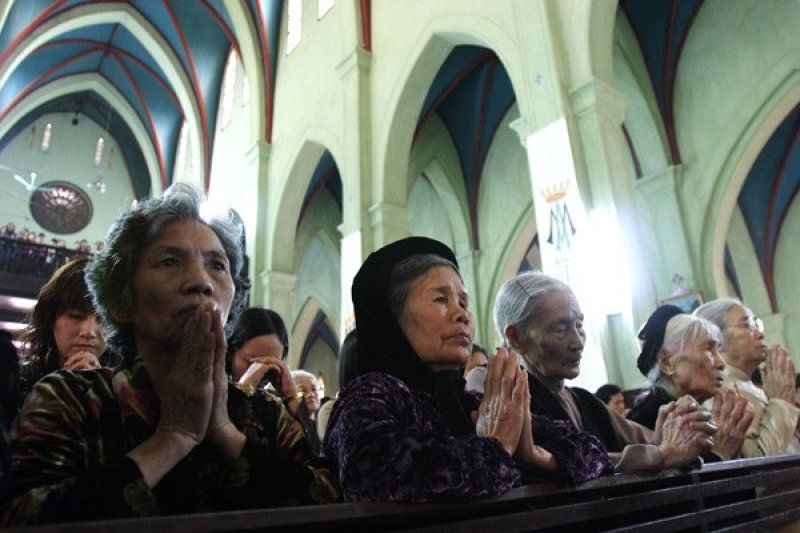
For two hundred and fifty years, Christians were persecuted and murdered in Japan. In the mid-nineteenth century, the era of persecution of followers of Christ in the „land of the rising sun“ ended. For which reason? Why did Christians stop being enemy number one?
Was this for at least two reasons? First, Japan was almost completely isolated from the world, and no one came into it from outside new ideas, so there was a belief that Christians succeeded in eliminating or at least pacifying. Second, at one point, power felt unchallenged.
Conviction, however, some rulers managed to get rid of Christ’s followers in Japan misguided. He stated I would like one interesting comparison: When the Portuguese came to India in the middle of the fifteenth century, Vasco da Gama heard the question: „Why the hell did you come to us?“. Sailor, he replied: „ We came looking for Christians.“In the nineteenth century, when the era of isolationism ended in Japan and the Europeans coming to the country were certainly not looking for Christians there, it was a massive shock for them when they found out that there were Christians in the country after all. Za Some people began to arrive at Europeans, asking them if they had a statue of the Virgin Mary or whether they were obedient to the Holy Father in Rome.
They spread there are rumors that a large part of Christians in Japan did not believe in the arrival of Europeans, and she continued to wait in hiding for some other, more convincing sign, after which she would dare to come out of the underground.
How did Japanese Christians react to the end of isolationism? Reports of how they reacted have been preserved, for example, to celebrate Holy Mass by a priest.
Japan, including France, was allowed to operate foreign diplomatic missions. It should be borne in mind that France, which was part of the other empire, was friendly to Christians. Finally alone, Napoleon III. believed that he was the successor of privileges dating from the time of the Valois, that is, that he was the protector of Catholics in the mysterious East and, therefore, also in Japan. Thanks to the measures taken by the French, Japanese Christians began to leave the underground.
However, there is a great danger associated with it because anti-Christian regulations were not repealed. Although in Japan, in the nineteenth century, Christians were no longer murdered, conversions to Christianity continued to be considered for high treason. A curious coincidence arose at one time. Japanese elites decided to carry out a mental revolution in the United States, and they sent a big message to Europe.
Na The West was often asked how the government treated Christians in Japan. Sure, at the moment, they found their way and realized that the persecution of Christians was lousy advertising for their country. And so, in 1873, they were anti-Christian regulations repealed in principle. I’m talking basically because the question of how to reconcile Christianity with respect cannot be answered and shown to the emperor, and what is this respect? Is it respect to the office, part of the monarchical system, or is it a religious cult? This it became clear only in 1945.
There was one more thing. At that time, the mad hunt for the modernization of Japan began. There were also extreme ideas, such as renouncing the Japanese language and introducing the English language to make the country modern. They also intended to abandon Chinese characters and introduce the Latin alphabet. They thought of giving up rice and replacing it with bread, not because it is tastier, but because civilized people eat bread. At one point, the idea arose to adopt Christianity as the state religion.
Why was this last request not implemented?
OF for an unfortunate reason. Japanese elites traveling the world came to believe that the elites in Western countries are no longer honest Christians and that it is in the fashion of believers among Western intellectuals in Christ, instead to mock, among them especially the popes, than „pleated persons“.
Aj, when some representatives of the Japanese elite staying in the West accepted Christianity, they got their bearings very quickly when they saw that they could work even without it in the world. Even if someone says that he has become a Christian out of conviction, others look at him as a freak.
The Japanese eventually concluded that, in that case, they did not need Christianity.
Despite this shameful situation in the second half of the nineteenth century, Malo Christianity in Japan is a chance to develop?
It developed sa in the sense that it came out of the underground. Christians could pray openly, parishes were established, and the Japanese were ordained priests and even bishops.
Pope Pius IX beatified and canonized the first Japanese martyrs, including Sts. Pavel Miki and his companions. Too bad that this did not happen earlier, although we do not know whether, with the impermeability of the Japanese, it would be possible for the world at all. Information that Japanese martyrs are canonized and respected throughout the Christian world could have been important to the Japanese underground Church.
In this regard, the Church in Japan developed. Nevertheless, it is impossible to get rid of it, and they are under the impression that the best moment for the Christianization of Japan was the sixteenth century. In the second half of the nineteenth century, it was created in Japan’s centralized state, and it turned out that Europe could also be imitated without Christianity. He was behind the basic principle and then accepted the cult of the emperor. For example, the obligation to bow before was introduced a portrait of Emperor Meij during the recitation of his work „O návove“. Christians, those who rejected this gesture, were immediately fired from their jobs.
Some European missionaries claimed that such a bow could be shown (even though it is necessary not only for the emperor himself but also to pay tribute to the moral one with bow literature such as the work above.
So, the best moment for the Christianization of Japan passed, and the conversions of the essential Japanese personalities, even representatives of the imperial family, did not make much of an impression on anyone. In other words, whether they are true or rumors don’t matter. This is best described in the personal drama of Emperor Hirohito, the grandfather of the reigning emperor, who is said to have considered converting to Christianity. Even if it happened, would it mean a breakthrough? Undoubtedly, for Hirohito’s soul, yes. And for the world? Perhaps this would be bombastic news, but would it shake Japan and Poland the baptism in 966 accepted by Mieszko I.?
While is he an emperor to the Japanese?By God?Officials?Lord over life and death?
Constitution Japan says that the emperor is the primary power source in the country, and everything that happens in the country happens through him. However, there is a gap between the provisions of the Constitution and political practice.
If you have read, for example, the Constitution of Great Britain, because this country, despite widespread opinion, has a constitution, but not in the form of a booklet, but a library, you would learn that the queen exercises the leading power in the state, that she appoints it for the prime minister, whoever he wants, she is the supreme commander of the army, etc. Britain, however, has an entirely different political reality.
Is emperor to the gods for the Japanese? First, you need to be clear about your understanding of divinity. Not for nothing, as I mentioned before, the first missionaries compared the Japanese religion to the religion of the ancient Romans, especially with that „really“ religion of ancient Rome before it became similar to the religion of the ancient Greeks.
I can say that it was a huge problem, especially for Christians who did not know how to react. In 1921, Crown Prince Hirohito was introduced to Pope Benedict XV. then, the question of the emperor’s divinity appeared. At the time, Hirohito said it was known from a European perspective that it was nonsense, but it could not be denied so that ordinary Japanese people would not be offended.
So, was ecumenism already in full swing then?
No, please. Benedict XV was an old-school man who did not want to harm Christians in Japan. Therefore, he accepted this rhetorical reversal.
Pope also counted on the fact that he would be able to get along with Dobra with such gestures as a message to members of the imperial family and convert them to Christianity. The problem turned out to be more complicated when people from the environment of Emperor Hirohito asked if the Emperor-Christian could perform Shinto rites.
Here, the question must be asked: Who is the ruler? It is well known that there is no such thing as a secular king because if someone is titled a secular king, as in Scandinavia, he is not a king, just a jester who does not believe himself to be a king. Swedes, at least, are consistent when they banned the coronation because it isn’t a secular ceremony.
In Japan, it’s completely different. Certainly not during enthronement coronation) is performed in several rituals.
Why enthronement and not coronation?
Because the ruler of Japan does not have a tiara, there are three types of cover heads and other insignia. So the question arises whether the Christian can participate in something like this, and what it would all mean for him. The answer is not simple.
Miscellaneous persons from the imperial family were suspected because it was never officially announced, from the fact that they converted to Christianity. Still, it always concerned extended family, empress, or imperial wives.
An example is Empress Michiko, who abdicated with her husband on April 30, 2019. It is interesting to mention that she is a former student at the School of the Sacred Heart of Jesus. She represented the school as a single at congresses of Christian schools in Europe. But she was Christian? No one officially asks this question in Japan.
The problem for Christianity in Japan, what it is after all in the West: growing indifference.
Once upon a time, I read on one of the eastern portals that one of the emperors openly said that he converted to Christianity. Japanese media had to explain to people that it meant nothing because the emperor was god and could say what he wanted and convert to what he wanted…
This situation never happened because no emperor, even though he converted to Christianity, did not publicly admit it, and no one asked him about it.
Were there but such rumors?
Of course. Rumors were regularly repeated at different times and concerned at least two rulers and one empress.
Let’s start with Hirohito – the most famous ruler of Japan. They say that his mother was a Christian woman, but the evidence in this matter is circumstantial and inconclusive. Of course, this should have happened long after the Hirohite’s birthday and her husband, Emperor Taisho, died in 1926. It seems, however, that this alleged evidence is wishful thinking.
Unless this is about Hirohito, his conversion should be evidenced by events from the American occupation. Then, as a result, he would say I am – for personal reasons, including shock caused by defeat in war and by subsequently executing some of the imperial ministers as war criminals, he had the emperor is said to be interested in the conversion.
Next, the rumors concerned Hirohito’s successor – Emperor Akihito. His relations with a profoundly religious person, even if his religiosity was specific, because I mean the American commander MacArthur, were minimally complicated. The fact is that Akihito was under the supervision of an American educator – a Protestant from a group of Quakers – a deeply religious person.
But even if it had happened, neither Hirohito’s nor Akihito’s conversion to Christianity was officially announced.
Why?
Usually, there are two reasons for the adverse decisions of the Japanese rulers. The first is that if the emperor did it, it would explain that he did it out of fear and that it was collaboration and humiliation on his part. He praised democracy and the occupation, and now he praises Christianity.
Second, the lost war strongly threatened the throne’s position. V If a converted emperor were to sit on the throne, it could cause too much upheaval for the very institution of the Japanese monarchy.
Is it is known that Hirohito corresponded with Pope Pius XII, thanks to which they began to spread more crazy rumors on this topic. We know that he visited Nagasaki – the center of Japanese Christianity and at the same time, the city was destroyed as a result of a nuclear attack. It is also known that he suggested they pray together at meetings with his son’s Christian teacher, but do we know if he turned? We don’t know. Probably nah.
And what do we know, Professor?
Hirohito had two sons – Akihita, who recently resigned, and Prince Masahito. Unless it is about the prince, there is some evidence. Still, unfortunately, it is not convincing that during his stay abroad, he became a Christian and regularly believed that he practiced. It was never announced in Japan ex-cathedra.
Fortunately or unfortunately for the system in Japan, religion is relegated to a background completely different than, e.g., in the British royal family. There, it is clear that the consequence of conversion to Catholicism is the loss of the right to the throne, which is quite amusing because discussions remain as to whether an atheist can be the head of the Anglican Church. However, if we consider contemporary Protestantism, the answer can be heard more and more often: „Why not?“
It is also certain that Emperor Akihito married a Christian woman, even though he tried to deny it.
What do you mean by that?
V in 1959, Akihito married a person from the people. In the future, although Empress Michiko came from a wealthy family, she was from a family without aristocratic titles, and in addition, she was a Christian – horror of horrors. It went about the first such case in Japan’s history.
Negotiated about it in the parliament as much as possible, but a representative of the imperial court said it was no problem because despite her parents being Christians, Michiko was not baptized, so the fears were irrelevant.
It is. However, it is doubtful that Christian parents in the thirties did not have their daughter baptized when the empress came into the world. Why wouldn’t they have done that? Maybe they were already counting then because she would become the bride of the heir to the throne?
Her affiliations among Christ’s followers are evidenced by much circumstantial evidence, e.g., an audience with Pope John Paul II in which the Empress kneels and kisses his ring, so he makes a gesture before which Pope Francis was recently reluctant about hygiene reasons.
Except for Michiko’s question, which, according to her, was the most crucial event in the history of Japan, she answered without hesitation: Visit the Holy Father in our country.
In connection with this, we can assume that the empress converted to Christianity your man – Emperor Akihito?
Even if that were to happen, I repeat: these questions are not asked by anyone in Japan. Drama consists of even if the emperor ( the former emperor!) Akihito became a Christian; it would not impress anyone more. It would be a great shame for the Japanese government and the imperial court, but nothing more.
But after all, the current Japanese government is breaking all kinds of taboos. Some time ago, the constitution was voted on, according to which the Japanese armed forces can participate in foreign missions, which caused fierce disputes in the local parliament because it meant a change of more fifty-year ban…
No these are no taboo topics, only politically sensitive issues. Tabooed the topic is, for example, finding an answer to the question of whether Japan committed aggression during World War II or whether he surrendered at Yasukuni Shrine in respect of war criminals.
You are talking about political gestures that can be beneficial or unhelpful.
According to you, the Japanese government would react if the future Emperor Naruhito said: Am I Catholic?
That would be a problem for her. Mainly because some politicians of the so-called debating class would start thinking out loud about who the emperor is, what the monarchy is, and what the state is.
The Japanese constitution does not clearly say that the emperor is the head of state. Even with a bit of malice, it is also possible to conclude that, in reality, this is not the case. It is written there that the emperor is a symbol of the state and the unity of the nation, but such problematic questions arose, for example, whether the emperor has the right to receive credentials from ambassadors (a receives…), i.e., when he is not the head of state in the technical sense of the word.
Indeed, whether the emperor-Christian can perform all Shinto rituals would be debatable. Even so, we have a problem – on whose behalf does it do it? Is it state celebrations or his private activity?
But why is it so important? After all, a person has the impression that Japan is essentially a secular state…
Aj Sweden is a secular state, but the king there is the head of the local church. The church is limited to tax collection there, but let’s imagine it would happen in Sweden if the king became Catholic or the monarch converted to Catholicism. Bol would also be the head of the Lutheran Church, or he would have to replace him in this one. Are there any civil servants? Or would the Catholic king of Sweden continue to appoint bishops, archbishops, and pastors? System in Sweden, such issues are not dealt with and avoided. Equally, the Japanese system also avoids them. If the emperor is Catholic, he should keep it to himself. If he doesn’t believe in Shinto rites, so let him not believe, but let him speak loudly about it doesn’t speak.
Let’s introduce that on January 1, 1946, by order of General MacArthur, Emperor Hirohito said he was wrongly considered a god. „I’m a person like any of you,“ he declared. How was it interpreted? Japanese hardcore traditionalists first said that the emperor never said he was a descendant of the gods, except that he was not. Mon, the second – emperor, can be wrong because it is only his opinion.
Do you think there is a chance to convert Japan? What do you think they can do about these hierarchies? What can the Church do?
Something different needs to be done than before. Must stop telling people empty passwords like: „Basically, we all believe in the same God, so you don’t have to be a Christian to be they were saved. So don’t come to me asking for baptism, because not only I’m not worthy to give it to you, but I seem to be he did something inappropriate that I brought you to faith“.
Like this, many priests and hierarchs advance toward Muslims who want to live in France and, therefore, come to churches. There are dozens of cases of frightened priests asking them: „Why don’t you like Prophet Muhammad, who was a wonderful person? Yours intentions can harm ecumenical dialogue…“.
Equally, it’s in Japan.
But what’s next? I don’t know. Fortuna is variable, and God is Love. Even though in the sixteenth century, Christianity had promising prospects in Japan, it was all over persecutions, pogroms, apostasy, and descent underground for hundreds of years.
In the 20th century, Christianity had good prospects in China, but communists came. However, it cannot be ruled out that during the day, hour, or even minutes, everything will not radically change, and the Immaculate Heart of Mary will eventually win.
It seems that the best solution will be to stick to the words of Scripture, that we should be hot or cold but never lukewarm. If we believe that the salvation of Japan is not, it is our business. The only thing that unites us is the protection of the landscape and the environment; we can’t get far, especially when the Japanese are the only ones killing alongside the Norwegians „na scientific purposes“ whales, which significantly decreased in the eyes of Pope Francis.
Posted in Nezaradené
Leave a comment
Holy Blaise Blessing.

The priest gives the girl the Holy Blaise Throat Blessing.
Today, an exceptional blessing is given in Catholic churches during Holy Mass. The priest shall place two lighted and crossed candles under the believer’s throat and bless him with the words: „ At the intercession of Saint Blaise, may the Lord protect you from all evil and may the almighty God the Father and the Son and the Holy Spirit bless you.“
The Holy Blaise Throat Blessing, which priests administer on the feast of St. Blaise on the third of February, has a long tradition in the church. As Blažej Čaputa, the dean of Nové Mesto nad Váhom, explains to the World of Christianity, the blessing has been established in the church since around the 16th century.
The church confirmed the tradition based on legends
„There are no verified written records directly about Blaise’s life, but the tradition of respect for him is powerful in the church. Instead, she passed on herself through experience. That respect for him has survived to this day is proof that the faithful have experienced hearing their pleas at his intercession,“ says Dean Čaputa with that, that most miracles allegedly took place only after his death.
The life of this early Christian martyr from Armenia was not described until several centuries after his death, but these are legends rather than credible sources.
„Legends are legends, we cannot verify them historically, but the fact is that the church confirmed their tradition with a blessing given through his intercession, which is why it is called St. Blaise,“ liturgist Štefan Fábry told the World of Christianity.
The tradition about Saint Blaise says that he worked as a doctor before becoming a bishop in Sebastian (today’s Sivas in Turkey). He died a martyr’s death sometime around 316. The origin of the blessing, which is given on the day of his commemoration, lies in two legends.
„According to the first, during the persecution of Christians under Emperor Licinius, Bishop Blaise hid in a cave in the mountains, where he allegedly saved a poor widow, a calf, or a pig attacked by a wolf. She is said to have given him candles as a reward,“ As another legend mentions, Blaise was also said to like forest animals that hid in a cave where he lived as a hermit. Thanks to this, the hunters discovered him, denounced him, and then he was imprisoned and sentenced to death.
„The second legend says that on the way to the gallows or while still in prison, he saved the life of a boy whose throat had a bone from a fish stuck,“ It was precisely because of these two events which stuck in people’s memory, that believers prayed more and more for his intercession as a helper in need, in various diseases of the throat or teeth. He has been revered in the East as the patron saint of cattle since the 6th century. Blaise has been revered as the patron saint of doctors and wool weavers in the West since the 9th century. Since 855, Blaise’s relics have rested in St. Blasien in the Schwarzwald southwest of Germany. Only in Rome are several churches dedicated to him; there is also a well-known church in Dubrovnik, Croatia.
A blessing is not mandatory; it belongs to popular piety.
„ However, people expect it, desire this blessing, and come to it in relatively large numbers. It is used in our area; I have not met that the priests bypass the blessing because people will request it,“ thinks Dean Čaputa. There are two ways in which a blessing can be given. The priest blesses each believer who shows interest in him by standing in line. This form is time-consuming, requires people’s patience, and replaces the final blessing. At the same time, it is also possible to give a joint blessing when the priest blesses everyone present in the church at the same time.
In both cases, the ceremony will begin with the blessing of the candles, which the priest will sprinkle with holy water. The prayer will be heard: „ Protect us, through the intercession of this bishop and martyr, from diseases of the throat and all damage and lead us safely through all the dangers of our lives.“
When blessing together, the priest prays with the words: „ Let him strengthen you so that in the health of body and soul you fulfill your mission and achieve salvation in the community of all saints.“

The priest grants a blessing with a candle, the so-called bliss. Photo: The Dubrovnik Times/Niksa Duper
Priest Štefan Fábry draws attention to the fact that liturgical prayers are not narrowed down to throat diseases, but a request for protection from every evil is heard. Therefore, every believer can receive the blessing, not just the one with the sick throat.
„The Holy Blessing is given, holding lit candles in your hand, which are placed under the throat. They are usually crossed and tied with red – the color of the martyrs, but they do not have to be. There are also blaise candles.“
Posted in Nezaradené
1 Comment
God is infinitely benevolent.
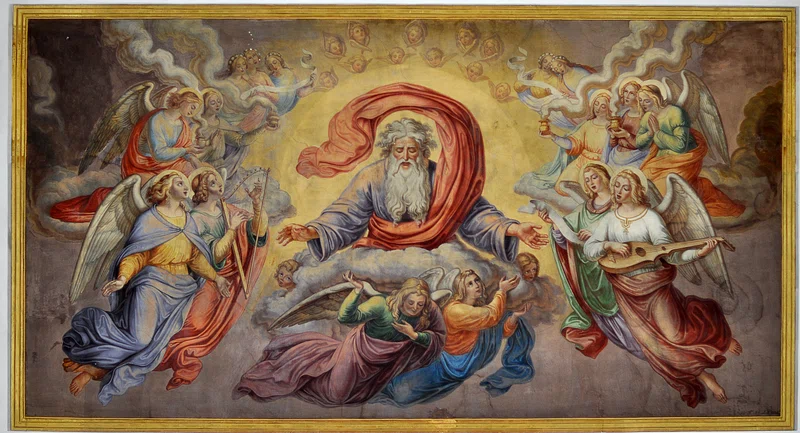
Whatever perfection we can imagine with human reason, we will find it with God without end or end.
That is why we say that God is the perfect being. He is from eternity, knows everything, omnipresent, omnipotent, infinitely wise, holy and just, reasonable and merciful, truthful and faithful. I explained these qualities of God one by one; the other time, I said that God is holy and just. Now, according to the order of the catechism, it follows that God is benevolent and merciful.
Angels best know the infinite holiness of the Lord God, therefore enchanted by the holiness of God unsteadily – forever sing like this: „Holy, holy, holy is the Lord of hosts.“ The infinite goodness of the Lord God is best known to us humans; therefore, we hear most from the mouths of humans: „God good, oh my God kind, benevolent!“The holiness of God is unattainable, at the same time his benevolence cannot be exceeded. Let’s think!
During the time of Emperor Vespasian, it was once discussed by the Roman Council, which most decent title (men) belongs to God. One wanted God to be called a wise God; the other preferred to call him an almighty God. There was also one who recommended this name: „Rich God.“ When they could no longer decide, the wisest counselor stood up and said: „I, for my part, do not recommend any of these names. Because if God is the God of wealth, he ignores the poor. If he is a God of wisdom, he would not be a protector of the unconscious. If he is a God of omnipotence, he would only like influential people, but he would forget low-class people. That’s why I so think that God best owns this name: „Good God.“ Everyone liked this wise speech, so they brought out the law that from now on, the name of God would be this: „Beneficent God.“
That was a pagan who spoke like that. I, as a Christian and an ordained priest, would not know how to give God a more beautiful name than this pagan said: „ Beneficent God.“ But also the apostle of Jesus, St. John, could say the most about God: „God is love.“
I could express this kind of goodness of God in a few words like this: „God only wants us well and only does us good because he loves us immensely. As the sun has the role to shine and warm, the nature of God brings with it to love and do good. Not as many hearts in Heaven and Earth can love as God.
There is no father; no mother is as sufficient to love as the heavenly Father loves us, his unworthy children. St. Scripture mentions Jacob’s love for his son Joseph as an example. The brothers sold Joseph. Joseph became a great lord in a foreign land, he took his father James to him. When old Jakub could see his son Jozef again after many years, he could not speak a word of joy; he fell around his neck and just cried and wept. – Scripture St. an example mentions King David’s love for his son Absalom. When they brought him the rumor about the death of his son, King David just cried with grief and repeated in unison: „If I had died in your place, Absolón“ (2Sam 19,1). That’s how one earthly father loves, from that we can understand a little the love of the heavenly Father. Would a kinder heart be found in the world above the father’s heart? It would be seen that the love of the mother’s heart is perhaps even warmer! The mother watches over the cradle of her baby. She loves him when she cries and laughs with him when her child rejoices; she is also looking for her baby’s grave; she travels to his little cross, and the dust of the lovely flower from her breast is also watered with tears.
This is motherly love. What do you think? The good God who created the heart of the mother, who grafted the love for the children into the parent’s heart, how much this kind God can love us, his creatures. We learn this from himself when the God of the prophet Isaiah asks: „Will a woman forget her infant and have no mercy on the fruit of her womb? Even if she fails, I won’t forget you!“ (Iz 49,15)
A sure Christian youth, after many accidents, came to Egypt among the pagan people. He settled there. He settled there so much that he fell in love with the daughter of the local pagan priest and asked her for a wife. The pagan priest, according to the custom there, asked the statue of the idol in which the devil dwelt whether he should give his daughter as a wife to this Christian. „Don’t give, – answered the devil, – until he denies his faith.“ And the unfortunate man denied his faith. Then the pagan priest asked the devil for the second time: can he give him his daughter as his wife? „Don’t give it to him even now, the idol replied – because he left his God, but God hasn’t left him yet.“ God’s immense benevolence so penetrated this young man’s heart that he embarked on a loud lamentation, mourned for his sin calling to heaven, and spent his whole life in sincere repentance for the denial of his faith.
So it is: an ungrateful sinner can leave and deny God, but God will not leave anyone.
O God, my benevolent God, thinking of Your abounding deep divine love, I fall on my knees, I fold my hands to prayer, and with St., I call David: „What is the man that you remember him, and the son of man that you take him in? You created him only a little smaller than the angels, you crowned him with glory and honor and appointed him ruler over the works of your hands“ (Ž 8.5–7). My benevolent God, you watch over us at night; you accompany us during the day. Three hundred and sixty-five times a year you dawn on us, you take care of the flower of our life with a careful hand, you protect it from the cold draft of death, so that it does not wither before time. You give us strength and health. To the earth, our blessing, you grant success to our works. You serve us the bread that we feed on, you send us a spring to quench our thirst, you give us a garment to clothe our bodies.
And what should I say about the glorious mental gifts of God? It gives us victories in temptations and patience in tribulations. He created our soul in his image and parable, received us into the bosom of his saving Church, and showered us with his graces. He made us happy when we cried. He hears the wailing of widows, the lamentation of orphans, the burning of the unfortunate. God will not leave, he will not reject anyone, because if the benevolent Lord God hit you with some accident, he is powerful enough to send his comforter angel to you. Therefore, trust that you have heard that God is infinitely benevolent. That blessed hand that draws a rainbow in the sky of heaven after a storm, that blessed hand hovers over you, wants you well and turns your sorrow into joy, an accident into a blessing. Instead of grumbling, fold your hands, and the greater the pain in which your heart is gripped, the more fervent your prayer floats to the heavens: „Our Father, your will be done!“
First, you will count the stars in the sky, the grains of dust on the earth, and then the graces and blessings with which God has sprinkled us. Did he endlessly grant you no more than all the treasures of the world, even so much that he could not even grant you more himself? Or what more excellent thing should he have given you than his only begotten Son? Did he not deliver him to the terrible death of the cross for you?
Even now, his most holy Body is ready for food every day! „ And God’s love for us was manifested in the fact that God sent his only begotten Son into the world so that through him we might have life“ (1Jn 4,9), live forever in the glory of heaven, where there will be no more pain or sorrow, but only joy and cheerfulness, endless and incomprehensible bliss.
What would we thank forever, even then we would not thank God enough for his multiple blessings.
Posted in Nezaradené
Leave a comment
St. Blaise Mk 16,15-20
Feast day: 3 February
* 2. 2nd half of the 3rd cent. 2.2 Feb. 2nd century. Se baste, today Sivas, Turkey
† c. 316 (?)
Attributes: crossed candles, book, pig’s head
Patron saint of otorhinolaryngologists (ear, nose and throat doctors), wind instrument musicians, wool merchants, tailors, shoemakers, hatters, weavers, tanners, bakers, millers, masons, plasterers, stonemasons, soap makers, wax makers, night watchmen; pets; for good confession; for sore throats, coughs, laryngitis, diphtheria, bladder diseases, flatulence, bleeding, ulcers, colic, toothache, plague
The life of St. Blaise was described very late after his death. It is written more as a legend, so the facts are unguaranteed. According to it, Blaise was not only a bishop in Se baste, Armenia (now Sivas, Turkey), but also a physician. The co-rulers of Emperor Constantine, who gave freedom to Christians, did not respect it and persecuted Christians further. Because of this, even Bishop Blaise took refuge in a rock cave. Legend has it that when the hunters arranged a hunt, the animals fled in one direction, namely to the cave of Bishop Blaise, who lived there as a hermit, his only company being the animals. The hunters thus discovered him and denounced him. The governor gave orders to bring him to trial. Deputy Agricola urged him to sacrifice to the idols. When he failed to do so, the judge had him tied to a pole and flogged. He was then taken to prison and sentenced to death in 316.
An unconfirmed story tells that a widow, weeping, brought to Blaise her child, who was left with a fish bone sticking out of his throat and begged him for help. Blaise prayed fervently, blessed the child, and the boy was healed. After his death, miracles of healing also took place. A tradition developed that on the feast of St. Blaise (February 3), the blessing of St. Blaise is bestowed – the blessing of the throat. St. Blaise was among the fourteen helpers in need. He is highly venerated. In Rome alone there are five churches dedicated to him.
Posted in Nezaradené
Leave a comment
Man has rejected God.
From the feeling of independence from God and self-sufficiency, other sins grew, but man could not wholly exclude God; He was inscribed in his soul. Man had to invent gods and false, illusory gods, those who did only what man wanted. The ever-generating surplus was the water to the mill of the early farmers’ sense of self-sufficiency. This surplus germ of wealth could be our biblical apple. The surplus creates in man a sense of strength, independence, and the ability to be on his own without the help of supernatural forces. Excess and wealth replace God. But excess is a double-edged weapon.
At the same time, man becomes a slave to his wealth. He finds it extremely difficult to give it up and is willing to do anything to gain it. This is still true today and will remain accurate as long as sin reigns. God has taught the giving up of surplus from the beginning. The sacrifices of the Old Testament are clear proof of this. God does not need meat, sheep, goats, or bulls. He needs men to be able to give them up. The sacrificial animals must not be defective. They must be first class, for these are the very animals man did not want to give up. Remember Cain and Abel. Cain probably used what he would have thrown away anyway for sacrifice; Abel used a valuable sacrifice, and God looked upon it. About 10,000 years before Christ, there was an unexpected cooling. It lasted more than 500 years. The man was faced with a dilemma.
Survive or perish. Plants suitable for consumption, too. The man threw all his energies into agriculture, saving him. Agriculture meant a great flowering of humanity, significant surpluses, and thus the emergence of civilization, but also a departure from God. What to say in conclusion. The claims of the devil, in the form of the devil, that you will be like God were a lie. We could not do without God in the love of man for man. God saves us; we are still drowning in our pride, resentment, and hatred. The devil lied about what this means—simply admitting to myself that I am not enough. That is the first step of returning to God. We must humbly accept our weakness and powerlessness to do good. Twelve thousand years ago, we pushed God away with words. Please leave us alone; we have enough on our own. We are like You. Humanity expands ever more than energy.
A Neanderthal needed just as much energy to exist as an ibex. Man, at the beginning of the agricultural era, only about half as much. By the time of Tutankhamun and Moses, it was already 4 times more. The Romans already consumed 9x more energy than an equal-weight ibex. The man of the 19th-century industrial revolution has already surpassed the ibex by 30x. Today’s man consumes 50x more energy for his existence than an ibex. Where will this lead? Scientists are making it clear that we are on the brink of an energy and ecological crisis that will grow into a catastrophe if we do not tackle it. Greed and recklessness, a market economy in economic terminology, are the root cause of all today’s global problems. It is up to man to solve them
Posted in Nezaradené
1 Comment
Memorial of Saint John Bosco ,Priest, Mk 4,26-34
John Bosco, popularly called Don Bosco, was born on August 16, 1815, in the small mountain settlement of Becchi in Italy. Becchi belonged to the town of Castelnuovo d’Asti in the Piedmont region. His father was Francis, and his mother was Margit, née Occhien. His father was married for the second time because his first wife died. He had a son, Anton, from his first marriage, and Josef and John were born in the second. When little John was 2 years old, his father died of pneumonia at the age of 33. So Margita’s mother raised them alone. The youngest, John, had great talent. As a boy, he did all kinds of acrobatics and witchcraft tricks, which made many people in the village like him. In addition, he had an excellent memory. An old priest taught him to read and write, so he often read books to other villagers or repeated sermons that he heard in the church. As a nine-year-old, he dreamed of seeing many children screaming, cursing, and acting naughty. He saw himself there. At first, he talked to them, but then he threw himself between them and started beating them to stop. But suddenly a mysterious figure approached him and said: „No so! Not by force! Only kindly if you want to win their friendship!“ He said to himself, and suddenly, the antics were as tame as lambs. The voice of the mysterious figure further told him: „Take your shepherd’s staff and lead them to the pasture. Later, you will understand the meaning of this vision.“ Even later, Don Bosco remembered it as his first impulse to devote himself to the youth, especially those nobodies cared about. Since there were problems at home with his half-brother Anton, to whom it seemed that John was promoting himself, he preferred to go into service on a peasant property, where he spent two years. After returning, when he was 15 years old, he started attending school in Castelnuovo, about 5 km from the settlement. He walked, sometimes twice a day. A year later, he started going to the city of Chieri, which was about 20 km away. He could no longer commute, so it was bitterly challenging to find a cheap sublet, where he stayed, saying that he helped as a servant in the family of householders. He could finish elementary school and gymnasium in four years thanks to his talent, extraordinary memory, and strong will. During his studies, he founded an association called Allegri- cheerful, whose goal was to detach friends from sinful pastimes and lead them to God. After graduating from high school, he wondered what to do next. He wanted to be a priest but didn’t know whether to join a religious order or go to a diocesan seminary. He eventually became a diocesan priest. After his ordination, he studied for a while and wanted to penetrate deeper into the sacred sciences.
At that time, in 1841, he began to gather around him boys, urchins, whom no one cared about. They came themselves and sensed a love for him that they had not known until then. Some of them were not even fourteen yet, others almost twenty. Bosco’s principle was: Be cheerful, play, have fun, don’t sin. He was still among them; he could skillfully mix something from the catechism into the game. Well, not everyone liked it. The noise of the boys having fun disturbed people; some priests even thought he was crazy. They even wanted to take him to an asylum, but they failed. Soon, Don Bosco had several hundred boys around him. He knew he had to find someplace to be home. With the help of benefactors, it was possible to buy Mr. Picardi’s shed and house in Turin in the Valdocco district, which was famous for its bad reputation. His mother, Margita, became a housekeeper not only for him but also for the boys. She helped him selflessly until her death. Buildings and a church gradually grew on the poor plot, and elementary and vocational schools with workshops were established. Don Bosco also founded a printing house that still operates and is one of Italy’s largest and most modern. Don Bosco himself wrote several books. God kept telling him through dreams. He strengthened him so that he would not stop and be disgusted. On December 18, 1859, a new company was born. It was formed by priests Don Bosco, Don Alasonatti, and young clerics. Approval was given to the company ten years later – on March 1, 1869. He considered Don Bosco the main patron of the Virgin Mary’s Help of Christians. He dedicated his events to her and the main temple of the Salesian society, which he built in Turin. After a while, he founded the Association of Salesian Associates, which lived worldwide and worked for his ideas. In 1872, together with Maria Dominika Mozzarella, he founded a women’s religious society, which they named the Daughters of Our Lady Help of Christians. Their main content was to take care of raising girls. Even during his lifetime, the Salesians spread to many countries worldwide. He was characterized by tireless work to the point of exhaustion. He built several temples, e.g., in Rome, the temple of the Divine Heart of Jesus (Sacro Cuore, near the Termini) railway station. His life was interspersed with various wonders and miracles. Don Bosco died in Turin on 31 January 1888. He was seventy-two years old. More than a hundred thousand people attended his funeral. He was declared a saint in 1934.
Posted in Nezaradené
1 Comment