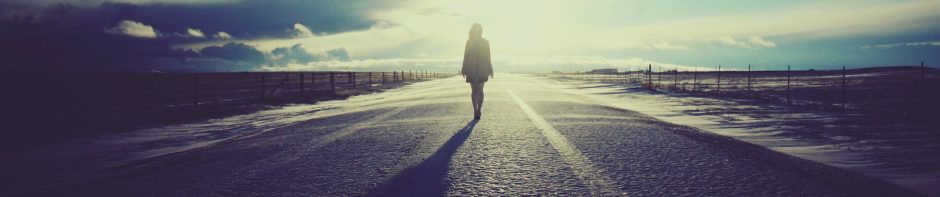
The following Sunday of Advent invites us to journey to places where our minds and hearts become more open to spiritual strengthening and experiencing the presence of God. Last Sunday, that journey—following on from the concluding Jubilee Holy Year, called “Pilgrims of Hope”—took us to John the Baptist, to the Jordan, to open us to the truth about ourselves and to set us on the path of knowing Jesus—the Messiah. Spiritual journeying, above all through dedicating time to prayer, becomes in Advent a setting out on an adventure with God. When we prepare for the Nativity of the Lord, we focus on the Child Jesus, but the meaning is much richer. It extends to experiencing our lives with God beyond history and temporality, reaching into eternity. Pope Francis said beautifully years ago that in every Advent we rediscover that we are on a journey: the Church, with her vocation and mission, and all of humanity, nations, civilizations, and cultures—we are all on a trip; we travel along the paths of time. Just as each of us needs to start anew, rise, and gain a sense of the goal of our own existence, the eternal human family also requires the renewal of the typical horizon towards which we are heading. The horizon of hope! The time of Advent, which we are beginning again today, restores to us the horizon of hope, a hope that does not disappoint (Angelus, December 1, 2013). So let us also set out on this third Sunday of Advent on another journey—a pilgrimage. In this case, we will travel to the desert.
The prophet Isaiah presents the image of the desert to us, though it is a strange one. We are not accustomed to the idea of a desert that blooms, where flowers appear, which is one of the driest places on earth, where, every few years, its ordinary barren sand is covered with white and purple flowers. But usually our thinking is the opposite: the desert is hot and dry, scorched land, desolate, waterless, bringing tribulation and fear. The prophet Isaiah creates this image to show the contrast between the situation in which man lives today and what will happen with the coming of the Messiah. The problem is entirely changing; a time will begin that will reveal the greatness and majesty of God. And the redeemed of the Lord will return; they will come to Zion with singing. Eternal joy will be on their heads; they will obtain joy and gladness; sorrow and sighing will flee away (Isaiah 35:10). When we read these words in a historical context, they were supposed to inspire in the listeners hope for the restoration of Israel, liberation, and authentic joy in returning to the land, but also to God. Then the eyes of the blind will be opened and the ears of the deaf unstopped. Then the lame will leap like a deer, and the tongue of the mute will sing for joy (Isaiah 35:5-6a). The image of a desert blooming, joyful, and bursting with consolation spoke volumes when compared to the sadness of slavery, contempt, infidelity, and the lack of perspective and hope for a change of fate. Say to the faint-hearted: Be strong, do not fear; behold, your God will come with vengeance, with God’s recompense; he will come and save you (Isaiah 35:4).
This biblical image of a blooming desert is crucial for us. This image primarily conveys a message of hope. When it seems all hope is lost and there are no opportunities to improve our circumstances, the desert intervenes, not in a depressing or barren way. The path of our pilgrimage should lead us to another desert, the one where great things can happen. That path was discovered by monks and hermits, who chose places far from people, often desolate and challenging to live in, to find spiritual values. Why not try to follow in their footsteps? We may not be hermits, but we can try to notice what we missed before. It can be prayer, silence, discovering the value of meekness and restraint, purity, detachment from the world, even for a moment. Although it seems complicated, it is possible for someone who is connected to God.
One of the most famous desert monks, Saint Evagrius, described his spiritual experiences in the desert, which remain valuable to us today, 16 centuries later. These are the words of advice: learn to discern thoughts, practice silence and solitude, work on imagination and memory, do not focus on fighting but long for love, and know God through prayer. These are the words of a man who spent his whole life struggling in the desert with himself and his weakness, yet the desert led him to God and to the peace of his heart.
A pilgrimage to such a desert teaches us that true happiness is somewhere else than we usually think. Pope Francis stated these words in the jubilee bull: What is happiness? What kind of happiness do we expect, and what type do we desire? Not a fleeting joy, but a satisfaction that, once it has achieved something, demands more and more, in a spiral of desire in which the human soul is never satisfied but increasingly empty. We need a happiness that is filled with what truly fulfills us, specifically love, allowing us to affirm: I am loved, and therefore I exist; I will always remain in the Love that does not disappoint and from which no one and nothing can ever separate me (SNC, 21). Choosing the desert path is about finding time for God and our souls. It is a journey to discover, experience, and share love.
Here, we must show the direction that leads to the discovery of love. Pope Francis speaks clearly and specifically about confession: Sacramental Reconciliation is not only a beautiful spiritual possibility but also a decisive, essential, and necessary step on the journey of faith for every person. There, we allow the Lord to destroy our sins, heal our hearts, lift us, and embrace us so that we may know his tender and compassionate face. There is no better way to know God than to allow him to reconcile us to himself (cf. 2 Cor 5:20), so that we may experience the joy of his forgiveness. Let us therefore not give up on confession, but let us rediscover the beauty of the sacrament of healing and joy— the beauty of the forgiveness of sins! (SNC, 23). There is no better way to know God than to allow him to forgive us. The sacrament of Reconciliation and mercy places us in the contrast spoken of by the prophet Isaiah. We come from the desert of our heart, dried up, burnt, barren, dark, and terrible, and we leave confession with a blooming and joyful heart. Previously unconscious, deaf, lame, and weak—now full of health and strength. The desert of the heart is transformed into a garden. That is why it is worth going to confession.
Here we must pay attention to one more important thing. It is evident in the scene from today’s Gospel. Jesus asks the crowds a question: What did you go out into the desert to see? (Mt 11:7). He says this in relation to John the Baptist, who was gaining more and more popularity and to whom many came to the Jordan. What did the crowds expect? What did they come out to see? People may have had different expectations and different ideas; they longed for something different. Jesus also says his words in his own context. Was John, who was now sitting in prison, presenting himself in a way that reflected all he wanted to achieve? Jesus’ question concerns our expectations and, perhaps a little, our ambitions. Do we have higher expectations than others, first of ourselves, to live a life of faith for Christ? Do we have ambitions in acquiring spiritual virtues? Are we truly drawn to go to the desert to change our hearts? Do we want to see it again or ever in our lives?
These are essential questions when we want to live the time of our journey—the pilgrimage—to the desert, because we are to go there to see something beyond our expectations. Jesus said that the least in the kingdom of heaven is greater than John (cf. Mt 11:11). This phrase should serve as the standard for our spiritual ambitions. John was someone more than a prophet. His greatness consisted in the fact that he preceded the Messiah; he was utterly devoted to serving Him, although before that, he did not even know who He was. John was excellent in what he did, and he remained faithful to his mission until death. How enormous, then, must be our spiritual desire to serve Jesus so that we may be greater than John in the Kingdom of Heaven. However, if John the Baptist chose the desert as the place of his expectation of the Messiah, then surely for us the desert, also (and perhaps especially) the different one, blooming and joyful after reconciliation with God, is the responsible place for our Advent expectation of the birth of Jesus.
Visitors counter: 166