
-
Recent Posts
Recent Comments
Archives
- September 2026
- August 2026
- July 2026
- June 2026
- May 2026
- April 2026
- March 2026
- February 2026
- January 2026
- December 2025
- November 2025
- October 2025
- September 2025
- August 2025
- July 2025
- June 2025
- May 2025
- April 2025
- March 2025
- February 2025
- January 2025
- December 2024
- November 2024
- October 2024
- September 2024
- August 2024
- July 2024
- June 2024
- May 2024
- April 2024
- March 2024
- February 2024
- January 2024
- December 2023
- November 2023
- October 2023
- September 2023
- August 2023
- July 2023
- June 2023
- May 2023
- April 2023
- March 2023
- February 2023
- January 2023
- December 2022
- November 2022
- October 2022
- September 2022
- August 2022
- July 2022
- June 2022
- May 2022
- April 2022
- March 2022
- February 2022
- January 2022
- December 2021
- November 2021
- October 2021
- September 2021
- August 2021
- July 2021
- June 2021
- May 2021
- April 2021
- March 2021
- February 2021
- January 2021
- December 2020
- November 2020
- October 2020
- September 2020
- August 2020
- July 2020
- June 2020
- May 2020
- April 2020
- March 2020
- February 2020
- January 2020
- December 2019
- November 2019
- October 2019
- September 2019
Holy Saturday Night of Easter-Easter Vigil
In his Gospel, Saint Mark tells us how the disciples, coming down from the Mount of Transfiguration, discussed among themselves what it means to “rise from the dead” (cf. Mk 9:10). Just before that, the Lord predicted to them his crucifixion and Resurrection after three days. Peter protested against the prediction of death. And now they were thinking about what “rise from the dead” could mean. Isn’t the same thing happening between us? Christmas, the birth of the divine Child, is immediately comprehensible to us. We can love this Child; we can imagine the Bethlehem night, Mary’s joy, the joy of St. Joseph and the shepherds, and the joy of the angels. But Resurrection – what is it? It goes beyond the realm of our experience, and its message thus often remains, to a certain extent, misunderstood; it belongs to the past. The Church tries to bring us into its understanding and translates this mysterious event into the languages of symbols, in which we can at least glimpse this revolutionary event. The Easter vigil gives us the meaning of this day with the help of three main symbols: Light, water, and a new song – hallelujah.
First, it’s light. God’s creation – which we heard about in the first reading – begins with the words: “Let there be light!” (Gen 1,3). Where there is light, Life is born, and chaos can turn into a cosmos. In the biblical message, Light is the most immediate image of God: He is all Light, Life, Truth, Light. The Church reads the creation narrative on the Easter Vigil as a prophecy. The Resurrection majestically confirms what this text describes as the beginning of everything. God says again: “Let there be light!”. The Resurrection of Jesus is an eruption of Light. Death is overcome, and the grave is open. The Risen One himself is the Light, the Light of the world. With the Resurrection, the day of God enters the night of history. The Light of God spreads to the world and history by being resurrected. It’s dawning. Only this Light – Jesus Christ – is true Light more than the physical phenomenon of Light. He is pure Light: God, who gives birth to a new creation in the midst of the old, transforms chaos into cosmos. Let’s try to understand it even better.
Why is Christ the Light? In the Old Testament, the Torah was considered a light coming from God for the world and for people. It separates Light into darkness in creation, i.e., good from evil. It shows a person the right path to an authentic life. It shows him good, shows him the truth, and leads him to love, which is its most profound content. The Torah is a “lamp” for steps and a “light” on the path (cf. Ps 119,105). Christians then knew that the Torah is present in Christ, and the Word of God is present in Him as a Person. The Word of God is the true Light that man needs. This Word is present in Him, in the Son. Psalm 19 compares the Torah to the sun, which rises and makes the glory of God visible throughout the world. Christians understood this. Yes, in the Resurrection, the Son of God appeared as Light over the world. Christ is the great Light from which all Life comes. He enables us to recognize the glory of God from one end of the earth to the other. He shows us the way. He is the day of God that is now beginning and spreading throughout the planet. If we live with him and for him, we can live in the Light.
At the Easter Vigil, the Church points to the mystery of Christ’s Light in the sign of the paschal, whose flame is light and heat simultaneously. The symbolism of Light is tied to fire: glow and heat, brightness and transforming energy contained in fire – truth and love go together. The Easter candle burns and thus is fed: the cross and the Resurrection are inseparable. From the cross, from the Son’s self-giving, Light is born, and true radiance enters the world. From Easter, we all light our candles, especially the baptized, for whom the Light of Christ descends to the depths of their hearts in this sacrament. The ancient Church marked baptism with the Greek term fortissimos, the sacrament of enlightenment and the granting of Light, and connected it with Christ’s Resurrection. God says to the baptized one in baptism: “Be light!”
The baptized person is brought into the Light of Christ. Christ separates the Light from the darkness. In it, we recognize what is true and what is false, light and darkness. The Light of truth arises with him, and we begin to understand. When Christ saw the people who had gathered to listen to him and received some guidance from him, he felt sorry for them because they were like sheep without a shepherd (cf. Mk 6:34). Amidst the conflicting currents of their time, they did not know where to turn. How much compassion must Christ feel even today in connection with great speeches, behind which great disorientation is hidden? Where should we go? What are the values we can follow? What are the values in which we could raise the youth without presenting them with unbearable standards or demanding things that should not be imposed on them? He is the Light. The baptismal candle is a symbol of the enlightenment that is given to us in baptism. Also, St. Paul is speaking to us directly at this moment. In the letter to the Philippians, he says that amid a perverted and evil generation, Christians should shine like stars in the universe (cf. Phil 2:15). Let us ask the Lord that the Light of the candle that he has lit in us, so that the gentle Light of his Word and his love in us amid the confusion of this time does not go out, but grows stronger and brighter. So that together with him, we can be the people of the day, the stars of our time.
Water is the second symbol of the Easter Vigil – the night of baptism -. It occurs in the Holy Scriptures and the internal structure of the sacrament of baptism but in two opposite meanings. After all, there is a sea that appears as a hostile power that opposes Life on earth as a permanent threat, but to which God has set limits. That is why it is said in the book of Revelation that there will be no more sea in God’s new world (cf. Revelation 21:1). It is the element of death. And so it becomes a symbolic representation of Jesus’ death on the cross: Christ descended into the sea, into the waters of death like Israel into the Red Sea. He rose from the dead; he gave us Life. This means that baptism is not only washing itself but a new birth: with Christ, we descend into the sea of death, as it were, to emerge as new creatures. The second way we encounter water is a fresh spring that gives Life or a great river from which Life comes.
According to the Church’s original stipulation, baptism was to be given with fresh spring water. Without water, there is no life. It is incredible how essential wells are in the Holy Scriptures. They are the places where Life comes from. At Jacob’s well, Christ announces to the Samaritan woman a new well, the water of true Life. He appears to her as a new, definitive Jacob, who opens the well they long for to humanity: the water that gives Life, which never runs out (cf. Jn 4:5-15). Saint John tells us how a soldier pierced Jesus’ side with a spear, from which blood and water gushed out (cf. John 19:34). The ancient Church saw it as a symbol of baptism and the Eucharist, coming from the pierced heart of Jesus. In death, Jesus himself became the source.
In one vision, the prophet Ezekiel saw a new Temple, from which a spring came out, which became a great river, giving Life (cf. Ezekiel 47:1-12). It was a powerful vision of hope in a country that has always suffered from drought and lack of water. In its beginnings, Christianity understood that it was realized in Christ. In Christ, He is the true, living temple of God. And He is the fountain of living water. From him gushes a great river, which in baptism begets and renews the world; the great river of living water, his gospel, which makes the earth fertile. In one speech during the Feast of Tabernacles, Jesus prophesied something more significant: “If … anyone … believes in me … streams of living water will flow from within him” (Jn 7:38).
In baptism, the Lord makes us not only people of Light but also springs from which living water flows. We all know such people who have refreshed and renewed us in a certain way, who are the source of fresh spring water. We don’t necessarily think of great men like St. Augustine, Francis of Assisi, Teresa of Avila, Mother Teresa of Calcutta, etc., persons through whom streams of living water flowed into history. Thanks to God, we find such people constantly in our everyday Life: people who are a source. Of course, we also know the opposite cases: people who create an atmosphere like a pool of stagnant or poisoned water. Let us ask the Lord, who gave us the grace of baptism, so that we can always be a source of clear, fresh water, gushing from the source of his truth and love!
The third great symbol of the Easter Vigil is unique: it concerns the man himself. It is the singing of a new song – hallelujah. When a person experiences great joy, he cannot keep it to himself. He has to express it and pass it on. But what happens when the Light of Resurrection touches a person and comes into contact with Life, Truth, and Love? He can’t just talk about it. Speaking alone is no longer enough. He has to sing. The first mention of singing in the Bible is found just after the crossing of the Red Sea when Israel was freed from slavery. He emerged from the terrifying depths of the sea. He is like reborn. He lives and is free. The Bible describes the people’s reaction to this great event of liberation with the sentence: “The people trusted the Lord and his servant Moses” (cf. Ex 14:31). This is followed by the second reaction, which flows from the first one out of some inner necessity: “Then Moses and the Israelites sang this song to the Lord” (Ex 15:1). In the Easter Vigil, we Christians sing this song every year after the third reading as our song because we too were rescued from the waters by God’s power and were freed to true Life.
The story of Moses’ song after the liberation of Israel from Egypt and after the crossing of the Red Sea has a surprising parallel in the book of the Revelation of St. John. Before the arrival of the last seven plagues, which will fall on the earth, there will appear to the visionary something “like a sea of glass mixed with fire, and those who have overcome the beast, over his image, and over the number of his name, standing on the sea of glass; they had God’s harps and sang the song of Moses, God’s servant, and the song of the Lamb” (Revelation 15:2-3a). This image describes the situation of Jesus’ disciples of all times and the problem of the Church in the history of this world. Humanly speaking, this situation is contradictory in itself.
On the one hand, the community is in a state of departure in the middle of the Red Sea. A sea in which, paradoxically, fire and ice mix. But shouldn’t the Church still walk on the sea through fire and ice? Humanly speaking, she should drown. But while still wandering amid this Red Sea, he sings. He sings the praise of the righteous: the song of Moses and the Lamb, in which the Old and New Covenants coincide. Instead of drowning, the Church sings a song of thanksgiving for the saved. It stands on the historical waters of death yet has already been resurrected. She sings and grabs the hand of the Lord, who holds her above the waters.
And she knows this puts her beyond the reach of the attraction of death and evil – a force from which there would otherwise be no escape. It is uplifted and attracted by the new attraction of God, truth, and love. Now, it is still between two gravitational fields. However, since Christ rose from the dead, love’s gravity is more vital than hate’s. Isn’t this situation the actual situation of the Church of all times? It always feels like she’s about to drown, and she’s always already saved. Saint Paul illustrated this situation with the words: “We are as dying – and behold, we live” (2 Cor 6,9). The saving hand of the Lord carries us, and we can now sing the song of the saved, the new song of the resurrected: Alleluia!
Posted in Nezaradené
Leave a comment
Good Friday of the Lord’s Passion
With the seven words of Christ and the Cross … “Father, into your hands, I commend my spirit”. The words of Jesus Christ on the Cross call us to trust and love as God’s children filled with the Holy Spirit.
The evangelists refer to Christ’s seven words on the Cross. We discover in them how much God the Father loved us, to the extent that he gave his Son to die so that we could become sons in him.
1. “Father, forgive them, for they know not what they do” (Lk 23, 34). The Lord asks forgiveness for our sins. “When he ascended the cross, he bore our sins on his own body, so that we might die to sin and live for righteousness” (1 Pt 2, 24). Christ dies to save us. It calls us to do good and to endure suffering. The secret of forgiveness is a love that understands the weakness of others because we know that we are filled with God’s Love.
2. “Truly, I say to you: Today you will be with me in paradise” (Lk 23, 43). Forgiveness again. The excellent thief repents and hears the promise of salvation. The word “paradise” of Persian origin recalls the garden of happiness: the first garden at creation. Jesus makes it clear that happiness is to be with him. As Saint Gregory of Nazianzus says, “If you are crucified with him as a thief, trust your God like a good thief.”
3. “When Jesus saw the mother and with her the disciple whom he loved, he said to the mother: Woman, behold your son!” Then he said to the disciple: Behold your mother! And from that hour, the disciple took her to himself” (Jn 19, 25-28). The Virgin Mary “accepts with love the offering of the victim she conceived.” She has no other son than Jesus. By accepting his death on the Cross, she receives us all as her daughters and sons in Saint John: she is the Mother of the Church.
4. “The whole earth was covered with darkness. Jesus cried out with a loud voice: Eli, Eli, lemah sabachthani? – that means: My God, my God, why have you forsaken me?” (Mt 27, 46). They are words from Psalm 22(21), which end with confidence in the goodness of God the Father and the future growth of the Church: “The whole earth will remember and turn to the Lord; all the families of the nations shall bow before him” (v. 28). Christ’s suffering on the Cross existed simultaneously with the immediate vision of God. At the same time, as St. Augustine says, we were also on the Cross because we are his body, which is the Church: Christ spoke for each of us.
5. “I thirst” (Jn 19, 28). This cry expresses the Lord’s humanity amid great suffering as He suffocates on the Cross. He also thirsts for our Love, which can ease the pain in his heart. His glory, the radiance of His love, is our participation in God’s life. “More than the weariness of the body, the thirst for souls consumes him.” He looks at us from the Cross in the Father’s eternal Love. Thirst for our thirst. And he has a great thirst to send us the Holy Spirit.
6. “It is finished” (Jn 19, 30). It is fulfillment. Jesus loved in obedience to the extreme (cf. Jn 3, 34; 13, 1). With the fullness of the Spirit, his offering to the Father is without measure. He fulfilled the Father’s will. At the same time, he is surrendered, drained, and exhausted. We contemplate the mystery of Love rather than pain. Above all, Jesus’ Love for the Father and the world is on the Cross. To the very end, what it means to be entirely the Son of God is manifested in him.
7. “Father, into your hands I commend my spirit” (Lk 23, 46). In the light of Jn 19, 30 – “he gave up his spirit” – the Church sees the gift of the Holy Spirit. Christ dies for the Love of God, for following his plan of salvation, and for Love for us. He dies “once for all” (1 Pt 3, 18). His human soul is separated from the body, which no longer has an animating principle. He died as a man, willingly, in the same way that a man suffers grief to separate himself from another man—death overcome by Love. The deity remains attached to the holy body, awaiting resurrection. We watch over him with sadness and hope.
In Christ’s seven words, we find the forgiveness of our sins, the promise to be with Jesus, the gift of the Virgin as Mother, the prayer full of trust, the request, the fulfillment, and the gift of the Spirit. “To lay down one’s life for others. That is the only way to live the life of Jesus Christ and identify with him”. Because “there is only one way to live on earth: to die with Christ, so that we can rise with him from the dead until we can say with the apostle: It is no longer I who live, but Christ lives in me (Gal 2:20)”. We can claim: “We are already God’s children”; and the children of the Blessed Virgin Mary.
Posted in Nezaradené
Leave a comment
Holy Thursday of the Lord’s Suppor John 13,1-15
In 1 Corinthians, it says: “For I received from the Lord what I delivered to you: The Lord Jesus, on the night he was delivered up, took bread, gave thanks, broke the bread and said, “This is my body for you. Could you do this in my memory? Likewise, after the meal, he took the cup and said. This cup is the new covenant in my blood. As often as you drink from it, do this to remember me.” We also find these words in all the evangelists, and they are especially recalled to us today on Maundy Thursday.
Sermon
I want to emphasize the words: “Do this in remembrance of me.” Let us imagine what would have happened if the apostles had not fulfilled this commission! We would not celebrate the Eucharist, i.e., no Holy Mass. Then Jesus would not be indeed and personally present among us. Thank God the apostles fulfilled this mission, so Christ is still present where the Eucharist is celebrated. The highlight of every Holy Mass is the words of consecration spoken by the priest over the bread and wine. The Holy Mass is, therefore, the ceremony in which we remember the entire history of salvation – but not just remember it, but visualize and experience it. In every Holy Mass, we hear the Word of God and can receive his body. We are with Jesus at Calvary, are reminded of his death, and rejoice that he is risen. Even if it seems impossible to us, we must be aware that in every Holy Mass, this remembrance of suffering, death, and resurrection is carried out. Jesus has left us something of unimaginable value. After every Holy Mass, we should go to the world to proclaim that Jesus lives and loves us.
There would be none today if people had made up the Holy Mass with its various ceremonies. Everything human will perish or change, but the Holy Mass will last until the end of time because it is God’s work. The Holy Mass is the source of many graces. A good relationship with the Holy Mass is the distinguishing mark of a Christian. It is a pity that many people pay too little or no attention to Holy Mass. Especially in Western Europe, only a few believers attend Holy Mass. I recently read a statistic about the Catholic Church in the Netherlands. In several dioceses, less than one percent of the faithful attend Holy Mass. Having the right attitude towards Mas is essential, and you get that from good role models. If parents are indifferent to Mass, you can’t expect children to have a good relationship with Holy Mass.
But there is also the other side – only some places can celebrate Holy Mass anytime. Here is an example: King Henry VIII of England broke away from the Catholic Church and forbade Catholics from celebrating Holy Mass. A priest was caught celebrating Holy Mass and was put on trial. He was asked whether he did not know that the king had forbidden Catholic priests to celebrate Holy Mass. He answered that he did know. The judge then asked who had authorized him to celebrate Mass. The priest replied: “Jesus said: Do this in remembrance of me. So I am only fulfilling Christ’s command.” He was then executed.
Even today, thousands of believers still make great sacrifices to be able to attend a Holy Mass, and Christians are persecuted in many countries around the world. We live in a free country, and we should take the opportunity to attend Holy Mass every Sunday and on public holidays! It gives us strength for our everyday lives.
Posted in Nezaradené
Leave a comment
Judas betrayal.
The terrible fall and damnation of Judas reminds us that we are all called by God to salvation, but not everyone listens to God’s voice. God calls every person to himself, but not every person follows God’s advice and recommendations. God has given everyone abilities for salvation, but not everyone uses these abilities. The reason for the fall and damnation of Judas was that he did not work to raise and perfect his soul, he did not work to improve his character, he rejected the talents that were given to him, and therefore he ended up in damnation.
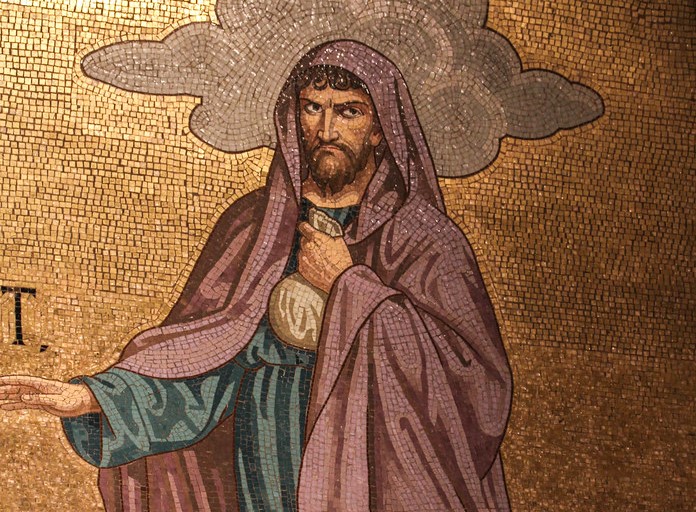
No one is safe from sin, we all have to fight against sin and our bad habits. Those who do not will end up like Judas.
The physical law of falling bodies also applies to the moral world. Woe to the person who embarks on the path of ” compromise with sin”. Whoever stands on the slope of evil is constantly sliding down, and his fall becomes more and more difficult to stop as time goes by. Thousands of victims of sin could not resist their fall and stop it, they ended up in damnation. If a seam on a garment tear and we don’t sew it up quickly, the whole garment will eventually tear. If during a flood the wave breaks the protective barrier of sandbags and we do not repair the leak immediately, eventually the whole wall will fall and the flood will inundate everything.
Greed was still smoldering in the soul of Judas, in others it can be vanity, laziness, desire for fame and recognition, hedonism. Judas was spiritually killed by the fact that he did not strictly fight against the sin that threatened him.
Many theologians have devoted themselves to the figure of Judas. Many theologians became convinced that the love of money negatively shaped Judas already in childhood. He probably committed petty thefts and lies in his youth, he did not stop at evil. Some theologians say that he did not know a loving father, and even though he was initially charmed by Christ’s words, he was fickle – his faith was not firm. The apostles entrusted him with the common finances, and he also financed his desires and activities from the common finances.
Judas could hide his character from everyone except Jesus Christ. Saint John mentions in his Gospel how Judas was shocked when Mary Magdalene anointed Christ’s feet with precious oil, instead of selling the oil and giving the money to the poor. Saint John also openly says that Judas was a thief (Jn 12:1–6): 1 Six days before Easter, Jesus came to Bethany, where Lazarus lived, whom he raised from the dead. 2 They prepared a feast for him there. Marta served and Lazar was one of those who dined with him. 3 Mary took a pound of genuine nard oil, anointed Jesus’ feet with it, and wiped them with her hair; and the house was filled with the smell of oil. 4 Here one of his disciples, Judas Iscariot, who was to betray him, said: 5 “Why did they not sell this oil for three hundred denarii and give it to the poor?” 6 But he did not say this because he was talking about the poor, but because he was a thief. He had a pouch and carried what they put in it.
A person who does not fight against sin and disorder of his passions will end badly. All people are sinners, but Christians must fight against sin and their disorganization, which encourages the violation of God’s commandments. Judas did not do so, and the devil overcame Judas based on Judas’ greed, so in the end Judas’ end was terrible.
In some countries, they paint dead bodies on high-voltage transformers as a warning sign. Our unsettled passions should be marked similarly.
Judas betrayed Christ for 30 pieces of silver (Mt 26:14–15): 14 Then one of the Twelve – his name was Judas Iscariot – went to the high priests 15 and asked: “What will you give me and I will hand him over to you?” They assigned him thirty pieces of silver. The thirty silver ones still travel all over the world and thousands of weak people have succumbed and will succumb to their deception. To their detriment, because, like Judas, betraying Christ can lead them to damnation.
Many in the past, present, and future have asked themselves, are asking, and will ask themselves the question: What will I gain when I betray Christ? Give me better pay, honors, and benefits and I am willing to reject Christian principles and beliefs. Give me wealth, property, youth, and health and I will give up Catholicism, children, and marital happiness. Give me a diamond ring, and gold earrings and I will marry you. Give me comfort, a luxurious apartment, and power, give me eternal youth and beauty, and I will avoid fertilization to maintain a beautiful line. Give me wealth, discretion, and comfort, and I will give up my faith and serve the prince of this world.
But how did Judas fare? Did 30 silver make him happy? The Apostle Matthew says clearly (Mt 27:1-10): 1 When it was dawn, the high priests and the elders of the people decided to put Jesus to death. 2 Therefore they led him away bound and handed him over to the governor Pilate. 3 When the traitor Judas saw that Jesus had been condemned, moved with remorse he returned the thirty pieces of silver to the chief priests and elders 4 saying: “I have sinned because I have betrayed innocent blood.” But they replied: “What is that to us? That is your business!” 5 He threw down the silver money in the temple and left, and then he went to hang himself. 6 The high priests took the money and said: “It is not allowed to put it in the temple treasury, because it is the price of blood!” 7 So they agreed and bought the Potter’s field with it for the burial of foreigners. 8 Therefore, that field is called the Field of Blood to this day. 9 Then was fulfilled what the prophet Jeremiah said: “They took thirty pieces of silver, the price of him who was thus valued by the children of Israel, 10 and gave them for the potter’s field; as the Lord commanded me.’
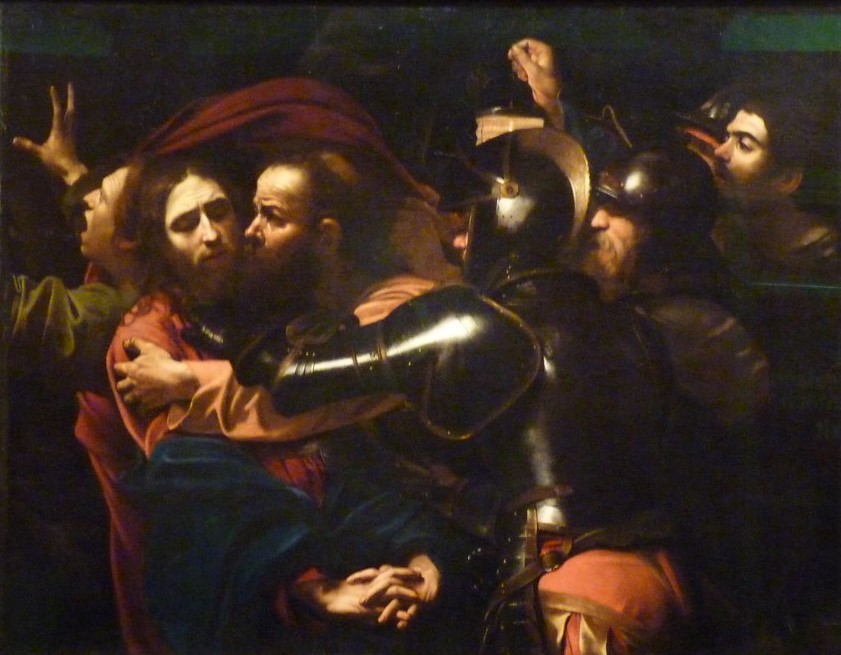
We have before our eyes the tragedy of one of the Apostles. Judas believed in evil, let himself be deceived by the devil, and succumbed to sin. He did not fight against sin, he was convinced that 30 pieces of silver would make him happy. This did not happen, in the end, Judas despaired, doubted God’s grace, and hanged himself in despair.
Can a person be satisfied with dishonestly obtaining money or other advantages? Can he enjoy them peacefully and can he remain happy? After a few hours, Judas felt remorse, and terrible disappointment and took his own life. Many will feel similar feelings in their last hour as they lie on their deathbeds, with the full weight of their sins upon them, along with the knowledge that they are walking the road to damnation.
What depth of knowledge and human psyche is evident from the pages of the Gospel? As soon as Judas has committed his act, comes the impulse of conscience. Many Christians have experienced a similar condition. The moment when lies, sin, and failure are revealed in full nakedness, even though at first it seemed to us that sin would bring us happiness and joy. In the end, he only led us to trouble and fall. Unfortunate are those who do not learn from their failure and continue to walk the path of sin. Their conscience gradually silences the encroachment of sin and evil, and when the conscience is heard only at the last hour, it may already be very late.
Whoever does not want to suffer the fate of Judas, should remember the questions and answers that will be heard at baptism. Do you renounce the evil spirit? Do you renounce all his temptations? Do you renounce the devil? Through baptism, we are reborn and become God’s children. Later, when we receive the sacrament of confirmation, we receive the fullness of the gifts of the Holy Spirit and can testify about Christ. When we receive the Eucharist, we participate in Christ’s sacrifice and can call the Lord God our Father, by sin we lose the privilege of being God’s children.
Judas, because of his unregulated love of money, committed a huge sin when he betrayed Jesus Christ. Terrible was his despair and doubts about God’s mercy, which eventually overcame his soul and forced him to commit suicide. And that was the end of Judas’ tragedy. Judas’ fall and death should be a lesson for every Christian about where sin and temptation can lead us if we don’t fight against them.
Judas succumbed to his sin because he failed to pray sincerely. To mask his emptiness, he feigned piety and zeal, but his soul was empty. How do I know with such certainty? If he had prayed sincerely, he would never have ended up like this. Let’s not forget that Judas repented of his sin and betrayal of Jesus. He admitted that he had sinned and returned 30 pieces of silver. However, the fact that he took his life is proof that he lacked trust in Christ’s mercy, he did not believe that his sin could be washed away by God’s mercy. But let’s not forget that no sin is so great that Christ’s sacrifice on the Cross could not wash it away. If such a sin existed, Christ’s sacrifice on the Cross would not be complete.
Every Catholic should know the story of the unfortunate Judas. Every Catholic should fight against his bad tendencies, and reject sin, and even if we fail and fall, we must not succumb to hopelessness. Let’s remember the words of the prophet Isaiah (Is 1:16–18): 16 Wash yourselves, cleanse yourselves, remove from my eyes the malice of your deeds, stop doing evil! 17 Learn to do good, claim justice, help the oppressed, enforce the right of the orphan, defend the widow! 18 Come, let’s go to bed! – says the Lord. If your sins become scarlet, they will be white as snow, if they blush and become purple, they will be like wool (white).
Saint John Chrysostom puts it even more clearly: Can sparks set the sea on fire? No, the sea of sparks extinguishes. Human sins are like sparks, and God’s mercy is like a boundless sea.
Even though our sins may be great, God’s mercy is greater. Let’s not forget, perhaps at the same hour that Christ died on Calvary, in a quiet place in the forest, abandoned by everyone, the traitor Judas hanged himself, his stomach was torn and his intestines fell to the ground. What a terrible difference. On the cross, the Savior dies for the sins of all mankind, including Judas’s sin, and Judas hangs on the tree, who came to the opinion that Christ shed His Blood for him in vain.
Posted in Nezaradené
Leave a comment
Judas’mother.
Judas’ mother was already very old when she visited the apostle John. She told him about the first time she looked at her son when she gave birth to him. The whole family rejoiced at his birth. He was bright and scholarly. After he betrayed Jesus and committed suicide, she read with horror the words of the Evangelist Matthew, “It would have been better for that man if he had not been born.” And she asked herself the painful question: why did she give birth to him?
When he was seventeen, he joined those who wanted to liberate Israel from Roman occupation. He waited impatiently for the Messiah. When he heard about Jesus, he immediately followed him. He was discouraged, but he was full of enthusiasm and hope. He believed that Jesus would restore Israel. Later, he became more and more sad, disillusioned, and said nothing. Jesus was not the Messiah he had imagined. His love for Jesus grew into hatred.
He was terrified because he was overwhelmed by immense despair. He was haunted by remorse like a rabid dog, and finally, he hanged himself. “I am Judas’ mother; I cannot cast him out of my heart. I would do it if love were in my head, but he is in my heart.” She finally said to John: “Speak to the mother of him whom my son has betrayed. With Jesus’ mother, maybe she will understand and forgive the mother of the betrayer, the mother who gave birth to the one who should not have been born.
Posted in Nezaradené
Leave a comment
Holy Thursday.
The Jewish Passover was and is a family holiday. It was not celebrated
in the temple but around the house. Already in the description of the departure, the house stands out as a place of salvation, of shelter in that night through which the Lord’s angel. From the other side, the Night of Egypt is a picture of the forces of death, destruction, and confusion that still rise from the depths of the world and of man and threaten that they will destroy the good creation, and they will turn the whole world into a desert, into something uninhabitable. In such a situation, the house protects the family; in other words, the world still needs to be defended from chaos, and creation needs to be protected and repaired.
In the calendar of the nomads from whom Israel inherited the Passover festivals, Passover was the first day of the year when Israel still had to be protected from destruction. Home and family are the bulwarks of life, the place where there is security and peace, the peace of dwelling together that makes life possible and preserves creation. Even in Jesus’ time, after the sacrifice of the lambs in the temple Passover was celebrated in homes and families. It was prescribed that one could not go out of Jerusalem on Passover night. The city was considered a place of salvation from the night of chaos, and its walls were like a dike defending creation. Israel had to make a pilgrimage to this city every year at Passover to return to its roots, to be re-created, and to re-embrace its salvation, liberation, and foundation.
There is a profound wisdom. People are always in danger of being scattered during the year, both externally and internally, and they will lose the inner foundations that order them. It needs to return to its ancient foundations. Easter was meant to be this annual return Israel is accessible from the dangers and confusion present in every person. It was an opportunity to take root in its foundation and had hitherto guided it to its unbroken defense and the restoration of its origins. And because Israel knew that over it shone the star of the election, it also knew that from its success or failure, something would result for the whole world, that in its existence or its downfall, the fate of the entire earth and creation was at stake.
Jesus also celebrated Easter according to these prescriptions: in the house, with his family, with the apostles, who became his new family. Thus, he was, on the one hand, obedient to the commandment that was then in force and according to which pilgrims going to Jerusalem could form associations of pilgrims, called havurot, which for that night formed a Passover house and family. And so Easter also became a holiday for Christians. We are Jesus’ havurah, his family, which he founded with the companions of his wanderings, and friends who walk the path of the Gospel across the landscape of history. As his companions in his pilgrimage, we are his house. So the Church is a new family and a new city that is to us what Jerusalem was: a living house that drives away the forces of evil and is a place of peace that preserves creation and ourselves. The Church is a new city like Jesus’ family, a living Jerusalem. Her faith is a wall and bulwark against the threats of the forces of confusion that want to destroy the world. Its walls are fortified by the sign of the blood of Jesus Christ, that is, by a love that gives itself to the uttermost and is without end. This love is the opposite force of chaos; it is the creative force that is constantly re-creating the world, nations, and families, and so offers us shalom, a place of peace in which we can live with one another, for one another.
There are many reasons for us to think again about these relationships in our day and to allow them to speak to us. Because we see the power of chaos, we see how, just amid a developed society that thinks it knows and can do everything, chaos’s primordial forces are rising against what it calls its progress. We see how a people of rights amid their wealth, technical ability, and scientific dominion over the world can be destroyed from within, and all of creation can be threatened by the forces of confusion that nestle at the bottom of the human heart and threaten the world.
Posted in Nezaradené
Leave a comment
“I have come that they may have life and may have it more abundantly” (Jn 10, 10).
The Holy Scriptures, published by contain a simple note on this word of Jesus: “eternal life.”
Jesus brought eternal life to people. However, the term “eternal life” is understood in two ways. People usually talk about eternal life, meaning life in eternity, after death, when this early earthly life ends. That is the first meaning of this term – eschatological. However, a Christian begins to possess eternal life (the life that Jesus Christ brought) already in this life; already, during his earthly life, he begins to participate in it. In baptism, he received it in the form of God’s grace as the seed of a new, supernatural life, which is constantly developing until definitively, at the second coming of Christ, it will grow into the whole fruit of Christ’s divine life. Therefore, the eternal life present in the Christian in this earthly life is the second meaning of that expression. Both meanings are correct and belong to the fullness of the glad tidings.
A Christian should perceive the connection between the eschatological and already at this time conceived and experienced eternal life. The roots of eternity begin in time. Whoever lives in sanctifying grace has already “passed from death to life” in this earthly life (Jn 5:24). Although he does not yet experience the fullness of the future glorified life, he has already entered it. He can lose it through mortal sin. Therefore, he must guard, develop, and protect it. But in his earthly life, he should live from the fullness of eternal life, which was brought and given to him by Jesus Christ.
In modern times, “eternal life” has been subjected to irrational criticism, and modern man often lives as if there were no God. Eternal life has been declared an idol to be scattered, and those who praise it have been declared criminals. The legendary modern Zarathustra says: “I adjure you, my brothers, stay true to the earth and do not believe those who tell you of otherworldly hopes! Crime against God used to be the greatest crime, but God died, and these criminals died with him. To commit a crime against the earth and value the interior of the unfathomable more than the meaning of the earth is now the most terrible thing!” (F. Nietzsche, Thus Spoke Zarathustra, First Volume, 3).
It would certainly be a perversion and a sick escape from the world to think only of heaven, or if all Christians were obliged to go to the desert or into solitude and devote themselves only to prayer. It would be against God and eternal life in heaven not to think about the earth’s needs. Here and there an individual, a freak, may appear who commits such a mistake. However, the inseparable teaching and practice of the Church have always been to connect prayer with work (“ora et labora”), to connect concern for eternal life with concern for earthly life. Every true believer is well aware of Jesus’ words (which will be the criterion for an orthodox life at the Last Judgment): “Whatever you did for one of the least of these my brothers, you did for me” (cf. Mt 25, 31-46). Finally, the proof of this unity of practice and teaching are the hospitals and schools that the Church and its best children have always founded and built to serve the people of this world, regardless of religion, race, nationality, etc.
Looking to eternal life is not a crime against the earth. On the contrary, only from his perspective can a person properly look at this earth, its values, the ratio, and its relationship to it. It is precisely the man in captivity of temporality, who is not interested in the “unfathomable” depths of his human nature and his definitive eternal goal, that is the greatest pest of this earth. Whoever neglects the eternal eschatological life and the eternal life present in man’s earthly life robs him of the most essential part of his nature. He performs a spiritual abortion on him because he destroys the embryo of the fruit of eternal life in him!
When Jesus wanted to bring people closer to the fact of eternal life, which has become part of their human existence, he did so using various comparisons and parables. I like the one about the mustard seed, which when planted is the smallest of all, but when it grows it becomes a huge tree, in whose branches the birds of the sky can make a nest (Mt 13, 31-32). This parable encourages my frailty, because it tells me that I have the power of life, the power of eternal life, which no obstacle can stop and which can take hold even in the most inappropriate place. The parable of the seed tells me that as a believer in Jesus Christ, I have a life within me that is stronger than the death of temptation and sin; that I have life in me, over which not even the “second death” has power (cf. Rev. 20:6).
Posted in Nezaradené
Leave a comment
Taking a legal position this week.
It is called Great or Holy because, during it, the greatest events took place, through which Jesus Christ carried out the work of the salvation of humanity. In the first reading from the prophet Isaiah, the First Song of the Servant of the Lord is heard. In four such songs, the prophet, from a distance of six centuries, describes in almost detail the action, suffering, death, and victory of the Lord’s Servant. It is like a photograph of Jesus Christ, which receives its complete form and full color, especially this week, day by day and hour.
This first song discusses the mission of this Servant of God. He works under the guidance of God’s Spirit. In a few lines, Jesus’s entire public activity is outlined, characterized by his silence, love for sinners, and freeing people from suffering, especially by performing miraculous healings. The climax of his deeds was the resurrection of Lazarus, whom he brought out of the dark dungeon of death and the grave.
The Gospel follows This event, which records what happened on this exact day, “six days before Easter.” Jesus is in Lazarus’ house. He is surrounded by Lazarus and his sisters’ respect, joy, and gratitude. One of them, Mary, shows magnanimous respect for Jesus: she poured about three hundred and twenty grams (that was the weight of a pound at the time) of precious oil on his feet and anointed them. However, other attitudes toward Jesus are also emerging. The first is immediately from the close circle of his apostles: Judas, who was in charge of the small community’s economy, looks at this action seemingly purely professionally and matter-of-factly. He immediately estimated the price of the spilled oil at three hundred denarii (approximately the annual income of a worker), which could be used more effectively. Judas’ real motive differed from that of the evangelist John, who revealed that he was interested in his enrichment. For this purpose, he was willing to misuse gifts for people with low incomes; this purpose blinded his eyes so that he was unable to see and understand the generous gratitude and love that does not look at material values - and soon after, he was willing to betray his Master for the same purpose.
Another ominous cloud on the horizon at the beginning of the week was the decision of the high priests, who were ready for another murder (they had already pronounced the Nortel over Jesus before) – they wanted to radically eliminate the “crown witness” of Jesus’ divinity, Lazarus. In this week’s events, Jesus becomes the Light that old Simeon spoke of at his sacrifice; at the same time, it also becomes a sign of contradiction and resistance. People around him have to take an attitude towards him. When thinking about these events, none of us can remain in the position of a non-participating spectator, but we must identify with some character. If it is a negative character, we must ask Jesus Christ to help us with inner healing and the right attitude towards him.
Practical instruction: I am willing to show selfless and generous love for Jesus Christ (by the time I devote to meeting him in prayer or at a church service, by serving his work, by making a material donation to beautify the temple or to help the poor); or do I evaluate everything only in terms of economic profit? By what act do I show the right attitude?
Prayer: Almighty God, because we are weak and often fall, we ask you to strengthen us by the passion of your beloved Son, who is God and lives and reigns with you in unity with the Holy Spirit for all ages.
Posted in Nezaradené
Leave a comment
When teenagers don’t need preaching, they need to listen and be disturbed by questions.
Dictated answers to teenagers will not work. They need a relationship and stimuli that will work in them.
This week, we launched a new website with an improved design, faster, clearer navigation, and many other innovations that will make it easier for you to read Postoj. Thanks to our supporters, it’s a big thing that we’ve only been able to do. The 2023 documentary Pope: The Answers offers a picture that would have been unimaginable a few decades ago.
In the film available on Disney+, Holy Father Francis is surrounded by young people, which the director mixes very cleverly. An atheist DJ, a non-binary person, a former religious sister who now lives with a girlfriend and no longer considers herself a believer, a Catholic feminist, a woman who sells her erotic photos, or a young man abused by a priest as a child.
Only one girl is Catholic, who defends the church’s teachings in the debate, perhaps more vehemently than the Pope himself.
There is no protocol, no napkin. The young people meet the head of the Catholic Church in a space outside the Vatican, greet him as if they were an old acquaintance, and are dressed in shorts, caps, and crop tops. They talk openly with the head of the Catholic Church about topics that interest or worry them.
More than what the Pope answered or did not answer the questions, it is surprising that he was willing to follow such a format at all and endured it. He emerges from the debate in an uneasy composition, like a pope who does not raise an eyebrow because he is not surprised by reality. He knows her. And besides, it doesn’t convince.
Even if he speaks his mind, he accepts young people with what they bring before him, and he can bear it. Many cry in front of him when they talk about their difficulties. He encourages them, and sometimes, he looks like he is about to cry.
No doubt
Teenagers have always been critical of authorities and the system. Unlike its predecessors, today’s generation has experienced a more democratic upbringing. Plus, it grows up in the Internet age, so it is confronted from a young age with opinions contrary to those instilled in it from an early age. It is all the more difficult for him to accept the views of authorities just because they are official teachings or rules. In addition, young people today do not hide their views; many are willing to present them publicly.
Kaja Kováčová, the mother of a first-year student at the church gymnasium, was angry when her son got a bad grade in religion because he asked. According to the religious sister who teaches him, there is no doubt about religion. “It is very surprising if, in religion class, instead of dialogue or thought-provoking questions, the student receives the answer that there is nothing to question in religion class,” he tells Postoj about his experience.
According to Kováčová, the teenage age is perfect for accompanying children and thus helping them pass through a particular developmental stage of faith.
“Sometimes we adults may be restrained by fear in order to pass on the faith to children as well as possible, but we unknowingly put pressure on them because we would like them to understand things right away. However, that is not possible, there is a lack of personal experience and steps along one’s path… That is why there are often shortcuts in communication: things are this way and that way, end of debate, full stop,” thinks the teenager’s mother.
According to her, the transmission of faith is impossible if we close our eyes to the reality in which young people live. “On the contrary, accepting children with their problems means bringing faith to where they are right now. After all, even God himself desires to be a part of every area of our lives,” he concludes.
Salesian Marián Husár considers it essential that young people experience that someone listens to them and understands their opinions. When a teenager speaks his mind honestly or even with “youthful impudence” and encounters rejection or condemnation, he shuts down and warns the priest.
Young people must be guided and taught to critically distinguish where the information that influences them comes from. “They must be taught to explore the palette of all attitudes and opinions that surround us. To discover and distinguish, I can honestly search,” he adds.
Teenagers need to justify why the church teaches the way it does, according to the experience of Ľubica Nogová, who lectures in schools on topics from relationship and sex education. “I feel that for a child to accept the teaching of the church just because it is the teaching of the church, he must have grace from God,” she tells Postoj, adding that she prefers to argue with facts and experience.“My perception is that they are not open to seeking the truth. They are mostly satisfied that they have ‘their truth’, their value system, which works for them and brings them comfort.”
Like Husár, she points out that young people must be listened to. “Accept them even with ‘hair’ and give them good questions that can disturb them properly, but point to the truth,” describes her approach to Nogová from the catechetical office of the Bratislava Archdiocese.
“The basis of our program is that we want to show the students what beauty, what pearls they have inside. And the whole approach follows from that. They have good in them and are naturally drawn to it, but not all of their resources are accessible in an attractive form ,” he adds.
Teacher Štefan Murárik from the Piarist Grammar School in Nitra has set three values when teaching religion. “I will tell the students: The first dimension is your world, the second dimension is my world, and the third dimension is the teachings of the Catholic Church.
I will respect your opinions or attitudes; I expect that you will respect mine and that we will respect the church’s teachings. So we don’t have to agree with him; the important thing is that we understand him and know his implications,” Murárik describes his model, which he believes provides a good space for discussion.
He mentioned a recent teaching example when students argued that masturbation is healthy because it prevents cancer. “They read it somewhere, accepted it, and acted accordingly. When you open up relevant categories for them to think about masturbation, like self-esteem, sexuality, and relationships, they can suddenly discover what they think about the subject. Their conscience usually works correctly,” says the high school teacher.
Based on his experience, he claims that young people generally do not know how to debate very well, and their arguments are based on one or two opinions that they heard somewhere and liked.
“My perception is that they are not open to seeking the truth. They are mostly satisfied that they have ‘their truth’, their value system, which works and brings them comfort. So they don’t often enter into confrontation, because they have an internalized idea of the world – you have your truth, I have mine, so it’s good if we tolerate each other,” he said.
However, he adds that he does not want anyone to change his opinion. “In my opinion, changing values or attitudes is an internal process and cannot be forced. It happens in a dialogue with one’s inner self. When someone recognizes some ‘truth’, it should happen freely in the intimacy of inner discernment. All debates are only impulses, stimuli,” explains Murárik.
What shapes attitudes
According to the people we spoke to about the topic, social networks, movies, music, and the environment of the family from which they come have the greatest influence on young people’s attitudes. “Somewhere under the opinions taken from peer groups, from social networks or culture, there are still attitudes and opinions that they take from their family—they return to them later in life,” says Murárik.
According to Noga, young people are influenced by the patterns of behavior they have experienced at home in the formation of opinions in the field of relationships and sexuality.
In her book Mama Bear Apologetics, American author Hillary Morgan Ferrer offers parents arguments against the views that prevail in society and conflict with Christianity, the so-called cultural lies. Our children today are exposed to them much more than was the case for generations before them and at a significantly younger age.
As proof of the growing pressure of a society that is not inclined to Christianity, Ferrer cites the statistics of the ever-increasing “exodus” of young people from Christian churches during high school or college. Parents should, therefore, be ready for these questions to come and prepare themselves and their children for their encounters with different points of view. How?
Ferrer guides parents in teaching children from an early age to apply biblical truths to ordinary life situations, thus preparing the soil of their hearts so that ideas that they will encounter daily among classmates, in culture, or on the Internet are not easily sown in it.
“We don’t want our children to live in fear but to be able to distinguish. We want them to be able to see Christ in art, movies, science, history, and music because he is the Lord of everything. But we don’t want them to assume that everything they encounter in art, movies, science, history, or music tells the truth,” the author explains in the book.
When debating with teenagers and young people about questions of faith, according to Salesian Marian Husár, we must focus on the beauty it offers us, which comes from the relationship.
“The beauty lies in meeting the one who loves us and wants to accompany us through life. And he is not primarily morality or dogma but a relationship,” says the priest. Teenagers will only let us into their world if they feel confident we will be accepted without judgment or criticism.
The Holy Father Francis in the documentary Pope: Answers on this topic inspires with his approach – to accept young people, listen to them, try to understand them, and not be afraid of their questions. Only then does the space for shaping attitudes open up.
Posted in Nezaradené
Leave a comment