First Sunday of Lent, Year A, Mt 4, 1-11

We have entered the season of Lent and are once again preparing for Easter. To celebrate Jesus’ sacrifice for our salvation and to celebrate His resurrection, which is an invitation for us to eternal life in the Kingdom of Heaven. This year, on the first Sunday of Lent, we read the fundamental and, I would say, the most classic texts of Scripture that relate to the Lent season. We have heard them many times. However, let’s be more aware of their relevance and direct relationship to our own lives and the situations we find ourselves in.

In the first reading from the book of Genesis and in the passage from the Gospel of Matthew, we observe how cleverly evil can work and the tactics the Evil One uses to seduce and destroy. The dialogue between the serpent and Eve illustrates the innocent beginning of everything. The serpent said: “Did God really say, ‘You shall not eat from any tree in the garden?'” This attracted attention, aroused interest, and, at the same time, sowed doubt… Did God say that? And Eve answers him as if she wanted to put the serpent’s statement in perspective. This is the first stepin conversation/dialogue. It allows evil to set a trap. “No, you will not die… You will be like God, knowing/determining what is good and what is evil.

In this way, the Evil One says to man, “God deceived you; set your own rules. You yourself. Set them for yourself; set them for others too.” He says this to us, and it depends on how we reveal it, in what situations, and how we deal with it. Here, we see that the Evil One is the prototype of a disinformation agent. He takes part of reality, distorts it, decorates it with a tempting lie, and presents this “delicacy” to us for consumption. And we, humans, often take it and taste it. We then feel the consequences as individuals, families, nations, and all of humanity.

He used the same tactic against Jesus during the temptation in the desert. Again, we witness a dialogue that always begins with the tempter. This Gospel text is very well known, but we often do not think it applies to us. “Tell these stones to become loaves of bread.”known dialogwell-knowndialog For people, it does not have to be physical food to satisfy a starving body. Let us translate the situation into the plane of ideas – it can be food for people who are in a spiritual desert. It can be thoughts, intentions, and ideas that a person or a group declares to be good and presents to others to satisfy their spiritual hunger. Sometimes these are stones that they claim to be bread—nationalism, racism, communism, Nazism, and today’s almost unnameable ideology prevailing in Russia, which is a mixture of all of these. And there are other heaps of delusions that a person is “fed”. 

The devil’s dialogue with Jesus is taken to an even “higher level” of deceit when the tempter says “If you are the Son of God, throw yourself down,” and uses the words of Scripture—Psalm 91:11-12 as motivation – “He will give his angels charge over you, and they will bear you up in their hands, lest you strike your foot against a stone.” That’s as far as he can go. He is a model for false prophets, about whom we read in Matthew: “Beware of false prophets, who come to you in sheep’s clothing, but inwardly they are ravenous wolves. You will recognize them by their fruits.” (Matthew 7:15). And in situations where we, humans, are close to something bad – close to sin, he tempts us with the same “go for it, try it, throw yourself into it, it’s not that bad, nothing can happen to you, you can – you yourself determine what is good and what is bad.”

And at the end, the “best” one: the devil took Jesus to a very high mountain, showed him all the kingdoms of the world and their glory, and said to him, “All these I will give you, if you will fall and worship me.” He also says to a person, “I will give you all this… fall and worship me.” “All this” can be very different in our case, but it aFalllways causes the temptation of power, influence, importance, indispensability, and chosenness, in small and large ways. As history and today show, some people or groups want to devour the world or part of it.

During Lent, we ask for the strengthening of the Holy Spirit so that we can recognize these tricks and attacks in time and, truly, so that we can, with God’s help, effectively defend ourselves. We have the means of defense in Christ’s attitude and in his words: “Get thee hence, Satan! For it is written, ‘You shall worship the Lord your God, and him only shall you serve.'”

I wish you all a blessed Lent.

Posted in sermons | 1 Comment

Types of fasting. Mt 9,14-15

It is wonderful when people come to Jesus and ask. When they approach the priests and inquire, it’s fantastic. Thank God that people always have somewhere to go to ask. Folk wisdom says, “If you ask, you may be a fool for five minutes. If you don’t ask, you will remain one for life.” Mark Twain also said, “Wisdom is known by the ability to ask questions.” I could crown the battery of wisdom with the words of St. Catherine of Siena: “God created us imperfect so that we would need each other.” Alms-giving. There were confrontations, frictions, and discussions. What does Jesus say about this? “Can the guests at the wedding mourn as long as the bridegroom is with them? But the days will come when the bridegroom will be taken away from them, and then they will fast.” The time of building the church community has not ended; it resembles a cathedral, where a sculptural workshop is still working, into which new elements, memorial plaques, and works of art are inserted.

What is the situation with fasting today? Four types of fasting are observed. The first is the so-called strict fasting. Currently, we observe it on Ash Wednesday and Good Friday. During these two days, we should livesalms-givingrecognize that life encompasses more than mere celebration and acknowledge the uncertainty of the Bridegroom’s presence.  Perhaps many of us have experienced that the “empty time” devoted to dining can be used for prayer and meditation. The second type of fasting is the Friday fast. It is to be a fast cause of harm. This fast involves abstaining from one thing in favor of another. Even today, we are invited to pay closer attention to the cross of Jesus Christ and to all the crosses that people in our immediate environment carry. This fasting in particular should be connected to the entire trefoil of penitential practice: prayer, fasting, and almsgiving. We should pray and give the money we saved for that day’s food to the needy.

The third type is Eucharistic fasting. It is not at all demanding. It is about realizing at least one hour before communion who I will meet, who will physically enter my life. We should symbolically hunger for “the bread of eternal life” (John 6:35) for at least that small moment. “But the days will come when the bridegroom will be taken away from them; then they will fast.” There may also be moments when we do not feel Jesus’ discreet presence. We seek him, we long, we thirst for his word, his faith, and his presence. Then fasting enters our life as if by chance. Love is certainly impatient in waiting but absolutely unquestioning in seeking. He who seeks finds. And he who finds rejoices. Fasting can sharpen the senses and the will. Fasting can be a way of searching for God.

Posted in Nezaradené | Leave a comment

True Following Christ.

Let us imagine that we could possess everything. All our earthly dreams would come true, and we would succeed in everything. Let’s strive to unleash our imagination and manifest our desires. Let us have what we would like. Let us achieve everything we want in owning property, the qualities we would like, and the people we would like to be with. Despite all this “happiness”—and perhaps precisely because of it—we would realize that the more we have, the faster we can have what we want, and the more desire would begin to consume our hearts. We would discover what it means to desire and not have. We will never have everything, and for what purpose?

The Lord Jesus wants usvery concretely manifest, from the very beginning, to focus our desires on what fulfills, heals, elevates, and gives true meaning to life. It is the acceptance of the essence of life in the acceptance of God. However, there is a certain “law of resistance” within us that leads us to want to achieve everything. We want what God offers, but also what the world offers and what the corrupt part of our “self” suggests to us. Jesus clearly tells us that such achievement is not possible: “If anyone wants to come after me, let him deny himself, take up his cross daily, and follow me.” We must reject this corruption of our egoism out of love for life, let it suffer, and also let it die. The cost is the loss of Christ’s life.

Let us look at our lives, at the tendencies of egoism that are very concretely manifested in them—in our relationships with those closest to us, in our thoughts about others, and even in the way we view ourselves. Let us put it in the hands of Jesus Christ in a moment of silence. In our words, let us ask that He grant us the strength to stop the lust of the eyes, the flesh, the pride of life, and the acceptance of offers that would distance us from the source of life. Let us ask the suffering Savior to willingly choose the suffering of losing egoism so that we may open ourselves to receiving love for God and neighbor.

Posted in Nezaradené | Leave a comment

Ash Wednesday: Matthew 6:1-6, 16-18

Dear brothers and sisters,
Today is Ash Wednesday, the start of the 40-day Lenten period. During this time, we will deepen our relationship with Jesus Christ through fasting. We will be surrounded by changes in colours, shapes, and objects that may guide us towards deeper values. On this Ash Wednesday, I would like to reflect on some of the symbols of fasting, beginning with the most obvious one.

Ash Wednesday is the day on which we are marked with ashes on our foreheads, symbolising fasting. Ashes are made by burning wood, so they are a symbol of destruction. This day reminds us of the biblical words: ‘Remember that you are dust, and to dust you will return.’ Adam, the first man, was created from the dust of the earth, and when we die, we too will return to dust. Ashes remind us of the transience of earthly life, and today helps us realize this.

The second symbol of Lent is bread and water, representing moderation. While our bodies need food and water, going to extremes can weaken our spirit. Eating with moderation helps us to pay more attention to the spiritual things happening around us. Another symbol of Lent is the desert, representing solitude and prayer. Just as Jesus spent 40 days in the desert, we should also find time and a place to pray, away from the world’s distractions.

Another symbol of Lent is praying the Stations of the Cross, which recalls Jesus’ suffering, symbolizing resurrection. The liturgical colours change to purple, a symbol of preparation and expectation, encouraging us to anticipate the significant events of Lent. Today, we are offered many symbols of fasting to accompany us and help us experience this Lenten season more deeply. It is important not to perceive these symbols superficially, but to allow them to truly change our hearts and turn us towards God.

Posted in Nezaradené | 1 Comment

St. Alexius and companions—seven founders of the Servite Order.

Founders of the 7th Order of the Servants of Mary: Alexius, Bartholomew, Benedictus, Bonfilius, Gerardinus, John, Ricoverus

Seven esteemed Florentines lived in poverty and penance on Monte Senario, striving to live holy lives and to help others on the path to holiness. They founded an order dedicated to Marian devotion called the “Servants of Mary” or “Servites.” Except for Alexei, who wanted to remain a mere religious brother, all were ordained priests. The order is now spread throughout almost all of Europe, as well as in South Africa, Australia, and America.

CV FOR MEDITATION

TO JESUS ​​WITH THE CONTRIBUTION OF THE SEVEN-SORROWED PM

Seven wealthy townspeople and merchants, Andonieri, Bartholomew, Benedict, Bonfilius Monaldi, Gerardin, John, and Rikover—sang praises to the Blessed Virgin Mary in the streets of Florence. On the feast of the Assumption of the Virgin Mary on 15 August 1233, they gathered in a church, where they received an inner address, calling them to a perfect life together. On that day, the Queen of Heaven appeared to them, dressed in mourning for the old grudge that had reigned between them.

They agreed to distribute their property to the poor and together they would go into seclusion to live a hermit’s life, meditating on the Passion of the Lord Jesus and the pains of his Mother. They went to Bishop Arding, who approved their intention, and then left the city. They settled permanently on the deserted hill of Monte Senario (north of Florence) and from there they would go to a chapel dedicated to the Mother of God with a gracious image of the Annunciation. The chapel was their point of support and main place of prayer.

At first they lived in a free community, but soon, on the instructions of the bishop, they founded a new order for which they adopted the rule of St. Augustine. They put on black monastic robes with a scapular and, apart from Alexei, were ordained priests after the novitiate. Alexei longed for the most ordinary service, so out of humility, he remained only a lay religious brother. Pope Alexander IV. confirmed their order, called Servants of the Virgin Mary—Servites. The significance of the order’s founding stands out against the backdrop of a time when fratricidal strife was common in Italy. Bonfilius Monaldi became the first superior.

In 1253, Philip Benizi joined the order, and after 14 years, he was elected superior general and contributed greatly to the flourishing of the order. Alexei reached the age of 110, and at his death, the order already had 10,000 members.

Today’s memorial was established by Pope Leo XIII, who canonized all seven founders of the Servites in 1888.

RESOLUTION, PRAYER

I will reflect for a moment on the sorrows of the Virgin Mary, for which she came to be called the co-redemptrix.

Fill us, O God, with the sincere piety with which the holy brothers, whose memory we celebrate, devoutly worshipped the Mother of God, the Virgin Mary, and brought human souls to worship You. Through Christ our Lord. co-redemptive

Posted in Nezaradené | Leave a comment

The Pharisees asked for a sign.

The Pharisees demanded signs from heaven from Jesus for several key reasons, which, in the Gospels (e.g., Matthew 16:1-4, Mark 8:11-13), are associated with temptation, distrust, and a desire to maintain their own power.

The main reasons were:

  • Temptation (test): The goal was not to believe but to test Jesus and “catch his word.” They wanted to force him to do something that they could later question or use against him.

  • Disbelief and hardness of heart: Although they had witnessed many miracles (healings, feeding the multitudes), they refused to accept Jesus as the Messiah. A sign from heaven (e.g., a phenomenon in the sky) was for them a “higher” type of evidence that would supposedly confirm his authority, more so than earthly healings.

  • Protecting their authority: The Pharisees and Sadducees were afraid that Jesus’ work would threaten their influence over the people. By asking for a sign, they wanted to unsettle his followers.

  • Cultural expectations: Jews often looked for “signs” as confirmation of prophetic authority, which was at odds with Jesus’ focus on faith rather than theatrical miracles.

Posted in Nezaradené | Leave a comment

St.Cyrill and Methodius.

Posted in Nezaradené | Leave a comment

Cyrill, a monk, and Methodius bishop.

If we were to conduct a survey and ask people who a saint is, who knows what image of holiness we would get? Probably the most common image of a saint would be a person cut off from the world, hidden somewhere in a monastery, eternally suffering and praying incessantly. We imagine saints as weirdos who have run away from people, who have nothing more to say to us, and we have no way of becoming like them. Much has contributed to this image of dusty saints’ statues with rolled-up eyes or to ancient legends about saints that no longer mean anything to us, modern people.

Today we celebrate the feast of two great saints of the Church. We are tempted to classify them as dusty statues and hackneyed stories, because much water has flowed since they lived here on earth, and we would rather look to the future than to the past. But let us resist this temptation. The lives of today’s saints are too valuable to write off.  It has been over 1100 years since they lived in these regions. Our ancestors were still barbarians back then; they were cruel and cruel. They did not have a dove-like nature at all. They did not know what tolerance and peace were. They waged constant wars against one another and against other tribes. Today’s saints come into this atmosphere of intolerance and hostility. We cannot even imagine how much effort and sacrifice it cost them to fulfill Jesus’ call to the apostles today: “Go therefore and make disciples of all nations, baptizing them in the name of the Lord Jesus Christ, teaching them to observe all that I have commanded you.”

Cyril and Methodius could have said to themselves, “Oh, we are fine here in Constantinople; we have life security, security of every kind, and perfect places. Where would we now be struggling somewhere in unknown regions to the pagans? Why do more than is necessary?” However, they behaved completely differently. When they received the offer to go to unknown people and preach Christ to them, they did not hesitate and immediately began preparing for the journey. They were willing to endure the discomfort of the journey and the dangers from nature and people.

But we ask: Why? What led them to this decision to throw away their security and the warmth of home? To find out, we must delve into the letters of St. Paul, who says in one of his letters, “I count everything as rubbish, that I may find Christ…” (Philippians 3:8). St. Cyril and Methodius also put God first in their lives. Wherever they were, whatever they did, God was always the most important thing for them. And so they might have made mistakes in life, messed up many situations, and botched many speeches to the Gentiles, but they always had God in mind, who was their priority.

Yes, this is the truth about holiness. Holiness means falling in love with God. It doesn’t matter whether we work or rest, whether we are simple people or famous and popular, whether we live alone or confess our love to our partner, or whether we are happy or sad. It is enough to fall in love with God. We can only call ourselves believers and begin our journey to holiness if we always put God first.

Andrej Sládkovič understood this truth about holiness when he wrote his poem “Marína.” Its peak is these verses:

Those who dwell in the valleys of shadows,
Accept the counsel of the Just.
Believe in love and the desire for Eden,
Kindle your love for love.
Whether you fall in love with a virgin, pledge your heart to glory, are captivated by the sky, dedicate yourself to the nation, or fly into the vastness of humanity, love God in everything!

Today’s feast wants to tell us this: When we leave church, let us not forget that we are believers. Let us always put God first in our daily lives. Let us consider him a blessing, not something we put in a drawer after mass to avoid inconvenience. Let us fall in love with him wherever we are, whatever we do. Let us make every decision with him in mind. So that at the end of our lives we can say what Saint Paul said: “I have fought the good fight, I have finished the race, I have kept the faith.” May Saints Cyril and Methodius also help us in this

Posted in Nezaradené | Leave a comment

Sixth Sunday in Ordinary Time, Year A Mt 5,17-37

The theme of God’s law and the question of its binding nature have accompanied the entire history of Christianity. Saint Paul deals with it in his most famous letters. Although he explains everything carefully, even in the time of the first Christians, there was a misunderstanding of the meaning of Christian freedom from the Law, which is why we hear the warning of the Second Letter of Peter.  The Lord Jesus clearly says that he did not come to abolish the Law. And he adds that he came to fulfill it, which could also be translated as “to fulfill.” What does “not to abolish, but to fulfill” mean?

First, let’s see what it does not mean. The so-called freedom from the Law would be difficult to reconcile with “not to abolish.” So no person can say that he is free from God’s law or that he can determine (recognize) for himself what is right. Such an attempt was already made here in Paradise, and we know how it turned out. In essence, it would be a form of liberalism in spiritual life. Liberalism is about freedom/unconstrainedness, but we are called to freedom. Freedom, however, does not mean either liberty or unconstrainedness. Our freedom is based on God, and in Him we even speak of necessity, not freedom. He goes

He asserts that he came to fulfill the Law. This means that the way the Old Testament man approached the Law will no longer be the best. The Lord Jesus fulfilled the Law in his preaching and actions, which culminated on the cross. And with his life, he gave us an example to follow. In this way, he points to the essence of the Law itself, while St. Paul contrasts the Old Testament concept of the Law and the cross of Jesus Christ. The essence of God’s law is to show the way to God. The essence of the redemptive work culminating on the cross is the path to God.

Therefore, fulfilling the law means going to God in the right direction. Going in the wrong direction—failing to fulfill the Law—misses the goal. The law, understood in this way, is complete. The idea of obeying the Law among the Old Testament people was simply to follow commands or prohibitions, and navigating it as if it were a series of human paragraphs was good but flawed. They may have lived exactly according to the words of the Law, but words are not everything. Avoiding killing is not enough. If I understand what the fifth commandment is about and what it protects, I will avoid killing and unjust anger. However, I will not say, “I understand; this commandment loses its meaning for me; I am going to kill.” Just when I have understood it, I am all the more likely to keep it completely. To understand the law. To understand, and with this understanding, we do not kill to fulfill it. Contrary to popular belief, our goal is not only to understand the law but also to uphold it actively. How could someone come to God who would reject his commandments and replace them with his own? Such a person would not be heading towards God but towards himself and eternal solitude.

And so we do not kill, but Timeskill out of love for God and man. We do not kill because we ourselves have already internalized God’s law, as they say. And this is Pauline Christian freedom: We do not need an external command. However, it is not liberalism. Sometimes, we can act independently; at one moment, I refrain from killing, and at another, I kill based on my own judgment, believing in my own righteousness. However, we humans are not masters of morality, so God’s will is the same for everyone. In the second reading, we heard about living according to wisdom; in the first, about approaching God’s commandments responsibly. Freedom carries with it responsibility; liberalism does not. Wisdom leads to the knowledge of God. God himself gave his commandments. Wisdom also means penetrating God’s commandments—God’s, not one’s own. To reject God’s commandments and replace them with our own decisions, ideas, and desires would mean rejecting God and replacing Him with ourselves. Five

We are often reminded of the repeated comparison between a guardian and a child being raised, where the guardian represents the law. When a child is little, he does what he is told. When he grows up and no longer needs a guardian, he continues to act as he was taught. He acts in the same way and in the same spirit in which he was raised. Only the motivation is different. Likewise, the Christian acts similarly, but with a different motivation, in accordance with the Law. Pauline’s. He does not do so because of the law, but for much higher reasons. There

Relawmains another, and in a sense even more Relawmains, meaning of the words “to fulfill the Law.” We have already mentioned Christ and redemption. What man cannot do with his strength and his efforts to preserve the Law, correctly understood, is sufficient for this: God’s infinite mercy and God’s forgiveness when we return to God with repentance and receive the opportunity for a new beginning in holy confession. The law will not bring salvation to the sinner, but God’s forgiveness will. We now address the Law and its meaning, as we all need God’s forgiveness. However, we do not rely on God’s mercy rashly. Our conversion must be genuine, our disagreement with sin and our turning away from it must be sincere.

Posted in Nezaradené | Leave a comment

On spiritual blindness.

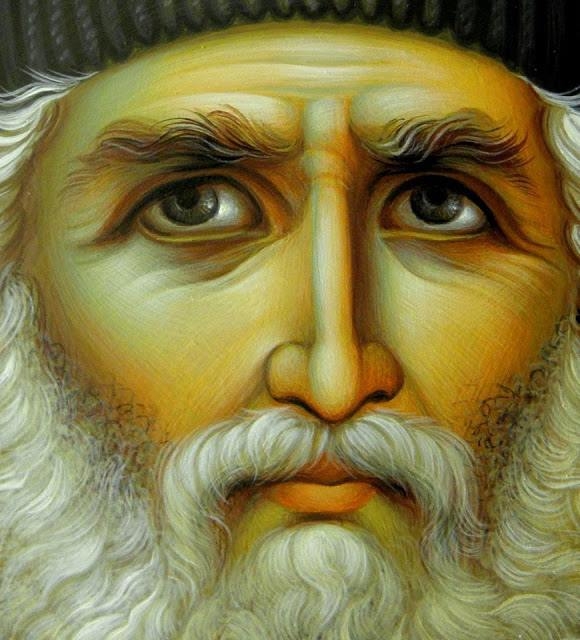
Elder Paisius, portraitThe theme of the Gospel passage for this Easter Sunday is one of the most topical issues of our time. Physical blindness isn’t so bad, as it will end when the soul leaves the body. Spiritual blindness is far more terrible, because the soul that becomes blind here remains blind forever. It is an epidemic of the present. Man does not see what is right before his eyes. He sees physically but does not understand. The Lord Jesus Christ did not have much patience with those who could recognize the season and predict the weather but did not understand the spiritual meaning of the time in which they lived. They saw events but did not recognize their spiritual meaning. (Matthew 16:2-4)

But try saying to someone, “You are blind.” All these blind people will start shouting, “We see perfectly well; you are blind!” The Pharisees saw that the Lord Jesus had healed the sight of a man who was born blind. Yet they did not want to understand anything and shouted that Jesus was a sinner because he did not keep the Sabbath. Arguments here are pointless. Even worldly education is no defense against spiritual deception. A scientist can be spiritually blind just like a simpleton—but a scholar is more at risk of blindness than an uneducated person, because an educated person often suffers from deadly self-confidence. Today’s blind people are even worse off than the ancient Pharisees. And it is saddest among Christians – that is, in the Church. And the higher the place a blind person occupies in the church hierarchy, the more tragic and frightening a phenomenon he becomes.

A Greek bishop recounted that, once, while still a monk on Athos, he came to see the elder Paisius. There was a well in the yard, and a bucket for drawing water was lying in it. The elder led him to the well and put the empty bucket on his head, which covered his head and rested with its rim on his shoulders. The monk, of course, could not see anything. The elder not only predicted to him that he would become a bishop (in Greece, only bishops wear mitres), but also, using the parable of the bucket, showed him the terrible power that the bishop’s mitre has. What threatens its wearer? The danger of spiritual blindness. You put on the mitre, and you will no longer see. (And no one will tell you this, because you are a bishop.)

* * *

Blindness is often an automatic and direct consequence of pride. A person can be proud of anything. Of having been somewhere and seen something there. Of how much he has read (whether he understood any of it is another matter). Of having seen half the world. Of knowing something, and of knowing nothing. Being able to do something, even though pride destroys any benefit that his skill could bring to him or the church. Of his reason and unreason. Even in his humility. From a spiritual perspective, a proud person is practically like a madman. He sees nothing correctly; he lives in delusions. To condemn pride is as meaningful as throwing peas at a wall (you know the Czech proverb). Everything that a person who has fallen into pride says and does is corrupt, spiritually empty, and useless, or rather harmful to the work of the church. If possible, it is best to run away from a proud person and not waste the short time of your life fighting his pride and madness.

Elder Paisius of the Holy Mountain said that everything good is not ours, it does not come from us, but from God. Only what comes out of our nose when we blow our nose is ours. A proud person trusts himself and believes that something good can come from him, that he can do something useful with his own strength, that some of his opinions can be of high value, and that his ideas have the right to be realized. However, we only produce the products of our pride. Even manure has greater value – it can at least be used to fertilize the soil. However, a proud person’s opinions only pollute the surroundings with a spiritual stench and prevent others from breathing freely.

* * *

People’s opinions can often differ. I fear that the blind and fierce promotion of personal opinions can completely subvert the church. Typically, that is why canons are established: to resolve issues of church administration according to sacred rules, thereby limiting the devil’s ability to subvert the church. Another topic that people argue about in the church is property or money – whether it is the property of parishes, the temple treasury, or church restitution – property and the purse are often a grateful source of strife. Another inexhaustible topic of human contention revolves around divine services, or rather, around divine services (various national traditions, language, singing, typicon, etc.). All these disputes do not occur (or quickly wither) where there is humility. Where there is no humility, disputes will never cease. This paralyzes the Church: instead of praying and struggling with passions, people meet, endlessly debate, create factions, plot, send e-mails, and engage in all sorts of other futile activities, and spend their spirit in quarrels. My God, what can be done in the Church instead of praying! If a person has even a grain of humility, they will easily understand that human life is too short for such vanities and that there is no point in endlessly debating with someone with a worldly spirit. I think that Christ does not dwell among people who are restless, quarrelsome, power-hungry, or self-assertive and eternally dissatisfied. If it is not a matter of defending Orthodoxy, then it is possible to calmly leave them and go to where prayer and humility are practiced.

I have observed one rule: if the ability to pray and the love for divine services are lacking, if the will to struggle with passions is lacking, people prefer to satisfy an unquenchable appetite by endlessly debating or solving something, or by developing administration and similar secondary things, not to mention nonsense. During the time I have been in the church (and from what I have heard from my predecessors), I have directly or indirectly seen a whole gallery of people’s spiritual falls and/or complete apostasy from the church, from piety, or from reason. It is interesting, but at the beginning of most cases of spiritual disaster among these individuals, there was some modification of the sentence: “The services are too long.” A spiritually blind person not only fails to see that the more abundant the prayer, the more blessings it brings, but also tries to limit other people’s prayers. If I do not pray, they do not pray either.

We see this worldly spirit, which causes blindness of the soul, operating in the Church in small and large ways – at all levels. Bishops who do not observe the canons and seize power create unrest in the Church, thereby disrupting the Church’s prayer. Ceremonies can be held magnificently in any circumstances. Still, for the development of prayer throughout the Church, peace and stability (or persecution) are needed. When people quarrel in the parish, humility and mutual love disappear, and the faithful abandon the services to which they were entrusted. They complain about this or that. And the first thing that goes aside is prayer. Such is the time we are walking into. Chaos in the world will also confuse the Church. Who then can understand that the main work of the Church is prayer, in second place is prayer, and then prayer? Instead, people will enthusiastically repair everything and polish the golden domes of temples, as the prophecy about the times of the Antichrist says.

Elder Lavrenty advised the nuns not to be too busy with repairs, as it took time away from prayer. He advised them to repair only what was necessary (today we would say: a state of emergency), and otherwise to give everything to prayer. Elder Pasiy (although he was a skilled craftsman and knew how to work with wood) kept his cell in extreme simplicity and poverty – he only cared for it so that it did not fall apart; he did not even hammer a nail into the wall.

To some extent, there have always been problems with human blindness in the church. The devil is always prowling around looking for someone to devour. Especially when there is real spiritual work underway, Christians must show sufficient resistance to temptation if they want to maintain their spiritual guard. The devil especially targets such places where there is some prayer and lies in wait for the spiritually unfortified or the downright weak to penetrate through them and destroy this fortress from within. This has always happened. This must be taken into account.

Sometimes a spiritual fortress falls under external pressure that gains power over it, sometimes through internal betrayal. This applies to entire local churches (see, for example, the West), parishes, and monasteries. How many large and strong monasteries have already disappeared in history? If one bastion falls, those who want and know how to continue fighting must move elsewhere. Above all, don’t throw a pebble in the sand!

* * *

What is said about the meaning of prayer is as true today as it has always been in the past. Understanding the principles of prayer and its fundamental importance has shaped the historical development of our church services. That is why Orthodox church services are so impractically long – and still are, even though we have been shortening them for the last two centuries (well, tell me yourself: all ektenies, troparia, and kontakions; long psalms; slow singing; and I’m not talking about the many stichera at vespers or paremias at Easter, and what’s more, liturgies! And we prefer not to hold the longest church service—matins—in our country, otherwise the cup of patience of our believers would probably really overflow. The liturgy is the church’s main prayer (not even the Jesus Prayer or the inner prayer of the heart can replace it), and the entire prayer life of a Christian unfolds from it. There is no more important prayer than the liturgy. But we, the blind people of today, no longer see this. And the same blindness prevents us from seeing the state of the present world. And the same blindness still prevents us from seeing the spiritual cause of this state. And it is still the same blindness that will prevent us from seeing how necessary and powerful good prayer accompanied by humility is. What can a Christian’s private prayer look like when, after two hours in the temple, he complains that it is too long? One thing can be said with certainty about such believers: they do not feel an encounter with Christ during the liturgy. If a person encounters Christ in prayer, then even ten hours are not enough for him… But God’s grace does not visit those who lack a humble heart.

A blind person cannot say after five minutes of seeing: “That’s enough, I’ve seen everything, give me back my blindness,” and similarly, someone who has seen spiritually cannot say, “I’ve had enough of the liturgy for about an hour, and I want to go home; I still have enough other things to worry about.” And yet the world and all of us need prayer much more than a hundred or two hundred years ago. But in this critical time, even the minimum that the Church established as necessary to preserve God’s commandment to sanctify the holy day is no longer available to people: liturgy every Sunday and on twelve holy days. Is there any way out of such a situation? Or will it be better to accept that the fulfillment of the aforementioned commandment from the Decalogue will now be a matter for a few individuals? In what state is the Church when the vast majority of Christians have resigned themselves to this commandment of God? And what awaits such a Church? It would be beneficial for us to consider this, at the very least.

Elder Paisios said:

Do not forget that we are living in difficult times and that much prayer is needed. Remember the tremendous need that people feel today. Remember the enormous fervor for prayer that God asks of us. Pray for the general madness that has gripped the whole world. Pray that Christ will have mercy on his creation, because it is approaching catastrophe. May God intervene in his own way in this crazy era that we are living in because the world is being dragged into chaos, madness, and a dead end. God has called us to pray for a world that has so many problems. Unhappy people, they do not even have time to make the sign of the cross. If we monks do not pray, who will we leave it to? In times of war, a soldier is on alert, shod, and only waiting for orders. A monk should also be in such a state.

Let us not be confused by the fact that the elder speaks primarily of monks. After all, there is no such thing as a dual Christianity – monastic and secular. There is only one Christianity. However, we have already spoken about this here several times. The elder Paisius also emphasized this. He said that a good Christian living in marriage would certainly be a good monk under other circumstances. And a good monk would certainly be a good secular Christian if his life developed in such a way that he could not become a monk and had to marry.

Where God has placed you, there you can and should be holy. St. Justin Popovich said: If you are a teacher, be a holy teacher; if you are a craftsman, be a holy craftsman; if you are a monk, be a holy monk; if you are a journalist, be a holy journalist.

* * *

But let us not lament. Even in today’s superficial and sinful world, even among unsalty, ungreased believers, there are still individuals who possess a burning heart, a thirst for prayer, a longing for silence, and a resistance to the worldly spirit. Such people are still found, and God knows about them and often calls them to Himself by strange paths. Often, these are the ones that the “strong in faith” and loud Christians, who are full of their Christianity, do not have high hopes for.

Today, we see how God gathers individual people through personal “call-ups,” just as, before the start of a war, he sends a mobilization call from the army command. (Elder Paisius)

These are the lights that matter. You won’t see them in the newspapers or on the Internet. They don’t have a Facebook account. They don’t necessarily have to be monks. They are often those who quietly and unobtrusively, but really generously help in parishes, never complain about anything, are at every service, and selflessly serve as much as they can. These are the pillars of church life, people on whom a priest can lean and rely. These are those who understand something about the mysterious life of the church, who see such hidden things that the proud, who think they understand something, don’t even dream of it.

The fate of the world depends on a few people, but God still “holds the reins.” We must pray fervently for God to intervene in the ongoing events. (Elder Paisius)

Periodically, historical moments return when it seems that God is silent. It seems that He will not stand up for those who are trying to do good, adhere to the canons, and defend the faith. Evil and arbitrariness triumph. These are difficult times. Perhaps it is necessary to sift, sift people. In these times, every person has a chance to know himself, to learn who he really is. And he can learn truly surprising things about himself. So these dark times can darken one person even more, while helping another to see things through. So we prepare our own judgment with our own deeds. God gives man the opportunity to “color himself,” to show himself and manifest himself, and thereby to say before people and before heaven who he is, what he stands for, and to express what he wants for himself in eternity. (Osipov)

God will eventually put everything in its place. But each of us will be held accountable for how we behaved in these difficult times with our prayers and goodness. (Elder Paisius)

* * *

And with that, we have come close to the conclusion of today’s reflection on spiritual blindness, or rather, spiritual vision. As we have written here many times before, the basis of spiritual vision is to know oneself: to see one’s terrible spiritual state, to see one’s sins. Such awareness, at the level of practical thinking, is what makes a Christian a Christian (see St. Ignatius Brianchaninov). When no one else answers the call to spiritual ministry through prayer and repentance, when no one approaches this work gently, and everyone else serves only their pride, then it’s time to use the strongest medicines against blindness. Just as when standard medications do not work to treat an illness, a doctor may resort to a more drastic course of treatment with stronger medications. He places all his hope in one outcome: either he will die or he will recover. In the end, God will intervene so that at least one blind person can see. He shakes everything up once more so that everyone gets the opportunity to be free from blindness.

Posted in Nezaradené | Leave a comment