
-
Recent Posts
Recent Comments
Archives
- September 2026
- August 2026
- July 2026
- June 2026
- May 2026
- April 2026
- March 2026
- February 2026
- January 2026
- December 2025
- November 2025
- October 2025
- September 2025
- August 2025
- July 2025
- June 2025
- May 2025
- April 2025
- March 2025
- February 2025
- January 2025
- December 2024
- November 2024
- October 2024
- September 2024
- August 2024
- July 2024
- June 2024
- May 2024
- April 2024
- March 2024
- February 2024
- January 2024
- December 2023
- November 2023
- October 2023
- September 2023
- August 2023
- July 2023
- June 2023
- May 2023
- April 2023
- March 2023
- February 2023
- January 2023
- December 2022
- November 2022
- October 2022
- September 2022
- August 2022
- July 2022
- June 2022
- May 2022
- April 2022
- March 2022
- February 2022
- January 2022
- December 2021
- November 2021
- October 2021
- September 2021
- August 2021
- July 2021
- June 2021
- May 2021
- April 2021
- March 2021
- February 2021
- January 2021
- December 2020
- November 2020
- October 2020
- September 2020
- August 2020
- July 2020
- June 2020
- May 2020
- April 2020
- March 2020
- February 2020
- January 2020
- December 2019
- November 2019
- October 2019
- September 2019
The end of the world.
The end of the world and one day the end of each of us is the theme presented to us by this week’s liturgy. Today’s reading from the book In the Revelation of St. John, the fall of Babylon symbolizes the downfall of worldliness, prosperity, and self-sufficiency. This apocalyptic scene is mirrored in today’s Gospel reading from Luke, where Jesus foretells the desolation of Jerusalem and his eventual return. Babylon, compared to “the great harlot,” is a city of deceit, where corruption and unclean spirits lie beneath its façade of magnificence and festivities. Ultimately, its destruction will be swift and total, leaving no trace..
“The sound of harpists, singers, pipers, and trumpeters will no longer be heard in you” – there will be no more beautiful celebrations. »No master of any craft will appear in you again« – because you are not a city of work, but of corruption. »The knocking of the mill will no longer be heard in you. The light of the lamp will no longer shine in you.« – it may be a city illuminated, but it will not shine. This is a corrupt civilization, »the voice of the bridegroom and the bride will no longer be heard in you«. There were many couples, many people, but no love. Desolation starts from within and ends when the Lord says “enough”. There will come a day when the Lord will say: »Enough of the pretense of this world«. This is the crisis of a civilization that considers itself proud and self-sufficient but is dictatorial and will end up like this.
Jerusalem will see another kind of destruction, namely the destruction of unfaithful love. It failed to recognize the love of God in His Son. Gentiles will trample the Holy City, the Lord will punish it because it has opened the gates of its heart to the Gentiles. Life – in our case the Christian life – becomes pagan. Are we living as Christians? It seems so, but in reality our life is pagan when these things happen and are subject to the seduction of Babylon. And Jerusalem lives like Babylon. He wants to make a synthesis that cannot be made. And both will disappear. Are you a Christian? Are you a Christian? Live like a Christian. You cannot mix water with oil. They will always remain separate. This is the end of a civilization that is self-contradictory, calling itself Christian and living like a heathen.
After the fall of both cities, the cry of the Lord will be heard. After destruction comes salvation. The angel will say, »Blessed are those who are invited to the Lamb’s wedding feast!«. It will be a grand, real celebration. Tragedies also exist in our lives, but if we find ourselves in front of them, let us look to the horizon because we are redeemed and the Lord will come to save us. We thus learn to undergo the trials of this world not in agreement with worldliness or paganism, which leads us to destruction, but in hope, detaching ourselves from these worldly and pagan temptations, looking to the horizon, hoping in Christ the Lord. Hope is our strength: we go forward. But we must plead with the Holy Spirit.
Think of the Babylons of our time. Consider, for example, the powerful empires of the last century that collapsed. And so will the great cities of today also end, and so will our life and if we follow the path of paganism. Only those who put their hope in the Lord will remain. With hope, therefore, let us open our hearts and turn away from the heathen life.
Posted in Nezaradené
Leave a comment
Why is hope important for us and how can we cultivate it?

Hope gives people a reason to keep fighting and to believe that their current circumstances will improve. /
People often talk about hope, which strengthens their resolve and accompanies them even in the darkest moments. Hope helps people stay committed to their goals and motivated to act toward those goals. Hope gives people a reason to keep fighting and to believe that their current circumstances will improve. It is typically associated with high motivation, optimism, and a generally elevated mood.
What is hope in psychology?
Hope is a partly subjective concept, and both psychologists and philosophers have tried to define it. Some people believe that hope is a relatively stable personality trait, while others may feel that hope depends on external circumstances and previous experiences. Others see hope as a choice. It is commonly associated with warm feelings about the future, an increased willingness to work towards achieving goals and a positive mood. According to hope theory author Charles Snyder, hope is a positive cognitive state based on a sense of successful goal-oriented determination and planning to accomplish those goals. In other words, hope is like a snapshot of current goal-oriented thinking, emphasizing the motivated pursuit of goals and the expectation that those goals can be achieved. Snyder’s theory of hope includes goals, path, and freedom of choice. According to him, there are at least three components that people can associate with hope, namely:
- you must have focused thoughts
- to achieve these goals, you must develop strategies in advance,
- you must be motivated to put in the effort necessary to achieve those goals.
The more an individual believes in his ability to achieve the above components, the more likely he is to develop a sense of hope.
What is the difference between hope and optimism?
Optimism indeed has? a lot in common with hope, both are concerned with a positive orientation towards the future and assume that good things will generally happen in people’s lives. The difference is that optimism is a positive attitude toward a future event that is likely and likely to occur, optimists expect life to work out well and as expected. On the contrary, if someone is hopeful, he considers himself more realistic. Hopeful individuals recognize that life may not work out as planned, yet maintain a positive expectation focused on possible outcomes that are personally meaningful.
How to develop and cultivate hope?
Great ideas and activities that promote hope in everyday life. Write the letter to yourself, but give it to a friend, write a heartfelt letter to your future self. You could tell your future self how you feel right now, what hopes and dreams you have for them, and recount what you’ve been through that month. When you are done, put this letter in a sealed envelope and give it to a trusted person who will mail it to you during an undisclosed period. They could send the letter back to you in a month, 3 months, or more, but with the hope that it will come back to you when you need it.
When you’re at your weakest, try journaling. Sometime in the future, you’ll look back at your past records and see how far you’ve come. Journaling works in two ways, not only to secure your thoughts in the immediate moment of writing but also to create a chronological history of you and your progress. Give yourself space to breathe, to grieve, to think, but also to discover what it’s like to have hope One thing to remember is that hope shouldn’t come from positivity that isn’t there. You cannot have hope without knowing the shadows of what you hope to overcome. If you are surrounded by a lot of media and news that focuses on the negative, try to also examine the positive news regarding the topic and who and where the news is coming from. A balanced perspective on hope is just as important as a balanced perspective on other topics in our lives.
Symbols of hope.
Be creative. Look for symbols of hope, and collect things that might remind you of hope in times when you might need it. Create a poster, a bulletin board of hope, using a pile of magazines to dig through and find symbols and images that make sense to you.
Go for it yourself.
Seek the solitude that is your own. Solitude without phones, radio, or loved ones can help you integrate your thoughts and senses. The goal is to achieve a solitude that transcends any real or imagined social conventions and effectively shuts you off from the daily routines of life, even if only for a few hours.
Write down your goals and keep a hope journal.
Writing down your goals is a great way to solidify your ideas and focus your thoughts. A Hope Journal takes this concept a step further by structuring your thoughts in a way that promotes hope. Write down your goals, state why you want to achieve each goal, and what motivates you, brainstorm potential paths to achieving your goals, list any potential obstacles you may face and think of ways you can overcome them. Write how you feel when you reach your goal. Visualizing who you will be and how good it will feel to reap the rewards of your hard work is one way to stay focused and motivated.
Posted in Nezaradené
Leave a comment
The word of the priest..Until I let myself be led.

Illustration photo:
I still remember the media and social uproar at the coronation of King Charles in London. Hundreds of millions of people, not only in the British Isles but all over the world watched the unique, in fact, religious ceremony, in which the prince became the king.
It is strange that we, the people of the modern democratic world, watched with such interest a ceremony which, from a historical and cultural point of view, is at first glance only a kind of relic or survival without any real influence on the running of society. In Western countries, several monarchies remain, which are only constitutional, not absolutist. Kings perform ceremonial and representative functions; they may have a few symbolic roles according to the constitution, but nothing more.
Nevertheless, the figure of the king is symbolic. If we consider everything we know about kings in Western civilization, then it is not just about handing over the supreme power in the country. This birth of a new monarch is also a religious ceremony, during which the future bearer of this office is anointed with sacred oil, which symbolically imprints an indelible mark on the soul of the monarch.
He belongs to God, and he performs this office not by human will, but by God’s will. This ceremony is a message that he receives from the Lord everything he needs to perform this office, but he must perform it conscientiously because he will bear responsibility for everything before God.
In the ceremony of putting the king into office, two things seemed to meet. Real, in the past, absolute power and at the same time the desire of the subjects that the one who became king by the will of God, ruled wisely, was a role model for his people.
Charles’s coronation was a media event, but the interest it generated was not just out of curiosity. As citizens of our states, we simply desire leaders who not only have power but also wisdom, are exemplary, and if we are believers, we expect them to be humble before the Lord and blessed.
The ceremony in London offered this ideal for a moment, and we subconsciously wished that every leader in every country had not only one, but also the other. Although we know, also from our own experience, that the reality is often much worse.
“We very much wish that the one to whom we entrust our destiny or whose advice we rely on, not only has power, but is in God’s favor, thanks to which he will not lead us into a dead end.”
Being a king is therefore primarily associated with power, almost absolute. In what contrast to human imagination is Jesus’ dialogue with Pilate. Jesus was accused of impersonating a king. It was a very serious charge. If even a hint of it proved to be true, Pilate would have him executed without mercy. However, when this pragmatic Roman asked the poor battered prisoner if he was a king, Jesus cryptically replied that his kingdom was not of this world.
Pilate thought he was hearing badly. What Jesus told him seemed like a game of king the way children play kings and queens, princes and princesses. Dreaming. When he asked him again after the first, for him such a naive answer: “So you are the king after all?” he received an answer that derailed him.
Jesus not only says that his kingdom is not of this world, but that he has come to bear witness to the truth.
The people from the upper classes among the Romans were educated, had something read in philosophy and oratory, moreover, they were superstitious and surrounded by a pantheon of inscrutable deities of so many nations, so Jesus’ answer not only surprised him, but also scared him a little.
He realized that even though he was hated by the high priests, he had in front of him an interesting person with a certain life experience and depth, which although he did not understand, he was intuitively attracted to, because it overturned his logic of power and opened a kind of thirteenth chamber.
However, Pilate did not dare to go further in the conversation with Jesus, he did not owe anything to his pragmatic nature, and for reasons of power and gain, he had him crucified as a precaution.
However, Jesus revealed who he was in the interview. God’s Son, in whom the Father wants to restore everything in Truth. God did not offer that Truth by force but with the greatest humility. Like a good shepherd who takes a wounded sheep on his shoulders; as a humble man, who needs no horse, but the colt of the poor is enough for him to enter the holy city of Jerusalem. As the capture of human souls who noticed the ajar door in Zacchaeus’ soul to enter his life and save him.
In the Gospels, Jesus shows that the Lord is always good to man, that he seeks him and does not impose himself on anyone.
We all have some idea about life. We are from different backgrounds, from different cultures, no two families can be compared. Likewise, we are not wearing the same shoes, so it is difficult, even impossible, to say which of us is worse or better before the Lord.
But one thing is certain. As we wander through life, we look for people who could be a support. It is ideal if we find them in the family or among friends. However, they are only people full of weaknesses and limitations. We very much wish that the one to whom we entrust our fate or whose advice we rely on, not only has power but is in God’s favor, thanks to which he will not lead us into a dead end.
We need people to lean on, but we need God even more. Perceiving his presence in your life and knowing his will.
Christ wants to reign in our lives. Let us listen to his voice, let us seek the truth about ourselves, life, and the world in which we live to live under Christ’s rule.
Voluntarily, with all humility. As those who know that in such submission to the Most High, great things are born in human life: wisdom, hope, humility, and love.
Posted in Nezaradené
Leave a comment
Catherine of Alexandria, virgin and martyr.
St. Catherine is a very popular saint, martyred at the beginning of the 4th century in Egypt, she is one of the three holy virgins (along with St. Barbara and St. Margaret) and the 14th saint of helpers in need. She is the patroness of theologians and philosophers.
Although the legends of her martyrdom contain many symbolic images, there is no doubt that behind them lies the life of a rare woman and an actual historical event. According to the Greek text Pasiio (narrative of the martyrdom) from the 6th century and Conversion (8th century), the young and beautiful Katerina came from an educated and noble family. In 307, the emperor Maxentius ordered grand pagan celebrations and sacrifices to the gods. Catherine refused to participate in them and even reproached the emperor for his folly: “Why do you want to bring this crowd into misery because of the cult of pagan gods? Learn to know God, the Creator of Jesus Christ, who freed humanity from hell with his cross.”
The monarch was not only surprised by this boldness, but also very touched and touched in the heart. He had orators and philosophers called to convince Catherine with their explanations. However, with her wisdom, the young Christian woman convicted them of the error, so many were even converted. She could not be persuaded to abandon her faith, even by generous marriage offers. That’s when the emperor had her beaten and put in prison. There, she was visited not only by the emperor’s wife, who also converted to the Christian faith, Jesus Christ appeared to her in a vision; Catherine’s soul since then belonged entirely to Him.
Because of the many conversions caused by Catherine’s wisdom, the emperor had her tortured on a wheel studded with nails, which, according to legend, broke during the torture, and therefore she was finally beheaded with a sword. The legend further states that the body of St. Catherine was transferred to Sinai, where a famous monastery dedicated to her name was founded. It still exists today and is visited by many pilgrims. St. Catherine is often depicted with her wheel pierced with nails or discussing with surprised philosophers. In the Franciscan monastery church in Jindřich Hradec, which is dedicated to St. Catherine, she is again depicted in a “mystical betrothal” to Jesus on the painting of the main altar, and her attribute – the executioner’s wheel – is not missing here either.
Her testimony and example make us realize a very important thing: we should strive for actual knowledge. However, the truth does not submit to the wishes of the powerful, nor do we have to arrive at it through mutual discussion, even if that is also necessary for a better understanding of it – see the conversion of the philosophers. Even education or professional studies, which we cannot underestimate, do not guarantee that we will understand things correctly. Wise is the man who can truthfully reveal the laws of this world, but he becomes a fool if he does not know the Creator of this world. And so far wiser is the one to whom the truth about God – and thus also about everything else – was revealed through the Holy Spirit. That is why St. Katerina is a shining example of Jesus’ words: “They will persecute you, deliver you to the synagogues for trial and prison, they will present you before kings and rulers for my name’s sake. This will give you an opportunity to testify. So take this to heart: Don’t prepare in advance how to defend yourself. For I will give you eloquence and wisdom, which none of your adversaries will be able to resist or oppose.” (Lk 21, 12-15)
Posted in Nezaradené
Leave a comment
Let’s strengthen faith in eternal life.
This time in November has led many of you to thoughts or discussions about whether there is life after death. Perhaps you have read the book Life After Life by the American doctor Moody, who deals with Lazarus’ symptoms. The stories he describes happened to those who survived clinical death and were awakened to life. This may not yet convince anyone of the existence of life after death. Still, many are troubled by many ambiguities when reading it, such as understanding depersonalization, the great light, the tunnel, the wonderful feeling of joy, and so on. In this soulful time, Jesus wants to bring light to our doubts with today’s Gospel, which describes the meeting of the Lord Jesus with the Sadducees, who deny the resurrection. The Sadducees asked the Lord Jesus about the resurrection of those who have died physically, and we also often meet the Sadducees.
A group of Sadducees sought conflict to oppose Jesus. The Sadducee class came from the strict priestly class and became more of a political than a religious group. We may take them as a second Jewish sect, smaller than the class of Pharisees, with whom they disagree because they teach more strictly and have confined the revelation of God to the Five Books of Moses. They deny the resurrection and the immortality of the soul; they do not believe in life after death and in angels. Therefore, they tell Jesus about a fictional event that is directed against him. They refer to the Law of Moses, which orders: “… if someone’s brother dies who had a wife but was childless, his brother should marry her and beget offspring for his brother” (Lk 20:28). They also tell of a woman who, after the death of her husband, was married to his seven brothers. That is why they ask the Lord Jesus: “Well, which of them will be the wife of the woman at the resurrection?” After all, seven of them had her as a wife” (Lk 20:33). The Sadducees say there can be no life after death because then comic scenes would follow. The previous question formulated in this way is ridiculous. However, it is not because there are many similar questions even today. Today, when people talk about life after death, many people do not believe in life after death, ridicule and misinterpret it. For one group, this life is compatible with our life here. That’s why they try to live fully here on earth, and that’s all they expect from life. The second group speaks of the second life as a mystery that beckons man. However, it is vague and, therefore, similar to dreaming of an earthly paradise where one will not lack material things, goods, and joy. So, they see the second life after death as a worldly life of a higher quality.
Posted in Nezaradené
Leave a comment
Go clean your soul of rust
How often should confession be made? Is there any church regulation that if a person wants to receive the Eucharist more often, he is obliged to attend the sacrament of reconciliation every month? I went to confession on the first Friday of July, then every Sunday I went to Holy Mass and Holy Communion. After that, an older friend assured me that as long as I kept myself in sanctifying grace without major sin, I could continue to receive the Eucharist, without the First Friday confession. So I went to Holy Communion in August as well, but now I don’t know if I committed sacrilege.
Nothing is worse than having to prescribe a relationship in the spiritual life. For example, the one that at least once a year confesses and receives the Sacrament of the Altar. The basic equipment of a person should include the inner and outer truthfulness of everything he lives and does.
And so he will never again be troubled by the thought that he has to go to confession (for example, before Christmas). He will be much more excited about the idea that he can go clean his soul from rust again because it is already ripe for it again.
HOW OFTEN TO CONFESS
Just imagine what it would be like if, next to the church order to confess at least once a year and receive the Sacrament of the Altar, another new order appeared – to lie down with your husband at least once a year… Because it is assumed that spouses understand, that even this side of coexistence helps to strengthen their relationship and mutuality. But let’s move on.
When you write, Evka, about regular Holy Communion, i.e. every seven days, my idea of regularity differs from yours. What is the Eucharist? The dogmatic answer is: the living Christ, is present there. And since we have holy masses all over Slovakia from Monday to Saturday, why not go and meet this Christ on a weekday and accept his radiant presence as food reinforcement on the path of life?!
The only condition for such a meeting is a pure heart or, as your friend rightly advised you, sanctifying grace. If a person approaches the Eucharist in this way under all circumstances, he need not fear sacrilege. However, one must be very careful about the two extremes.
SCRUPULOUS AND LAX APPROACH
What I still know from the holy confessions is the iron rule that people who have a center of gravity in regulations, orders, prohibitions, and regulations, carry with them a terrible boulder of scrupulousness – scrupulousness. They keep asking themselves: is this still okay? Did I do something wrong? Am I not committing sacrilege right now?
It is even a customary practice of many Christians to this day that if, after Holy Confession, he misses several Holy Masses in the following days, he no longer has the right to attend the Eucharist, because he missed it – apparently in the spirit of the idea that nothing interrupted is good… In addition, he does not look at whether it is in sanctifying grace, which is decisive for communion! These people seem to forget the freedom that Jesus Christ won for them on the cross.
Exactly according to the Holy Scriptures “Where the Spirit of the Lord is, there is freedom”. But on the other hand, I also read freedom in some confessions as follows: I have no sins, everything in my life is good as it is, because Saint Augustine also said “Love and do what you want”. So “love” has such a crazy meaning for some people that “do what you want” can no longer apply! Why can’t he? Because even love has its own rules!
Posted in Nezaradené
Leave a comment
The Presentation of the Blessed Virgin Mary
When a small child goes “to the cross” during Holy Communion, he usually goes with his parents or grandparents. When I give communion to their guides, I often realize the mutual similarity and think, this is how parents looked 30 years ago, grandparents 60 years ago. Or this is what the child will look like after the mentioned years. We don’t just inherit the outward appearance. Many times also character traits. And maybe even more. The transmission of physical resemblance is automatic, based on genes, without the parents’ knowledge. It seems that the transmission of character traits is not so automatic anymore. Why? Because the parent, by shaping his nature, passes on an already guided (or unguided) child. By shaping himself, he helps his children and the environment.
Perhaps that is why we celebrate the Feast of the Sacrifice of the Virgin Mary today, even though it was slowly gaining ground in the West and was abolished after the Council of Trent. It was canceled because it is based on a New Testament apocryphal writing called Jacob’s First Gospel (lat. Protoevangelium Jacobi). Although the Second Vatican Council violated the feasts without a historical and biblical basis, today’s was retained, despite its creation at the instigation of the Apocrypha, because the Virgin Mary ultimately sacrificed herself to God and the role he assigned to her in the history of salvation. With this, she incentivizes all Christians to follow her in this sacrifice.
And to the Virgin Mary, the devotion was handed down from her parents, who brought her to the temple as a child and thus coded the devotion for her. This is what Mary wants to pass on to us. So what should we do so that Mary’s son can also say about us: “Behold, my mother and my brothers.” For everyone who does the will of my Father who is in heaven is my brother and sister and mother.” For help, let’s take the ancient mystical author Pseudo-Marius, who compares the soul to a great city. In the middle is a beautiful castle, and next to it is the market and all the institutions that belong to the town. The enemy, i.e., original sin, has occupied the surroundings of the castle; this is what our senses symbolize. And that is why we are so often worried. From the market, the sound also reaches the castle. And there, in the depths of our soul, we can accept or reject these temptations.
In the castle of our inner soul, we should not let sin go. St. Teresa from Avila perhaps inspired by this author, wrote “The Castle Inside.” He says that we can dialogue with our Lord without being disturbed by the market. However, and you may be right, we are often internally divided. That market, figuratively speaking, reaches too far into the castle of our soul. And that is often unpleasant and tiring for us. A person following Mary avoids sin and purifies his heart to return to inner peace. The goal of asceticism – spiritual exercise is to purify one’s thoughts in the depths of one’s heart.
Because we must not stay only with moral teachings. It is necessary to learn a relationship with God, which should occur more precisely in the depths of the heart and not through external actions. That is why Jesus is so critical of the Pharisees. This may have the consequence that many people outwardly observe the commandments, but as if they still consider belonging to the Church, faith, and keeping the commandments a burden. It’s like when the Israelites left Egypt. They kept looking behind the greasy pots. Moses taught them something else. That is why a person is doing wrong when he wants to treat restlessness with drugs, medicines, and false mysticism.
Christian spirituality offers us opportunities to gain peace. It is precisely from the point of view of heredity mentioned in the introduction that we realize that the drama of the martyrdom and death of the Son of God reflects the drama of a person who is entangled in hereditary and personal sin. The situation of all humanity, including each of us, is serious when the God-Man “had” to accept such a cruel fate: he had to suffer a lot, be rejected, despised, and crucified (cf. Lk 9, 22). Therefore, let us realize that we were sacrificed to God at baptism. The great preacher and saint St. In his sermon to the newly baptized, John Chrysostom describes what baptism makes of us with these words: “The baptized are not only free, but also holy, not only holy, but also righteous, not only righteous, but also sons, not only sons but also heirs, not only heirs but also brothers of Christ and not only brothers of Christ but also co-heirs, not only co-heirs but also members, not only members but also a temple, not only a temple but an instrument of the Spirit.”
In the book Restlessness of God, the Dutch painter Jean Verkade (representative of Nabism) tells how he became a Christian. Among other things, he writes: Intellectually, I got closer and closer to the Church. I was only afraid of the obligations I had to take on, and I could not yet genuinely believe. I told the priest. He was unsurprised and told me: “Unless you are baptized, you cannot believe as we do because the supernatural virtue of faith is the grace we receive at baptism. When you are baptized, all difficulties and doubts will likely disappear. And so it happened.” So we inherited a lot of goodness. We can follow the Virgin Mary.
Posted in Nezaradené
Leave a comment
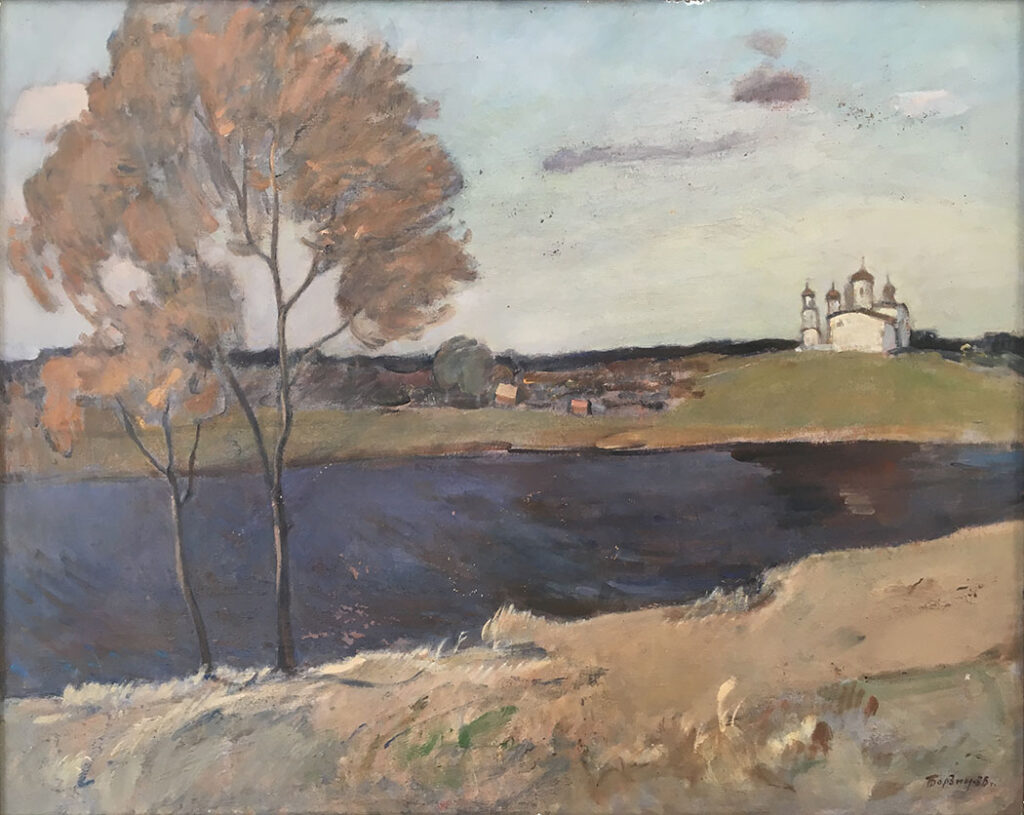
***
In today’s part of the series about lesser-known or even well-kept converts, we will talk about a very specific group within this species. Their motivation, from the point of view of many of today’s observers of the crisis in the Catholic Church, who are inclined to easy and superficial solutions (see for example Rod Dreher), can appear confused and ill-conceived. After all, according to the common opinion of contemporary followers of ecumenism, the Orthodox Church differs from the Catholic Church only in that it does not recognize the office of the Pope, or even according to Russophiles or Slavophiles, the contemporary Orthodox Church is in much better condition than the contemporary Catholic Church.
With the first one, we can first say that the Catholic Church differs from the Orthodox Church primarily in that it is – true. The Catholic Church is the Church that was founded by Jesus Christ, the Son of God and continues unbroken to this day. The Orthodox Church in the so-called It separated the Great Schism from the Catholic Church and exists outside of its communion. However, it is not only a matter of separation from Rome. The Orthodox Church has adopted many heterodox elements during the centuries of separation so that in its case it is no longer just a matter of the notorious “non-recognition of the Pope” or the dispute over the word ” filioque “. Suffice it to mention for illustration at least the dogma of the Immaculate Conception, which the Orthodox Church does not recognize. It should also be mentioned, for example, its recognition of divorces, under certain circumstances.
Others who adore the Orthodox Church as an oasis of tradition and as their easy escape from the crisis in the Catholic Church should be reminded that the Church is a timeless institution and its teaching is the Truth revealed by God, while this teaching has the fullness of all the means of salvation for almost two thousand years. The fact that nowadays many members and representatives of the Holy Apostolic and Catholic Church distort or even deny this Truth cannot change the fact that it is the Truth and the only way to salvation.
The actions of Catholic conservative admirers of the Orthodox Church are reminiscent of the reaction of a mathematics student to a professor who teaches the subject badly, and in response to this confusion, the student instead of learning the correct procedure, despite the professor’s mistakes, resigns from mathematics as such. He will be satisfied with guessing the result, happy that until he worked on the correct result under the professor’s guidance, he hit something by guessing. However, the solution is to learn mathematics correctly, which is independent of the existence and mistakes of one professor.
Of course, no one will deny that the preservation of tradition in the Orthodox Church far surpasses all Protestant and apostate sects. However, it is all the more important to understand what led Russian converts to the Catholic faith to convert. It was not the beauty of the ceremonies, nor the antiquity, but the Truth of the Faith, the certainty of the dogmas and the historical credibility of what the Catholic Church proclaims. These converts deserve our admiration more than converts from dull and dry Protestantism, or even from the folly of pagan idolatry. At first glance, it seems that the Catholic Church did not give them much more than what they already had. However, their search had to focus much more intensively on the essential, what lies behind the beauty of the liturgy and the treasure of tradition, what distinguishes the Orthodox Church from the Catholic Church – the Truth.
Sofia Petrovna Svečina – owner of the conversion salon
At the time when the Russian nobility began to think about dealing with the Catholic faith at all, that is, at the beginning of the 19th century after the Napoleonic wars, the fiasco of the French Revolution and at the time of the conservative Catholic revival, framed by figures such as Joseph de Maistre, René de Chateaubriand or Louis de Bonald, became the first known convert from the homeland of St. Vladimíra, daughter of Russian State Secretary Peter Alexandrovich Sojmonov.
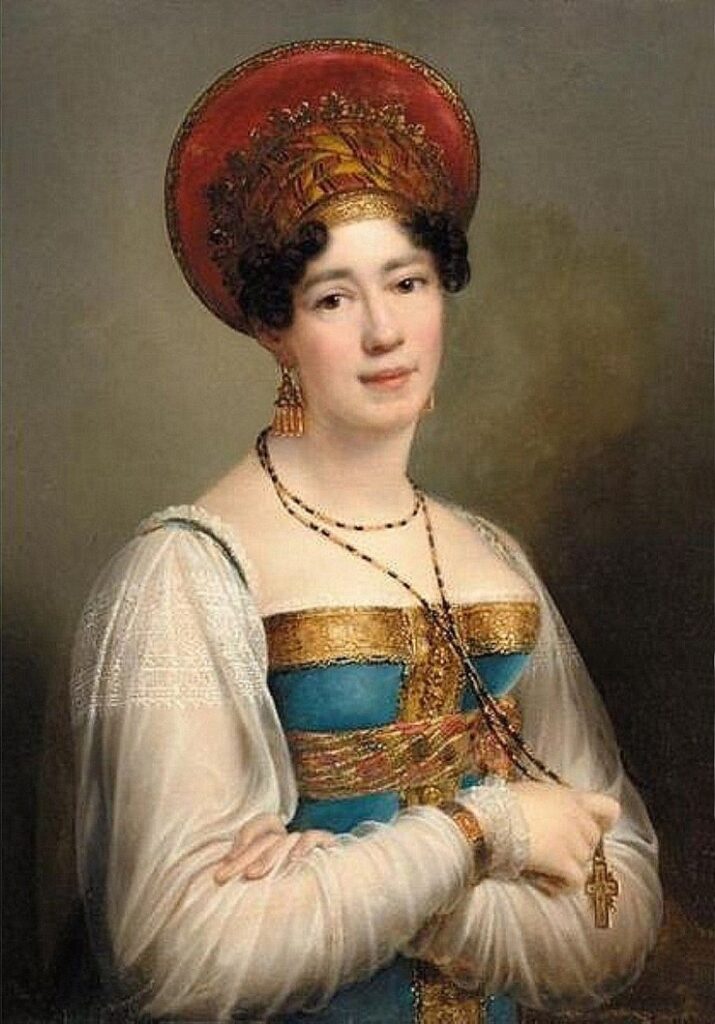
source: Wikimedia commons
She was born in 1782 in Moscow and from childhood showed a deep talent for acquiring a broad education. She acquired an excellent knowledge of the main European languages (Italian, English, French, and German), while her knowledge of the classical languages was also excellent: ancient Greek, Latin, and Hebrew. As the daughter of a leading noble family, she became a lady-in-waiting to Empress Maria Fyodorovna.
At the age of seventeen, at her father’s wish, she married the much older military governor of St. Petersburg and General Nikolai Sergeevich Svechin, a widower who was already 42 years old at the time. The marriage did not deviate from the framework of noble marriages of the time and was relatively happy. However, soon after the marriage, her father as well as her husband found themselves in the disfavor of the mentally unstable Czar Paul I, as a result of which the father died of a stroke and the husband had to resign from his office.
Young Sofia, who could not have children of her own, but lovingly cared for her adopted daughter, under the pressure of these family and personal dramas, plunged into her inner world, becoming an even more avid reader, devouring Western literature and philosophy, so fashionable in the times salons of the Russian nobility. In one of these salons, Sofia fatefully meets a well-known French emigrant, a refugee from the horrors of the French Revolution and, most importantly, an ardent Catholic, Chevalier d’Augard. His captivating presentation and apology of the Catholic faith dug deep into Sofia’s soul, so much so that she began to search for members of this small French diaspora in Russia.
In this search, she finally came into contact with the famous Joseph de Maistre, who at that time was working in Russia as the ambassador of the monarch of the Kingdom of Sardinia. His influence in the circles of the Russian nobility at the time went so far that Tsar Alexander I himself began to openly sympathize with Catholicism. At that time, in the eyes of the Russian nobility, the Catholic faith was stripped of its forbidden fruit, and soon the first conversions appeared in these circles.
Sofia’s was neither light nor short. She was plagued by doubts and could not make up her mind for a long time. However, in the end, an event that decisively put an end to the Russian nobility’s flirtation with Catholicism probably helped her definitive conversion. Under the pressure of the Orthodox hierarchy, the government decided to expel the Jesuits, who had been tolerated until then, in order to persuade the Russians to convert to the Catholic faith. Faced with the threat that she too would now be condemned by society for her faith, perhaps Sofia realized her duty to God and openly confessed her sympathies towards the Catholic Church.
Czar Alexander, who had previously also made no secret of his sympathies for Catholicism despite signing the decree to expel the Jesuits, maintained his favor with Sofia. However, the rest of society did not, so she decided to emigrate to Paris in 1816, where she definitively and officially accepted the Catholic faith. In Paris, her salon soon became a sought-after place where French celebrities of the time met and where many conversions from among the Russian nobility took place. Her captivating personality and even more her gift of conversation, which Lacordaire attributed to her as “the great master of conversation”, together with her intelligence, education, and zeal for the Catholic faith, formed a most attractive mixture that led to salvation many a wandering soul.
In her salon, such aces of the French education of the time as Abbot Félix Dupanloup, Alexis de Tocqueville, Paris Archbishop Hyacinthe-Louis de Quélen, Prosper Guéranger, Victor Cousin, or her compatriot, Prince Ivan Sergejevich Gagarin, were frequent guests.
Thanks to her and in her salon, Countess Sofia Rostopčinová, another Russian convert and later French writer, author of the famous children’s books Sofia’s Troubles, Somárik’s Memory, and Little Good Girls , met her future husband, Count de Ségur.
She became a permanent part of French literature thanks to her rich correspondence with the intellectual elite of the time. Her correspondence with Alexis de Tocqueville, Count Fréderic de Falloux and Viscount Armand de Melun stands out.
Sofia Petrovna Svečina died in Paris in 1857, and her reputation as a defender of the Catholic faith was so great that shortly after her death rumors spread about her canonization. And even though it did not happen, and even if she still had to atone for some sins in Purgatory, it is likely that the prayers of the multitude that she converted to the true faith shortened her temporary suffering and now she is enjoying with them in Heaven.
Vladimir Sergejevich Pecherin – from a nihilist to an Irish priest
The person and especially the life of the poet Pečerin are significantly more bizarre than the ultimately peaceful life of Sofia Svečina in the Parisian salons. He was born in 1807, when she was already enchanting the cream of St. Petersburg, at the very opposite end of Russia, in seaside Odessa.
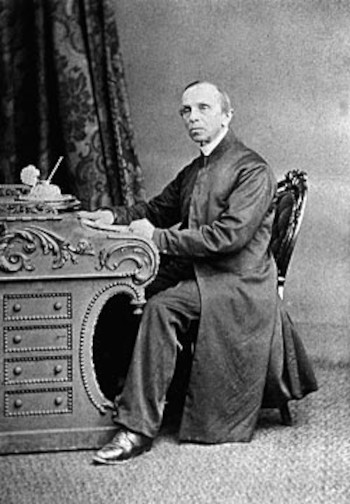
source: Wikimedia commons
The son of a cruel nobleman, who regularly beat not only the servants, but also his wife, Vladimir’s mother, was very sensitive to this cruelty and concluded it that questioned not only the traditional world of tsarism, family, and order but also Christianity itself. In his later memoirs, he described his father’s rage as follows:
“ I can still hear their wails as he whipped them in the stables. My mother sent me to my father to intercede for Vaska or Jaška. I cried, begged, kissed my father’s hands and sometimes mitigated the cruelty of their Russian fate… But my mother was also a victim herself… Once she took me by the hand, led me to a corner, told me to kneel next to her in front of the icon of St. Nicholas, and in tears said : “Oh, Saint Nicholas, you see how unfairly we are treated!” Meanwhile, in the next room, a party was taking place… But the queen of this party was not mine mother, but another woman… This other woman was the wife of our colonel, a cunning and beautiful Pole, with whom my father had an almost open affair.”
After a short career as a university professor in Moscow, he became a nihilistic dissident, of the kind that was numerous in Russia in the 19th century, and which the Russian novelist Dostoyevsky describes vividly in his novel Besy . He decided to emigrate to the West and wrote a personal letter to the Tsar about his decision.
In Europe, he became a member of bohemian literary groups, inclined to the same romantically tinged nihilism as himself. He made a name for himself as a poet with classicizing tendencies in his style and an iconoclastic tendency in his content. It was an even bigger shock for all his friends and acquaintances when he decided to convert to the Catholic faith in 1840.
His conversion was total and thorough. He decided to become not only a Catholic but also a Catholic priest. Tsar Nicholas I was so enraged by this news that he stripped him of Russian citizenship, nobility, and any inheritance. He was also banned from returning to Russia. However, this only strengthened Pečerin in his decision. He became a member of the Redemptorist order, whose mission was to work among the poorest of the poor. He lived in a monastery in Clapham, near London, and later in Ireland, where his oratorical skills attracted large audiences and made Pecherin’s sermons very popular.
After his departure to Ireland, he lived excellently with the mentality of the people there and even came into the wider historical consciousness of the British Empire as the last Catholic priest, tried in 1855 for violating the Protestant “blasphemy” law, that is, in fact, for questioning Protestant heresies. Pecherin, who as a local Catholic priest was at the head of the campaign against immoral literature, while burning dubious books also threw into the flames the Protestant Bible of King James I. Stuart, all this on Guy Fawkes Day, a Catholic dissident from the time of King James who was executed for allegedly planning to blow up the English Parliament. On this day, English Protestants celebrate the capture of alleged Catholic traitors.
Newspapers ran ahead in anti-Catholic hysteria, but the jury acquitted Pečerin, much to the indignation of Protestant groups. The enthusiastic Irish Catholic population in Dublin wildly celebrated his freedom and even composed two songs about him that are still part of Irish folklore. The case had a different response in Russia, where anti-Catholic propaganda portrayed Pecherin as a typical “Jesuit” blaspheme while hushing up the liberating finale.
In 1856, Pecherin was invited by Cardinal Newman to preach on St. Patrick’s Day in the chapel of the newly founded University of Dublin. There, Pečerin openly took the side of the Irish national liberation struggle. Contemporary reports praise his English and rhetoric, which were said to be the envy of even the most experienced English speakers, adding that many cried during the sermon.
In 1862, after 20 years of missionary service, Pecherin was allowed to leave the Redemptorists at his request. To save him from poverty, Pecherin was assigned by the Archbishop of Dublin, Cardinal Paul Cullen, as chaplain to the Sisters of Mercy at the Mater Misericordiae Hospital. Pecherin spent the last 23 years of his life there while living as a virtual hermit.
Although it may seem that way at first glance, he never forgot about Russia. He once wrote about his split between two worlds:
” I happen to lead two lives: one here, the other in Russia. I can’t get rid of Russia. I belong to him by the very essence of my being. It is thirty years since I settled here – but I am still a stranger, my spirit and my dreams do not wander here – at least not in the environment to which I was bound by fateful necessity. I don’t care if anyone here will remember me when I die, but Russia is a different matter. Oh, how much I wish to leave some memory of myself on Russian soil, at least one printed page that will bear witness to the existence of a certain Vladimir Sergeyevitch Pecherin .”
However, those Russians who decided to follow him in the most important decision of his life, converting to the Catholic faith, do not doubt at all about the significance of his existence for Russia. His life was a small but significant contribution to Our Lady of Fatima, at her request for the consecration of Russia.
Ivan Sergejevich Gagarin – from a descendant of the medieval nobility to a Jesuit
A descendant of the ancient Russian nobility, who belonged to the rulers of Starodub in the Middle Ages, and the son of Prince Sergei Ivanovich Gagarin and Varvara Mikhailovna Pushkinova, he was born in 1814. His origins and talents predestined him for a diplomatic career. His uncle worked as an ambassador in Munich, where young Ivan was sent in 1833 as chief actuary.
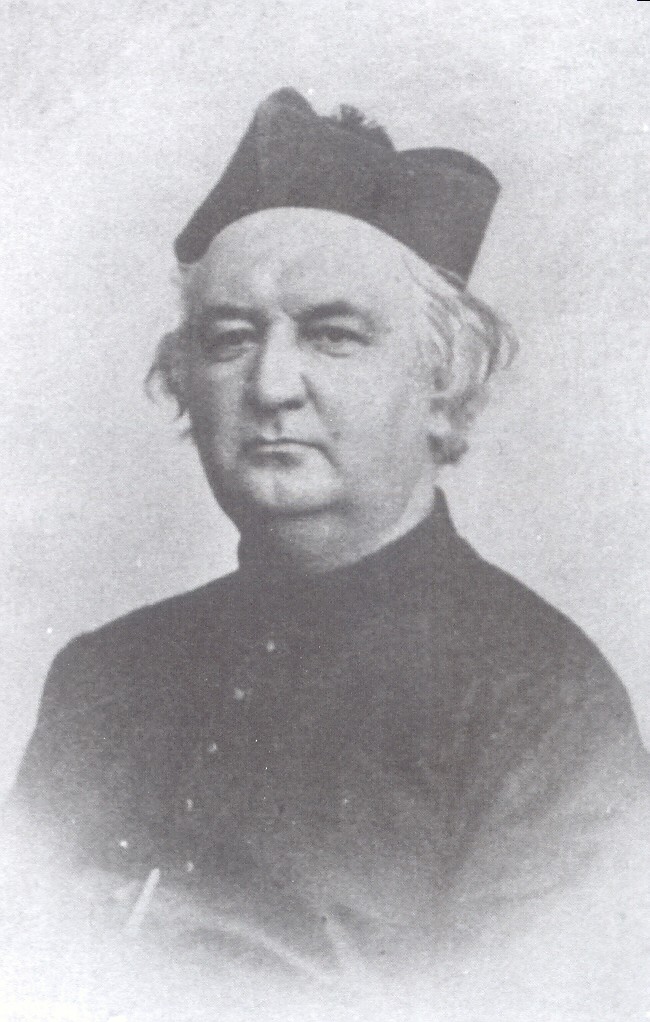
source: Wikimedia commons
In Munich, he met the German philosopher Friedrich Schelling and one of the most talented lyricists of Russian poetry of the 19th century, Tyutchev, who also worked in the diplomatic service. Gagarin became his protector and mediated the publication of his poems in Pushkin’s magazine Sovremennik , which, given his mother’s original name, was not a problem for him.
In 1838, IS Gagarin was appointed junior secretary at the embassy in Paris, and his extensive scientific interests led him to do a lot of work in history and Slavic studies in addition to his diplomatic services. Of course, these were not his only distractions from the boring administrative work at the embassy. The circle of this article essentially closes with the information that in Paris Gagarin became a regular visitor to the salon of his distant relative, whom we introduced to readers first in our modest medallion – Sofie Petrovna Svečina. We need not doubt that there he came under the fire of her Catholic zeal.
That probably started his own spiritual search. Subsequent study of church history and communication with educated Catholics led him to believe in the truth of Catholicism, and on April 19, 1842, he officially joined the Catholic Church. The tsar’s sanctions were not as severe as Pecherin’s, but in the same year, he was dismissed from the Ministry of Foreign Affairs and deprived of the title of chamber cadet.
Freeing himself from his obligations to the service of his native country, on August 12, 1843, he entered the real lion’s den, which was undoubtedly the Jesuit order for every Russian Orthodox Christian at that time, perceived as a sophisticated trap of Latin tricksters for spiritual entrapment and deception of naive Christians. After two years of novitiate, he later took his vows in the Society of Jesus under the religious name Xavier.
After entering the religious order, he was ordained as a priest, studied theology and taught church history at several Jesuit colleges. However, he did not forget his compatriots and the desire for the return of Russia to one Catholic fold accompanied his life until the end. This effort was crowned by the publication of many works on the theme of papal primacy and the uniqueness of the Catholic faith. The fact that in the mid-1850s he became an active member of the expanding Paris circle of Russian Catholics, which, in addition to him, included IM Martynov, EP Balabin, SS Dzhunkovskij testifies to the fact that his efforts, at least on the level of individual destinies, were not without effect and others.
In 1856, Gagarin published his first French essay with the characteristic title Will Russia become Catholic ? , which was soon translated into Russian. The work was well received in French Catholic circles, but provoked sharp criticism from Orthodox figures. What followed was what he had been spared so far: he was forbidden to enter Russia, he was deprived of nobility, citizenship, property, and inheritance.
The fact that the conversion of the Eastern Slavs permanently occupied his mind is also evidenced by the fact that in 1855 he created the Society of St. Cyril and Methodius in Paris, one of the first to be established. In 1857-1858, he published the monumental six-volume Theological, Philosophical and Historical Studies, which contained his articles of theological and historical content about Russia. It is already clear from the scope to what extent he attached importance to the conversion of the Russian nation.
In 1859 he went to Jerusalem, where he originally intended to stay for a long time, but health problems forced him to return to France in 1865. The rest of his life was devoted to the pedagogic, literary and scientific activity to which he dedicated his entire life and which was to lead his compatriots to the knowledge of the Truth.
He died in Paris in 1882 and is buried in the famous Paris cemetery of Montparnasse.
His work forms a substantial reservoir of arguments, suggestions, and exhortations, which brought several of his compatriots into the bosom of the Catholic Church. Let’s hope that this path will not remain blocked for the members of this great nation in the future.
Posted in Nezaradené
1 Comment
Love your enemies. Lk 6,27
These three words present one of the most challenging challenges of the New Testament! It becomes even more demanding after Jesus explains how exactly we are to love our enemies. We should not only not harbor hatred toward people who hurt us, but we should show love to them actively and concretely. We are to “do good to those who hate us, bless those who curse us, pray for those who despite fully use us” (cf. Lk 6, 27-28).
This command may seem impossible, even unfair. Why should we do good or bless people who have harmed or want to harm us? Because this is how God loves us! And when we do the same, “we will be sons of the Most High, for he is good even to the ungrateful and the bad” (Lk 6, 35). Jesus himself set a high bar in love: he loved even people who wanted to kill him. He even prayed for the people who crucified him and forgave them (23, 34). This is how Jesus loved his enemies; this is how he loved us.
During her service to the sick, Saint Catherine of Siena often felt God was prompting her to show love to her neighbors. More than once, some of the women she cared for got angry with her and treated her with hostility. However, despite their hurtful words, Katharina continued to nurse their wounds and care for them without complaining or defending themselves.
One of them, Ballerina, was so moved by Catherine’s love that she converted on her deathbed. So, how can you love your enemies? For example, by showing love to a family member who is always whining. Or by asking God to bless the person who slanders you. You can also ask God to heal someone sick, even though they have mistreated you. Whenever you do such things, you are loving like Jesus. What’s more, you become a channel of God’s grace that heals and washes away the poison of bitterness. It is not easy, but it is possible. Jesus poured his love into our hearts, and his love overcomes all.
Jesus, fill me with your love so I can love my enemies.
Posted in Nezaradené
Leave a comment