How often should confession be made? Is there any church regulation that if a person wants to receive the Eucharist more often, he is obliged to attend the sacrament of reconciliation every month? I went to confession on the first Friday of July, then every Sunday I went to Holy Mass and Holy Communion. After that, an older friend assured me that as long as I kept myself in sanctifying grace without major sin, I could continue to receive the Eucharist, without the First Friday confession. So I went to Holy Communion in August as well, but now I don’t know if I committed sacrilege.
Nothing is worse than having to prescribe a relationship in the spiritual life. For example, the one that at least once a year confesses and receives the Sacrament of the Altar. The basic equipment of a person should include the inner and outer truthfulness of everything he lives and does.
And so he will never again be troubled by the thought that he has to go to confession (for example, before Christmas). He will be much more excited about the idea that he can go clean his soul from rust again because it is already ripe for it again.
HOW OFTEN TO CONFESS
Just imagine what it would be like if, next to the church order to confess at least once a year and receive the Sacrament of the Altar, another new order appeared – to lie down with your husband at least once a year… Because it is assumed that spouses understand, that even this side of coexistence helps to strengthen their relationship and mutuality. But let’s move on.
When you write, Evka, about regular Holy Communion, i.e. every seven days, my idea of regularity differs from yours. What is the Eucharist? The dogmatic answer is: the living Christ, is present there. And since we have holy masses all over Slovakia from Monday to Saturday, why not go and meet this Christ on a weekday and accept his radiant presence as food reinforcement on the path of life?!
The only condition for such a meeting is a pure heart or, as your friend rightly advised you, sanctifying grace. If a person approaches the Eucharist in this way under all circumstances, he need not fear sacrilege. However, one must be very careful about the two extremes.
SCRUPULOUS AND LAX APPROACH
What I still know from the holy confessions is the iron rule that people who have a center of gravity in regulations, orders, prohibitions, and regulations, carry with them a terrible boulder of scrupulousness – scrupulousness. They keep asking themselves: is this still okay? Did I do something wrong? Am I not committing sacrilege right now?
It is even a customary practice of many Christians to this day that if, after Holy Confession, he misses several Holy Masses in the following days, he no longer has the right to attend the Eucharist, because he missed it – apparently in the spirit of the idea that nothing interrupted is good… In addition, he does not look at whether it is in sanctifying grace, which is decisive for communion! These people seem to forget the freedom that Jesus Christ won for them on the cross.
Exactly according to the Holy Scriptures “Where the Spirit of the Lord is, there is freedom”. But on the other hand, I also read freedom in some confessions as follows: I have no sins, everything in my life is good as it is, because Saint Augustine also said “Love and do what you want”. So “love” has such a crazy meaning for some people that “do what you want” can no longer apply! Why can’t he? Because even love has its own rules!
When a small child goes “to the cross” during Holy Communion, he usually goes with his parents or grandparents. When I give communion to their guides, I often realize the mutual similarity and think, this is how parents looked 30 years ago, grandparents 60 years ago. Or this is what the child will look like after the mentioned years. We don’t just inherit the outward appearance. Many times also character traits. And maybe even more. The transmission of physical resemblance is automatic, based on genes, without the parents’ knowledge. It seems that the transmission of character traits is not so automatic anymore. Why? Because the parent, by shaping his nature, passes on an already guided (or unguided) child. By shaping himself, he helps his children and the environment.
Perhaps that is why we celebrate the Feast of the Sacrifice of the Virgin Mary today, even though it was slowly gaining ground in the West and was abolished after the Council of Trent. It was canceled because it is based on a New Testament apocryphal writing called Jacob’s First Gospel (lat. Protoevangelium Jacobi). Although the Second Vatican Council violated the feasts without a historical and biblical basis, today’s was retained, despite its creation at the instigation of the Apocrypha, because the Virgin Mary ultimately sacrificed herself to God and the role he assigned to her in the history of salvation. With this, she incentivizes all Christians to follow her in this sacrifice.
And to the Virgin Mary, the devotion was handed down from her parents, who brought her to the temple as a child and thus coded the devotion for her. This is what Mary wants to pass on to us. So what should we do so that Mary’s son can also say about us: “Behold, my mother and my brothers.” For everyone who does the will of my Father who is in heaven is my brother and sister and mother.” For help, let’s take the ancient mystical author Pseudo-Marius, who compares the soul to a great city. In the middle is a beautiful castle, andnext to it is the market and all the institutions that belong to the town. The enemy, i.e., original sin, has occupied the surroundings of the castle; this is what our senses symbolize. And that is why we are so often worried. From the market, the sound also reaches the castle. And there, in the depths of our soul, we can accept or reject these temptations.
In the castle of our inner soul, we should not let sin go. St. Teresa from Avila perhaps inspired by this author, wrote “The Castle Inside.” He says that we can dialogue with our Lord without being disturbed by the market. However, and you may be right, we are often internally divided. That market, figuratively speaking, reaches too far into the castle of our soul. And that is often unpleasant and tiring for us. A person following Mary avoids sin and purifies his heart to return to inner peace. The goal of asceticism – spiritual exercise is to purify one’s thoughts in the depths of one’s heart.
Because we must not stay only with moral teachings. It is necessary to learn a relationship with God, which should occur more precisely in the depths of the heart and not through external actions. That is why Jesus is so critical of the Pharisees. This may have the consequence that many people outwardly observe the commandments, but as if they still consider belonging to the Church, faith, and keeping the commandments a burden. It’s like when the Israelites left Egypt. They kept looking behind the greasy pots. Moses taught them something else. That is why a person is doing wrong when he wants to treat restlessness with drugs, medicines, and false mysticism.
Christian spirituality offers us opportunities to gain peace. It is precisely from the point of view of heredity mentioned in the introduction that we realize that the drama of the martyrdom and death of the Son of God reflects the drama of a person who is entangled in hereditary and personal sin. The situation of all humanity, including each of us, is serious when the God-Man “had” to accept such a cruel fate: he had to suffer a lot, be rejected, despised, and crucified (cf. Lk 9, 22). Therefore, let us realize that we were sacrificed to God at baptism. The great preacher and saint St. In his sermon to the newly baptized, John Chrysostom describes what baptism makes of us with these words: “The baptized are not only free, but also holy, not only holy, but also righteous, not only righteous, but also sons, not only sons but also heirs, not only heirs but also brothers of Christ and not only brothers of Christ but also co-heirs, not only co-heirs but also members, not only members but also a temple, not only a temple but an instrument of the Spirit.”
In the book Restlessness of God, the Dutch painter Jean Verkade (representative of Nabism) tells how he became a Christian. Among other things, he writes: Intellectually, I got closer and closer to the Church. I was only afraid of the obligations I had to take on, and I could not yet genuinely believe. I told the priest. He was unsurprised and told me: “Unless you are baptized, you cannot believe as we do because the supernatural virtue of faith is the grace we receive at baptism. When you are baptized, all difficulties and doubts will likely disappear. And so it happened.” So we inherited a lot of goodness. We can follow the Virgin Mary.
In today’s part of the series about lesser-known or even well-kept converts, we will talk about a very specific group within this species. Their motivation, from the point of view of many of today’s observers of the crisis in the Catholic Church, who are inclined to easy and superficial solutions (see for example Rod Dreher), can appear confused and ill-conceived. After all, according to the common opinion of contemporary followers of ecumenism, the Orthodox Church differs from the Catholic Church only in that it does not recognize the office of the Pope, or even according to Russophiles or Slavophiles, the contemporary Orthodox Church is in much better condition than the contemporary Catholic Church.
With the first one, we can first say that the Catholic Church differs from the Orthodox Church primarily in that it is – true. The Catholic Church is the Church that was founded by Jesus Christ, the Son of God and continues unbroken to this day. The Orthodox Church in the so-called It separated the Great Schism from the Catholic Church and exists outside of its communion. However, it is not only a matter of separation from Rome. The Orthodox Church has adopted many heterodox elements during the centuries of separation so that in its case it is no longer just a matter of the notorious “non-recognition of the Pope” or the dispute over the word ” filioque “. Suffice it to mention for illustration at least the dogma of the Immaculate Conception, which the Orthodox Church does not recognize. It should also be mentioned, for example, its recognition of divorces, under certain circumstances.
Others who adore the Orthodox Church as an oasis of tradition and as their easy escape from the crisis in the Catholic Church should be reminded that the Church is a timeless institution and its teaching is the Truth revealed by God, while this teaching has the fullness of all the means of salvation for almost two thousand years. The fact that nowadays many members and representatives of the Holy Apostolic and Catholic Church distort or even deny this Truth cannot change the fact that it is the Truth and the only way to salvation.
The actions of Catholic conservative admirers of the Orthodox Church are reminiscent of the reaction of a mathematics student to a professor who teaches the subject badly, and in response to this confusion, the student instead of learning the correct procedure, despite the professor’s mistakes, resigns from mathematics as such. He will be satisfied with guessing the result, happy that until he worked on the correct result under the professor’s guidance, he hit something by guessing. However, the solution is to learn mathematics correctly, which is independent of the existence and mistakes of one professor.
Of course, no one will deny that the preservation of tradition in the Orthodox Church far surpasses all Protestant and apostate sects. However, it is all the more important to understand what led Russian converts to the Catholic faith to convert. It was not the beauty of the ceremonies, nor the antiquity, but the Truth of the Faith, the certainty of the dogmas and the historical credibility of what the Catholic Church proclaims. These converts deserve our admiration more than converts from dull and dry Protestantism, or even from the folly of pagan idolatry. At first glance, it seems that the Catholic Church did not give them much more than what they already had. However, their search had to focus much more intensively on the essential, what lies behind the beauty of the liturgy and the treasure of tradition, what distinguishes the Orthodox Church from the Catholic Church – the Truth.
Sofia Petrovna Svečina – owner of the conversion salon
At the time when the Russian nobility began to think about dealing with the Catholic faith at all, that is, at the beginning of the 19th century after the Napoleonic wars, the fiasco of the French Revolution and at the time of the conservative Catholic revival, framed by figures such as Joseph de Maistre, René de Chateaubriand or Louis de Bonald, became the first known convert from the homeland of St. Vladimíra, daughter of Russian State Secretary Peter Alexandrovich Sojmonov.
Sofia Petrovna Svečina source: Wikimedia commons
She was born in 1782 in Moscow and from childhood showed a deep talent for acquiring a broad education. She acquired an excellent knowledge of the main European languages (Italian, English, French, and German), while her knowledge of the classical languages was also excellent: ancient Greek, Latin, and Hebrew. As the daughter of a leading noble family, she became a lady-in-waiting to Empress Maria Fyodorovna.
At the age of seventeen, at her father’s wish, she married the much older military governor of St. Petersburg and General Nikolai Sergeevich Svechin, a widower who was already 42 years old at the time. The marriage did not deviate from the framework of noble marriages of the time and was relatively happy. However, soon after the marriage, her father as well as her husband found themselves in the disfavor of the mentally unstable Czar Paul I, as a result of which the father died of a stroke and the husband had to resign from his office.
Young Sofia, who could not have children of her own, but lovingly cared for her adopted daughter, under the pressure of these family and personal dramas, plunged into her inner world, becoming an even more avid reader, devouring Western literature and philosophy, so fashionable in the times salons of the Russian nobility. In one of these salons, Sofia fatefully meets a well-known French emigrant, a refugee from the horrors of the French Revolution and, most importantly, an ardent Catholic, Chevalier d’Augard. His captivating presentation and apology of the Catholic faith dug deep into Sofia’s soul, so much so that she began to search for members of this small French diaspora in Russia.
In this search, she finally came into contact with the famous Joseph de Maistre, who at that time was working in Russia as the ambassador of the monarch of the Kingdom of Sardinia. His influence in the circles of the Russian nobility at the time went so far that Tsar Alexander I himself began to openly sympathize with Catholicism. At that time, in the eyes of the Russian nobility, the Catholic faith was stripped of its forbidden fruit, and soon the first conversions appeared in these circles.
Sofia’s was neither light nor short. She was plagued by doubts and could not make up her mind for a long time. However, in the end, an event that decisively put an end to the Russian nobility’s flirtation with Catholicism probably helped her definitive conversion. Under the pressure of the Orthodox hierarchy, the government decided to expel the Jesuits, who had been tolerated until then, in order to persuade the Russians to convert to the Catholic faith. Faced with the threat that she too would now be condemned by society for her faith, perhaps Sofia realized her duty to God and openly confessed her sympathies towards the Catholic Church.
Czar Alexander, who had previously also made no secret of his sympathies for Catholicism despite signing the decree to expel the Jesuits, maintained his favor with Sofia. However, the rest of society did not, so she decided to emigrate to Paris in 1816, where she definitively and officially accepted the Catholic faith. In Paris, her salon soon became a sought-after place where French celebrities of the time met and where many conversions from among the Russian nobility took place. Her captivating personality and even more her gift of conversation, which Lacordaire attributed to her as “the great master of conversation”, together with her intelligence, education, and zeal for the Catholic faith, formed a most attractive mixture that led to salvation many a wandering soul.
In her salon, such aces of the French education of the time as Abbot Félix Dupanloup, Alexis de Tocqueville, Paris Archbishop Hyacinthe-Louis de Quélen, Prosper Guéranger, Victor Cousin, or her compatriot, Prince Ivan Sergejevich Gagarin, were frequent guests.
Thanks to her and in her salon, Countess Sofia Rostopčinová, another Russian convert and later French writer, author of the famous children’s books Sofia’s Troubles, Somárik’s Memory, and Little Good Girls , met her future husband, Count de Ségur.
She became a permanent part of French literature thanks to her rich correspondence with the intellectual elite of the time. Her correspondence with Alexis de Tocqueville, Count Fréderic de Falloux and Viscount Armand de Melun stands out.
Sofia Petrovna Svečina died in Paris in 1857, and her reputation as a defender of the Catholic faith was so great that shortly after her death rumors spread about her canonization. And even though it did not happen, and even if she still had to atone for some sins in Purgatory, it is likely that the prayers of the multitude that she converted to the true faith shortened her temporary suffering and now she is enjoying with them in Heaven.
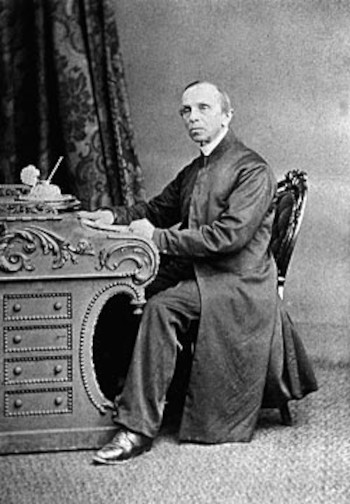
Vladimir Sergejevich Pecherin – from a nihilist to an Irish priest
The person and especially the life of the poet Pečerin are significantly more bizarre than the ultimately peaceful life of Sofia Svečina in the Parisian salons. He was born in 1807, when she was already enchanting the cream of St. Petersburg, at the very opposite end of Russia, in seaside Odessa.
Vladimir Sergejevich Pecherin source: Wikimedia commons
The son of a cruel nobleman, who regularly beat not only the servants, but also his wife, Vladimir’s mother, was very sensitive to this cruelty and concluded it that questioned not only the traditional world of tsarism, family, and order but also Christianity itself. In his later memoirs, he described his father’s rage as follows:
“ I can still hear their wails as he whipped them in the stables. My mother sent me to my father to intercede for Vaska or Jaška. I cried, begged, kissed my father’s hands and sometimes mitigated the cruelty of their Russian fate… But my mother was also a victim herself… Once she took me by the hand, led me to a corner, told me to kneel next to her in front of the icon of St. Nicholas, and in tears said : “Oh, Saint Nicholas, you see how unfairly we are treated!” Meanwhile, in the next room, a party was taking place… But the queen of this party was not mine mother, but another woman… This other woman was the wife of our colonel, a cunning and beautiful Pole, with whom my father had an almost open affair.”
After a short career as a university professor in Moscow, he became a nihilistic dissident, of the kind that was numerous in Russia in the 19th century, and which the Russian novelist Dostoyevsky describes vividly in his novel Besy . He decided to emigrate to the West and wrote a personal letter to the Tsar about his decision.
In Europe, he became a member of bohemian literary groups, inclined to the same romantically tinged nihilism as himself. He made a name for himself as a poet with classicizing tendencies in his style and an iconoclastic tendency in his content. It was an even bigger shock for all his friends and acquaintances when he decided to convert to the Catholic faith in 1840.
His conversion was total and thorough. He decided to become not only a Catholic but also a Catholic priest. Tsar Nicholas I was so enraged by this news that he stripped him of Russian citizenship, nobility, and any inheritance. He was also banned from returning to Russia. However, this only strengthened Pečerin in his decision. He became a member of the Redemptorist order, whose mission was to work among the poorest of the poor. He lived in a monastery in Clapham, near London, and later in Ireland, where his oratorical skills attracted large audiences and made Pecherin’s sermons very popular.
After his departure to Ireland, he lived excellently with the mentality of the people there and even came into the wider historical consciousness of the British Empire as the last Catholic priest, tried in 1855 for violating the Protestant “blasphemy” law, that is, in fact, for questioning Protestant heresies. Pecherin, who as a local Catholic priest was at the head of the campaign against immoral literature, while burning dubious books also threw into the flames the Protestant Bible of King James I. Stuart, all this on Guy Fawkes Day, a Catholic dissident from the time of King James who was executed for allegedly planning to blow up the English Parliament. On this day, English Protestants celebrate the capture of alleged Catholic traitors.
Newspapers ran ahead in anti-Catholic hysteria, but the jury acquitted Pečerin, much to the indignation of Protestant groups. The enthusiastic Irish Catholic population in Dublin wildly celebrated his freedom and even composed two songs about him that are still part of Irish folklore. The case had a different response in Russia, where anti-Catholic propaganda portrayed Pecherin as a typical “Jesuit” blaspheme while hushing up the liberating finale.
In 1856, Pecherin was invited by Cardinal Newman to preach on St. Patrick’s Day in the chapel of the newly founded University of Dublin. There, Pečerin openly took the side of the Irish national liberation struggle. Contemporary reports praise his English and rhetoric, which were said to be the envy of even the most experienced English speakers, adding that many cried during the sermon.
In 1862, after 20 years of missionary service, Pecherin was allowed to leave the Redemptorists at his request. To save him from poverty, Pecherin was assigned by the Archbishop of Dublin, Cardinal Paul Cullen, as chaplain to the Sisters of Mercy at the Mater Misericordiae Hospital. Pecherin spent the last 23 years of his life there while living as a virtual hermit.
Although it may seem that way at first glance, he never forgot about Russia. He once wrote about his split between two worlds:
” I happen to lead two lives: one here, the other in Russia. I can’t get rid of Russia. I belong to him by the very essence of my being. It is thirty years since I settled here – but I am still a stranger, my spirit and my dreams do not wander here – at least not in the environment to which I was bound by fateful necessity. I don’t care if anyone here will remember me when I die, but Russia is a different matter. Oh, how much I wish to leave some memory of myself on Russian soil, at least one printed page that will bear witness to the existence of a certain Vladimir Sergeyevitch Pecherin .”
However, those Russians who decided to follow him in the most important decision of his life, converting to the Catholic faith, do not doubt at all about the significance of his existence for Russia. His life was a small but significant contribution to Our Lady of Fatima, at her request for the consecration of Russia.
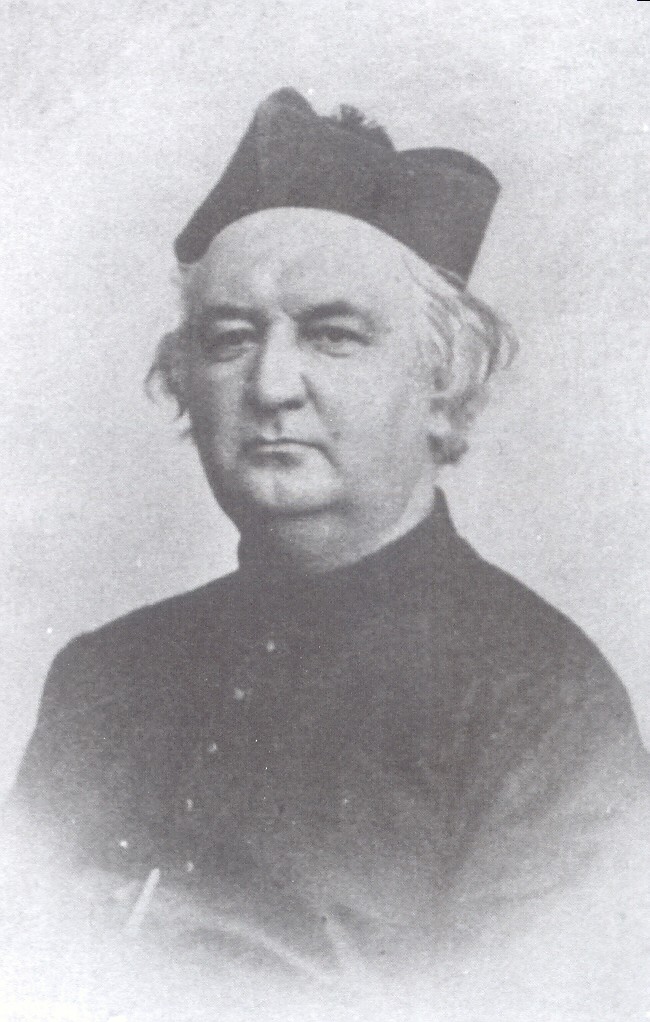
Ivan Sergejevich Gagarin – from a descendant of the medieval nobility to a Jesuit
A descendant of the ancient Russian nobility, who belonged to the rulers of Starodub in the Middle Ages, and the son of Prince Sergei Ivanovich Gagarin and Varvara Mikhailovna Pushkinova, he was born in 1814. His origins and talents predestined him for a diplomatic career. His uncle worked as an ambassador in Munich, where young Ivan was sent in 1833 as chief actuary.
Ivan Sergeyevich Gagarin source: Wikimedia commons
In Munich, he met the German philosopher Friedrich Schelling and one of the most talented lyricists of Russian poetry of the 19th century, Tyutchev, who also worked in the diplomatic service. Gagarin became his protector and mediated the publication of his poems in Pushkin’s magazine Sovremennik , which, given his mother’s original name, was not a problem for him.
In 1838, IS Gagarin was appointed junior secretary at the embassy in Paris, and his extensive scientific interests led him to do a lot of work in history and Slavic studies in addition to his diplomatic services. Of course, these were not his only distractions from the boring administrative work at the embassy. The circle of this article essentially closes with the information that in Paris Gagarin became a regular visitor to the salon of his distant relative, whom we introduced to readers first in our modest medallion – Sofie Petrovna Svečina. We need not doubt that there he came under the fire of her Catholic zeal.
That probably started his own spiritual search. Subsequent study of church history and communication with educated Catholics led him to believe in the truth of Catholicism, and on April 19, 1842, he officially joined the Catholic Church. The tsar’s sanctions were not as severe as Pecherin’s, but in the same year, he was dismissed from the Ministry of Foreign Affairs and deprived of the title of chamber cadet.
Freeing himself from his obligations to the service of his native country, on August 12, 1843, he entered the real lion’s den, which was undoubtedly the Jesuit order for every Russian Orthodox Christian at that time, perceived as a sophisticated trap of Latin tricksters for spiritual entrapment and deception of naive Christians. After two years of novitiate, he later took his vows in the Society of Jesus under the religious name Xavier.
After entering the religious order, he was ordained as a priest, studied theology and taught church history at several Jesuit colleges. However, he did not forget his compatriots and the desire for the return of Russia to one Catholic fold accompanied his life until the end. This effort was crowned by the publication of many works on the theme of papal primacy and the uniqueness of the Catholic faith. The fact that in the mid-1850s he became an active member of the expanding Paris circle of Russian Catholics, which, in addition to him, included IM Martynov, EP Balabin, SS Dzhunkovskij testifies to the fact that his efforts, at least on the level of individual destinies, were not without effect and others.
In 1856, Gagarin published his first French essay with the characteristic title Will Russia become Catholic ? , which was soon translated into Russian. The work was well received in French Catholic circles, but provoked sharp criticism from Orthodox figures. What followed was what he had been spared so far: he was forbidden to enter Russia, he was deprived of nobility, citizenship, property, and inheritance.
The fact that the conversion of the Eastern Slavs permanently occupied his mind is also evidenced by the fact that in 1855 he created the Society of St. Cyril and Methodius in Paris, one of the first to be established. In 1857-1858, he published the monumental six-volume Theological, Philosophical and Historical Studies, which contained his articles of theological and historical content about Russia. It is already clear from the scope to what extent he attached importance to the conversion of the Russian nation.
In 1859 he went to Jerusalem, where he originally intended to stay for a long time, but health problems forced him to return to France in 1865. The rest of his life was devoted to the pedagogic, literary and scientific activity to which he dedicated his entire life and which was to lead his compatriots to the knowledge of the Truth.
He died in Paris in 1882 and is buried in the famous Paris cemetery of Montparnasse.
His work forms a substantial reservoir of arguments, suggestions, and exhortations, which brought several of his compatriots into the bosom of the Catholic Church. Let’s hope that this path will not remain blocked for the members of this great nation in the future.
These three words present one of the most challenging challenges of the New Testament! It becomes even more demanding after Jesus explains how exactly we are to love our enemies. We should not only not harbor hatred toward people who hurt us, but we should show love to them actively and concretely. We are to “do good to those who hate us, bless those who curse us, pray for those who despite fully use us” (cf. Lk 6, 27-28).
This command may seem impossible, even unfair. Why should we do good or bless people who have harmed or want to harm us? Because this is how God loves us! And when we do the same, “we will be sons of the Most High, for he is good even to the ungrateful and the bad” (Lk 6, 35). Jesus himself set a high bar in love: he loved even people who wanted to kill him. He even prayed for the people who crucified him and forgave them (23, 34). This is how Jesus loved his enemies; this is how he loved us.
During her service to the sick, Saint Catherine of Siena often felt God was prompting her to show love to her neighbors. More than once, some of the women she cared for got angry with her and treated her with hostility. However, despite their hurtful words, Katharina continued to nurse their wounds and care for them without complaining or defending themselves.
One of them, Ballerina, was so moved by Catherine’s love that she converted on her deathbed. So, how can you love your enemies? For example, by showing love to a family member who is always whining. Or by asking God to bless the person who slanders you. You can also ask God to heal someone sick, even though they have mistreated you. Whenever you do such things, you are loving like Jesus. What’s more, you become a channel of God’s grace that heals and washes away the poison of bitterness. It is not easy, but it is possible. Jesus poured his love into our hearts, and his love overcomes all.
Jesus, fill me with your love so I can love my enemies.
Today we will look at a susceptible topic: the number of the saved. It is not about sensationalism, exact numbers, or “sending people to Hell”. It is about seeking and confronting the truth (which liberates). Christian love naturally leads us to desire the salvation of souls – first, our souls, and then all others. After all, “God wants all people to be saved and to know the truth”. But who wants to know her today? And right after that, Paul adds that there is only “one mediator between God and men – the man Christ Jesus” (1 Tim 2:4-5). Today, this second part is (un)intentionally forgotten. Therefore, let’s look again at what the Church teaches us about it.
In this first part, we will present the testimony of the Holy Scriptures and the statements of some Church Fathers and Teachers. In the second part, the sayings of many saints and the teachings of general councils and popes.
***
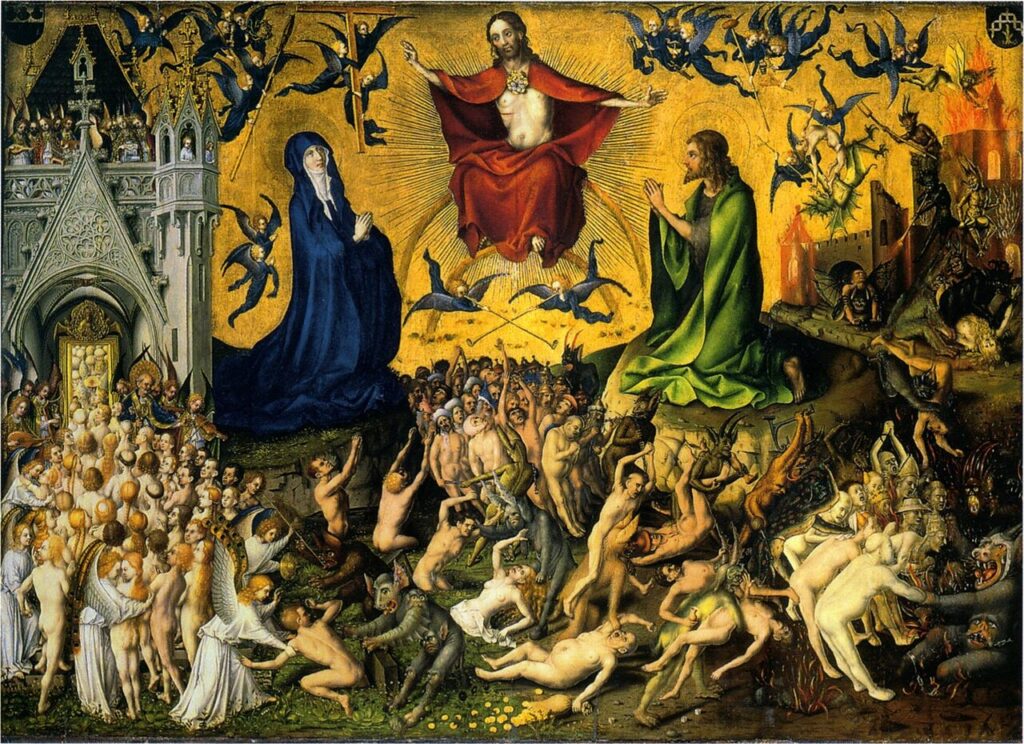
Stefan Lochner, The Last Judgment (ca. 1435)
Holy Scripture Lk 24.47: “… and in his (Jesus’) name, repentance for the forgiveness of sins will be preached to all nations, starting from Jerusalem .” Jn 3.36: “He who believes in the Son has eternal life, but he who does not believe in the Son, he will not see life and God’s wrath will rest on him (a more accurate translation of the Greek name = remains, continues ).” (That is, it was already on him before).
1 Tim 2,5-7: “For there is one God and one mediator between God and men – the man Christ Jesus, who gave himself as a ransom for all, as a testimony at the right time. And I am appointed as his herald and apostle – I speak the truth, I do not lie – a teacher of the Gentiles in faith and truth.”
1Pt 1,12: “And it was revealed to them (by the prophets) that they served you, not themselves, but what you’re now preachers of the gospel in the Holy Spirit, sent from heaven, which even the angels long to look at.”
1Cor 9,16: “After all, if I preach the gospel, I have nothing to brag about, it is my duty and woe to me if I did not preach the gospel.” (And woe would be to those to whom he would not preach).
Rom 10.8–17: But what does he say? ” The word is near you, in your mouth and in your heart”; namely the word of faith that we preach. Because if you confess with your mouth: “Jesus is Lord!” and believe in your heart that God raised him from the dead, you will be saved. For with the heart we believe unto righteousness, and with the mouth we confess unto salvation. After all, the Scripture says: “No one who believes in him will be put to shame.”
There is no difference between the Jew and the Greek, for the same is the Lord of all, rich to all who call on him: For everyone who calls on the name of the Lord will be saved. But how will they call upon him in whom they have not believed? And how will they believe in him of whom they have not heard? And how do they hear without a preacher? And how will they preach if they are not sent? As it is written: “How beautiful are the feet of those who preach good news.” But not all obeyed the gospel. Isaiah also says: “Lord, who believed what we preached?” That is, faith comes from preaching and preaching through Christ’s word.
Heb 11:6: “For without faith it is impossible to please God.”
Rom 1:18-32:
“God’s wrath from heaven is revealed against all ungodliness and unrighteousness of men, who hinder the truth by unrighteousness. After all, it is obvious to them what can be known about God; God revealed it to them . After all, what is invisible in him – his eternal power and divinity – can be known by reason from created things since the creation of the world; so they have no excuses. Although they knew God, they did not glorify him as God, nor did they give him thanks; but they were lost in their thoughts, and their foolish hearts were darkened. They said they were wise, and they became fools. They exchanged the glory of the immortal God for images depicting mortal man, birds, quadrupeds and reptiles. Therefore God gave them over to impurity according to the desires of their hearts; and so they dishonored their own bodies who exchanged God’s truth for a lie, worshiped creatures and served them rather than the Creator , who is glorified forever. Amen.
That is why God gave them over to shameless passions. Their women exchanged natural intercourse for unnatural intercourse. And likewise the men left the natural intercourse with the woman, and burned with lust for one another: men committed indecency with men. So they took upon themselves the well-deserved retribution for their wandering. And because they did not know how to value the knowledge of God, God gave them over to their perverted thinking , to do what is not proper, full of iniquity, malice, avarice, wickedness, full of envy, murder, strife, deceit, malice; they are gossipers, extortionists, hate God, insult others, are proud, haughty, invent evil, disobey parents, are unreasonable, unfaithful, heartless and merciless. Although they are well aware of God’s decree that those who do such things deserve death, they not only do it themselves, but also approve when others do it . ungodly and sinner ?”
1Sol 2,16:
“and they (the Jews) prevent us from preaching to the Gentiles so that they may be saved ; and so they are still fulfilling the measure of their sins. But the wrath of God has come to the brink of them.” (Because in 1 Thessalonians 1:9, the Holy Scripture testifies that before converting to Christ, these pagans from Thessalonica served idols ).
2 Thessalonians 1:8:
“to punish those who do not know God and those who oppose the gospel of our Lord Jesus in a fiery flame.”
Lucas van Leyden, The Last Judgment
Church Fathers and Teachers of the Churchof St. John Chrysostom (ca. 350 – 407), Church Father and Teacher of the Church ” We must not think that ignorance will be a sufficient excuse : because the time will come when we will be punished for our ignorance, when we will not be justified as much as our ignorance. ” (Hom. 26, in ep. Ad Rom.)
St. Augustine (354-430), Church Father and Teacher of the Church “We are to have perfect hatred for other religions, but we must have a discerning love for people who are pagans . Perfect discriminating love is only that in which we desire from the heart that the heathen or heretic should be converted and enter the True Church and thereby save his soul. On the contrary, perfect hatred is to leave the pagan or heretic in his delusion and tell him that he can remain in delusion because he will be saved anyway . This is evil of the first category and false love, which has its root in the evil spirit.” “All who believed in God from the foundation of the world and had a certain knowledge of him, lived in piety and righteousness, keeping the commandments, were without doubt saved by him” (Epistole ), but this does not apply to Gentiles. However virtuous such as Fabius, Scipio, Pythagoras, and Plato might appear, their virtues were only “beautiful vices” without righteousness, for righteousness is impossible without faith . Because righteousness means faith in God – not in any God, but in the one true God – and gratitude to Him. And since these men had never heard of the true God, they could not have faith and thus could not be righteous. “Gentiles who did not have faith in Christ are not righteous and do not please God, who cannot be pleased without faith…” (Contra Julianum Pelagianorum)
Now if anyone says, as the Pelagians did, that it is not just, that the Gentiles and the unbaptized children of the Gentiles should be punished. But it would be just if the entire race were condemned to eternal punishment. However, thanks to God’s infinite mercy, some are saved. But if someone asks a question and says that it is impossible to punish a person whose will is not free, Augustine answers that it is a mystery. God’s ways are not our ways, nor are His thoughts our thoughts. God’s justice is incomprehensible, unlike our justice, and cannot be measured by human standards. We just know that His will is perfectly just. And we have to stop there. This is Augustine’s teaching on the foundations of Law, Sin and Punishment in a nutshell.” (Ethics of St. Augustine)
St. Peter Kanízius (1521 – 1597), Teacher of the Church Against those who do not know about the things necessary for salvation (heading of the first author’s page in the Catechism, which he wrote and was the most used in the Church for a long time):
“No man must flee into the darkness of ignorance, that it may pretend an excuse for him. It is one thing not to know, and another to refuse to know. For the will is condemned in such a man who is said not to understand that he could do good. Yes, this very ignorance, which does not concern those who will not know, but those who simply do not know, does not excuse anyone from burning with eternal fire – if he did not believe because he never heard what he could believe (the gospel), maybe however, it will burn less. For it was not without reason that it was said:
“Pour out your anger on the nations that did not know you” (Jer 10:25). And what the apostle says: “When he comes in a flame of fire to take revenge on those who do not know God” (2 Thessalonians 1:8). “Because you have rejected knowledge, I will also reject you” (Hos, 4,6). “They said to God: Depart from us, we will not get used to knowing your ways” (Job 21,14). “If anyone does not know, he will not be known” (1 Cor 14:38). “Do not be like a horse and a mule, in which there is no understanding” (Psalm 31:9). “Do not stop listening to the teaching, my son, and do not be ignorant of the words of knowledge” (Pro 19,27). (A Sum of Christian Doctrine, 1555)
Vol. Alfonz Mária Liguori (1696-1787), bishop and Teacher of the Church ” All unbelievers and heretics are surely on the way to damnation. (The Incarnation, Birth and Infancy, 291-2)
At the end of this first part, I want to encourage us not only to read these statements but also to think about them…
The story of Saint Margaret shows how life can treat a person in a crazy way. She was born in Hungary in 1045 as the daughter of a British king who had fled the country. She grew up in England, became Queen of Scotland, and her remains now rest in Spain. But anyone who, like Saint Margaret of Scotland, firmly believes in divine providence will reach the high goal for which God has chosen them, even by crooked paths.
The fact that Saint Margaret was born in a foreign land, far from her homeland, is a clear sign of God’s providence. Out of this misfortune, the young princess found great happiness in that she saw with her own eyes the blessing that comes from a holy ruler. This ruler was the host of her parents, Saint Stephen of Hungary. The example that this prince, full of royal nobility, set for her in her youth was a guiding light for the salvation of the entire Scottish people when she herself became queen. So misfortune is not always misfortune, but can also be happiness.
When the royal family was later able to return to England, divine providence, which directs and guides everything for the best, soon showed itself for the second time in a new apparent misfortune. The father died, disputes over the throne broke out, and Margareta and her brother Edgar had to flee the country in a hurry. And because, as we all know, no misfortune comes alone, the storm drove the ship they were trying to use to reach the mainland far off course to the north, where it was wrecked on the Scottish coast. King Malcolm of Scotland welcomed the castaways hospitably, soon fell in love with Margareta, asked for her hand in marriage, and when she said yes to him, they celebrated their wedding. The fugitive princess had become a queen. So misfortune is not always misfortune, it can also be good fortune.
A little later, however, it turned out that the new happiness had brought with it a new misfortune. Malcolm was a daredevil and a quarrelsome man, and a miser at that, who committed many wrongs in his hot temper, and if this man had found a wife of the same kind, the misfortune would probably never have ended. Therefore, divine providence once again arranged that the hot-tempered king received a wife in Margareta who ennobled him and transformed him not only into a good person, but also into a capable ruler, so that the whole country was grateful to the queen.
Beautiful and happy years followed. The royal family was a haven of love and peace. Six sons and two daughters made the parents happy, and none of the children ever brought them disgrace. They all thrived; Margaret herself taught them to pray and explained the catechism and the Bible to them. But one should not think that the queen was squeamish in her upbringing. For example, if one of the princes was punished by a teacher for doing something wrong and complained to his mother about it, she would give him a second beating. Margaret looked after the poor of the country with royal generosity. She fed up to three hundred people a day. The noble woman also visited hospitals and prisons, considering it her privilege as a kind mother of the country to look after the poorest in particular.
Thirty blessed years passed through all this. Then, in one last great misfortune, divine providence came upon the good queen once more. Margaret was dying when she was told that her husband and her beloved son had fallen in battle. She folded her hands and prayed: “God, I thank you that you have visited me with this great suffering before my end, in order to cleanse me of the stains of my sins so that I can come to you in heaven.” Margaret had penetrated so deeply into the understanding of divine providence that turns all misfortune into happiness, up to the highest happiness, which consists in eternal bliss.
Two Wolves: One evening, an old Indian took his grandson and told him about the battle that goes on inside each person. He told him, “Boy, the battle inside each of us is between two wolves.” One is evil. It is anger, envy, jealousy, sadness, selfishness, rudeness, hatred, self-pity, falsehood, arrogance, and ego. The other one is good. It is joy, peace, love, hope, equanimity, modesty, kindness, empathy, generosity, faithfulness, compassion, and trust. The grandson thought about all this and after a minute asked, “And which wolf will win?” The old Indian replied: “The one you feed”.
This story is a metaphor for our life – for our heart, which is capable of doing good things as well as bad things. So a person can live as a saint, but also as a scoundrel. What does it matter? Of course, more things affect it, I’ll stop at one today. Today wewill talk about the virtues that every person can have, precisely the queen virtue of Wisdom. By the way, it is also one of the seven gifts of the Holy Spirit. If you want to know what the scriptures say about Wisdom, read the book. Look for God’s Wisdom, which will protect you from the evil way.
If one of you lacks Wisdom, let him ask God for it; he gives it to everyone in abundance and without reproach – and it will be given to him. The sound came to me together with Wisdom…(Wisdom 7:11) Wisdom is an inexhaustible treasure for people…(Wisdom 7:14)
Wisdom is not just something that I remember, that I naturally get hold of… something like a degree, it’s not scholarship, it’s not just theory, knowledge. As we have heard, wisdom is a gift from God, and God gives it to those who desire it, seek it, and can provide anything for Wisdom. So,Wisdom is the art of living, so I am always focused on the goal; I live in such a way that I want my good – salvation of the soul and eternal life. I want heaven, but my feet walk on solid ground (D. Bosco). So that they don’t write on my monument, here lies the one who didn’t know what he was living for.
So, a wise person tries to listen to God’s goodness and truth all his life. He is an explorer and a master who connects God’s truths with everyday life. He lives not only an ideology, but he is a mystic. Since he surrendered to God, he has experienced everything with Him. He does not attribute anything to himself at all; he knows that he did everything he got and could do, only thanks to God and together with Him. He is free and proud of his divine origin… How do I gain Wisdom? … source is St. scripture and Church Teaching, it is our personal experience, prayer, study, excellent people, and others. Wisdom makes itself known to man. Wisdom shines and does not fade; it is easily seen by those who love it, andit is found by those who seek it.
It overtakes and makes itself known to those who long for it. He who looks for her early in the morning does not need to exert himself because he will find her sitting by his door. To think about her is the height of reasonableness, but whoever watches for her will be worry-free. She goes round and seeks those worthy of her, appears to them on their paths, and walks to meet them. /Wisdom 6,12-16/
Story…. Like Sweden, where a man who sold barrels lived. He put them on a sled, harnessed a horse, and walked with them from village to village. Once, walking through the desert, he heard the howling of wolves when he was still far from the town. The horse was tired, and the howling could be heard getting closer. It was clear to him that they would not escape. But he still drove the horse. Suddenly, he noticed a moving point in front of him. It was the beggar, Frank. She certainly didn’t hear the wolves because she was walking towards them. The man thought: “If I let her go on, she will come under their teeth. While they are tearing her apart, I will buy time and probably manage to escape. If I take her on the sled, the wolves will tear us and the horse apart in a moment. But if I get free, I will live with regrets until death.” Thinking, he barely realized he was speeding past Frank. Now she, too, heard the howling. She wanted to scream, but didn’t make a sound out of fear.
Initially happy to escape the wolves, the man began to have regrets. He hasn’t done anything dishonest so far. “Let her have her way!” – and turned his horse. “Put it on!” – he exclaimed when he reached the old woman. After a while, the old woman says, “Why don’t you drop the barrels and relieve the horse? You can come for them tomorrow.” The man rejoiced at the good advice, surprised that he hadn’t figured it out. He entrusted the reins to France, gradually dropping the barrels to the ground. Wolves already, already catching up, were held back a little. “If it doesn’t help, I’ll go to the wolves myself so that at least you can save yourself,” Frank bravely offered. But the man said: “No need. You run to the village and call people to come here to help me!” He jumped down from the sled, and when the wolves approached, he deftly crawled under one of the heavy barrels. The clamp caught up, but she didn’t know how to handle iron frames and hardwood. She forgot about the horse and the cart. Called by an older woman, the people of the village dispersed the pack and rescued the man. A happy ending with a dramatic twist. We all want to see a happy ending in our lives. They say, “All’s well that ends well.” So that it will always be like that, I will at least behave like a barrel dealer or a beggar Frank. Even people from the village can address me. Everyone shows a certain courage; they are witnesses for each other, they help each other, sometimes a little advice, a word of encouragement, or a gesture of forgiveness is enough, and the clouds of fear disappear.
We heard the words of the Lord Jesus about the end of the world, about the signs of the last days. You say to yourself, nothing like that is happening yet; we can be calm; we don’t have to deal with eternity or the Lord God. After all, if it is going to happen, it won’t happen in a minute, but there will be enough time to put things in order. But with such an expression, such or similar reasoning, you escape the Lord God. You must have seen how a hare runs from a hunter to hide in its den.
Similarly, the human soul often tries to crawl into a lair, or, better said, it has a choice of five lairs: the inside of a person, sex, science, nature, and humanism. There are also five substitutes with which a person replaces God so he does not have to come into contact with him. The first replacement is the inside of a person. A person, tired of life, hopes that by diving into himself, some new secret about himself will appear and that it will save his life.
Today’s man is no longer like the people who lived in the three-dimensional world. They believed that heaven is above, hell is below, and the earth between them is a vestibule in which a person is for a specific time to say yes or no to eternal salvation. But over the centuries, people lost religious truths, morals declined, and people stopped considering themselves as inhabitants of the three-dimensional world. They limited their life to only one dimension: a house or apartment on this earth. And thanks to progress, evolution, and science, they feel that they can be gods on this earth and that paradise can be created here. However, wars, depression, and fears of other threats came into play, which robbed a man of hope about the earth. At the same time, the man had already managed to lose hope in heaven. As a result, he began to withdraw more and more into himself. This is where false scientists try to restore the three-dimensional world, but they place it inside man. Instead of heaven, earth, and hell, they speak of conscience, consciousness, and animal instincts and claim that if man penetrates these depths, he can gain energy and strength from there to bring peace and salvation to the world. Some have tried but ended up unsuccessful because when a person is closed in on himself, he is in bad company. He wanted to silence God, so he ended up in great misery.
The second substitute that man chooses for God, or the second escape route, is sex. True love binds one to another permanently in fidelity and is unchangeable. However, erotic pleasure, if it becomes the goal, leads to promiscuity, and a person likes the other person only as long as he is the source of his joy. This sin tempts a person the most because other sins do not promise to cure us of loneliness and emptiness, as this sin promises at first glance. But the body is finite, and the soul is infinite. We can satisfy the solitude of the body but not the soul’s aspirations. This disproportion causes sadness and disappointment, and one sees that the escape is stupid. So he escapes and turns to science. Science cannot fully satisfy man’s hunger because the scientist is an observer of nature, its describer and chronicler, and the soul remains unsatisfied again because the language of nature is not the language of the heart, and even the freshest knowledge does not satisfy man permanently.
In more than science, study, and research, man escapes from God and into nature. He wants to hide in it like the first people. He wants to change the environment and lifestyle. He had already put a considerable speed on him. But God is faster than our wings, and nature cannot be misused against God because God created all things in nature, and so they remain faithful to God, and with their help, man cannot escape from Him. When a man has become disappointed in the pleasures of the senses and has not found lasting happiness through them, he can still seek satisfaction without God in humanism, which proclaims that if we work diligently for the brotherhood of man, we need not acknowledge the fatherhood of God. However, it was forgotten that we came from God and still belong to him and that it is impossible to build a brotherhood of people if they do not have a common Father. After these five substitutes and five ways of escape, man sees that he has suffered defeat and suddenly faces three new situations: the feeling of emptiness, later the fear of the cross, and finally, the final clinging to his challenge to love.
Discord can be caused by physical loneliness when we have lost a beloved wife, husband, or relative, it can be a moral emptiness that we feel when we feel guilty, or it can be mental that we have caused by living a mediocre life so far. Thus, a person experiences emptiness. If at such a moment he realizes that only God can fill it, and if after all this he admits that after all, if God exists, he can be tried and experienced, he has taken the first step on the way to him, to eternity, because eternity, that is God. Once he has recognized this, he can get the fear of the cross, the fear that when he went after God, he has to carry out Jesus’ call: “Whoever wants to come after me, let him deny himself, take up his cross every day and follow me” (Lk 9, 23). You often hear: How can God allow this? However, the one who sincerely went towards God gradually realizes that no pain or sacrifice is unnecessary. God has never closed a door; if he did, he would open a window. He never created a void, and if he did, to fill it. Put out your hand as if you wanted to hug your neighbor. What do you see under your hand? Shadow. Suffering, crosses, hardships, and sorrows are only the shadow of his hand, outstretched to embrace.
When a person understands and accepts this, he reaches the third situation, the level of God’s love. God’s love is like the sun, its rays can be felt all around. Some don’t want to admit it. Imagine if there were only blind people and only three sighted people worldwide. For them to see, and no one else could become a severe problem for a group of psychologists. They would probably start by saying that if they are blind, then everyone must be blind. If the three seers claimed that we see the sun and all things under the sun – psychologists would call it a delusion because belief in the sun belongs to Persian mythology. Other psychologists from the world of the blind would say that the sighted suffer from a complex based on a morbid desire for light. And this is the behavior of those who say that God’s love is a myth, that God’s love is a superstition. Do you know what the scriptures say about that? He says: “Try and see for yourself how good the Lord is!” If the belief in God and the experience of God were a pure illusion, an invention, it would not move people to sacrifices, purity of morals, or humility, as it has been until now during the twenty centuries. And there are people among us who have tasted both worlds, both lives, escape and return. These are converts and penitents. They have known the anguish of conscience, disappointment, anddefeat, and now they see the peace of a good conscience; they know how wonderful it is to be in God’s love.
Now, brothers and sisters, lift your hearts! Are you looking for comfort? This is because you are in an emptiness that only God can fill. Because only God is the love that completely satisfies a person. It is love, and love is what each of us needs. Let us hold fast to this love, to God. If we live in the state of God’s love, then when the great tribulation comes, when the sun darkens in our life when evening sets in, and not even the moon gives its shine, when all the stars we admired fall when God calls his elect from four corners of the world, we will be able to say the words that St. Karol Borromeo, when he was playing billiards and was asked what he would do if he learned that he would die shortly. He replied, “I would finish this game.” We, too, will be able to say that we will finish the present moment, finish our part of life, because we are in God’s plane, in the plane of his love; we don’t have to run anywhere; we are always with him. We count on it now; we always count on it, we count on eternity, andwe live by it, so nothing surprises us, not even death.
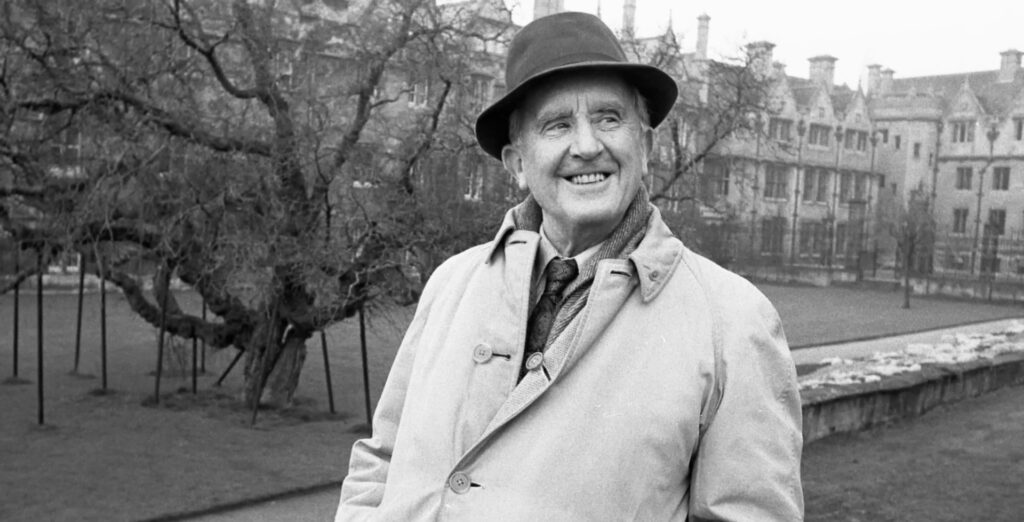
The author of the legendary trilogy The Lord of the Rings practically completely rejected the changes and spirit introduced into the Church after World War II. Vatican Council. As a professional linguist, however, he had the biggest problem with replacing the Latin language in St. masses in local languages.
J. R. R. Tolkien
” Monumental Council”
The author of the literary YouTube channel Ink and Fantasycame after a post about Tolkien’s view of politics with another interesting video called Why Tolkien Disapproved of II. the Vatican Council, in which he reveals, as the title suggests, a new unexplored aspect of the writer’s life – namely his insight into World War II. Vatican Council. JRR describes Tolkien not only as a Catholic convert but as a traditionally minded Catholic.
II . The Vatican Council is the most important event in the modern history of the Catholic Church,” the author explains the significance of this event. He further states that the council lasted 4 years (1962 to 1965), that Pope John XXIII. convened it and that it was ” monumental “. Ink and Fantasy states:
“(Vatican Council II) touched on several topics, from huge liturgical reforms and the renewal of many foundations of church teachings to more progressive changes, such as interreligious relations, the role of the priesthood, and especially the language and ritual of St. mass .”
The author explains that this council ended the use of Latin during Masses and replaced it with the common languages of the population – to” simplify the Mass ” and ” give a greater role to ordinary believers”. ” However, traditional Catholics felt that the Church was bowing to modern social pressure,” the document continues,” and softening its stance on many issues .” The author adds:
” Simply put, traditional Catholics perceived the Council as a deviation of the Church from its traditions, especially as regards the liturgy, but it also concerned the sphere of dogmatics .”
The Church wanted to” modernize” until the traditional Catholics” didn’t like it” – and one of the opponents of the changes after World War II. J. R. R. Tolkien was also a member of the Vatican Council.
When a devout Catholic is also a linguist…
Tolkien was an ” incredibly devout Catholic,” the video says, for whom ” faith and the Church were probably the most important things in his life. ” However, the writer was not only a Catholic but a Catholic with a very traditionalist view of the world. As a scientist and intellectual, he studied the history of the Catholic Church and its fathers, as well as councils, he adored Catholic spirituality and traditions, in his view, organically transmitted from generation to generation through the Latin language, which he considered sacred.
As a linguist, he perceived Latin from both a practical and a spiritual perspective. According to him, this sacred language was directly connected with the Eucharist – the real Jesus. To demonstrate Tolkien’s genuine opposition to the removal of Latin on St. Mass, Ink and Fantasy quoted the testimony of the writer’s grandson Simon Tolkien, who mentioned:
” I vividly remember going to church with him in Bournemouth. He was a devout Roman Catholic, and it was shortly after the Church changed the liturgy from Latin to English. My grandfather disagreed and gave all the answers very loudly in Latin, while the rest of the congregation responded in English. The whole experience was quite torturous for me, but my grandfather was oblivious. He simply had to do what he thought was right .”
For Tolkien, the use of Latin during St. Mass is not only the ” tip of the iceberg “, as the author states, but also the “foundation ” of St. Mass as such. At the same time, it was not just a kind of external character of the divine service that lost its “mystery”, but a much deeper problem. The document explains that the professor generally viewed with great concern the constant efforts of church officials to ” simplify ” fixed church dogmas and regulations, as well as ” abandoning its sacred traditions ” – the abandonment of Latin was the most obvious example of these changes for everyone “and especially for a linguist “.
Protestantization of the Church?
Tolkien literally” hated ” the changes in the liturgy after II. the Vatican Council, reports Ink and Fantasy. His biggest fear was that the Catholic Church was getting dangerously close to the attitudes of the Protestant churches, which he knew well as an English Catholic and convert. The document quotes one of the letters the Lord of the Rings author wrote to his son Michael in 1967, two years after the end of the council:
The” Protestant” search for backwardness for its “simplicity” and directness, which, of course, brings some good in itself, at least in understandable motives, is erroneous and indeed futile. Because “early Christianity” is now, and despite all “research” will forever remain largely unknown; because “simplicity” is no guarantee of value; it was and is rather a reflection of ignorance.
Gross abuse was part of Christian liturgical behavior from the beginning just as it is now. (St. Paul’s reservations about Eucharistic conduct are sufficient proof of this!) “
The professor of linguistics continues in the letter, arguing that the Church was never meant to be static and that even ” Our Lord did not want it to constantly remain in its initial stage of infancy,” but that it is a ” living organism ” similar to a plant and should therefore grow as if in height so to the width, to plant leaves and bear fruit. Tolkien continues:
” The wise know that (the Church) began as a seed, but it is futile to try to dig it up again, because it no longer exists, and its strength and virtue now rests in that tree…, gardeners must tend this tree according to the wisdom they enjoy, prune him, removing rot, ridding him of parasites, and so on… However, they will surely do great harm if they become obsessed with the desire to return to the seed or even to the primeval youth, when (as they imagine) it was beautiful and still untouched by evil. “
A broken man
So Tolkien was not against changes in the Church or new reforms as such, but the reforms of II. of the Vatican Council were somewhat specific: perhaps they are best described by an Italian word and also by the council’s unofficial motto, aggiornamento – that is, a kind of modernization of the Church. That is why Latin was abandoned, and St. mass simplified, which is why services after the 1960s seem so different from services before. The professor was against the modernization of the Church, holding that it should ” defy external social norms “, modernism being number one of these enemies. Ink and Fantasy continues:
” Because of this, Tolkien, with his motives deep down in his soul, had an incredibly difficult time accepting the changes introduced by the Council. He disagreed with many of the decisions that were made on it. But he had to respect them. As a Catholic, he believed in the authority granted to the Pope and the importance of the Bishop of Rome for the Catholic Church, which, according to Tolkien, was the Church founded directly by Jesus Christ and the only instrument of salvation .”
The document goes on to quote from the same letter written by the writer to his son:
” I am aware that for you as well as for me, the Church that once seemed like a refuge now seems like a trap. But there is nowhere else to go! (I ask myself if perhaps this feeling of despair, the last stage of loyalty, was not even more often than it is recorded in the Gospels, felt by the Lord’s followers during their earthly journey?) I think that nothing can be done other than to pray, for the Church, for Christ’s vicar, and for ourselves; and in the meantime cultivate the virtue of loyalty, which indeed becomes a virtue only when one is under pressure to renounce it. “
According to the documentary, Tolkien not only disagreed with most things that happened in the Church, but the channel believes that he was also “emotionally broken “. “Nevertheless, he had to hold on to his faith, ” he continues,” that the Catholic Church will endure and that it has a way forward that he does not know. “
The fact that the professor generally welcomed interreligious dialogue with the Protestants is surprising, but that was because he hoped that they too would somehow finally come under the authority of the Pope.
Latin – the language of the Church
In another video titled Why Tolkien Hated the Roman Empire?the channel also touches on the topic of J. R. R. Tolkien and his relationship to the Latin language. Tolkien was a ” vocalist ” and therefore hated the Roman Empire. He did not like the fact that the Romans imposed their Latin language and lifestyle on the Celtic, Slavic, or Germanic ethnic groups. However, the writer perceived the use of Latin in the Catholic Church in a completely different way. The channel explains:
” For Tolkien, the Latin language, imposed by the Romans, whom he greatly adored, and their empire, which he hated, was a symbol of the Catholic Church’s existence in time. It connected those ancient times with the present and united every aspect of the Church into one whole. He valued the preservation of local languages and the diversity of different cultures, but he did not see the use of Latin in the Church as something that contradicted this.
The Vatican Council could potentially lead to Latin itself being slowly forgotten and rendered redundant, a prospect he hated precisely because he adored all languages and Latin itself in particular. “
Athanasius, bishop of Alexandria and doctor of the Church, An May 2nd, memorial Position: Patriarch and Doctor of the Church Death: 373 Patron: is invoked as an aid against headaches Attributes: An older bishop with a longer beard and sometimes … Continue reading → The post St. Athanasius appeared first on predication.net.
In a religious education class, a catechist asked his students to write a short essay on the following topic: ‘Which relic of which saint would you like to have to make your wish come true, and why?’ The catechist laughed … Continue reading → The post Saint Joseph the Worker Mt 13, 54-58 appeared first […]
‘The Last Supper’. So much happened during it! First, Jesus bowed down to wash the disciples’ dirty feet, taking on the role of the lowest of the low, and said: ‘As I have done for you, you must do for … Continue reading → The post Fifth Sunday of Easter, Year John 14.1-12 appeared first […]
Jesus’ invitation! Today, as we celebrate the Feast of St Catherine of Siena, the patron saint of Europe, let us remember Jesus’ invitation to us all: ‘Come to me, all of you, and learn from me.’ This invitation also comes … Continue reading → The post St. Catherine of Siena. appeared first on predication.net.
In today’s Gospel reading, Jesus’ words are neither soft nor vague. He says clearly: ‘I am the gate… I have come so that they may have life.’ He also reveals the cruel truth that we would rather not hear: that … Continue reading → The post When a shepherd’s work stinks appeared first on predication.net.